



Železářská huť svatého Klimenta Factory
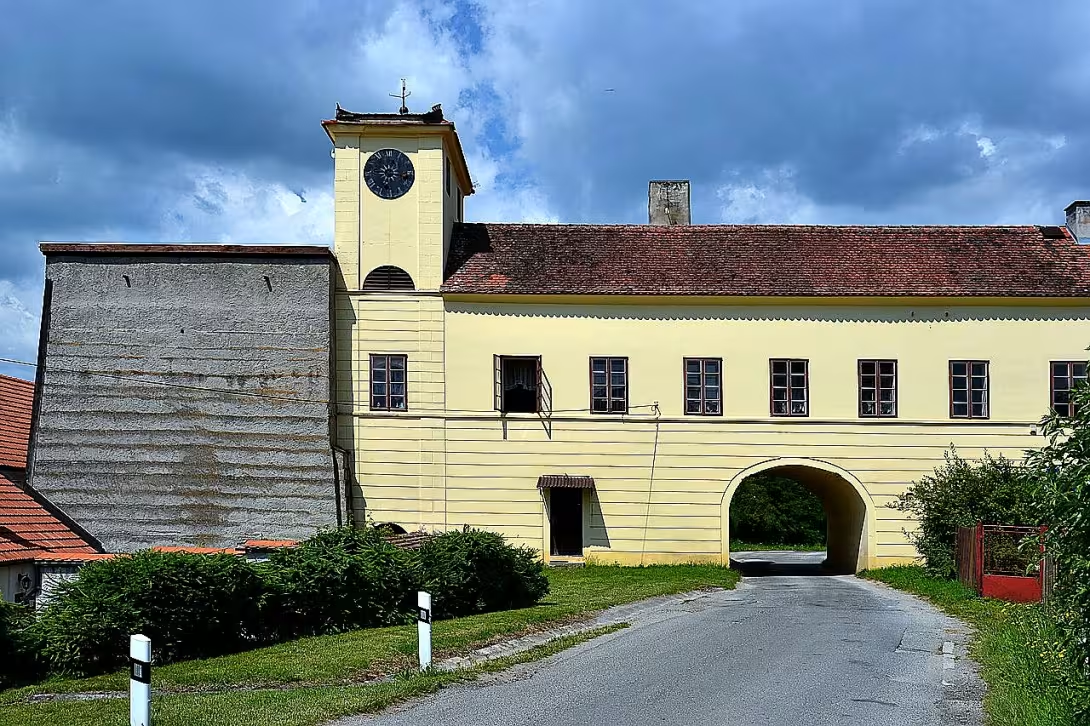
Železářská huť svatého Klimenta, also known as Viktor's Hust, is a historical monument located in the village of Plasy in the district of Pilsen-North. This building was founded between 1827 and 1829 by Prince Metternich and is today protected as a cultural monument of the Czech Republic. The hunt became famous for its quality cast iron products, from commercial items to decorative art. After the operation was stopped in 1875, the plant was gradually sold and its objects were modified for various purposes, but today it serves as a museum and exhibition hall.
The history of the iron smelter is closely linked to the industrialization of the Austrian countries. Plastic iron and metallurgical production has its roots at the end of the 17th century when tankers were founded. In 1826 Prince Metternich bought a monastery in Plasi and subsequently decided to build a iron smelter with a high furnace and foundry. This decision was motivated by sufficient supplies of wood in its own forests, the proximity of the River Shelling and the location of coal in Kaznejov. Originally, charcoal was used to melt ore, but later it was replaced by stone coal.
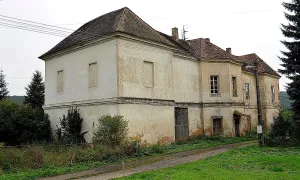
The oldest part of the complex is the building of the former foundry with a high furnace from the 1920s. The main operating building, completed in 1844, is a single-storey empirical structure of a rectangular floor plan with a smooth front and a covered saddle roof. On the southwest side of the building is built a tower with clock dial, which served as a ventilation window for the furnace. The southern facade is joined by the body of the former high furnace in the shape of a chamallow needle.
The possession of the smelter after the death of Chancellor Metternich moved on to his son Richard. In 1872 the smelter was severely damaged by a large flood and in 1875 the operation of the iron plant was definitively stopped. The objects were gradually sold or cut into building material.
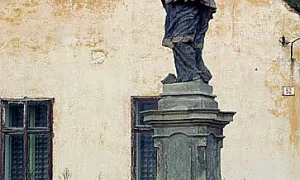
The cast iron products such as fountains, candelabra and lanterns have become famous for the smelting. Today, these works of art can also be seen in the local cemetery in the form of tombstones and crosses. There is a restored statue of St. John Nepomucký, which was part of the project "Plastic cast iron.".
Today the iron smelter of St. Kliment is open to visitors and serves as a museum. The reconstruction of the objects was carried out within the project "Plastic cast iron," which was supported by the Ministry of Culture of the Czech Republic and the city of Plasy. The ceremonial opening of the exhibition hall and the renewed Huti took place on 26 May 2005.
Visiting the iron smelter of St. Kliment offers an opportunity to explore the rich history of the industrial revolution in the region and to appreciate the artistic skills that have evolved here. It is a place where history and the present harmonically exist together, waiting for the next generation of visitors to discover its beauty.
Historical milestones
- 1827
- The beginning of the construction of the iron smelter.
- 1872
- Significant damage to the area during a large flood.
- 1875
- Stopping ironworks operation.
- 1963
- Object statement for technical monument.
- 2005
- Ceremonial opening of the restored metal and exhibition hall.
Architectural development
The main building is a one-story Empire building with a smooth front and a clock tower. The complex included a high furnace in the shape of a chamois needle. The building has undergone extensive reconstruction for museum purposes in recent years.
Historical events
In 1827, the construction of the metallurgical plant began. In 1872 the smelter was damaged by a large flood. In 1875, the operation of the iron plant was definitively stopped.
Owners
The Metternich Prince House since 1826.
Points of interest
- Železářská huť svatého Klimenta was founded between 1827 and 1829 by Prince Metternich. - The smelter has become famous for its quality products made of cast iron, from commercial items to decorative art. - The oldest part of the complex is the building of the former foundry with a high furnace from the 1920s. - The possession of the smelter has moved on to his son Richard after the death of Chancellor Metternich. - Today the iron smelter of St. Kliment is open to visitors and serves as a museum.
Guide
Show guide text
This text was created by artificial intelligence and has not been editorially reviewed. It may contain inaccuracies.
We welcome you to the historic monument of St. Kliment's railway plant, which you stand before you. It's a place full of history and beauty where every stone tells the story of period technology and art. Let's take a closer look at this fascinating memory.
Železářská huť svatého Klimenta was founded between 1827 and 1829 by Prince Metternich. This site, which is situated before your eyes, is proof of the industrial ambition of the time. It was created to produce quality products made of cast iron - from commercial items to decorative art. The area you see now included a high furnace and foundry, which were key to the process.
Let's look at the architecture of this monument. The oldest part of the complex is the building of the former foundry with a high furnace from the 1920s. This structure, which you see before you, is truly impressive and shows the technical skills of the time. Note the careful processing of building elements and their functionality.
Of course, among the key people associated with this monument is Prince Metternich, who not only founded this plant but also contributed to the development of industry in this area. His name is associated with the ambitions and achievements of this project.
The interesting thing is that even after significant damage to the site during the Great Flood in 1872 and the subsequent shutdown in 1875, the plant was gradually sold. However, due to its historical value, the building was declared a technical monument in 1963. In 2005 it was restored and opened as a museum where you can now enjoy both history and contemporary exhibitions.
Let's take a closer look at this memory. Look at the details of architecture and imagine life in the metal when hundreds of people were working here. Note how these structures were designed for maximum efficiency.
And now that you've been a little immersed in the history and architecture of this monument, consider researching it. You can go through the exhibition halls or read more about the history of this place.
Thank you for your visit to St. Kliment's railway plant. We hope this guide inspired you to further discover and appreciate historical monuments. Goodbye!
Tips for visitors
The best time to visit are spring or autumn months when the light is more pleasant and the weather for walking in the area is ideal. For photography we recommend focusing on the blast furnace and the inside of the workshops, especially when the sun penetrates through the windows and creates interesting light effects on metal parts.
You can reach the place by car or use public transport.
During the tour we recommend taking water with us and wearing comfortable shoes suitable for uneven industrial terrain. For families with children, the visit is very interesting because children can directly see how iron has been processed in different workshops in the past.
You can explore the area within a 30-minute radius after you've checked the hunk. Near there is a monastery in the Plasi and River Shell which offer a beautiful environment. If you're interested in mining, you can visit the nearby coal site in Kaznejov.
Frequently asked questions
Can the monument be visited?
Some buildings of this kind are open for guided tours, others serve another purpose or are privately owned. We have not verified whether and when this monument is open – please ask the operator.
What are the opening hours and admission?
We have not verified the opening hours or admission. Current information is published by the operator.
Where is the monument?
Location: Plasy, Plzeňský kraj. The map on this page shows the exact spot.
Why is the monument protected?
It is listed in the Central List of Cultural Monuments of the Czech Republic as a cultural monument (register no. 1000141452).
Businesses nearby
Do you run a restaurant, accommodation, shop, museum, rental, wellness or other visitor service near this monument? Show yourself directly to the people heading to it — this is how they will see you in the app and on the web:
Nearby
Klášter v Plasích, řeka Střela a nedaleké naleziště uhlí v Kaznějově.
Accommodation nearby
Trips and activities nearby
Guided tours, tickets and activities nearby from GetYourGuide
Affiliate link: if you buy from the partner, we may receive a commission. The price for you does not change.
Search tours and activities →Themed route
Železářská huť svatého Klimenta - historical industrial monument, museum and area. Type: industrial complex. Why: captures technology and living conditions of the 19th century, you will find original iron mining machines and documents in the exhibitions.
The monastery in Pláší - medieval Cistancian monastery with Baroque interiors. Type: religious complex. Why: You can take a walk to the nearby monastery courtyard, where quiet gardens with historic fresco and monastery library can be joined.
River Bullet - picturesque water road flowing through the village. Type: natural corridor. Why: There is a marked trail along the river, which offers views of the old hut and monastery, and the possibility of relaxing at the water bank overlooking historical buildings.
The coal site in Kaznejov - a former mining site, now open to the public. Type: industrial site. Why: A short ride (about 2 km) from Plasí will lead you to a remarkable place where you can see the remains of mining equipment and understand the link between coal mining and the development of iron smelters.
Logical order: start at the railway plant, continue on foot to the Monastery, then follow the River Shrela along the path and eventually by transport (bus or taxi) to Kaznejov to the coal site. The total route is approximately 5 km and can be managed within one day.
Seasonal recommendations
Spring: In the spring season Železářská huť svatého Klimenta lights up with sunlight that creates a magical atmosphere. The landscape is revived by flowering shrubs and trees, which adds color shine to the historical environment. At this time, the visit can be proven thanks to mild temperatures which facilitate long walks around the metal and its surroundings. It is recommended to visit early afternoon or evening time to avoid high school students on school trips. Due to the variable weather, it is advisable to carry a light jacket or raincoat.
Summer: During the summer season, Železářská huť svatého Klimenta offers visitors warm sunny days that are ideal for exploring historical places in peace. Although it is the most popular period for tourists, which means a higher probability of meeting with the crowd, especially around noon, it is advisable to visit the Huti earlier on or later in the evening. At this time it is recommended to wear light clothes and a sun helmet as well as drinks to drink during walks.
Autumn: In autumn Železářská huť svatého Klimenta becomes melancholic atmosphere with colour palette of leaves and mild climate. This season is ideal for visiting because there are fewer tourists than in the summer months, which allows for a more intimate experience of an ancient place. Visit the smelters in the early afternoon or evening time for the best light and climate. When preparing for the journey, it is advisable to carry warm clothes because the weather can be variable.
Winter: The winter visit of St. Although the opening time is shorter and the traffic is lower, the weather may be cold, so it is important to come well dressed. Hot clothes, including fur or jacket and protective gloves, are crucial for a comfortable walk. Visiting the huti in the early afternoon time can be an ideal choice due to shorter daylight and lighter temperatures.
Visualizations and artistic views


The visualisations are generated by artificial intelligence and serve as inspiration.
Photos from the area
Real photos taken near the monument


Zdroj a licence jsou uvedeny u každého snímku.
Tips from visitors
No tips yet. Be the first!
Log in and add your tip.
Sources and literature
Photos: Petr Kinšt / CC BY-SA 3.0 — Wikimedia Commons. The author and licence also appear when you hover over the image.
Faktickým podkladem tohoto textu byl článek na Wikipedii, jehož autory jsou přispěvatelé Wikipedie. Článek je dostupný pod licencí CC BY-SA 4.0.
Location on the map

Příběhy a pověsti
Legendy, pověsti a příběhy spjaté s touto památkou

Fotografie návštěvníků
Zatím žádné fotografie. Buďte první, kdo přidá fotografii z návštěvy!
Log in a přidejte svou fotografii nebo hodnoťte.
Za ověřenou návštěvu v aplikaci získáte víc bodů — poznáme podle GPS, že jste na místě.
Reviews and comments