






Hrobka Metternichů v Plasích Church
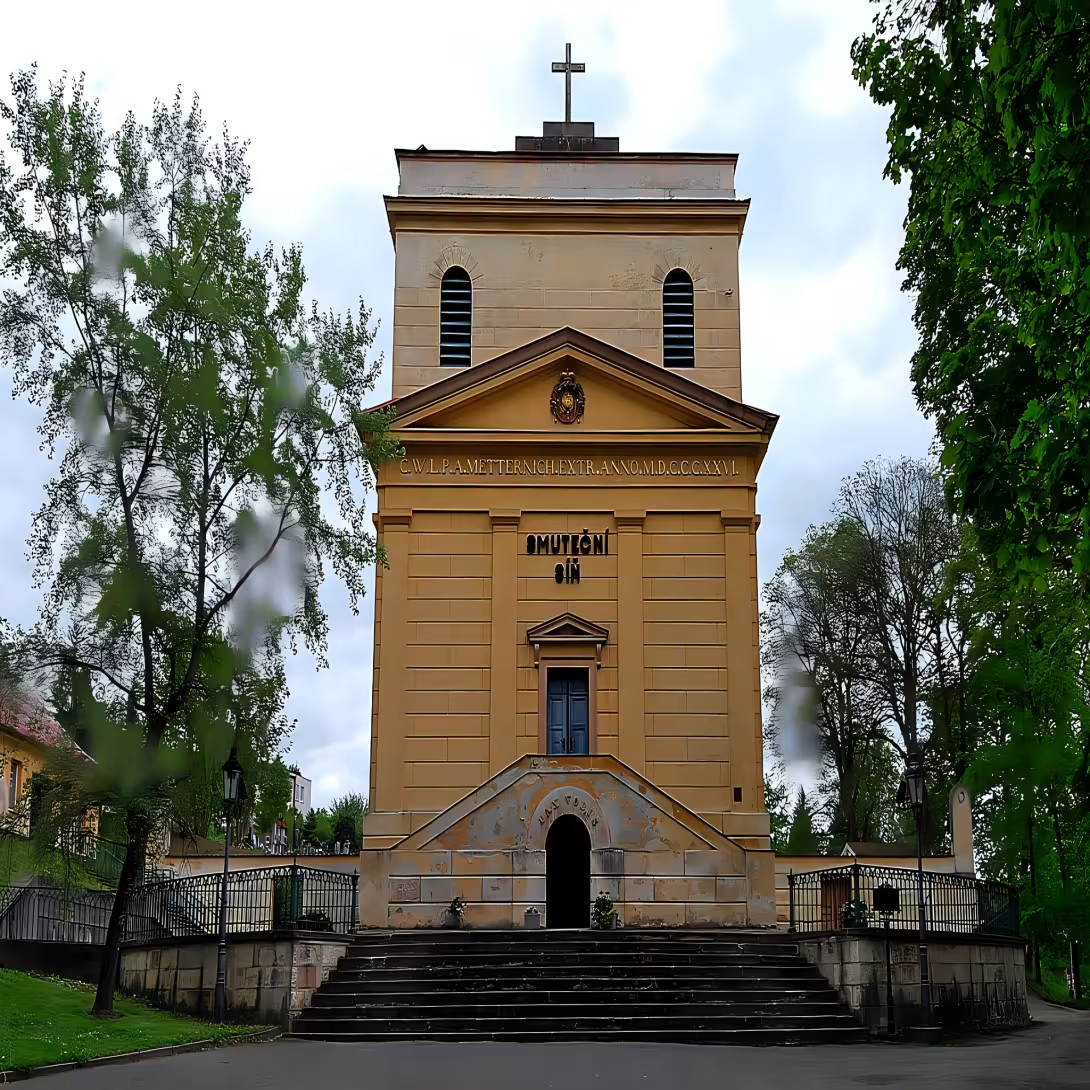
In the western Bohemian Plas, there is a building in the cemetery, which is a rare example of a change in the purpose of the building - originally the Gothic church of St. Wenceslas became the family tomb of the Metternich family. This tomb is owned by the city Plasy.
The church has been modified in the past. During the Baroque period, under the abbot Ondřej Trojer, he received a Baroque form and was equipped with two towers (it is assumed that Jan Baptista Mathey designed them). A fundamental change came in 1785 when the monastery was abolished and the estate acquired the Metternich family. Forty years later, in 1826, Chancellor Metternich had the church rebuilt into a family tomb. Towers have been removed and space adapted to a new purpose. The reconstruction was conducted by architect Josef Kranner on the basis of design or in consultation with Petr Nobil.
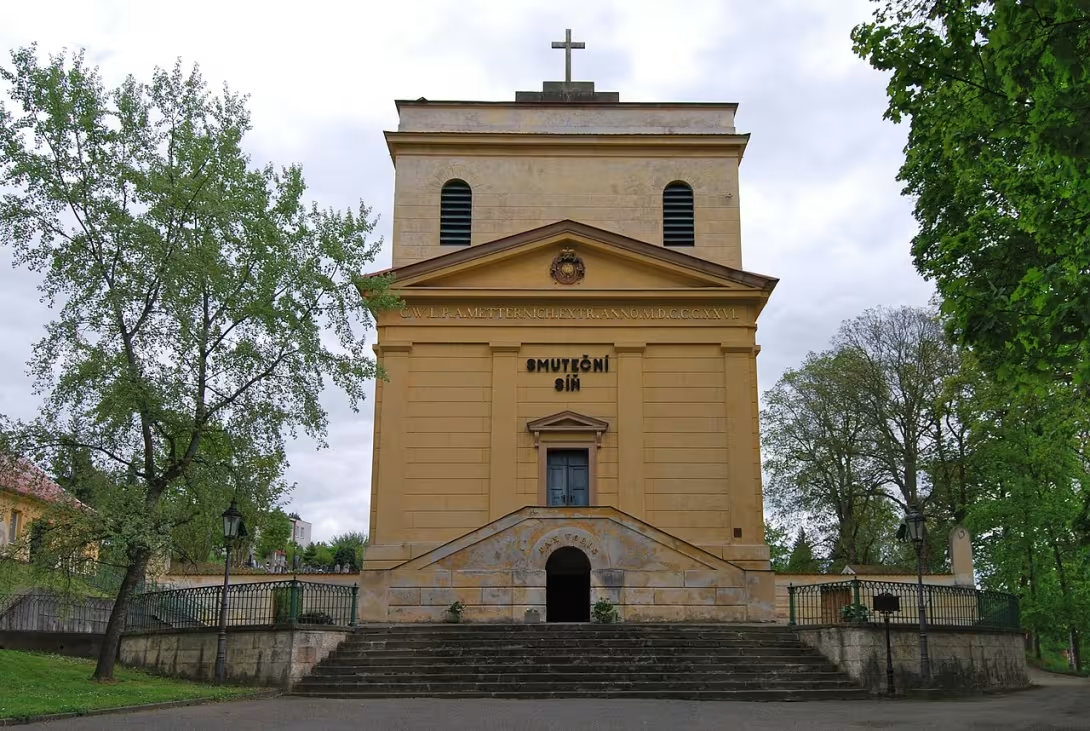
The architecture of the tomb bears an empirical character. The facade is articulated by pilasters and closed by a low triangular shield with a Metternich symbol in the tympanone. The entrance to the tomb is located under a two-arm staircase. The interior retains a cylindrical vault. The presbyterium preserved Gothic wall paintings from the original building. The equipment includes the paintings of Jan Kryštof Liška and the tumbling relic of St. Valentine's Day from 1828, whose remains were donated to Metternich by Pope Lev XII.
The tomb contains thirty pieces for coffins (after fifteen on each side). The last member of the family was buried in the tomb in 1930. Some of them were empty. Before the tomb was created, the Metternichs were buried in St. Margaret's Church in Kynžvart. After 1945, when the house lost its property in Czechoslovakia on the basis of the Beneš Decrees, the last generation was buried near the church of St. John the Baptist in the chateau of Johannisberg in Germany.
Then and now
Drag the slider to compare how the landmark may have looked when it was built with the view today.
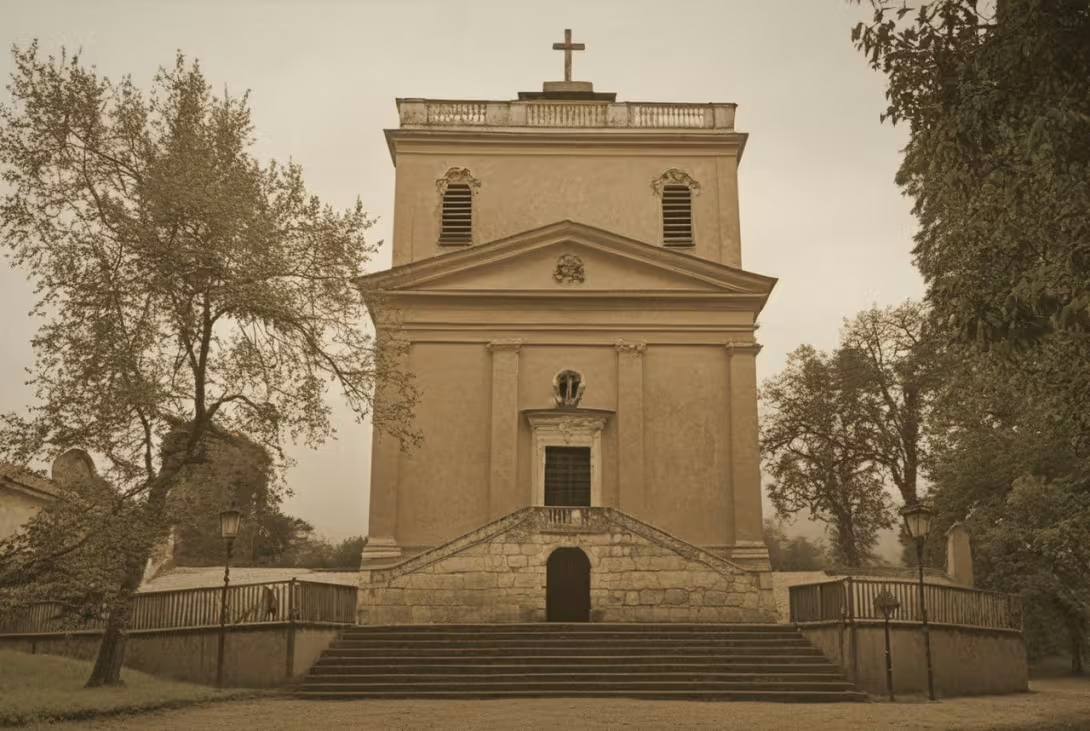
The historical appearance on the left is an AI-generated visualisation and serves as inspiration only.
Historical milestones
- 1785
- Cancellation of the monastery in the Plasi.
- 1826
- Empire reconstruction of the church on the tomb.
- 1930
- Putting the last member of the family in the tomb.
Architectural development
The original Gothic church was baroque rebuilt by Jan Baptiste Mathey for the abbot Ondrej Trojer. In 1826, an empirical reconstruction took place in which the towers were removed and the facade with pilasters and triangular shield was modified. The entrance to the tomb is solved under a two-arm staircase.
Historical events
1785: Cancellation of the monastery in Plasi, 1826: Empire reconstruction of the church on the tomb, 1930: The deposit of the last member of the family into the tomb, 1945: Loss of property of the family in Czechoslovakia.
Owners
House Metternich, city Plasy
Points of interest
- The construction is a rare example of a change of purpose, when originally the Gothic Church of St. Wenceslas became the family tomb of Metternich. - The tomb presbyterium preserved Gothic wall paintings from the original building. - Part of the equipment is the tubular relic of St. Valentine's Day from 1828, whose remains were donated to Metternich by Pope Lev XII. - The tomb contains 30 grand for coffins, some of which remain empty. Before this tomb was created, members of the Metternich family were buried in St. Margaret's Church in Kynžvart.
Guide
Show guide text
This text was created by artificial intelligence and has not been editorially reviewed. It may contain inaccuracies.
Welcome to the Plasas. You have just stopped in front of one of the most important and precious monuments of this place. You stand before the tomb of the Metternich family, a place that carries the deep silence and seriousness that only this place can offer. While you're looking around, I believe you perceive the strange atmosphere of this cemetery, where history is not just a book entry, but a living presence that can be achieved by hand and sight. In front of you, there is a building that seems calm and dignified at first glance, but its face is the result of a fascinating transformation that combines two completely different epochs and two completely different worlds.
To understand why this building looks like this, we need to go back deep into the past. Imagine a time when this place was not a tomb but a living center of spiritual life. Originally there was a Gothic church of St. Wenceslas, which was part of an extensive monastery. However, the fateful break occurred in 1785, when the monastery in Plas was abolished. This event has changed everything. The building lost its original function and its fate became uncertain until it connected with the fate of one of Europe's most influential families. In 1826, a major reconstruction took place, which was intended to give the building a new, native character. That's when the original church became the final resting place for the Metternich family. This transformation was so deep that the original Gothic building became an empirical-style building that reflected the aesthetics of its time in its form and spirit.
Now that you're looking at the tomb, pay attention to its architecture. Notice how the building avoids the typical, heading towards the sky of Gothic verticality. During the Empire reconstruction, the original towers were removed, which gave the building its current, rather horizontal and balanced appearance. This change was deliberate, meant to create a space that did not act as a place of constant ascension to God, but as a place of dignified, quiet training and remembrance. Behind this architectural change were important creators of their time, among whom we name Josef Kranner and Peter Nobile. Their work in the Plas represents a fascinating dialogue between the old and the new.
If you decide to enter, prepare yourself for an experience that will take you to another space-time. The inner space of the tomb is characterized by the fact that it is glazed with valenas, which creates a sense of stability and monumentality. But the greatest treasure is hidden in the presbytery. Although the whole building appears to be the result of the nineteenth century, in the presbytarium it was possible to preserve something incredible - Gothic wall painting from the original building. It's like you found walls in a modern house that still whisper stories from another century. These paintings are a silent witness to the fact that the heart of the original Gothic church of St. Wenceslas is still beating under the Empire layer. It's a rare example of how history can layer without the older ones being completely erased.
However, this space is not only an architectural unique, it is mainly a place associated with big names. The tomb served as a home for the remains of members of the Metternich family, a family whose influence reached far beyond this region and the state. The most important personalities associated with this place include Chancellor Klement Václav Nepomuk Lothar Metternich. His name is written in gold in history, and this tomb is proof of his family continuity and importance. Even though the family was changing in later times, the tomb remained their fixed point. The last member of this family was only stored here in 1930, which means that the tomb was still a living place for family memory over the centuries. There are other figures like Ondřej Trojer and Jan Baptista Mathey who are all part of this silent society.
If you go through the interior, pay attention to details that indicate the wealth and religious devotion of this family. One of the most interesting items is the tumboid reliquary of St. Valentine's from 1828. This object is not only a religious artifact, but also a symbol of the family pride and gift that brought the Metternich family to this place. Imagine the precision of the work and the weight of the tradition this reliquary carries. It is another proof that the tomb was not just an empty building, but a richly equipped space to reflect the status and faith of those who rest here.
There is also one special thing that can impress a visitor. It's the invisible line between what you see and what happened here. The tomb is a unique example of changing the purpose of the construction. Most churches either remain churches or become something else, but there has been such a specific rebirth - from the public place of divine service has become a private, native settlement for eternity. This transformation from the church of St. Wenceslas to the family tomb is rare and gives this place a hint of mystery. It is as if the sacred space for the whole village has turned into an intimate monument to one particular line of people.
Now that you've met the curriculum of this place, I suggest you just let yourself be stopped for a while. Take a look at the facade details, feel the atmosphere of the surrounding cemetery and try to imagine the times when the first time there was a new empirical spirit. The Metternich tomb is not just a building, it is a chronicle of transformations that took place in the heart of the plasma.
Thank you for joining us on this short journey through history. Please continue your search and have this area fully relive. You can now move freely and continue to explore the surroundings. Goodbye.
Tips for visitors
The best time to visit is in the morning during the working week when you avoid weekend crowds and enjoy the quiet atmosphere of the cemetery. Due to the piety of the site, it is advisable to choose dates outside the main holidays.
You can easily reach the Plas by car and public transport. Parking is possible near the monastery area, from where the tomb is easily accessible by walking. We recommend checking the current connection by train or bus in the official connection search engine.
We recommend warmer clothes to visit the tomb, as it is colder in interiors during the summer months. Don't forget to wear suitable shoes to move around the cemetery area and around the monastery.
Photography of the exterior of the Empire building is best in soft morning or evening light, which highlights architectural details. The interior of the tomb is specific, so always inform yourself in advance of the rules for photography on site.
When visiting with children, use the vast area of the former Cistercian monastery in Plasi, which offers sufficient space for movement. A tour of the tomb is more suitable for older children who will be interested in the history of the House of Metternich.
Businesses nearby
Do you run a restaurant, accommodation, shop, museum, rental, wellness or other visitor service near this monument? Show yourself directly to the people heading to it — this is how they will see you in the app and on the web:
Events nearby
Zdroj akcí: otevřená data měst a obcí ČR (Národní katalog otevřených dat) a kalendář akcí Národního památkového ústavu.
Nearby
A complex of former Cistercian monastery in the Plasi.
Accommodation nearby
Trips and activities nearby
Guided tours, tickets and activities nearby from GetYourGuide
Affiliate link: if you buy from the partner, we may receive a commission. The price for you does not change.
Search tours and activities →Themed route
1. Complex of the former Cistercian monastery in Plasi (Type: Monasteries). First stop in historical space. 2. Hrobka Metternichů v Plasích (Type: Grave). The main destination of the route, which offers a tour of the monumental monument. 3. Area of the former Cisteriac monastery in Plasi (Type: Tanks). Final walk in the immediate vicinity of the monument.
Seasonal recommendations
In spring, the tomb wakes up along with the surrounding nature. The light is fine in this period and the landscape around it begins to green, creating an interesting contrast between natural revival and peace within the monument. I recommend visiting the morning when the air is freshest. Clothes should be layered because the morning cold can still be felt in the open.
In the summer months the area of the tomb is gardening and full of thick green. The sun shines the strongest, which highlights the details of the building, but inside it can feel warmer. Due to the main summer season, it is recommended to come right after opening to avoid the largest groups of visitors. Dress lightly and don't forget enough fluids.
Autumn brings the tomb a melancholy and noble atmosphere. Leaves turn color into golden and brown shades, which perfectly matches the historical character of the place. The morning mist gives the surroundings mystery and depth. An ideal visit in the afternoon is to use the low, golden sun. Prepare comfortable shoes and a warmer layer of clothing.
Winter is the quietest, when the tomb seems very lonely and dignified in cold and silver light. The landscape is without leaves, which reveals a more crude face of the monument. The opening hours are often shorter at this time, so check in advance. It is necessary to dress very warm and visit the place around noon to make available as much natural light as possible.
Visualizations and artistic views


The visualisations are generated by artificial intelligence and serve as inspiration.
Photos from the area
Real photos taken near the monument


Zdroj a licence jsou uvedeny u každého snímku.
Atmosphere of the place
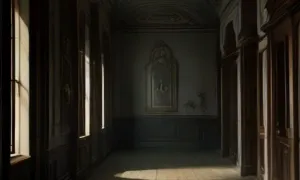
This atmospheric visualisation of the place and period was generated by artificial intelligence. It is not real footage of the location.
Tips from visitors
No tips yet. Be the first!
Log in and add your tip.
Sources and literature
Photos: Richenza / CC BY-SA 3.0, rozlišení zvýšeno umělou inteligencí — Wikimedia Commons. The author and licence also appear when you hover over the image.
Faktickým podkladem tohoto textu byl článek na Wikipedii, jehož autory jsou přispěvatelé Wikipedie. Článek je dostupný pod licencí CC BY-SA 4.0.
Location on the map
More monuments – Plasy
Show all in the municipality

Příběhy a pověsti
Legendy, pověsti a příběhy spjaté s touto památkou
Fotografie návštěvníků
Zatím žádné fotografie. Buďte první, kdo přidá fotografii z návštěvy!
Log in a přidejte svou fotografii nebo hodnoťte.
Za ověřenou návštěvu v aplikaci získáte víc bodů — poznáme podle GPS, že jste na místě.
Reviews and comments