



železniční nehoda u Perninku Site of events
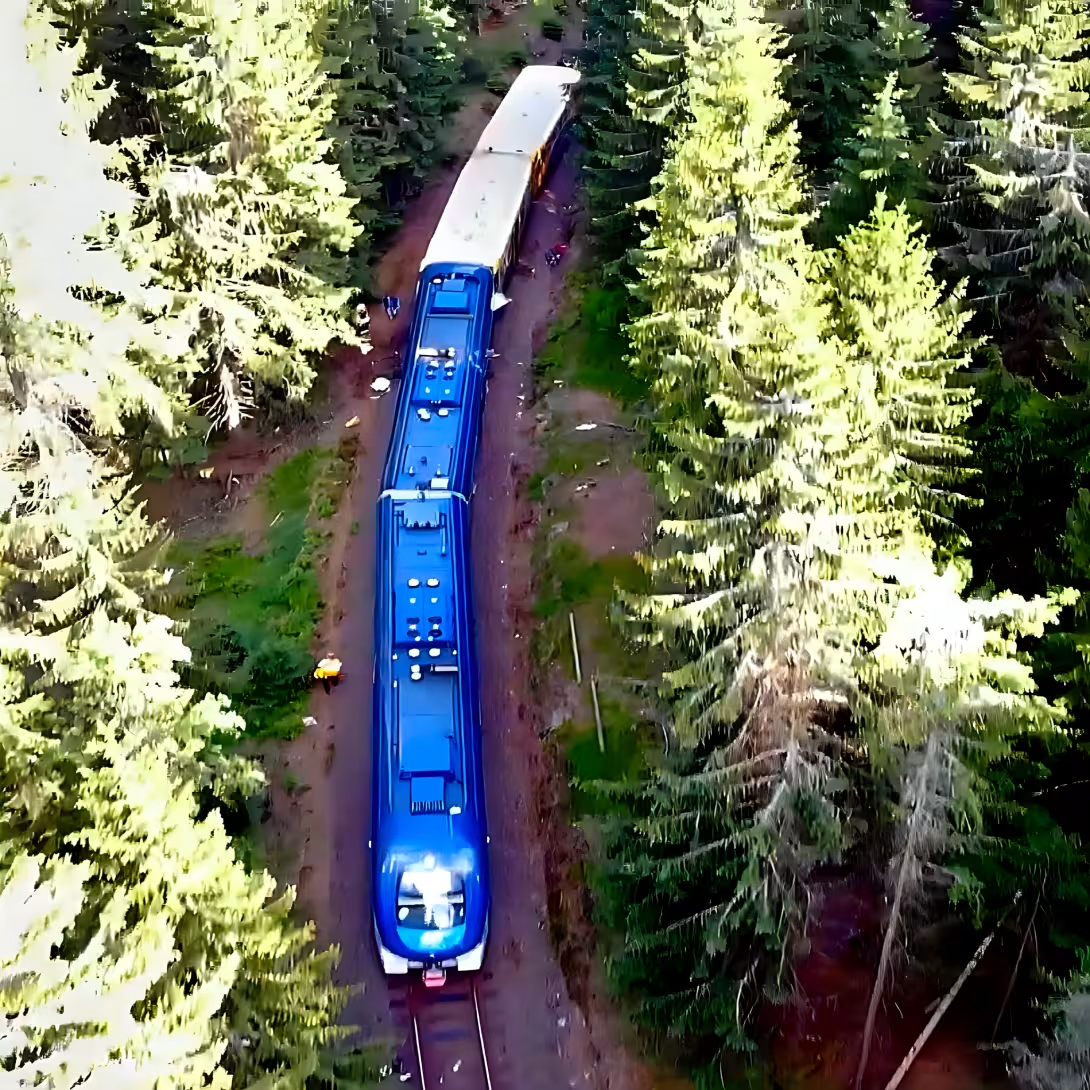
On Tuesday, July 7, 2020, at 3:10 p.m., on railway track 142 between Karlovy Vary and Johanngeorgenstadt, a tragedy took place, which will remain a black dot in the history of Czech railways. Two passenger trains between Nová Hamry and Pernink were met at the front. 33 people traveled on these trains, including personnel.
The crash site was undeniably unfavourable. The collision took place in an opaque wooded area in the arch, just 600 metres from the station Pernink. That's why the engineers didn't see each other until the last minute. Both trains were approaching almost full speed - one of the speedometers was stuck at 47 km / h, which was practically at the limit of the maximum permitted speed of 50 km / h in this section.
The cause of the accident can be found primarily in a traffic management error. Line 142 shall be driven according to Regulation D3, where the steering is based on dispatcher personnel without automatic safety devices. Trains were supposed to be cruised at the Pernin station. According to the communication log, a train coming from Johanngeorgenstadt was to wait for the crossing of the oncoming train, but did not. The investigators, as one of the working versions, suggest that the driver was wrong and thought that the crossing would take place only in New Hamra, as is happening on weekends and holidays.
The consequences were tragic. The more rugged RegioShark (844 series) lodged in the light car Regionova (814 series), which then pushed away by 12 meters. Two people died in the accident. Another 24 injured - 15 lightly, nine hard or moderate. Seven people were treated on site, 14 were transported to hospitals.
The police of the Czech Republic dealt with the case very closely. She apprehended one of the drivers and saved the case as a suspicion of general negligence. After almost a year of investigation, the prosecution was brought against a train driver coming from Johanngeorgenstadt.
However, the accident also brought systemic improvement. It led to significant changes in traffic rules on lines D3. A mandatory automatic notification message has been introduced in all D3 carriers whose interference has been prohibited. It was also prohibited to drive ahead, although this measure was later reduced to allow boarding only if another train meets another train on its route.
Instead of disaster at Pernink, it remains a reminder of how important safety, consistency in communication and consistent compliance with railway rules are. The accident took lives, but it led to systemic changes that have increased safety for passengers in the coming years.
Historical milestones
- 20
- The railway accident at Pernink happened on July 7th.
- 2021
- Implementation of automatic reporting obligations on lines D3.
Historical events
- 20
- The railway accident at Pernink happened on July 7th.
- 2021
- After the investigation, the driver was charged with general negligence.
Points of interest
- Tragedy took place on July 7, 2020 between Karlovy Vary and Johanngeorgenstadt on line 142. - There have been two personal trains in an opaque wooded area just 600 metres from Pernink Station. - The cause of the accident was a traffic management error without automatic signalling equipment on line 142. - Changes in the traffic rules have led to mandatory automatic reporting messages in all D3 transport stations and to the prohibition of ahead driving. - The accident took the lives of two people, another 24 injured, which led to the driver's indictment.
Guide
This guide is narrated by a synthetic voice generated by artificial intelligence.
Show guide text
This text was created by artificial intelligence and has not been editorially reviewed. It may contain inaccuracies.
On the afternoon of July 7th, 2020, at approximately 3 o'clock and 10 minutes, two passenger trains collided head-on on railway line number 142 from Karlovy Vary to Johanngeorgenstadtu. It happened between the stations Nové Hamry and Pernink, approximately 600 meters down the tracks from Pernink railway station. There were 33 people traveling in the trains, including staff. Two people died and another 24 were injured, 15 slightly and 9 seriously or moderately seriously. Seven people were treated by rescue workers at the scene and fourteen were transported to the hospital.
One train was traveling from Karlovy Vary, the other from Johanngeorgenstadtu. They were supposed to pass each other at the station in Pernink. Traffic here is controlled according to regulation D3, according to which traffic management rests with the staff. The collision site is located in an obscure wooded curve, so the train drivers didn't see each other until the last moment. The trains crashed into each other at nearly full speed. One of the speedometers stuck at 47 kilometers per hour, while the maximum speed permitted in this section is 50. The damaged trains were motor units of series 814, called Regionova, and series 844, called RegioShark.
The causes of the accident were investigated by the Railway Inspection and the Police of the Czech Republic. The police detained one train driver and investigated the case as a suspected general endangerment due to negligence. According to the Railway Inspection, recordings of conversations between the train driver and the dispatcher show that the train from Johanngeorgenstadtu was supposed to wait in Pernink for the oncoming train, but it didn't wait. One of the investigative theories assumed that the driver was mistaken and thought the trains would meet in Nové Hamry, as they used to on Sundays and holidays. After almost a year of investigation, the police charged the train driver of the train from Johanngeorgenstadtu with general endangerment due to negligence.
The accident significantly changed the operating rules on lines controlled according to regulation D3. Automatic notification obligation was introduced at all stations and its cancellation was prohibited. The practice of starting ahead was also banned. Later the ban was relaxed: starting ahead can be permitted only if the train doesn't meet any other train on its route.
Tips for visitors
The best time to visit is in the early afternoon, when the sun lights up the landscape and at the same time it is not too hot. This time allows not only to explore the site of the accident, but also to enjoy the quiet surroundings.
Transport to Pernink is available both by car and public transport. We recommend checking the current connection before visiting.
When visiting, bring protective clothing and shoes suitable for walking on unbalanced terrain. Additional recommended subject is a camera if you are interested in shooting the landscape.
Photos around Pernink offers beautiful views of the mountain landscape. The best light for photography is in the early afternoon when the sun illuminates the area with bright colors.
In the vicinity of Pernink you can visit historical track No. 142, which connects Karlovy Vary and Johanngeorgenstadt. This route is ideal for cyclists and tourists who want to explore the region.
Frequently asked questions
Can the monument be visited?
Some buildings of this kind are open for guided tours, others serve another purpose or are privately owned. We have not verified whether and when this monument is open – please ask the operator. According to the heritage register the structure is in poor condition – do not enter it and take care nearby.
What are the opening hours and admission?
We have not verified the opening hours or admission. Current information is published by the operator.
Where is the monument?
Location: Pernink, Karlovarský kraj. The map on this page shows the exact spot.
For kids
Imagine going back to the past and getting ready in an amazing county where the little town Pernink is today. A place that once was home to miners who sought wealth in deep mines.
This is where people lived who used to dig ore and silver. They were heroes trying to gain wealth for their families. This is where one of the worst railway accidents in the history of the Czech railway network took place on railway line 142.
Businesses nearby
Do you run a restaurant, accommodation, shop, museum, rental, wellness or other visitor service near this monument? Show yourself directly to the people heading to it — this is how they will see you in the app and on the web:
Nearby
Ambient Pernink
Accommodation nearby
Trips and activities nearby
Guided tours, tickets and activities nearby from GetYourGuide
Affiliate link: if you buy from the partner, we may receive a commission. The price for you does not change.
Search tours and activities →Themed route
Thematic cruise route: Rail accident at Pernink and surroundings
1. Railway Accident at Pernink - Type: Historical site - Why is it worth a visit: This monument commemorates the tragedy of 1908 when the most serious railway accident occurred in Austria-Hungary. Visit the site where today there is a memorial board and information boards that illuminate the historical context and impact of this unfortunate event.
Pernink - Type: Village - Why it is worth a visit: Pernink is a picturesque village with a rich history that boasts a natural beautiful environment and proximity to the Karlovy Vary region. Explore local architecture and enjoy a quiet moment in the surrounding woodland areas.
3.Karlovarský kraj - Type: Regional attractions - Why is it worth a visit: Although Karlovarský kraj is a wider region, its proximity to Pernink offers the opportunity to explore local cultural and historical monuments. The region is famous for its thermal baths and natural beauties, which are ideal for relaxing after a visit to a railway accident.
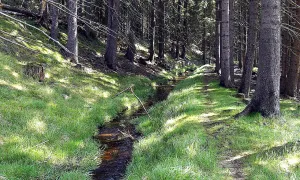
4. Ambient forest areas - Type: Nature - Why is it worth a visit: The woods around Pernink offer beautiful walks and the opportunity to relax in nature. They are an ideal place for lovers of wild flora and fauna, as well as for relaxing in the countryside.
This track offers a combination of historical and natural experiences that allow a deeper understanding of the local heritage and beauty of the Karlovy Vary Region.
Seasonal recommendations
Spring: In the spring season železniční nehoda u Perninku is charming with its lighting, when the sun's rays penetrate through the fog and create quiet but impressive flashes on historical structures. This period is ideal for exploring nature around the monument where flowers and trees start to open up the first green leaves. It is recommended to visit in the early afternoon time to avoid weather or mornings. Clothes should be one that allows you to adapt to changing conditions - from warm clothes to colder morning to a light jacket for the sunny season. Visitors can expect mild crowds, which means that it is possible to enjoy a peaceful visit.
Summer: Summer brings a lively atmosphere around the monument where long sun days and warm weather offer ideal conditions for exploring historical sites. The sun illuminates roofs and walls in a beautiful light, which contributes to the impressive impression of the monument. In the main summer season it is advisable to visit from morning or late afternoon to avoid peak hours and tight crowds. Clothes should be light and light, with sun protection - the hat or scarf for the head must not be missing. Remember enough drinking water, especially if you are planning a long walk around the sights.
This period is ideal for nature lovers who enjoy a peaceful visit without excessive crowds. Visitors should be prepared for colder weather and the possibility of rain, so it is advisable to bring warmer clothes and rain protection. The best times for visiting are early afternoon or trips at the end of the day when sunlight is particularly impressive and the temperature is lighter.
This period is quieter, which allows you to enjoy the memory in a mild touch of silence and peace. Visitors should be well prepared for cold weather - warm clothes, fur hats and wind protection are necessary.
Visualizations and artistic views


The visualisations are generated by artificial intelligence and serve as inspiration.
Atmosphere of the place
This atmospheric visualisation of the place and period was generated by artificial intelligence. It is not real footage of the location.
Tips from visitors
No tips yet. Be the first!
Log in and add your tip.
Sources and literature
Photos: Hasiči Karlovarského kraje HZS KVK / CC BY 3.0, rozlišení zvýšeno umělou inteligencí — Wikimedia Commons. The author and licence also appear when you hover over the image.
Faktickým podkladem tohoto textu byl článek na Wikipedii, jehož autory jsou přispěvatelé Wikipedie. Článek je dostupný pod licencí CC BY-SA 4.0.
Location on the map
Příběhy a pověsti
Legendy, pověsti a příběhy spjaté s touto památkou
Fotografie návštěvníků
Zatím žádné fotografie. Buďte první, kdo přidá fotografii z návštěvy!
Log in a přidejte svou fotografii nebo hodnoťte.
Za ověřenou návštěvu v aplikaci získáte víc bodů — poznáme podle GPS, že jste na místě.
Reviews and comments