



Adolfská železárna Technical monument
Objekt se nedochoval — na místě dnes nestojí. Následující text popisuje jeho historii, ne současnou návštěvu.
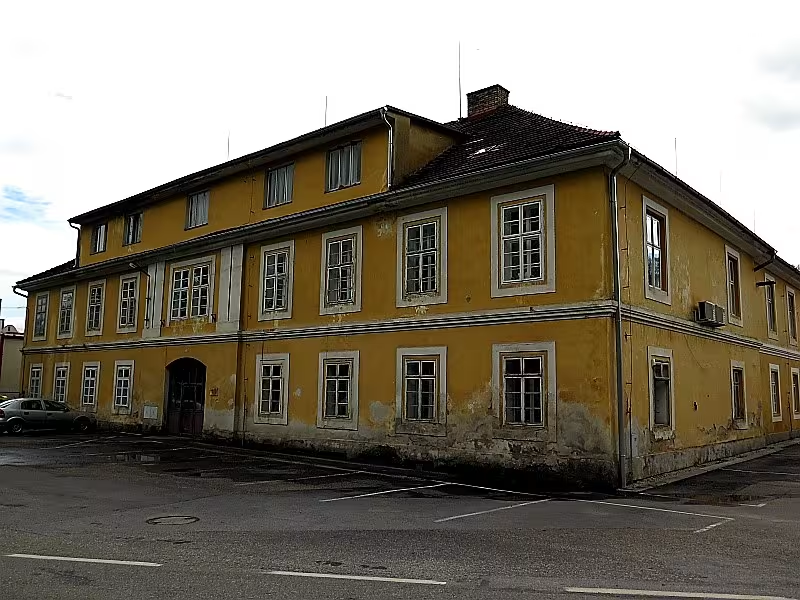
Adolfská železárna, located in the village of Holubov in the district of Český Krumlov, South Bohemia, is a technical monument from the 2nd half of the 19th century. This set of buildings of former ironworks is protected as a cultural monument of the Czech Republic and represents an important example of period industrial development. Its historical value lies in well-preserved technical elements, which testify to the industrial spirit of this era.
Established in the 2nd half of the 19th century as part of the development of regional industry, Adolfská železárna was created during the period of intense industrialization in the Czech Republic. Many entrepreneurs used rich natural resources and technological progress back then. Although their specific history is limited to the data available, their existence highlights the importance of industrial innovation in this area.
Architecturally Adolfská železárna shows elements typical of the modern age. Although not documented in detail, preserved period elements on the facade of buildings indicate a focus on functionality and durability. These elements contribute to their historical importance as technical monuments.
Information on specific owners or administrators is limited. However, as a typical industrial business of the 19th century, it was probably managed by private investors or family companies, which was common for this period. This plant became an important part of the local economy and its fates probably reflected wider economic trends at that time.
Adolfská železárna is important not only by its history but also by representing technological progress and the industrial tradition of the region. Its protection as a cultural monument ensures the preservation of this heritage for future generations.
Today Adolfská železárna is accessible to visitors who are interested in the industrial heritage and history of the region. Its protection as a cultural monument ensures the preservation of this heritage for future generations. The visit offers a unique view of the industrial past and contributes to understanding the historical development of the region.
Adolfská železárna is not only a monument, but also a witness of the technological changes that shaped the current society. Its visit offers a valuable insight into the industrial era and recalls the importance of preserving historical monuments for future generations.
Then and now
Drag the slider to compare how the landmark may have looked when it was built with the view today.
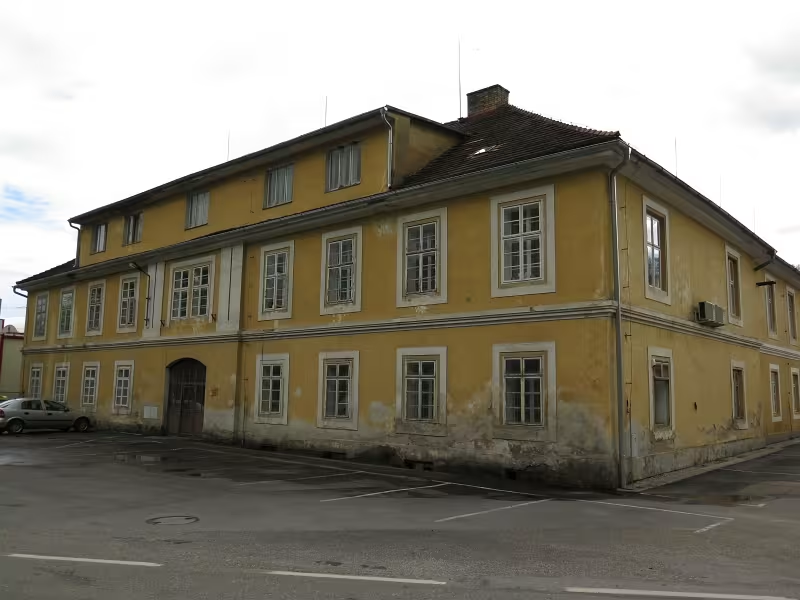

The historical appearance on the left is an AI-generated visualisation and serves as inspiration only.
Historical milestones
- about 1850
- The establishment of the Adolf Ironworks as part of regional industrialization.
- 2nd half of the 19th century
- Adolfská železárna was created during the period of intensive industrial development in the Czech Republic.
- 2nd half of the 19th century
- Adolfská železárna was a protected cultural monument, which underlines its historical and technological importance.
Guide
This guide is narrated by a synthetic voice generated by artificial intelligence.
Show guide text
This text was created by artificial intelligence and has not been editorially reviewed. It may contain inaccuracies.
Welcome to the village Holubov. Right now, at this quiet moment, you're facing something that was probably once a very noisy, thermal and constantly moving center of this neighborhood. In front of your eyes is a set of objects that together form the Adolf hardware factory. Feel this atmosphere. You may feel the weight of history floating in this space, and even though it's quiet now, these buildings carry the echo of ancient activity. You are standing in front of a technical monument which is recognised and protected as a cultural monument of the Czech Republic. This means that what you are seeing right now is not just ordinary construction figures, but a valuable piece of our national heritage that has its weight and significance.
Now let's think a little bit more about how this place came to be. Although we have not been able to trace the exact date on which the first foundations were laid, nor the exact name of the person who decided that this is where the hardware plant will be created, we must acknowledge its profound importance to this region. This hardware factory was part of the wider industrial history of our territory. It was built with a clear and strong purpose - to process metals, turn raw materials into useful products and drive the economic life of South Bohemia. Although we do not know the exact time frame for her rise and fall, we can see that these objects were once the heart of work and human effort. They were a symbol of the region's efforts to progress and develop.
Now pay attention to what you see right in front of you. Check the range of this object file. Although we do not know the name of the particular architect who designed these buildings, in their form you can perceive their functional character. In technical monuments, architecture is always subject to production and practical needs. Notice how the individual parts of this complex are interconnected. Look at the shapes of the buildings and how their lines are drawn against the sky. Feel the extent. Each object in this file had its task, each wall and each area had its meaning for the overall operation of the hardware plant. Take a look at the structure of these structures and try to understand in your mind how these spaces had to be organized in order to make difficult work with iron. Feel how these buildings fit into the region of South Bohemia and how their presence changes the appearance of the whole area.
Often when people look at places like this, they ask who were the people who spent their hours here every day. Who were the owners who invested their energy and resources in this place? Who were the workers who did their hard work here in the heat and dust? Unfortunately, we haven't been able to track the names of these personalities in the records. They're lost in the fog of time, as if history deliberately hid them from our eyes. But even if we don't know their names, their presence is still there. Every movement in these spaces, every road between buildings, was once filled with human life, fatigue, pride, and hope. Imagine the sounds, the voices, the steps that were being taken here at the time of the biggest boom. Although these rooms are now quiet, their tracks are engraved in these walls and throughout the layout of this place.
And that is where one of the greatest mysteries and the greatest attractions of this place lie. How is it possible that such a significant hub of industrial activity remains unclear in many respects? Why don't we know the exact chronology of its creation? Why don't we know the faces of those who built this place? The unknown creates a strange, almost magical charge around the Adolf iron factory. It's not just a place we're looking at, it's a place that makes us think about the permeability of human life and what really remains of us. Only these buildings remain, which, after years and centuries, still stand and wait for someone to understand them again and appreciate their importance. This ambiguity forces us to our imagination and to a deeper perception of history, which is not just about data, but about feelings and atmosphere.
Now I won't hold you any longer. I suggest you continue your search and slowly walk past these objects. Feel their silence and try to build a picture in your mind of the time when everything lived here and when the future was created here with iron and fire. Look at other parts of this file and see how the view of these structures changes depending on the angle you are looking at. Thank you for choosing to visit this historic monument and devote your time to its recognition. We wish you a pleasant further discovery of this interesting and mysterious corner of our country. Goodbye.
For kids
Adolfská železárna was a huge plant in the last century where steel products were produced. It was one of the largest and most modern ironworks in Europe.
Imagine a huge complex with high walls, where hundreds of people worked. It was like a city in the middle of town!
The railway plant was built in 1880 and worked until 1991. In its existence, it produced billions of tons of steel.
Interestingly, not only steel profiles were produced in the Adolf iron factory, but also parts for cars.
Businesses nearby
Do you run a restaurant, accommodation, shop, museum, rental, wellness or other visitor service near this monument? Show yourself directly to the people heading to it — this is how they will see you in the app and on the web:
Events nearby
Zdroj akcí: otevřená data měst a obcí ČR (Národní katalog otevřených dat) a kalendář akcí Národního památkového ústavu.
Nearby
➜ Zobrazit interaktivní přehled okolí – restaurace, ubytování, půjčovny a další místa v okruhu 15 km.
Data: OpenStreetMap contributors, okruh 15 km.
🏰 Historické památky
- keltske opidum (2.0 km)
- Demarkační linie (2.6 km)
- W. Freddy (4.0 km)
- Modrý obrázek (5.6 km)
- U Svaté Trojice (6.8 km)
- Kotek (6.8 km)
- Muzeum marionet (9.2 km – Latrán 6)
- nedostavěný kláštěr Kuklov (11.5 km)
🍽️ Restaurace a stravování
- Horská chata Kleť (4.6 km)
- Pod Skálou (8.3 km)
- Divadelní kavárna Kafe - forbína (9.4 km – Horní 2)
- Bistro Měšťák (9.4 km – náměstí Svornosti 13)
- Barbakán (9.4 km – Kaplická 26)
- Zlatý Anděl (9.4 km – náměstí Svornosti 10)
- Restaurace U Města Krumlova (12.0 km – Antala Staška 1103/1)
- Hostinec Na Spojce (12.2 km – Lidická tř. 1009/162)
🏨 Ubytování
- Pension Pod Skalkou (8.8 km – Pod Skalkou 536)
- Hostel 99 (8.9 km – Věžní 99)
- Pension U Zámku (9.2 km – Zámecké schody 9)
- Travel Hostel (9.3 km – Soukenická 43)
- U Malého Vítka (9.3 km)
- Leonardo II (9.3 km – Soukenická 41)
- Hotel Růže (9.4 km)
- Apartmá Horní 147 (9.4 km – Horní 147)
🚲 Půjčovny a sport
- Sportovní areál Cihelna (2.8 km)
- Inge (5.6 km)
- Inge Boršov (8.7 km)
- Koupaliště (9.5 km)
- Potápka (9.9 km – U Sáňkařské dráhy 408)
- SK Vltava Český Krumlov (10.4 km – 5. května)
- NAVLTAVU.CZ (10.6 km – Krátká 346)
- Půjčovna lodí a raftů Vydra;Vydra (11.0 km – U Vlaštovičníku 23)
🥾 Turistika a příroda
- Kluk (3.3 km)
- Slavče (3.8 km)
- Kleť (4.6 km)
- Černice (7.3 km)
- Kulichův kříž (7.9 km)
- Chabičovice (bus) (9.1 km)
- Infocentrum Český Krumlov (9.4 km – náměstí Svornosti 2)
- rybník Sebevrah (10.4 km)
Visualizations and artistic views


The visualisations are generated by artificial intelligence and serve as inspiration.
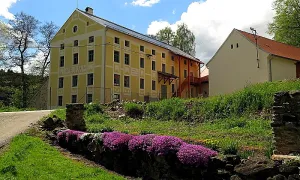
Photos from the area
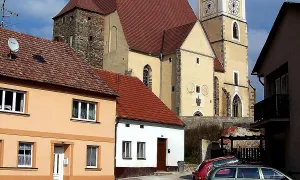
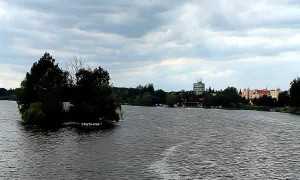
Real photos taken near the monument


Zdroj a licence jsou uvedeny u každého snímku.
Tips from visitors
No tips yet. Be the first!
Log in and add your tip.
Sources and literature
Photos: Sovicka169 / CC BY-SA 4.0 — Wikimedia Commons. The author and licence also appear when you hover over the image.
Location on the map


Příběhy a pověsti
Legendy, pověsti a příběhy spjaté s touto památkou
Fotografie návštěvníků
Zatím žádné fotografie. Buďte první, kdo přidá fotografii z návštěvy!
Log in a přidejte svou fotografii nebo hodnoťte.
Za ověřenou návštěvu v aplikaci získáte víc bodů — poznáme podle GPS, že jste na místě.
Reviews and comments