






Augustiniánský klášter v Táboře Monastery
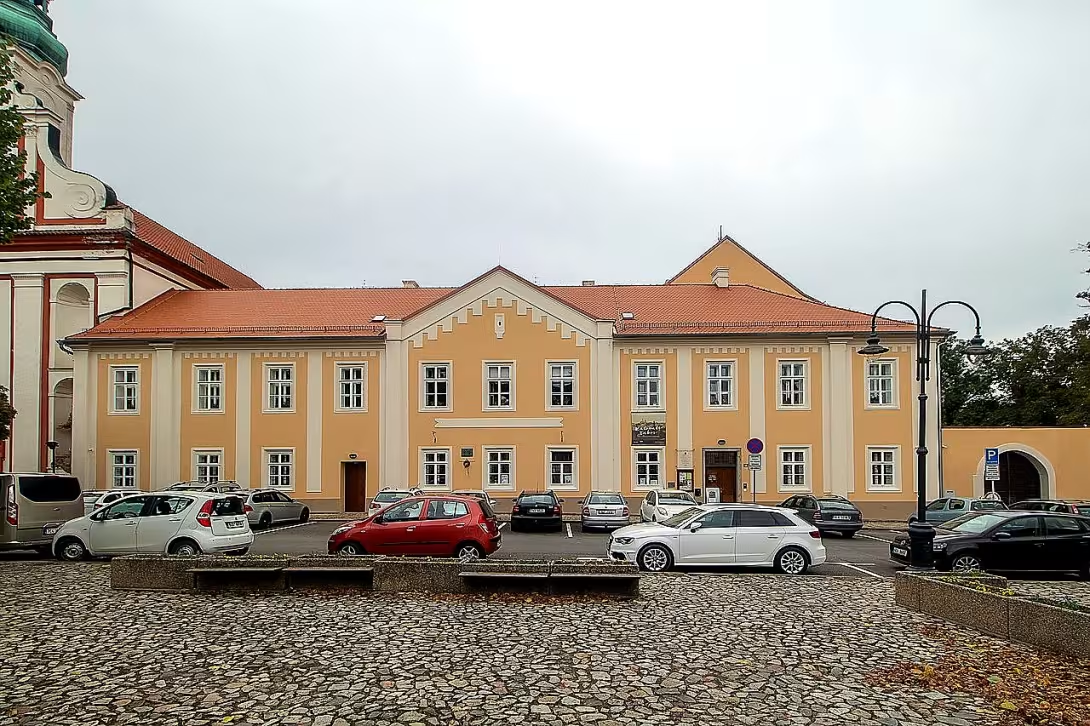
The Augustinian Monastery in Tábor is a remarkable example of early Baroque architecture located on Mikuláše z Husi Square in South Bohemian Tábor. Constructed between 1642 and 1666 by Italian architect Antonín de Alfieri, the monastery originally served as a religious institution for Augustinians sent to spread education following the Thirty Years' War. Today, it houses the Hussite Museum and stands as a testament to its historical significance in Czech cultural heritage.
The foundation of the Augustinian Monastery was laid in 1642 on the site of older buildings destroyed during the Swedish siege in the Thirty Years' War. Dedicated to the Nativity of the Virgin Mary, it was established by barefoot Augustinians tasked with promoting education and reasserting Catholic influence in Tábor, a region affected by Protestant movements. Antonín de Alfieri designed the structure in a challenging Italian Baroque style, completing it in 1666.
Architecturally, the monastery is notable for its deviation from traditional church orientation due to its location on Tábor’s western walls. Construction began with a small chapel near what is now the courthouse, later expanding into a comprehensive complex including a crypt under the church. This unique westward alignment and intricate Baroque elements reflect Alfieri's architectural vision.
Ownership of the monastery changed dramatically over time. Initially held by the Augustinians from 1642 until their expulsion in 1785, it subsequently served various functions, notably as a prison after the dissolution of monastic orders. In recent years, the site has been repurposed to house the Hussite Museum, marking another significant chapter in its history.
Throughout its existence, the monastery has witnessed several key events and curiosities. After serving religious purposes, it became a prison post-1785, reflecting broader societal changes during that period. In 2019, the site underwent comprehensive reconstruction, ensuring its preservation for future generations. The unique orientation of the church and its historical role as both a place of worship and incarceration add layers to its storied past.
Today, the Augustinian Monastery is accessible to visitors who wish to explore its rich history and architectural beauty. As part of the Hussite Museum, it offers insights into the cultural and religious transformations that have shaped Tábor over centuries. Its significance as a historical monument makes it an essential visit for those interested in Czech heritage, providing a tangible connection to the past while celebrating its enduring legacy.
Then and now
Drag the slider to compare how the landmark may have looked when it was built with the view today.
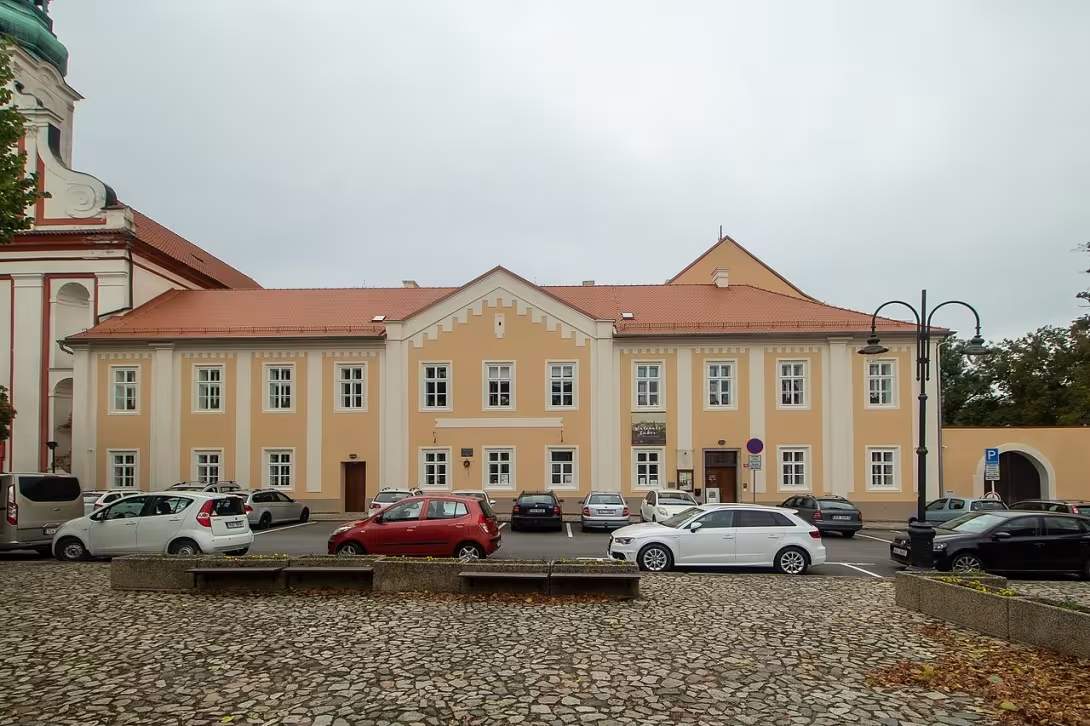

The historical appearance on the left is an AI-generated visualisation and serves as inspiration only.
Historical milestones
- 1642
- Založení Augustiniánského kláštera v Táboře.
- 1666
- Dokončení stavby kláštera Antonínem de Alfierim.
- 1785
- Vyloučení Augustiniánů a přeměna kláštera na věznici.
- 2019
- Komplexní rekonstrukce klášterního areálu.
Architectural development
The monastery was constructed between 1642 and 1666, designed by Antonín de Alfieri in a challenging Italian Baroque style. The orientation of the church deviates from traditional eastward alignment due to its location on the city's western walls. Initially built as a small chapel near what is now the courthouse, it expanded over time with significant additions like the crypt under the church.
Historical events
Founded in 1642 as part of efforts to re-Catholicize Tábor following its devastation during the Thirty Years' War.
Served as a prison after the dissolution of monastic orders in 1785.
Underwent comprehensive reconstruction completed in 2019.
Owners
Initially owned by the barefoot Augustinians from 1642 until their expulsion in 1785, after which it served various functions including a prison. In recent years, it has housed the Husitské muzea (Hussite Museum).
Points of interest
- The Augustinian Monastery's church is uniquely oriented towards the west due to its location on Tábor’s western walls, deviating from traditional eastward-facing churches.
- Antonín de Alfieri, an Italian architect, designed the monastery in a challenging Baroque style, incorporating intricate elements uncommon for religious buildings of that era in Czech lands.
- After being expelled by Emperor Joseph II in 1785, the monastery served as a prison, reflecting the broader secularization and repurposing trends during the dissolution of monastic orders across Europe.
- The site underwent comprehensive reconstruction in 2019 to preserve its architectural integrity and historical significance for future generations, highlighting ongoing efforts to maintain Czech cultural heritage.
- Despite being established by Catholic Augustinians to counter Protestant influences, today it houses the Hussite Museum, celebrating a region historically known for its Hussite movements.
Guide
This guide is narrated by a synthetic voice generated by artificial intelligence.
Show guide text
This text was created by artificial intelligence and has not been editorially reviewed. It may contain inaccuracies.
Welcome to the historic Augustiniánský klášter in Tábor—a remarkable testament to early Baroque architecture and a site steeped in history. As you stand here on Mikuláše z Husi Square, take a moment to absorb your surroundings. The grandeur of this structure unfolds before you, its intricate façade whispering tales from centuries past.
The story of this monastery begins in 1642 when it was founded by the barefoot Augustinians. These devout monks sought a new home here in Tábor, a city known for its rich history and cultural significance. The construction spanned over two decades, culminating in 1666 with the completion of the monastery under the skilled hands of Italian architect Antonín de Alfieri. His vision brought to life an architectural masterpiece that defied conventional norms.
As you gaze upon the building now, notice how it stands out from traditional monastic architecture. The church within this complex is uniquely oriented towards the west, a deliberate choice influenced by its position on Tábor’s western walls. This deviation from the customary eastward-facing churches offers a fascinating glimpse into the thoughtful design considerations of its time.
The Baroque style employed by Alfieri is evident in the monastery's intricate details and grand scale. The façade features elaborate ornamentation, inviting you to explore each curve and contour. Inside, the church exudes an atmosphere of solemnity and splendor, with every element meticulously crafted to inspire awe and reverence.
Throughout its history, this site has witnessed significant transformations. In 1785, a pivotal change occurred when the Augustinians were expelled, and the monastery was repurposed into a prison. This shift marked a new chapter in its storied existence. Fast forward to 2019, and you'll find that a comprehensive reconstruction revitalized this historic complex, breathing new life into its ancient walls.
One intriguing aspect of this site is the story behind its architectural orientation—a testament to Alfieri's innovative spirit. As you wander through the grounds, let your imagination roam free, pondering how these decisions were made in an era when tradition often dictated design.
As we conclude our journey through the Augustiniánský klášter, I invite you to explore further and discover more about its rich history and architectural beauty. Whether it's delving into the stories of those who walked these halls or simply soaking in the serene atmosphere, there is much to uncover here in Tábor.
Thank you for joining me on this exploration. May your visit inspire a deeper appreciation for the artistry and history that this remarkable site embodies. Safe travels as you continue your journey through the wonders of Tábor.
Tips for visitors
The best time to visit the Augustinian Monastery in Tábor is during late spring or early autumn. During these seasons, you can enjoy pleasant weather that enhances your experience of exploring both the monastery and its surroundings without the crowds typical of summer. The natural light at this time also provides excellent conditions for photography, capturing the intricate details of the Baroque architecture.
To ensure smooth travel plans, it's advisable to check current routes and schedules online before your visit.
When visiting the monastery, consider bringing comfortable walking shoes as there are several steps and uneven surfaces within the site. A camera or smartphone is recommended for capturing the stunning architectural details and serene atmosphere of the church. Additionally, carrying a light jacket can be useful, especially if you plan to stay until later in the day when temperatures might drop.
For photography enthusiasts, some of the best spots include the interior of the Church of the Nativity of the Virgin Mary where the morning or late afternoon light creates beautiful shadows and highlights on the Baroque elements. The exterior gardens also offer picturesque views that are ideal for capturing the monastery's historical ambiance.
In the vicinity of Tábor, within a 30-minute drive, you can visit several interesting sites such as the historic center of Tábor itself, which is rich with medieval architecture and cultural history. For nature lovers, the nearby landscape offers scenic trails perfect for a short hike or bike ride, providing an excellent opportunity to explore South Bohemia's natural beauty.
Frequently asked questions
Can the monument be visited?
Religious buildings are usually open mainly during services; at other times a visit is normally arranged with the parish or the operator. We have not verified specific times.
Where is the monument?
Location: nám. Mikuláše z Husi 44/5, Tábor, Jihočeský kraj. The map on this page shows the exact spot.
Why is the monument protected?
It is listed in the Central List of Cultural Monuments of the Czech Republic as a cultural monument (register no. 40580/3-4619).
Businesses nearby
Do you run a restaurant, accommodation, shop, museum, rental, wellness or other visitor service near this monument? Show yourself directly to the people heading to it — this is how they will see you in the app and on the web:
Nearby
Located in Tábor, the Augustinian Monastery sits near Mikuláše z Husi Square. The area is rich with historical sites and natural features typical of South Bohemia.
Accommodation nearby
Themed route
Tematická výletní trasa: Augustiniánský klášter v Táboře
1. Augustiniánský klášter v Táboře (Klášter) Začněte svou cestu u samotného srdce historie města, Augustiniánského kláštera. Tento klášterní komplex je jedním z nejvýznamnějších gotických staveb v České republice a nabízí nádhernou architekturu, která odráží bohatou historii Tábora. Navštivte interiér s jeho krásnými freskami a prozkoumejte klášterní knihovnu pro pohled na staré rukopisy.
2. Náměstí Mikuláše z Husi Pokračujte do okolního náměstí, Náměstí Mikuláše z Husi, které je jen krátkou chůzí od kláštera. Toto místo je nejen centrem místního života, ale také památným místem v duchu reformátora Jana Husa. Náměstí nabízí pohled na historickou architekturu a je ideálním místem pro odpočinek a užití sebe sama, zatímco si připomínáte významné události minulosti.
3. Kostel svatého Jiljí Od náměstí Mikuláše z Husi jen pár minut chůze dovede k Kostelu svatého Jiljí, dalšímu historickému dědictví v Táboře. Tento kostel je známý svou gotickou architekturou a bohatou historií spojenou s husitskými válkami. Jeho interiér obsahuje fascinující umělecké prvky, které z něj činí nezbytným prohlédnout si cíl.
4. Kostel svatého Jakuba Konečnou zastávkou na této trase je Kostel svatého Jakuba, který se nachází nedaleko od kostela svatého Jiljí. Tento kostel nabízí jedinečné gotické prvky a je známý svou historií spojenou s husitskými tradicemi. Je to skvělá příležitost prozkoumat další aspekt bohaté duchovní historie Tábora.
Tato trasa vás provede klasickým místem historie a architektury v Táboře, nabízejíc pohled na jeho bohatou minulost a kulturní dědictví.
Seasonal recommendations
Spring: The arrival of spring breathes new life into the Augustinian Monastery in Tábor, with blooming flowers and lush greenery enhancing its historical charm. The soft morning light filters through budding trees, creating a serene atmosphere perfect for exploring the monastery's intricate architecture and tranquil gardens. Visitors should take advantage of the mild weather by wearing comfortable layers that can be adjusted as temperatures fluctuate throughout the day. While the site is less crowded than in summer, arriving early allows you to enjoy the peaceful ambiance before more visitors arrive.
Summer: During the height of summer, the Augustinian Monastery offers a vibrant and lively experience under the bright sun. The lush gardens are at their peak, with colorful blooms and verdant foliage providing a picturesque backdrop for photos. Summer is also when the monastery experiences its highest visitor numbers, so it's advisable to arrive early in the morning or later in the afternoon to avoid crowds. Dressing in light, breathable clothing and wearing comfortable shoes will help you navigate the site comfortably, while staying hydrated throughout your visit.
Autumn: Autumn transforms the Augustinian Monastery into a tapestry of warm colors, with golden leaves and crisp air creating an enchanting atmosphere. This season offers excellent lighting for photography, as the late afternoon sun casts a soft glow over the historic structures. While visitor numbers start to decline compared to summer, it's still wise to plan your visit during weekdays or off-peak hours for a more relaxed experience. Layered clothing is recommended to accommodate the cooler temperatures and unpredictable weather.
Winter: The winter months envelop the Augustinian Monastery in a quiet, almost mystical atmosphere as snow gently blankets its historic buildings. Shorter days mean earlier closures, so planning your visit during daylight hours is essential. Winter's chill necessitates warm clothing, including coats, hats, gloves, and sturdy boots to ensure comfort while exploring the site. Despite fewer visitors, the serene beauty of the monastery in winter offers a unique opportunity for reflection and appreciation of its architectural splendor.
Visualizations and artistic views


The visualisations are generated by artificial intelligence and serve as inspiration.
Photos from the area
Real photos taken near the monument


Zdroj a licence jsou uvedeny u každého snímku.
Atmosphere of the place
This atmospheric visualisation of the place and period was generated by artificial intelligence. It is not real footage of the location.
Tips from visitors
No tips yet. Be the first!
Log in and add your tip.
Sources and literature
Photos: VitVit / CC BY-SA 4.0 — Wikimedia Commons. The author and licence also appear when you hover over the image.
Faktickým podkladem tohoto textu byl článek na Wikipedii, jehož autory jsou přispěvatelé Wikipedie. Článek je dostupný pod licencí CC BY-SA 4.0.
Location on the map


Příběhy a pověsti
Legendy, pověsti a příběhy spjaté s touto památkou

Fotografie návštěvníků
Zatím žádné fotografie. Buďte první, kdo přidá fotografii z návštěvy!
Log in a přidejte svou fotografii nebo hodnoťte.
Za ověřenou návštěvu v aplikaci získáte víc bodů — poznáme podle GPS, že jste na místě.
Reviews and comments