



Biskupská mincovna Mint
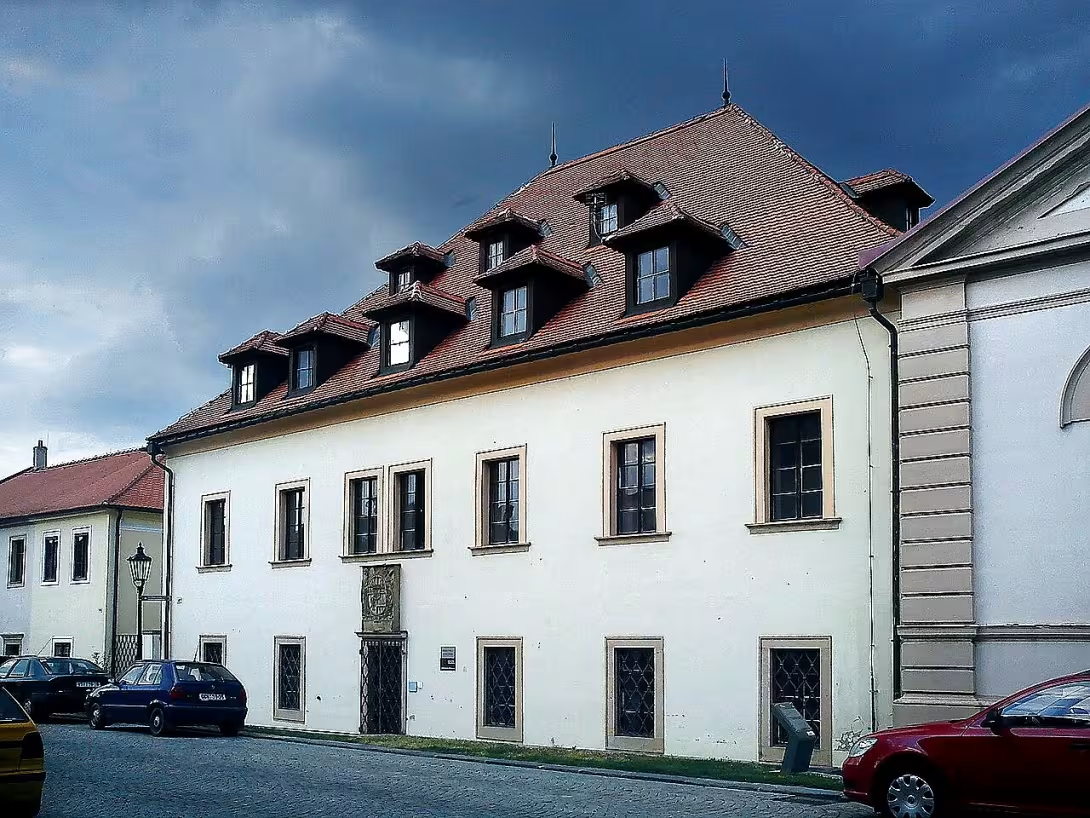
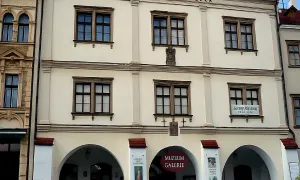
Biskupská mincovna is a historic Baroque building in Kroměříži, on the street Na Sladovně. It was founded in 1665 by Bishop Charles II of Liechtenstein, the Castelkorn. For nearly a hundred years, it served as a centre of gold, silver and copper coins, as well as commemorative medals for Olomouc bishops.
Olomouc bishops had the right to strike their own coins in the early Middle Ages; the privilege was linked to the Moravian Castle of Weirdo. This right is evidenced by the 1144 and 1146-1147 documents issued by Bishop Henry Zdik. In 1608, Emperor Rudolf II restored the right of the stamping in full at the request of Bishop František of Ditrichstein. From 1614 the grosh, tolary and ducats were struck; Cardinal Dietrichstein had 17 coins and six medals produced between 1608 and 1636.
The building itself was built only in 1665 in the Sladovnický suburb behind the Milín Gate. The location was chosen because there were economic facilities of the castle and malting rooms that were lying outside the city because of the open fire. Above the entrance hanging a bishop's coat of arms with a sign confirming that the building was founded and built by Karel Count of Liechtenstein, Bishop of Olomouc, in 1665.
Architecturally, it is a massive storey baroque building, which is adjacent to a waterworks with a yard in the back. It underwent a radical reconstruction in the late 1980s and 1990s and in 1998.
The first coins were struck in 1666. Although the building burned down in 1668, it was quickly repaired and at the same time there were gold ducats printed with a portrait of the bishop, silver and copper coins. The first gold medal was made in 1669. Nineteen kinds of coins were produced for Bishop Lichtenstein. The products were valid throughout the Marking of Moravian and had to match the weight and grain of royal coins.
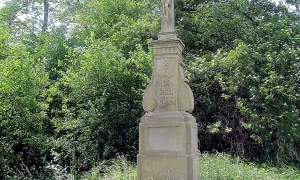
The operation of the Mint required a number of experts: smelters, metal founders, engravers, raiders, locksmiths, coin-strippers, scribes, miners, labs and controllers. The entire operation was run by the highest official - the mincmaster - and his deputy, the mint vardain. Shimon Ondrej Sinapi, who used the SAS brand, was an important figure; His memory is in Kroměříži dedicated two Baroque sculptures from 1696, created by sculptor Jean Baptiste Dusart.
Marking activity in Kroměříži ended in the middle of the 18th century. The last coin was a tolar embossed in 1756 for Bishop Ferdinand Julius Troyer. The very last strike was the intranisation medal of Bishop Leopold II of Egkhu from 1759. Empress Marie Teresa stopped the coin law in Kroměříži on September 15, 1759 and handed over the device to the Central Monetary Office in Vienna.
Today, the explosions of Olomouc bishops are part of the collection in the Archbishop's castle. The Mint Building in the District of Kroměříž, Zlínský kraj, remains a reminder of the time when this site was an important craft and political centre.
The monument presents a unique witness to the baroque blossom and economic privileges of church power. The visit allows a better understanding of the history of monetary systems and the level of the Mint Craft in Moravia.
Then and now
Drag the slider to compare how the landmark may have looked when it was built with the view today.
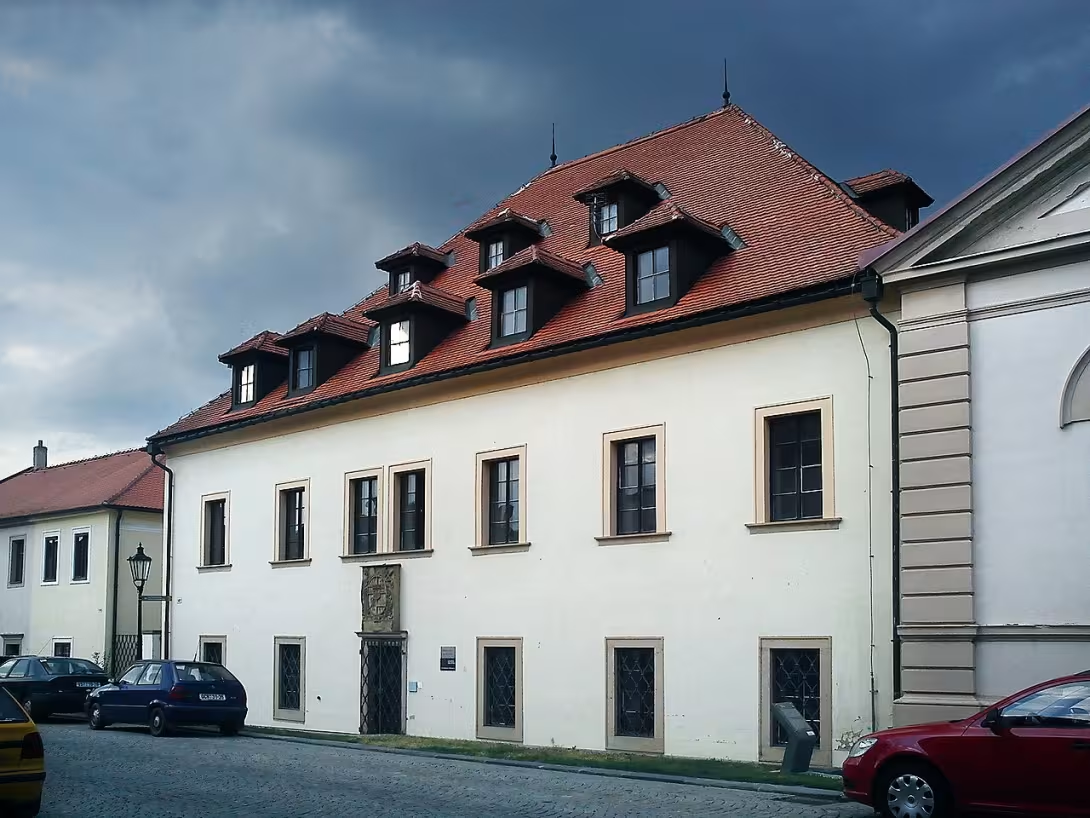

The historical appearance on the left is an AI-generated visualisation and serves as inspiration only.
Historical milestones
- 1665
- The establishment and construction of a new mint by Bishop Karl II of Liechtenstein.
- 1668
- The building fire and its subsequent repair.
- 1669
- Making the first gold medal.
- 1759
- Stopping the coin right and handing over the equipment to the Central Monetary Office in Vienna.
Architectural development
It is a massive storey Baroque building, which is adjacent to the waterworks with a yard. The construction underwent a radical reconstruction at the turn of the 1980s and 1990s and in 1998.
Historical events
In 1668, the building burned down, but it was quickly repaired. On September 15, 1759 empress Marie Terezie stopped coin law in Kroměříži.
Owners
Olomouc bishops
Points of interest
- The building was founded in 1665 by Bishop Karel II. z Lichtenštejna-Kastelkornu. - It served as a center of gold, silver and copper coins and commemorative medals. It was built out of town because there were malts nearby with open fire. - Although the object burned down in 1668, it was quickly repaired and the coins were embossed. - The stamping activity ended in 1759 when Empress Marie Terezie stopped the coin law.
Guide
This guide is narrated by a synthetic voice generated by artificial intelligence.
Show guide text
This text was created by artificial intelligence and has not been editorially reviewed. It may contain inaccuracies.
Welcome to Kroměříži. You're standing right in front of a building that, in its greatest glory, beat the beat of a metal rake and hot ovens. In front of you is Biskupská mincovna, a place where rare metals have turned into tender and commemorative objects. Now, if you look at this building, look at it as a symbol of power, wealth and craftsmanship that flourished in this city centuries ago. This building is not just an ordinary house, but a monument to the time when the bishops possessed the right, which today belongs only to the state, that is, the right to raise their own coins.
Let us now move back many years in time to the seventeenth century. It was a year of six hundred and sixty-five when Bishop Charles the second of Liechtenstein decided that Kroměříži would create its own mint. Imagine the atmosphere back then. The bishop was not only a spiritual leader, but also an important political player. By setting up this centre, he wanted to strengthen his position and ensure effective money management for the Olomouc bishops. At that time, the mint was seen as the highlight of technical progress. It wasn't just a place where they beat metal, it was a real center of science and art.
Pay attention now to the construction itself and its location. If you look around, you might wonder why this building was built here. The answer is very practical and dramatic. At that time, there were malts nearby where the open fire was used. To avoid danger, it was necessary to build a mint outside the main city centre. Although the construction was placed with balance, fate was cruel to it. Only three years after its inception, in the year six hundred and sixty-eight, building K hit a devastating fire. Imagine the chaos, the flames rising to heaven and the fear of precious machines. However, Bishop Charles the other did not let his vision be destroyed. The building was repaired very quickly and its operation continued in full force.
Today, when you are looking at the facade and the overall shape of the object, feel the spirit of the Baroque era. Although we do not know the names of the particular architects who drew the plans, it is clear that the building should emit stability and dignity. Notice the general look that was meant to inspire respect for everyone who came here. Inside these walls, a fascinating process took place. The Mint was not only a piece of work, but a real precipitate at the top of the trade back then. Imagine a local atmosphere full of noise, heat and the smell of fused metal. In one part of the building, the taqers were working to clean gold and silver in the heat of the kiln, while in another part they were creating fine patterns in the stamps in a quiet concentration. These rhythms were those who breathed life into coins and made them small works of art.
The key personalities we associate with this place are the bishops. Apart from the founder of Karl the second of Liechtenstein-Castelkorn, other important men and women left their trail. Among them was František z Ditrichštejna. It is interesting how the fates of local bishops intertwined with Europe's great politics in this area. The coins that were created here were not just local currency. They were valid throughout the wide area and served as confirmation of the power and stability of the bishop. There are also names like Rudolf the Second or Marie Terezie in history, which shows how deeply this institution was involved in the administration of the empire and church structures.
Now I want to impress you with one special feature. In the year six hundred and sixty-nine, just after the repair of the fire, they made the first gold medal here. The medals were not just money, they served as monuments of important events or persons. Imagine the precise details that had to be carved into hard metal at a time when there were no modern machines. Every detail was the result of thousands of hours of work and incredible patience. These medals are proof that Kroměříž was at the time a real cultural and craft centre.
An interesting aspect is how long this institution has worked. For nearly a hundred years, the mint was the heart of the bishopric financial system. But everything changed in the year seven hundred and fifty. At that time, the coin law was stopped. It was a decision that meant the end of an era. The entire facility and its equipment were handed over to the Central Monetary Office in Vienna. Imagine the sense of craftsmen who worked here for generations when suddenly they had to hand over their machines and knowledge to the capital. This act ended when Kroměříž beat its own coins.
If you look at the building again, you don't just see it as an old stone house. You see in it a place where high spiritual piety met with hard realities of money and metal. You see in it a place that survived fire and time. Feel the silence that is around today, and try to hear in it the echoes of ancient hammers and calls made by the tugs who made history here centuries ago.
This building is just one of many pieces of the puzzle made up of beautiful Kroměříž. It is proof that the city was much more than the seat of the bishops, but also the industrial and technical centre of its time. It is fascinating to think that coins embossed here, in these areas, have traveled from hand to hand across the country and perhaps beyond its borders, carrying the name of this city.
Thank you for stopping by the Bishop Mint with me. I hope you're interested in this short trip to the world of gold and silver coins. Now I invite you to look around in peace, to see the atmosphere of this historic place and then continue to discover other hidden treasures of Kroměříže. I wish you a pleasant walk and many more observations. Goodbye.
Tips for visitors
The best time to visit is late spring or autumn, when the colors of surrounding nature complement the appearance of historical walls. You can easily reach Kroměříže by car or public transport; Please check the specific transport options and the location of the vehicle to be postponed in the maps.
To visit we recommend to wear comfortable shoes suitable for the field because it is a ruin. For photo lovers, the best places are the angles that capture the Baroque elements of the building in the morning or evening light, when the shadows are longest and the details of the walls are the most prominent.
During your stay in the surrounding area, visit the Archbishop's Castle in Kroměříži and the Mlyn Gate, which is nearby. Families with children can use space to tell stories about how gold and silver coins were once rolled.
Frequently asked questions
Can the monument be visited?
This is a ruin. Such sites are often freely accessible, but some can only be visited with a guide or are closed for safety reasons. We have not verified the current situation – take care and respect any restrictions.
Where is the monument?
Location: Na Sladovnách 1491/4, Kroměříž, Zlínský kraj. The map on this page shows the exact spot.
Why is the monument protected?
It is listed in the Central List of Cultural Monuments of the Czech Republic as a cultural monument (register no. 16319/7-6042).
For kids
Imagine going back to when Brno was a big and important city. It was the era when gold, silver and other metals rolled in the Czech Republic. And right here, on the bank of the Svratka River, the castle Biskupská mincovna - one of the most important Mint centers in Bohemia.
It was like a small town where artisans, goldsmiths and metal grounders lived. They created their own community here, which was known for its rich goldsmiths tradition. Gold, silver and other metals were rolled into the castle, which were then cast into coins.
Businesses nearby
Do you run a restaurant, accommodation, shop, museum, rental, wellness or other visitor service near this monument? Show yourself directly to the people heading to it — this is how they will see you in the app and on the web:
Events nearby
Zdroj akcí: otevřená data měst a obcí ČR (Národní katalog otevřených dat) a kalendář akcí Národního památkového ústavu.
Nearby
Arcibiskupský zámek v Kroměříži, Mlýnská brána.
Accommodation nearby
Trips and activities nearby
Guided tours, tickets and activities nearby from GetYourGuide
Affiliate link: if you buy from the partner, we may receive a commission. The price for you does not change.
Search tours and activities →Themed route
1. Mill gate Type: Gate. Why: This construction represents an interesting historical point at the beginning of the journey.
Biskupská mincovna Type: Historical building. Why: It's the main objective of the tour, which suggests an ancient raid.
3. Archbishop's Castle in Kroměříži Type: Castle. Why: A magnificent complex that forms an integral part of the historical part of the city.
Seasonal recommendations
In spring, the area of the ruin awakens into life and the young green slowly covers the old walls. The light is fine and clear in this period, which helps to observe the details in the stone. It is recommended that footwear with fixed soles, because the terrain around the object can be wet and muddy after defrosting. The best place to visit is in the morning when the air is the cleanest.
Summer brings a sharp sun and with it a shadow game in the space of the former building. Nature is in full bloom and surrounding trees provide the desired shade. Due to the high temperatures, it is advisable to choose light, breathable clothes and take plenty of water with you. The ideal time for visiting is early morning or late afternoon to avoid the greatest heat.
The autumn will turn the landscape into gold and brown tones that match the color of historical walls. The atmosphere is melancholy and calm, typical of the ending growing season. It is advisable to dress in layers so that the visitor is not surprised by the colder wind. It is recommended to come in the low sun to highlight the texture of the remains of the building.
In winter, the ruin is strictly and unbalanced, especially if a layer of snow covers it. The light is gray and the days are short, giving the place a mysterious touch. Hot and waterproof clothes as well as high-quality winter shoes are essential to prevent slipping on the frozen surface. The most suitable visit is at noon when the maximum daylight is available.
Visualizations and artistic views


The visualisations are generated by artificial intelligence and serve as inspiration.
Photos from the area
Real photos taken near the monument

Zdroj a licence jsou uvedeny u každého snímku.
View from the area
This animation was generated by artificial intelligence from a real photograph of the surroundings. The motion and details are not real footage of the location.
Atmosphere of the place
This atmospheric visualisation of the place and period was generated by artificial intelligence. It is not real footage of the location.
Tips from visitors
No tips yet. Be the first!
Log in and add your tip.
Sources and literature
Photos: Czeva / CC BY-SA 3.0 — Wikimedia Commons. The author and licence also appear when you hover over the image.
Faktickým podkladem tohoto textu byl článek na Wikipedii, jehož autory jsou přispěvatelé Wikipedie. Článek je dostupný pod licencí CC BY-SA 4.0.
Location on the map

Příběhy a pověsti
Legendy, pověsti a příběhy spjaté s touto památkou
Fotografie návštěvníků
Zatím žádné fotografie. Buďte první, kdo přidá fotografii z návštěvy!
Log in a přidejte svou fotografii nebo hodnoťte.
Za ověřenou návštěvu v aplikaci získáte víc bodů — poznáme podle GPS, že jste na místě.
Reviews and comments