






Čepřovice Fortress
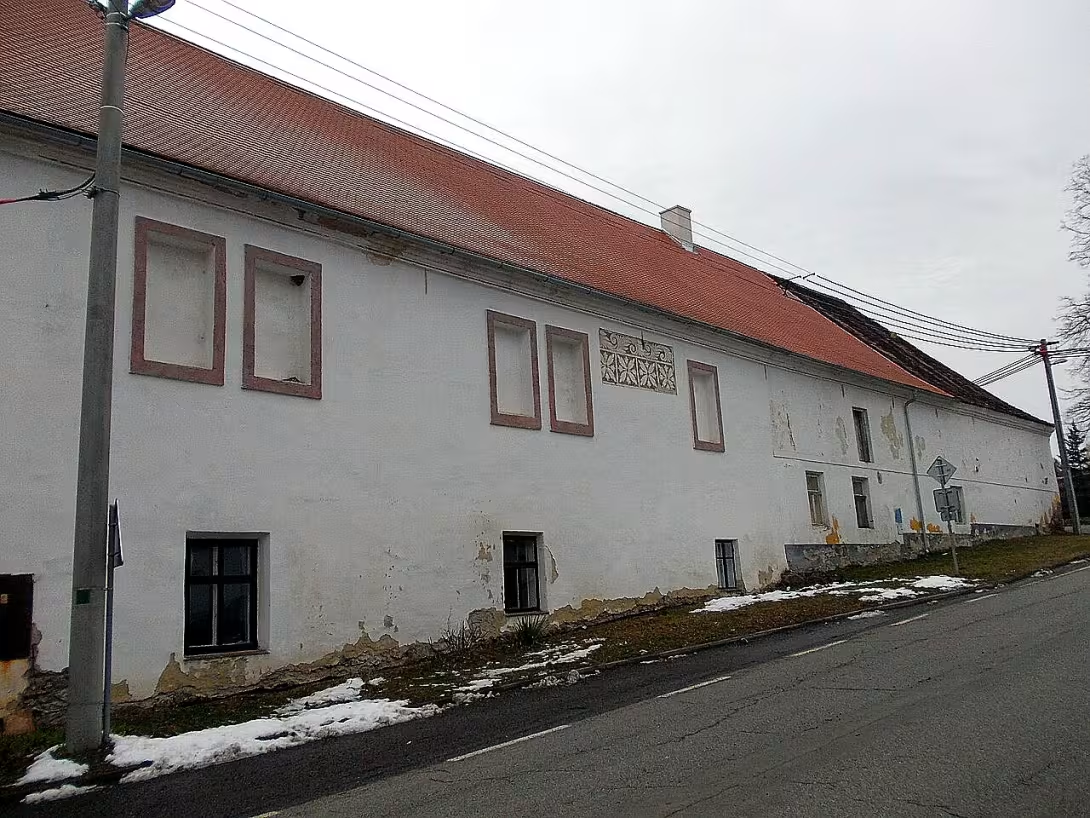
Čepravická stronghold is originally a Renaissance mansion in the village Čepřovice east of Volyn in Strakonice district in South Bohemia. It was founded at the beginning of the seventeenth century, later rebuilt baroque and is today a protected cultural monument.
Ves Čepřovice was founded by Queen Eliška Přemyslovna in the early 14th century. The chateau itself falls into the period of the beginning of the seventeenth century, when the Czech countries were in a tense pre-white mountain atmosphere under Rudolf II and later Matthias, in a period of sharp religious and political disputes between states and the sovereign. In 1595 he bought the village from Petr Vok from Rožmberka Arnešt Vitanovský from Vlčkovice in Nihošovice. The Renaissance mansion with the chapel was founded by his son Mikuláš Vítanovský z Vlčkovic around 1605.
Today, this monument has a rectangular plan of 44 times 16 meters. The building has undergone Baroque reconstruction and many modern interventions. Historical structures such as vaults and beam ceilings have been better preserved in the southern part bearing the descriptive number 59. The facade still shows the remains of Renaissance sgraffiti.
The members of the Vlčkovice family belonged to Čepřovice until 1682. Then Johanka Magdaléna Vítanovská, born Harras, widow of Ignatius Jetřich Vitanovský, sold the estate to František Jiří Doudlebski from Doudleb. Three years later, in 1685, the farm was bought by Count Gundakar z Ditrichštejna and joined him to Vladhov Březí.
As a result of this connection the fortress completely lost its original residential function. In the eighteenth century the object burned down several times and its vast space was later divided into residential houses with numbers describing 59 and 60.
Today this historic building is protected as a cultural monument reminiscent of the region's older construction development. The visit to Čepravice offers a view of the remains of Renaissance architecture and sgraffiti rustics in the authentic environment of southern Bohemia.
Then and now
Drag the slider to compare how the landmark may have looked when it was built with the view today.
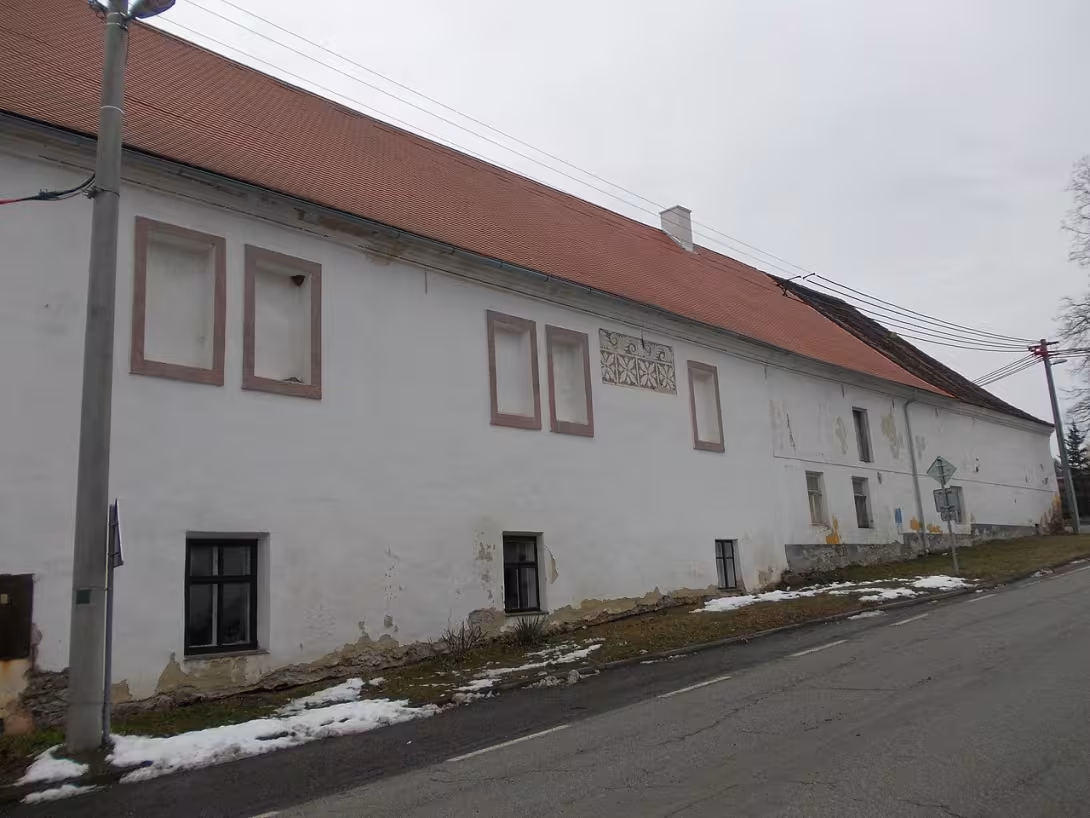
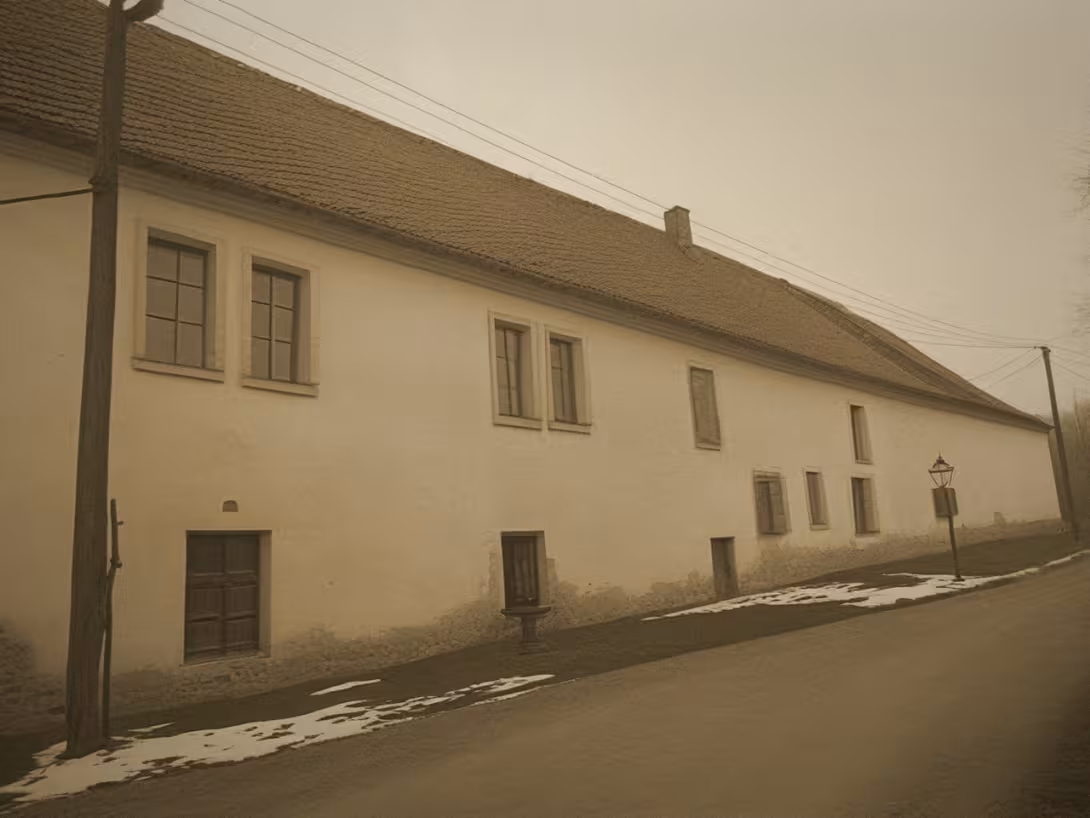
The historical appearance on the left is an AI-generated visualisation and serves as inspiration only.
Historical milestones
- 1595
- The village was bought by Petr Vok from Rožmberk Arnešt Vitanovský from Vlčkovice in Nihošovice.
- 1605
- The Renaissance mansion with chapel was founded by Mikuláš Vítanovský z Vlčkovic.
- 1682
- Johanka Magdaléna Vítanovská sold the estate to František Jiří Doudlebski from Doudleb.
- 1685
- The estate was bought by Count Gundakar z Ditrichštejna and joined him to Vlahov Březí.
Architectural development
Originally a Renaissance mansion with chapel was established around 1605. Later, the building was rebuilt and modified by modern interventions. In the preserved form, the fortress has a rectangular plan of 44 × 16 metres. Historical structures such as vaults and beam ceilings have been better preserved in the southern part of the building, with the remains of Renaissance sgraffiti on the facade.
Historical events
1595 - The village was bought by Ernest Vitanovský from Vlčkovice. 1605 - The establishment of the Renaissance mansion by Mikuláš Vitanovský. 1682 - Sale of the estate by Johanka Magdalena Vitanov František Jiří Doudlebský. 1685 - Connection of the farm to Vladhov Břež by Count Gundakar of Ditrichštejn.
Owners
Vlčkovice (until 1682), František Jiří Doudlebský z Doudleb (since 1682), Count Gundakar z Ditrichštejna (since 1685).
Points of interest
- The fortress was founded at the beginning of the seventeenth century and later went through Baroque reconstruction. - Ves Čepřovice was founded in the early 14th century by Queen Eliška Přemyslovna. - The Renaissance mansion with chapel was founded around 1605 Mikuláš Vítanovský z Vlčkovic. - In the eighteenth century the object burned down several times and its space was divided into residential houses. - The facade of the building still shows the remains of Renaissance sgraffiti.
Guide
Show guide text
This text was created by artificial intelligence and has not been editorially reviewed. It may contain inaccuracies.
Welcome to the Chepra Fortress. Right now you are standing in front of this remarkable historical mansion located in the village Čepřovice in Strakonice district. Raise your eyes and look at the building in front of you, which has traces of Renaissance origin, Baroque reconstruction and many modern interventions. It may surprise you at first glance that this monument today serves ordinary life, for in the eighteenth century the building was divided into residential houses with numbers of fifty-nine and sixty. Despite these changes, however, the whole building has retained its special charm and reminds us of centuries of human effort on this part of South Bohemia.
Now let's move forward in time and reveal the roots of this place. The village Čepřovice itself has an incredibly ancient history, as it was founded at the beginning of the fourteenth century by an important historical person, Czech Queen Eliška Přemysovna. Several centuries have passed and the fate of the village has intertwined with another famous family. In the year of the nultieth fifth century he bought the village from the last great lord of this family, Peter Vok of Rožmberk, nobleman Arnešt Vitanovský of Vlčkovice in Nihošovice.
But that's where the story begins. At the beginning of the seventeenth century, namely around the year of the fifth, the son of Ernest Vitanov Mikuláš Vítanovský z Vlčkovic decided to establish a Renaissance mansion, including a chapel. When you're standing outside the building, try to imagine what it looks like at the time of its creation. Nicholas Vitanovský printed the Renaissance residence, but history went on and so did the owners. In the year of the nultieth second seventeenth century, then owner Johanka Magdaléna Vítanovská sold the entire estate to Franz Jiří Doudlebski from Doudleb. Only three years later, in the year zero of the 85th, the Count Gundakar z Ditrichštejna won the farm, which connected him to his estate in Vlach's March.
Now pay attention to the architecture itself and the details that appear before you. Note how different building layers are mixed on the outside of the building. The original Renaissance character, which was printed here at the beginning of the seventeenth century by Mikuláš Vítanovský z Vlčkovic, has been transformed over the following centuries. The later Baroque reconstruction left its mark on the building, as well as a number of modern interventions that the building has undergone during the twentieth and twenty-first centuries. When you examine the building with your eyes, you see a testimony of constant development and adaptation to the needs of the people who lived and worked here.
When you listen to the stories associated with this place, the fates of people who have influenced Czech history appear before us. Imagine Queen Elizabeth Přemysna, who was at the beginning of the 14th century at the birth of the village Čepřovice itself. Her noble spirit seems to be still wary of this landscape. A few hundred years later, members of the Vitanov family from Vlčkovice left a deep trail. Whether it was Ernest, who bought the estate from the mighty Peter Vok of Rožmberk, or his son Nicholas, who built the Renaissance mansion with the chapel, all these people breathed life into the place. And then there were others like Johanka Magdaléna Vítanovská, František Jiří Doudlebský z Doudleb or Count Gundakar z Ditrichštejna who developed and managed the property here.
The interesting thing that is inherent in this place is his moved destiny in the eighteenth century. The building burned down several times back then. These devastating fires radically transformed her face and led to a fundamental division of the object into residential houses with numbers of fifty-nine and sixty. Imagine those dramatic moments when the residents tried to save their homes from the flames, and how, after these tragedies, the face of the mansion must have changed forever. It is this ability to transform and adapt to adversity that makes the Chepra fortress a fascinating witness of the past. Today, this historic building is protected as a monument, which underlines its importance for our cultural heritage.
I hope this stop has been rewarding for you and that you have enjoyed the atmosphere that the Chepra fortress radiates. Explore the surroundings of the village, let the traces of ancient times affect you, and I thank you for your attention and wish you a beautiful rest of the day.
Tips for visitors
The best time to visit Čepravic is during spring and summer months, when the surrounding South Bohemia landscape is the most picturesque and the weather wishes to walk outside. For a quiet atmosphere and nice light for observing historical architecture we recommend the morning hours.
For transport to the village Čepřovice you can use a passenger car or bus transport. The location is available by car and by public transport; Check the current connection in the search engine. Parking is possible in the village around the monument, we recommend to follow local traffic signs.
Bring comfortable shoes for walking around and clothes adapted to current weather. Since it is a historic mansion in the village, it is also useful to have drinking water and a small snack or raincoat.
The morning or late afternoon sun is best suited for the photography of the Renaissance fortress and its exterior, which will provide the building founded by Nicholas Vitanova with the correct contrast. The best views of the building are taken from the area in the village.
In the wider area you can visit the nearby Volyni, which is located west of Čepravice in Strakonice district. Further trips to Strakonice and the surrounding nature of South Bohemia region, where you will discover a number of other historical attractions.
Businesses nearby
Do you run a restaurant, accommodation, shop, museum, rental, wellness or other visitor service near this monument? Show yourself directly to the people heading to it — this is how they will see you in the app and on the web:
Nearby
Čepřovice is located east of Volyn in Strakonice district in South Bohemia.
Accommodation nearby
Themed route
1. Čepřovice - Hardness The main destination of our route is a historical monument located in this village. Its visit offers a view of the architectural development of the mansion in the region.
2. Volyne - City This adjacent residential point in the nearby area is the natural centre of the area. The city provides a starting and destination point for trips to the surrounding landscape of southern Bohemia.
Seasonal recommendations
Spring: In the spring season, the Čepřovice fortress is transformed into a green sanctuary, where the bright sunlight lights up newly blooming trees and shrubs. The atmosphere is full of renewal and life, making the visit strangely attractive to nature lovers. This is an ideal time to learn the historical monuments without excessive crowds. It is recommended to visit the fort in the early afternoon when the sun illuminates every detail and the temperature is not too high. Wear comfortable shoes to walk on the lawn and you must not forget your protective sunglasses.
Summer: For years, the fortress Čepřovice is a popular destination for families and tourists looking for an escape from urban life. The sun shines on old walls and historical space offers an excellent background for memorial photos. Summer brings the greatest attendance, so it is advisable to visit the fort earlier in the afternoon to avoid long fronts. Don't forget the light clothes and protective hat to protect from sunlight.
Autumn: In autumn, the Čepřovice fortress offers a unique atmosphere when tree leaves change colour and fall to the ground. This time of year is ideal for quiet walks between historic bells and views of the surrounding landscape. The climate is relaxing, allowing long visits without fear of heat. We recommend wearing warmer clothing and suitable shoes for walking on leaves.
Winter: Winter visit to the Čepřovice Fortress offers a completely different experience when snow covers historical roof structures and softens the overall atmosphere. Opening hours can be limited due to weather, so it is good to check in before visiting. Winter clothes with warm coat and protective shoes are essential for comfortable admiration of the monument in the cold air. This time of year is great for those who seek peace and escape into the historic environment.
Visualizations and artistic views


The visualisations are generated by artificial intelligence and serve as inspiration.
Photos from the area
Real photos taken near the monument


Zdroj a licence jsou uvedeny u každého snímku.
Tips from visitors
No tips yet. Be the first!
Log in and add your tip.
Sources and literature
Fotografie: Alan Šturm / CC BY-SA 4.0 — Wikimedia Commons. The author and licence also appear when you hover over the image.
Faktickým podkladem tohoto textu byl článek na Wikipedii, jehož autory jsou přispěvatelé Wikipedie. Článek je dostupný pod licencí CC BY-SA 4.0.
Location on the map
Příběhy a pověsti
Legendy, pověsti a příběhy spjaté s touto památkou
Fotografie návštěvníků
Zatím žádné fotografie. Buďte první, kdo přidá fotografii z návštěvy!
Přihlaste se a přidejte svou fotografii nebo hodnoťte.
Za ověřenou návštěvu v aplikaci získáte víc bodů — poznáme podle GPS, že jste na místě.
Reviews and comments