






Horův mlýn Mill
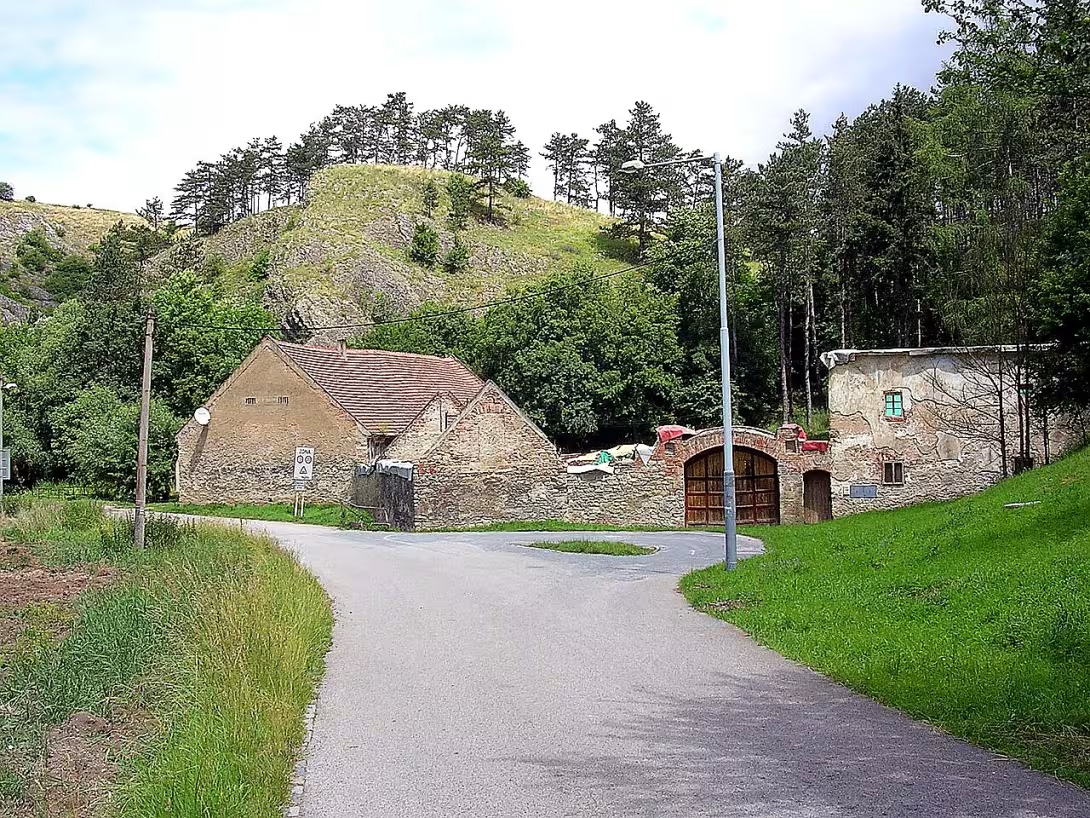
Horův mlýn is a historically significant watermill located in Hlubočepy, Prague, within the Klukovice area. Originally constructed during the Renaissance period, it stands as a cultural monument of the Czech Republic due to its architectural transformations and historical relevance. The site includes not only the mill itself but also a granary, barn, and gate, all part of a protected area currently facing deterioration.
The watermill was founded in the second half of the 16th century by Adam II. z Hradce, who served as the highest chancellor of the Czech kingdom. Its establishment occurred during a period when Prague experienced significant architectural development influenced by Renaissance ideals, amidst broader European cultural transformations following the Reformation. After suffering damage during the Thirty Years' War, the mill was acquired by Pavel Michna z Vacínova and subsequently came under the ownership of Klementinská kolej in 1658.
Architecturally, Horův mlýn began as a Renaissance structure but underwent Baroque modifications in the 17th century. These changes included reducing the interior space of the mill, adding wooden ceilings with an inscription from 1684, and incorporating two additional rooms into the existing structure. Further architectural adjustments were made in 1879 and later in the late 19th century. The mill's building is characterized by a stone construction with a gabled roof, while its granary features brickwork held together with clay.
Throughout its history, Horův mlýn has seen various owners who influenced its fortunes. After Adam II. z Hradce founded it, Pavel Michna z Vacínova acquired the damaged mill post-Thirty Years' War. In 1658, Klementinská kolej took ownership and continued to manage the property until further changes occurred in subsequent centuries.
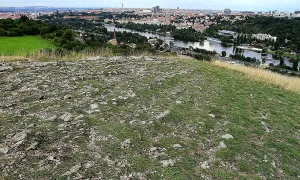
The site holds several historical curiosities, such as the birth of Kateřina Hora, recorded on May 19th in Tachlovická farní kronika. The granary bears an inscription from 1879, highlighting its layered history. Additionally, remnants of a former pond's embankment are present nearby, indicating past water management practices.
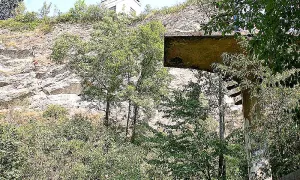
Today, Horův mlýn is situated near the Dalejský potok and close to a railway bridge leading to Rudné and Beroun. Despite its deteriorating condition, it remains an important site for understanding local heritage and architectural evolution. The mill's current state reflects both its historical significance and the challenges of preservation.
Visitors interested in exploring Prague's rich history will find Horův mlýn a compelling destination. Its unique blend of Renaissance and Baroque architecture offers insights into past construction techniques, while its cultural importance underscores the region's historical narrative. This monument invites those curious about architectural heritage to witness firsthand the layers of history embedded within its walls.
Then and now
Drag the slider to compare how the landmark may have looked when it was built with the view today.
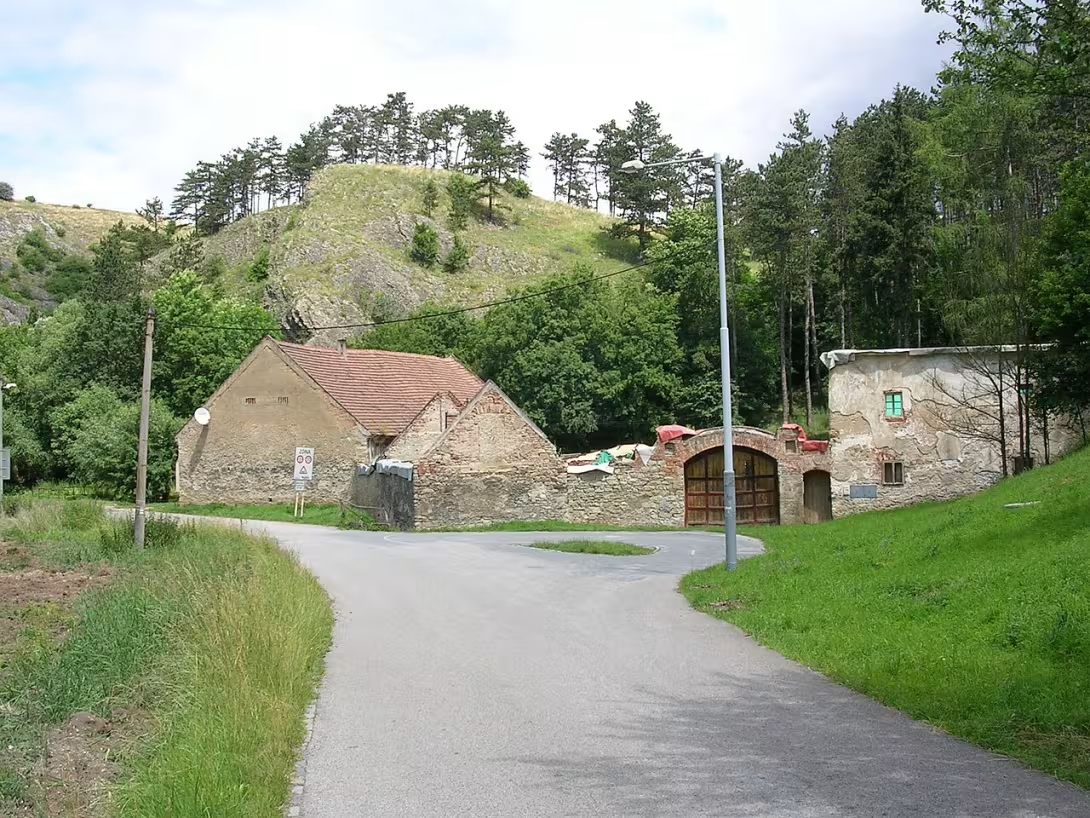
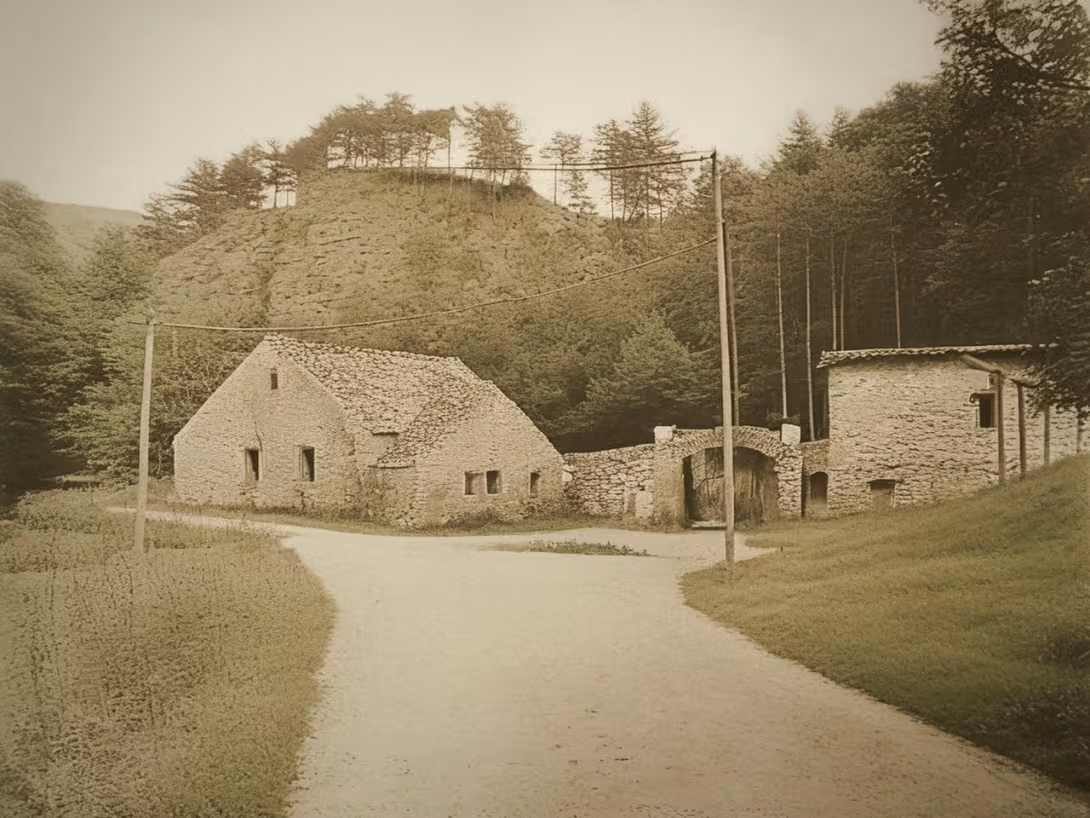
The historical appearance on the left is an AI-generated visualisation and serves as inspiration only.
Historical milestones
- konec 16. století
- Založení mlýna Adamem II. z Hradce
- 1618–1648
- Poškození během Třicetileté války
- 1658
- Převzetí Klementinskou kolejí
- 1684
- Přidání dřevěných stropů s nápisem
- 1879
- Architektonické změny v granárii a další úpravy
Architectural development
Originally a Renaissance structure, Horův mlýn was transformed into Baroque style in the 17th century. This included architectural changes such as reducing the mill's interior space and adding wooden ceilings with an inscription from 1684. Further modifications occurred in 1879 and later in the late 19th century.
Historical events
- 16th century
- Foundation of the watermill by Adam II. z Hradce.
- 1658
- Acquisition by Klementinská kolej.
Points of interest
- Horův mlýn is a historically significant watermill located in Hlubočepy, Prague, within the Klukovice area. - Originally constructed during the Renaissance period, it stands as a cultural monument of the Czech Republic due to its architectural transformations and historical relevance. - The mill was founded in the second half of the 16th century by Adam II. z Hradce, who served as the highest chancellor of the Czech kingdom. - Architecturally, Horův mlýn began as a Renaissance structure but underwent Baroque modifications in the 17th century, including adding wooden ceilings with an inscription from 1684 and incorporating two additional rooms into the existing structure. - The site holds several historical curiosities, such as the birth of Kateřina Hora, recorded on May 19th in Tachlovická farní kronika.
Guide
This guide is narrated by a synthetic voice generated by artificial intelligence.
Show guide text
This text was created by artificial intelligence and has not been editorially reviewed. It may contain inaccuracies.
Welcome in front of Horový Mlýn, one of the most significant historical sites in Hlubočepy, a part of Prague. You are standing before it and have a beautiful example of Renaissance architecture in front of you. The mill that stands before you has a rich history dating back to the end of the 16th century when it was founded by Adam II. of Hradec.
Let's move forward in time and see what happened at this place during the Thirty Years' War. Between 1618–1648, the mill was damaged but its basic structure was successfully preserved. In 1658, it was taken over by Klementinum College which began making modifications here. In 1684, wooden ceilings with inscriptions were added that still endure today.
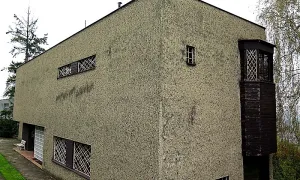
Notice how the architecture of the mill has evolved over the years. Take a look at the façade where you can see how individual elements complement each other and create a harmonious whole. The mill is not only an important cultural monument but also a testament to the craftsmanship of our ancestors.
Now pay attention to the personalities associated with this place. Adam II. of Hradec, founder of the mill, and Pavel Michna z Vacínova, who worked here, are two significant figures linked to Horový Mlýn.
An interesting fact is that Horův Mlýn is not just a watermill but also a cultural center. You can meet many interesting people here who organize various events and workshops. Whether you're a historian, an artist, or simply a lover of architecture, Horův Mlýn is a place worth visiting.
Let's return to the present and invite you to further explore this beautiful site. Horův Mlýn is a true gem of Prague and it’s worth visiting. Thank you for your attention and we hope you enjoyed our presentation of this historical monument.
Tips for visitors
The best time to visit Horův mlýn is during the late spring or early autumn months, when the weather is pleasant for outdoor exploration, and the surrounding nature is at its most vibrant. Visiting during these times allows you to enjoy the lush greenery and blooming flowers around Dalejský potok without the summer crowds or winter chill. The soft natural light of these seasons also enhances the aesthetic appeal of photography in this historic setting.
Parking near Horův mlýn is limited, so it's advisable to use public transportation whenever possible. The area can be accessed via Prague’s extensive tram and bus network; however, specific routes should be checked for any updates or changes. If driving, look for nearby parking options in Hlubočepy and plan your visit accordingly. Walking from the nearest transport stops is a pleasant way to start your exploration of this historic site.
When visiting Horův mlýn, it's recommended to bring comfortable walking shoes as there are some uneven paths around the area. A camera or smartphone for photography is also suggested, especially if you’re interested in capturing the mill’s architecture and its picturesque surroundings. Additionally, consider bringing a light jacket, as temperatures can vary throughout the day, even during warmer months.
For photography enthusiasts, the best spots to capture Horův mlýn are near the Dalejský potok where natural lighting beautifully highlights the watermill's structure against the backdrop of greenery. Early morning or late afternoon light provides a soft glow that accentuates the textures and details of the mill’s architecture. The area around the former pond’s embankment offers interesting perspectives for landscape shots.
Nearby, within a 30-minute walk, you can explore the remnants of the former pond's embankment, which provide insight into the historical use of water management in the region. This site complements your visit to Horův mlýn by offering additional context about its past operations and significance. For families with children, these areas are safe for exploration and offer a chance to engage with local history through nature.
Businesses nearby
Do you run a restaurant, accommodation, shop, museum, rental, wellness or other visitor service near this monument? Show yourself directly to the people heading to it — this is how they will see you in the app and on the web:
Events nearby

Zdroj akcí: otevřená data měst a obcí ČR (Národní katalog otevřených dat) a kalendář akcí Národního památkového ústavu.
Nearby
Horův mlýn is situated near the Dalejský potok and close to a railway bridge leading to Rudné and Beroun. The surrounding area features remnants of a former pond's embankment.
Accommodation nearby
Trips and activities nearby
Guided tours, tickets and activities nearby from GetYourGuide
Affiliate link: if you buy from the partner, we may receive a commission. The price for you does not change.
Search tours and activities →Themed route
Hlubočepská trasa
1. Horův mlýn (hlavní cíl) Horův mlýn is an old mill located on the outskirts of the village of Hlubočepy. It is interesting for its original state and features an exhibition that presents the history of the mill and its surroundings.
2. Dalejský potok Dalejský potok flows near the mill and its surroundings. You can stop by the stream to take a look at its bed.
3. Železniční most The railway bridge crosses over the stream and is an important transport artery for rail traffic. You can stop by the bridge to admire its architecture.
4. Původní hráz bývalého rybníka In the vicinity of the mill, there are remnants of the original dam of a former pond. You can stop by the dam to observe its condition.
Seasonal recommendations
Jaro
Spring is a time full of life and energy, making it the ideal season to visit Horov Mill. The atmosphere is filled with optimism and hope, as if nature has just awakened. The forests around the mill are covered in flowers, and trees are sprouting green leaves. A distinctive feature is also the sunny weather, allowing you to explore the area without unnecessary restrictions. Practical tips: the best time to visit is early morning or late afternoon to avoid crowds of tourists. Don't forget to wear warm clothing and comfortable shoes for a walk around.
Summer
Summer is the main season for visitors to Horov Mill. The forests are in full bloom, and nature offers a vibrant palette of colors and scents. The atmosphere is relaxed and cheerful, as if visitors truly have plenty of time. A distinctive feature is also the long opening hours, allowing guests to explore the entire area from morning till evening. Practical tips: arrive early before the peak tourist season begins to avoid crowds. Don't forget to bring sunglasses and a refreshing drink.
Autumn
Autumn is a time full of color and life, making it an ideal time to visit Horov Mill. The forests are covered in autumn hues, and trees are sprouting green leaves. The atmosphere is calm and relaxed, as if visitors truly have plenty of time for exploration. A distinctive feature is also the pleasant weather, allowing you to explore the area without unnecessary restrictions. Practical tips: the best time to visit is early morning or late afternoon to avoid crowds of tourists. Don't forget to wear warm clothing and comfortable shoes for a walk around.
Winter
Winter is a time of calm and silence, making it an ideal season to visit Horov Mill. The atmosphere is calm and relaxed, as if visitors truly have plenty of time for exploration. The forests are covered in snow, and trees are adorned with a white layer. A distinctive feature is also the short opening hours, requiring guests to be on time. Practical tips: arrive early to avoid closed doors. Don't forget to wear warm clothing and a hat.
Visualizations and artistic views


The visualisations are generated by artificial intelligence and serve as inspiration.
Photos from the area
Real photos taken near the monument

Zdroj a licence jsou uvedeny u každého snímku.
Tips from visitors
No tips yet. Be the first!
Log in and add your tip.
Sources and literature
Fotografie: cs:ŠJů / CC BY-SA 3.0 — Wikimedia Commons. The author and licence also appear when you hover over the image.
Faktickým podkladem tohoto textu byl článek na Wikipedii, jehož autory jsou přispěvatelé Wikipedie. Článek je dostupný pod licencí CC BY-SA 4.0.
Location on the map
Příběhy a pověsti
Legendy, pověsti a příběhy spjaté s touto památkou

Fotografie návštěvníků
Zatím žádné fotografie. Buďte první, kdo přidá fotografii z návštěvy!
Přihlaste se a přidejte svou fotografii nebo hodnoťte.
Za ověřenou návštěvu v aplikaci získáte víc bodů — poznáme podle GPS, že jste na místě.
Reviews and comments