



kaple Nejsvětější Trojice u cesty k zámku Lemberk Chapel
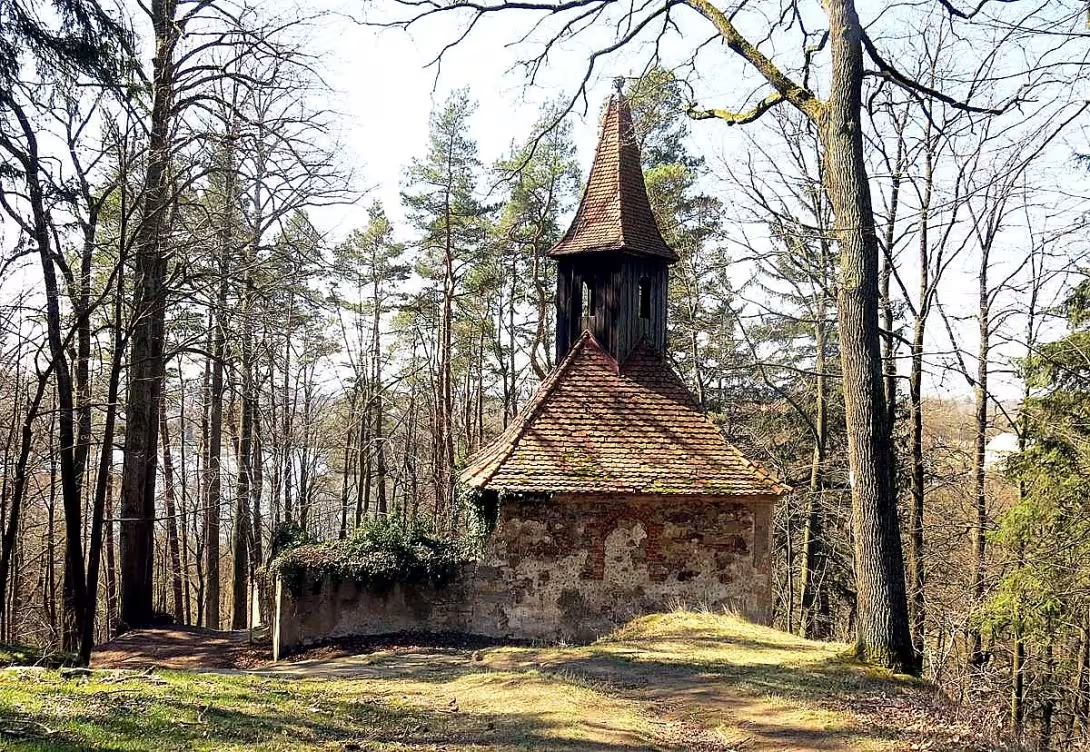
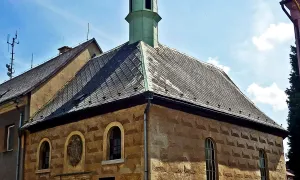
The Chapel of the Holy Trinity, also known as Zdislavina Kaple, is a historical monument within Chateau Lemberk's protected area in Jablonné v Podještědí, Czech Republic. It holds significance due to its association with Zdislava of Lemberk, who was canonized by Pope John Paul II in 1995. Originally Gothic, it transformed into Renaissance architecture in 1657 and is part of the smallest landscape conservation area in the country, Krajinná památková zóna Lembersko.
The chapel's origins are deeply linked to Zdislava of Lemberk's life. Born around 1220 to a Moravian noble family, she moved to northern Bohemia after marrying Havlík of Lemberk. Together, they established several religious institutions, including a Dominican monastery in Jablonné v Podještědí and the chapel near Lemberk. Zdislava is renowned for her healing abilities, documented as early as the 14th century. Legends suggest she used water from a spring beneath the chapel for healing purposes. Although some accounts attribute its founding to Hašek z Lemberka in the late 14th century, its connection to Zdislava remains central.
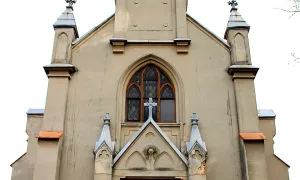
Architecturally, the Chapel of the Holy Trinity transitioned from Gothic to Renaissance style during a significant renovation in 1657. This included adding a bell and frescoes that adorned its walls, enhancing its aesthetic appeal. The Baroque period saw renewed interest in Zdislava's cult, further embedding her legacy within the chapel's history.
Throughout its existence, the chapel served various roles, including as an unofficial pilgrimage site shortly after Zdislava's death. Its crypt and surrounding cemetery were used for burying local officials and their families. However, especially post-World War II, it fell into disrepair, becoming a target for treasure hunters and vandals. Consequently, access to both the chapel and its graveyard has been restricted.
Today, the Chapel of the Holy Trinity stands at the end of a 400-meter-long linden alley leading southwest from Bredovský zámeček within the Chateau Lemberk area. Despite its historical significance and architectural beauty, it remains inaccessible to the public due to safety concerns. The chapel's rich history and connection to Zdislava make it an intriguing site for those interested in Czech heritage and religious history. Visitors can explore the surrounding landscape, including dense forests and nearby Markvartický rybník, while reflecting on the enduring legacy of this remarkable monument.
Then and now
Drag the slider to compare how the landmark may have looked when it was built with the view today.
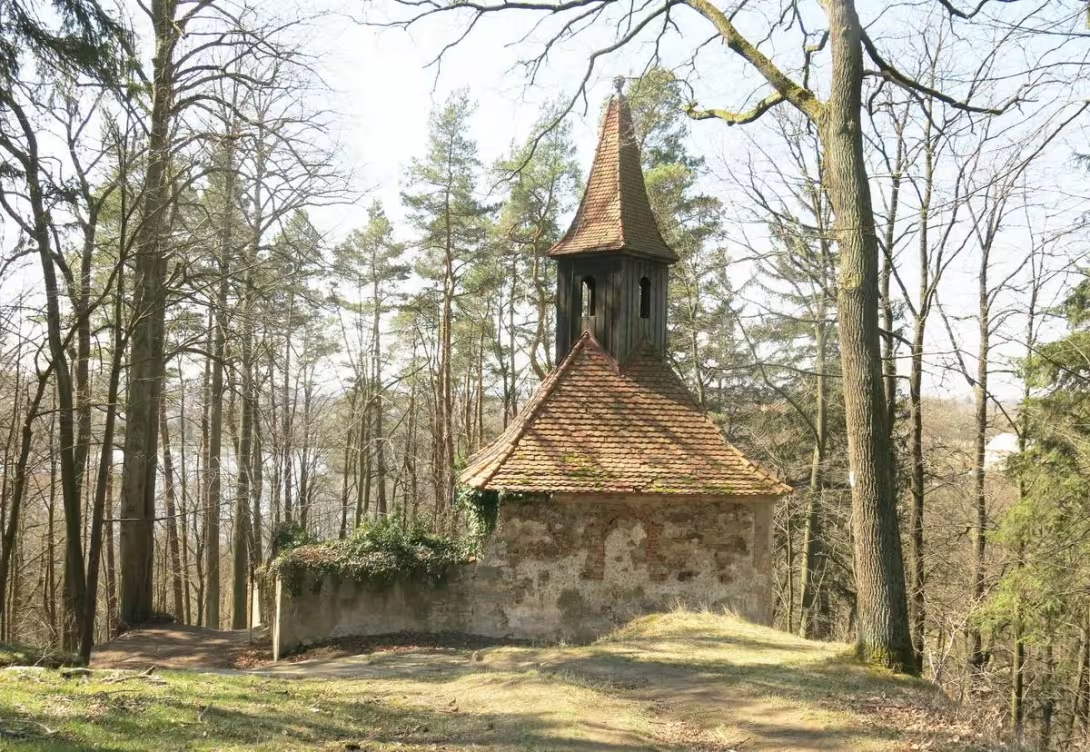
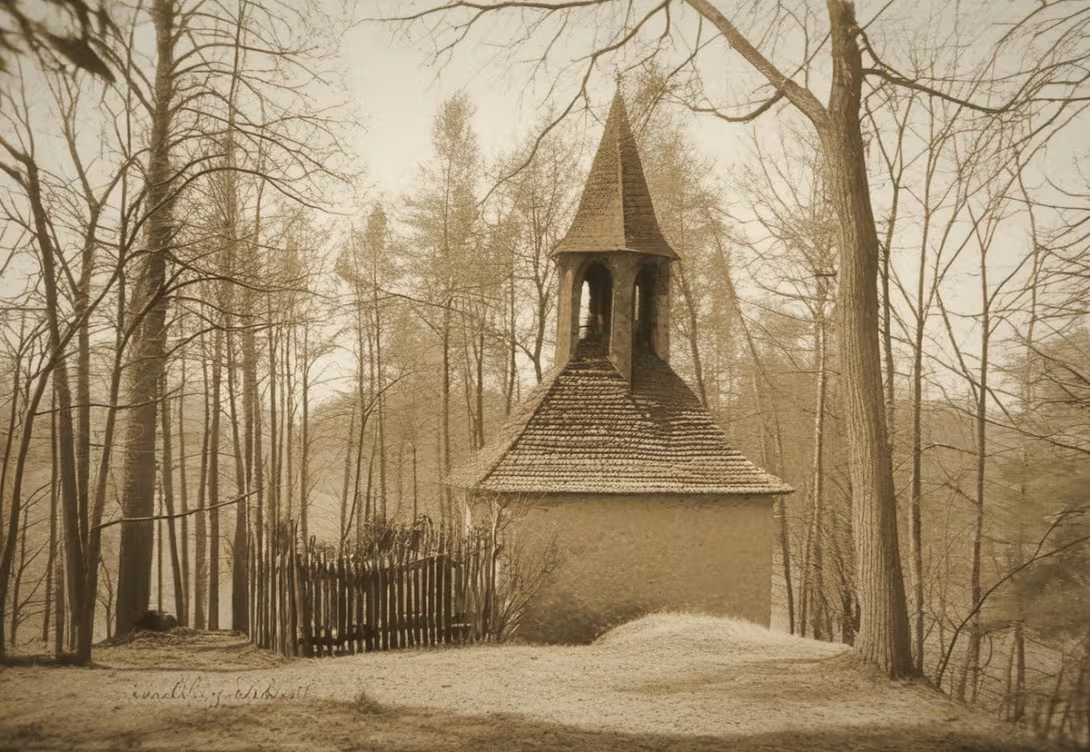
The historical appearance on the left is an AI-generated visualisation and serves as inspiration only.
Historical milestones
- 1657
- The Gothic Chapel of the Holy Trinity was renovated into Renaissance style with a bell and frescoes.
Architectural development
Initially built in the Gothic style, the Chapel of the Holy Trinity underwent significant changes in 1657 when it was renovated to reflect Renaissance aesthetics. This included the addition of a bell and frescoes adorning its walls. Over time, particularly during the Baroque period, there was renewed interest in Zdislava's cult.
Historical events
The chapel became an unofficial pilgrimage site shortly after Zdislava's death.
In 1657, the Gothic Chapel of the Holy Trinity was transformed into a Renaissance structure.
Points of interest
- The Chapel of the Holy Trinity is known as Zdislavina Kaple, named after its association with Zdislava of Lemberk, who was canonized in 1995 by Pope John Paul II. This connection highlights her significant impact on religious history and local heritage.
- Although some accounts credit Hašek z Lemberka with founding the chapel in the late 14th century, it is primarily linked to Zdislava of Lemberk, who used a spring beneath the chapel for healing purposes, adding to its legendary status as a site of miraculous cures.
- The chapel's architectural evolution from Gothic to Renaissance style occurred during renovations in 1657, which included the addition of a bell and frescoes. This transformation reflects broader historical trends in art and architecture during that period.
- After World War II, the chapel fell into disrepair due to neglect and vandalism, leading to its current status as inaccessible for safety reasons. Despite this, it remains an important site for understanding regional history and religious practices.
- The chapel is part of Krajinná památková zóna Lembersko, the smallest landscape conservation area in the Czech Republic. This designation underscores its environmental and cultural importance within a protected natural setting.
Guide
This guide is narrated by a synthetic voice generated by artificial intelligence.
Show guide text
This text was created by artificial intelligence and has not been editorially reviewed. It may contain inaccuracies.
The Chapel of the Holy Trinity, also known as the Zdislava Chapel, belongs to the historic buildings in the extensive heritage-protected grounds of Lemberk Castle near Jablonné v Podještědí. The entire complex is part of the Lembersko Landscape Heritage Zone, one of the smallest landscape heritage zones in the Czech Republic. The chapel stands at the end of approximately 400 meters long lime tree avenue, which leads from the Bredovský Castle.
The site has been connected for centuries with Zdislava of Lemberk, whom Pope John Paul II canonized in 1995. Zdislava was probably born in 1220 into the family of Moravian nobleman Přibyslaw of Křižanov. After marrying Havel of Lemberk, she moved to his newly built residence in northern Bohemia. The couple founded and supported a Dominican monastery in Jablonné and they are also credited with establishing other churches, monasteries and hospitals. Among their achievements was also the chapel near Lemberk. According to another source, however, it was founded at the end of the 14th century by Hašek of Lemberk, the last male heir of the family, who was buried there together with his wife.
Zdislava's healing abilities are mentioned already in Dalimil's Chronicle from the beginning of the 14th century. Later legends tell that she used water from a spring below the hill where the chapel stood for healing, and she would go there to pray. There is a theory that after her death in 1252, she may have been buried here first and only later transferred to the Church of Saint Lawrence in Jablonné. The chronicler Václav Hájek of Libočan apparently mistakenly mentions the grave of Saint Přibyslaw, sister of Saint Wenceslas, but she lived about 300 years earlier.
The spring and its surroundings soon became an unofficial place of pilgrimage after Zdislava's death. In 1657 the Gothic chapel was rebuilt in the Renaissance style, received a bell and frescoes. In the crypt and in the surrounding cemetery, then local officials and their families were buried. During the Baroque period, the cult of Zdislava was revived again and at the beginning of the 19th century the interior was arranged as a pilgrimage site. People then began to call the chapel the church of blessed Zdislava.
The pilgrimage and burial tradition persisted for a short time after the Second World War. Then the building fell into decay and became a target for treasure hunters and vandals. The entrances to the chapel and to the cemetery were therefore bricked up.
Tips for visitors
The best time to visit the Chapel of the Holy Trinity, also known as Zdislavina Kaple, is during late spring or early autumn. During these seasons, the surrounding landscape is lush and vibrant, making it ideal for enjoying a peaceful walk through the linden alley leading to the chapel. The weather is generally mild, which enhances the experience of exploring the dense forests and nearby Markvartický rybník. Additionally, visiting during weekdays can help avoid larger crowds that might gather on weekends.
It's advisable to check current transportation routes and schedules in advance for a smooth journey.
When planning your visit, it’s wise to bring comfortable walking shoes as you’ll be traversing a roughly 400-meter-long linden alley and exploring forested areas. A camera is essential if you wish to capture the chapel’s serene beauty and its picturesque surroundings. Additionally, consider bringing a light jacket or sweater, as temperatures can vary, especially in shaded forest areas.
For photography enthusiasts, the best spots for capturing stunning images are along the linden alley leading up to the chapel, where the interplay of light and shadow creates a magical atmosphere. Early morning or late afternoon is ideal for photographing the chapel with soft lighting conditions. The dense forests provide unique backdrops, while Markvartický rybník offers reflections that can add depth to your photos.
Nearby attractions within a 30-minute drive include the Chateau Lemberk itself, which offers historical insights and beautiful architecture. For those interested in nature, exploring the surrounding forest trails provides opportunities for hiking and bird watching. These nearby sites complement your visit by offering diverse experiences that cater to both history buffs and outdoor enthusiasts.
Frequently asked questions
Can the monument be visited?
Religious buildings are usually open mainly during services; at other times a visit is normally arranged with the parish or the operator. We have not verified specific times.
Where is the monument?
Location: Jablonné v Podještědí, Liberecký kraj. The map on this page shows the exact spot.
Why is the monument protected?
It is listed in the Central List of Cultural Monuments of the Czech Republic as a cultural monument. It is protected as part of a larger listed ensemble.
Businesses nearby
Do you run a restaurant, accommodation, shop, museum, rental, wellness or other visitor service near this monument? Show yourself directly to the people heading to it — this is how they will see you in the app and on the web:
Events nearby

Zdroj akcí: otevřená data měst a obcí ČR (Národní katalog otevřených dat) a kalendář akcí Národního památkového ústavu.
Nearby
The chapel is situated at the end of a roughly 400-meter-long linden alley leading southwest from Bredovský zámeček, within the Chateau Lemberk area. The surrounding landscape includes dense forests and nearby Markvartický rybník.
Accommodation nearby
Trips and activities nearby
Guided tours, tickets and activities nearby from GetYourGuide
Affiliate link: if you buy from the partner, we may receive a commission. The price for you does not change.
Search tours and activities →Themed route
Thematic Walking Tour: The Chapel of the Holy Trinity and Surroundings
1. Bredovský Zámeček: Begin your journey at this charming small castle, located just a short walk from the starting point. Bredovský Zámeček offers a glimpse into historical architecture with its picturesque setting amidst lush greenery. It's an ideal spot to immerse yourself in local history and enjoy panoramic views of the surrounding landscape.
2. Linden Alley: Follow the approximately 400-meter-long linden alley that stretches southwest from Bredovský Zámeček. This serene path is lined with majestic lime trees, creating a tranquil atmosphere perfect for reflection or leisurely walks. The alley not only connects you to nature but also leads directly to your main destination.
3. Chapel of the Holy Trinity: Arrive at this beautiful chapel nestled within the Chateau Lemberk area. Known for its architectural elegance and spiritual ambiance, the Chapel of the Holy Trinity is a testament to historical craftsmanship. It's an ideal spot for those interested in religious architecture or seeking a moment of peace amidst nature.
4. Markvartický Rybník: Conclude your tour at this nearby pond, located close to the chapel. Markvartický Rybník offers a serene environment perfect for relaxation and enjoying the natural beauty of the area. It's an excellent place to unwind after exploring the historical sites, providing picturesque views and a peaceful setting.
This thematic walking tour combines history, architecture, and nature, offering a comprehensive experience in the enchanting surroundings of Jablonné v Podještědí.
Seasonal recommendations
Spring: The chapel of the Holy Trinity near Lemberk Castle Road offers a serene and rejuvenating atmosphere during spring, as nature awakens with vibrant blooms and lush greenery framing this historic site. The soft light filtering through budding trees creates a picturesque setting perfect for photography or quiet reflection. Visitors are encouraged to dress in layers, as temperatures can vary throughout the day. Early morning visits are recommended to avoid larger crowds that gather later in the day when the weather is more inviting.
Summer: In summer, the chapel becomes an idyllic retreat from the heat, with its shaded surroundings providing a cool respite for visitors exploring the area. The lush landscape and longer daylight hours enhance the beauty of this historical site, making it ideal for leisurely walks or picnics in nearby parks. Given the popularity of outdoor activities during this season, arriving early is advisable to avoid larger groups. Comfortable walking shoes and light clothing are recommended, along with sun protection.
Autumn: Autumn transforms the chapel into a stunning tapestry of reds, oranges, and yellows as the leaves change color around Lemberk Castle Road. The cooler temperatures create a cozy atmosphere perfect for enjoying scenic views without the summer crowds. This is an excellent time to visit if you appreciate nature photography or simply wish to experience the tranquility of the season. Visitors should dress warmly in layers and consider bringing a light jacket, as evenings can be brisk.
Winter: Winter cloaks the chapel in a quiet, magical atmosphere with snow-covered landscapes that make it feel like stepping into a storybook scene. The shorter days mean fewer visitors, allowing for a more intimate experience of this historic site. However, the cold weather necessitates warm clothing and sturdy footwear to navigate potentially icy paths. Early visits are recommended as daylight hours are limited, and some facilities may have reduced operating times during this season.
Visualizations and artistic views


The visualisations are generated by artificial intelligence and serve as inspiration.
Photos from the area
Real photos taken near the monument


Zdroj a licence jsou uvedeny u každého snímku.
Atmosphere of the place
This atmospheric visualisation of the place and period was generated by artificial intelligence. It is not real footage of the location.
Tips from visitors
No tips yet. Be the first!
Log in and add your tip.
Sources and literature
Photos: Marie Čcheidzeová / CC BY-SA 4.0 — Wikimedia Commons. The author and licence also appear when you hover over the image.
Faktickým podkladem tohoto textu byl článek na Wikipedii, jehož autory jsou přispěvatelé Wikipedie. Článek je dostupný pod licencí CC BY-SA 4.0.
Location on the map

Příběhy a pověsti
Legendy, pověsti a příběhy spjaté s touto památkou
Fotografie návštěvníků
Zatím žádné fotografie. Buďte první, kdo přidá fotografii z návštěvy!
Log in a přidejte svou fotografii nebo hodnoťte.
Za ověřenou návštěvu v aplikaci získáte víc bodů — poznáme podle GPS, že jste na místě.
Reviews and comments