






kaple svatého Dismase Chapel
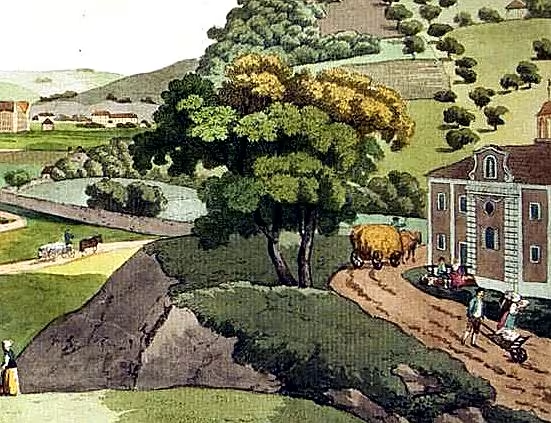
Objekt se nedochoval — na místě dnes nestojí. Následující text popisuje jeho historii, ne současnou návštěvu.
The chapel of St. Dismas in Žižkov, Praha, is a historical monument, which served as a place of comfort for condemned prisoners from the Old and New Cities of Prague. Originally, the small chapel was replaced by a larger construction commissioned by Count Kazimír Ferdinand z Kupperwaldu in 1720. This baroque chapel dedicated to St. Dismas, the patron saint of penitent sinners, hosted crowds of executed prisoners and performed in religious art. Located near Vítkova Hill and the former Mountain Gate, it was an integral part of Prague's historic landscape until its demolition in 1845 to make a place for Masaryk Railway Station.
The origin of the chapel of St. Dismas dates back to the beginning of the 18th century Bohemia, a period characterized by cultural and architectural developments within the Habsburg government. The initial small chapel was replaced by a larger construction which was commissioned by Count Kazimír Ferdinand z Kupperwaldu in 1720. This new chapel reflected the baroque influences and the earl's desire to provide spiritual support to condemned prisoners. It also served as evidence of religious and cultural practices at the time when the masses held the souls of executed prisoners.
Architecturally, the chapel of St. Dismas was remarkable for its polygonal structure with a distinctive lamp designed by Joseph Daniel Huber in 1769. In the interior was placed an altar dedicated to the crucified Christ, surrounded by wooden statues of the Virgin Mary, evangelist John and Mary Magdalene. The other altars were statues of St. Peter, St. Dismas, the publicist and the prodigal son. Over time, the chapel received various gifts, including metal containers, paintings, silver chalice with a patent and liturgical clothing, which increases its religious importance.
The ownership and administration of the chapel have recorded several changes over the years. After the death of Count Kupperwaldu in 1728 his daughter, married to Count Bubna, inherited the vineyard and the patron saint of the chapel. In 1746, Barbora Kořilová established foundations for other masses, and added the chapel to the spiritual life of the community. The reforms of Josephine in 1786 led to its closure and subsequent sale in 1787 by Antonín Jan Douš, who extended it to residential and commercial premises. In 1814 he acquired the place of Antonín Krenn and transformed it into a public garden with decorative features.
The key events in the history of the chapel include transformation during Josephine's reforms and its possible demolition in 1845 to suit Masaryk Railway Station. Despite these changes, the chapel remained an important spiritual place until its destruction. St. Dismas' legacy as patron saint of penitent sinners continued to resonate with those who visited or heard of the chapel.
The original chapel of St. Dismas is no longer standing because it was replaced by Masaryk Railway Station and surrounding urban development. Its historical importance, however, persists in the collective memory of Prague's inhabitants and visitors. The site serves as a reminder of the city's rich cultural heritage and the developing landscape that has shaped it for centuries. For those interested in exploring Prague history, visiting the area around Masaryk Railway Station offers an opportunity to think about past lives and stories intertwined with this one sacred space.
Then and now
Drag the slider to compare how the landmark may have looked when it was built with the view today.
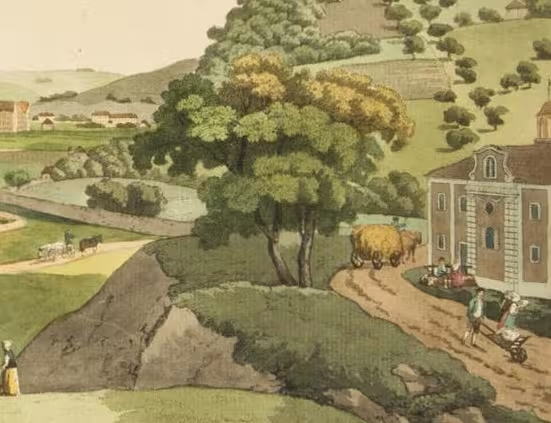

The historical appearance on the left is an AI-generated visualisation and serves as inspiration only.
Historical milestones
- 1720
- Construction of a new chapel ordered by Count Kazimír Ferdinand z Kupperwaldu.
- 1746
- Barbora Kořilová has established a basis for other masses.
- 1787
- Antonín Jan Douša bought the chapel and added residential and business premises.
- 1845
- The chapel was demolished to get to Masaryk Station.
Architectural development
Originally built as a small chapel, it was replaced by a larger construction with a polygonal plan and a significant roof construction. The interior represented religious works and altars dedicated to various saints. Over time the chapel underwent modifications including supplements for residential and commercial use.
Historical events
In 1720, Count Kazimír Ferdinand z Kupperwaldu commissioned a larger chapel dedicated to Saint Dismas.
The chapel was closed and sold during Josephine's reform in 1786.
In 1845, the chapel was demolished to get to Masaryk Station.
Owners
Kazimír Ferdinand z Kupperwaldu (1720)
Countess of Drum (after 1728)
Antonín Jan Douša (1787)
Antonín Krenn (1814)
Points of interest
- St. Dismas' chapel was dedicated to the patron saint of penitent sinners, reflecting a unique spiritual focus on redemption of those who were condemned to death.
- Architecturally, a distinctive polygonal structure with a lantern roof designed by Josef Daniel Huber appeared in the chapel in 1769, where the baroque influences appeared unusual in religious structures serving such grim purposes.
- After the death of Count Kupperwaldu, his daughter inherited the chapel's patronage and later founded the Barbora Kořilová foundation for financing other masses in the chapel, illustrating its deep integration into local spiritual practices.
- The reforms of Josephine in 1786 led not only to the closure of the chapel, but also to its conversion into a place with residential and commercial spaces, which underlines the impact of the era on religious sites in Prague.
- Despite its demolition in 1845 for Masaryk Railway Station, the legacy of Saint Dismas as a symbol of penance continues to resonate and emphasizes the lasting cultural and spiritual influence of this historical monument.
Guide
This guide is narrated by a synthetic voice generated by artificial intelligence.
Show guide text
This text was created by artificial intelligence and has not been editorially reviewed. It may contain inaccuracies.
The Chapel of Saint Dismas no longer stands today. It was located to the east of the New Town fortifications, in an area called Viničné Hory, between the Vítkov hill and the former Horská Gate. In 1845 it was demolished and the heating plants of today's Masaryk Station were built in its place.
Originally there stood only a small chapel for the condemned from the Old and New Towns of Prague, who were executed on the nearby Šibeniční Hill. In 1720 it was replaced by a large chapel, which was built by Count Kazimír Ferdinand of Kupperwald, owner of a vineyard below Žižkov. He dedicated it to Saint Dismas. Due to his sincere repentance, he became the patron of those condemned to death and protector of grievous sinners. Following his example, they were supposed to renounce their evil deeds before death and obtain forgiveness.
The Count established an endowment for the chapel. A priest from the Capuchin order said mass here every Friday at seven o'clock in the morning for the souls of the executed, and another mass on the day of execution of a condemned Catholic. In the warm part of the year, from April 24 to October 16, mass was held in the chapel itself, in winter in the Capuchin Church of Saint Joseph. In 1728 the Count's daughter inherited both the vineyard and the patronage of the chapel. Further endowments were added later. In 1746 a New Town burgher woman, Barbora Kořilová, donated 500 gold coins for a second Friday mass, and from then on mass was held from morning until noon.
On the map of Prague by Joseph Daniel Huber from 1769, the chapel is shown as the Chapel of Poor Sinners. It had a hexagonal floor plan and a pyramidal roof with a lantern topped by an onion dome. Inside stood an altar of the Crucified with twenty-five lamps. Around the cross stood wooden statues of the Virgin Mary, Saint John, and Mary Magdalene. In the niches on either side of the altar were statues of Saint Peter, Saint Dismas, a publican, and the prodigal son.
During the Josephine reforms, the chapel was closed in 1786. A year later a New Town councillor, Antonín Jan Douša, bought it at auction and converted it into a roadside inn with cellars for beer and wine. In 1814 the inn was acquired by a magistrate official, Antonín Krenn. Over fifteen years he established public gardens around it with flower beds, avenues, arbors, and a spring of good water.
From 1842 onwards, the grounds of the inn were used to survey the State Railway Station. In 1845 the chapel and the inn were demolished. The innkeeper moved his business to a new house Na Krenovce on the opposite side of the road. As late as 1884 there still stood a statue of the Virgin Mary from the original chapel in a niche behind the gate.
Businesses nearby
Do you run a restaurant, accommodation, shop, museum, rental, wellness or other visitor service near this monument? Show yourself directly to the people heading to it — this is how they will see you in the app and on the web:
Events nearby

Zdroj akcí: otevřená data měst a obcí ČR (Národní katalog otevřených dat) a kalendář akcí Národního památkového ústavu.
Nearby
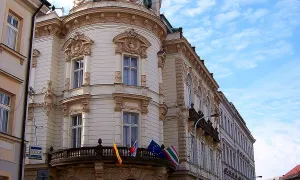
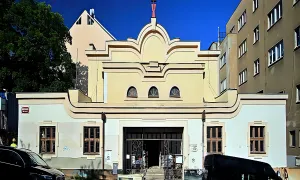
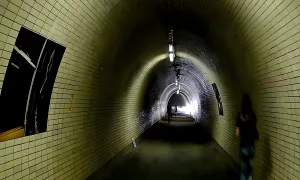
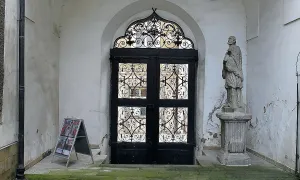
The location was located near Vítkova Hill and the former Mountain Gate, near the modernising Masaryk Railway Station. The area is now part of the bustling urban environment in Prague.
Visualizations and artistic views


The visualisations are generated by artificial intelligence and serve as inspiration.
Photos from the area
Real photos taken near the monument


Zdroj a licence jsou uvedeny u každého snímku.
Tips from visitors
No tips yet. Be the first!
Log in and add your tip.
Sources and literature
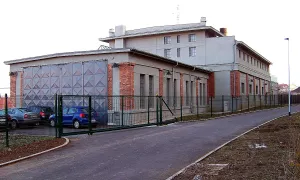
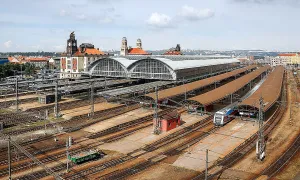
Photos: Violone / CC BY-SA 4.0 — Wikimedia Commons. The author and licence also appear when you hover over the image.
Faktickým podkladem tohoto textu byl článek na Wikipedii, jehož autory jsou přispěvatelé Wikipedie. Článek je dostupný pod licencí CC BY-SA 4.0.
Location on the map
Příběhy a pověsti
Legendy, pověsti a příběhy spjaté s touto památkou
Fotografie návštěvníků
Zatím žádné fotografie. Buďte první, kdo přidá fotografii z návštěvy!
Log in a přidejte svou fotografii nebo hodnoťte.
Za ověřenou návštěvu v aplikaci získáte víc bodů — poznáme podle GPS, že jste na místě.
Reviews and comments