



Klášter křižovníků s červenou hvězdou na Starém Městě v Praze Monastery
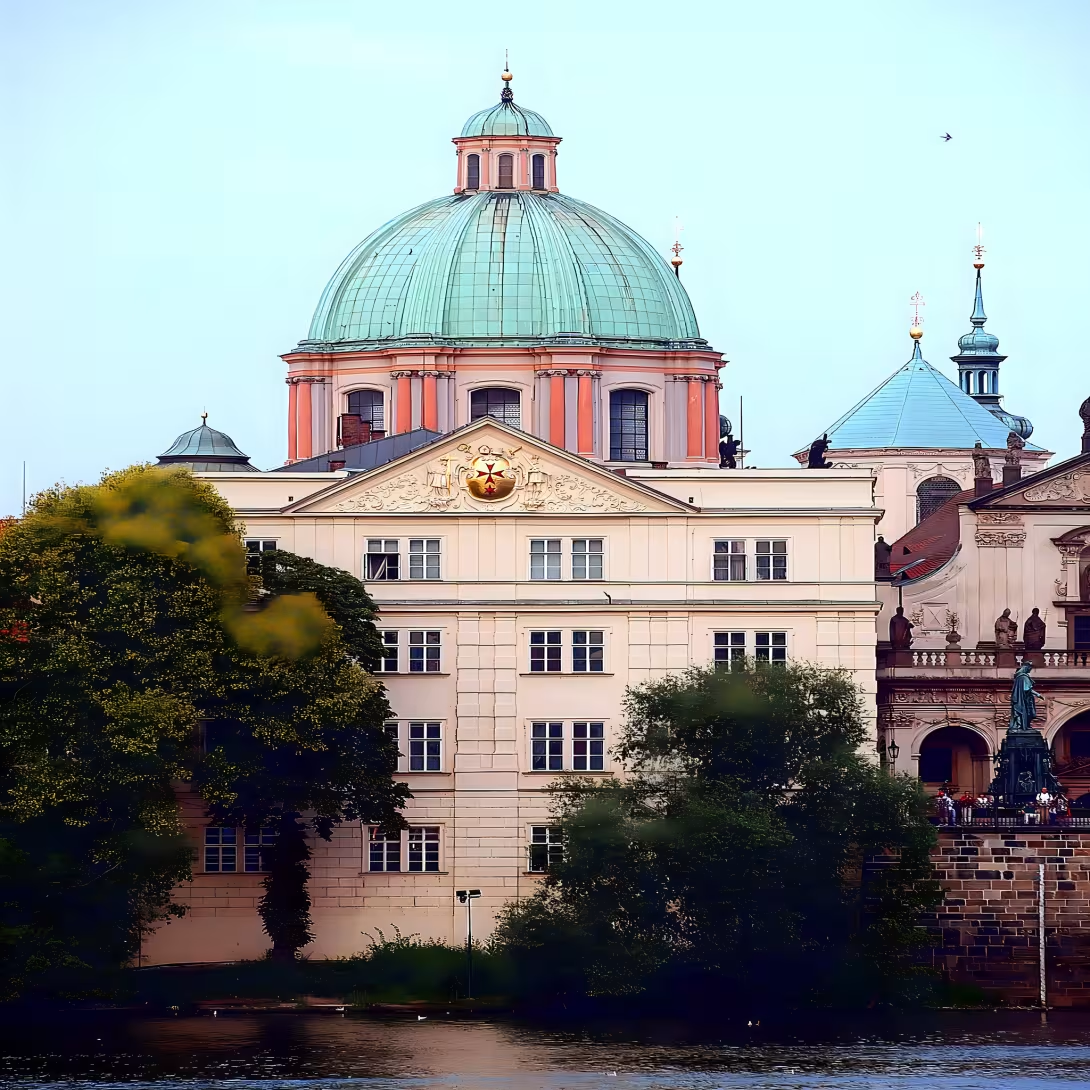
The Knights of the Cross monastery with the Black Star, located in Prague Staré Město, is an important historical monument serving as a home for the original Czech chivalric order founded in 1252 by Saint Agnes Bohemia. It is located in Cřežovnický Square, which is bounded by the river Vltava and the streets such as Platnířská and Cřížovnický Street, and has experienced a number of architectural changes from its original Gothic design to its Baroque and later Secessionist styles. Its rich history reflects cultural importance and resilience in various historical times.
The origin of the monastery dates back to 1252, when Saint Agnes of Bohemia began its construction on 21 May, after the papal confirmation of her order as a fraternity of hospitalists in 1237. The site was strategically selected near the Charles Bridge (Charles Bridge), serving as a basic communication centre for pilgrims and sick during this time. Over time, it became an important part of Prague's religious and cultural landscape under the Premyslid dynasty.
Architecturally, the monastery began in a Gothic style but went through significant changes over the centuries. The main baroque transformation began in 1663 after fire damage in 1378, which required reconstruction and adjustment of height. The new church, designed by Jean-Baptiste Mathey and completed in 1688, marked one of the first Baroque religious centers in the Czech lands. Other adjustments were made to Ignác Jan Palliardi at the end of the 18th century, with significant changes made in 1846 to Vincenc Kulhánek. The most transformative period came between 1908 and 1912, when Josef Sakař led the Secesionist reconstruction which replaced many original Baroque buildings.
The ownership and administration of the monastery have seen dramatic changes, especially during the 20th century. Originally, the Knights controlled the Red Star Cross until the mid-20th century, faced occupation first by Nazi forces in World War II and later by communist authorities, forcing order to disappear twice. Despite these challenges, the monastery continued to serve its purpose during the first republic, even though it focused partly on state administration.
Key events include a devastating fire in 1378, which led to significant efforts to restore and damage during the Swedish siege of Prague in 1648. The site also settled one of the last Prague operating breweries until closing due to reconstruction 1908-1912. This brewery was remarkable as the first Czech beer bottle business in 1844.
Today visitors can explore this historically rich place, which remains evidence of Prague's architectural development and cultural heritage. The monastery is accessible to people interested in discovering its mixture of medieval architecture and modern urban development. Its historical significance and resilience at different times make it a convincing destination for anyone visiting Prague Staré Město.
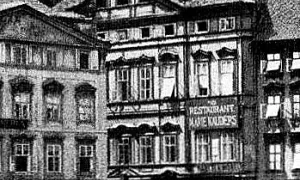
Then and now
Drag the slider to compare how the landmark may have looked when it was built with the view today.
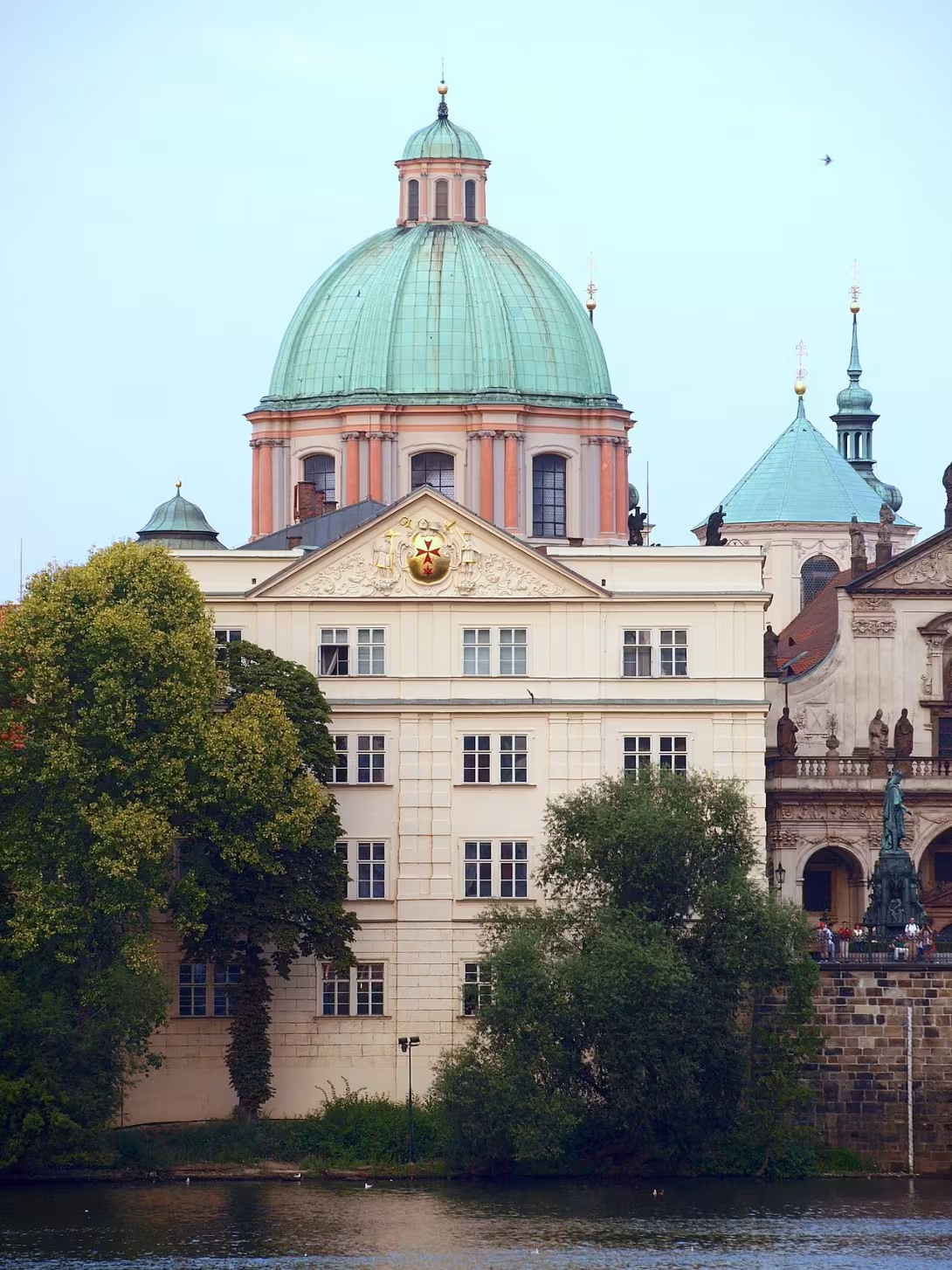
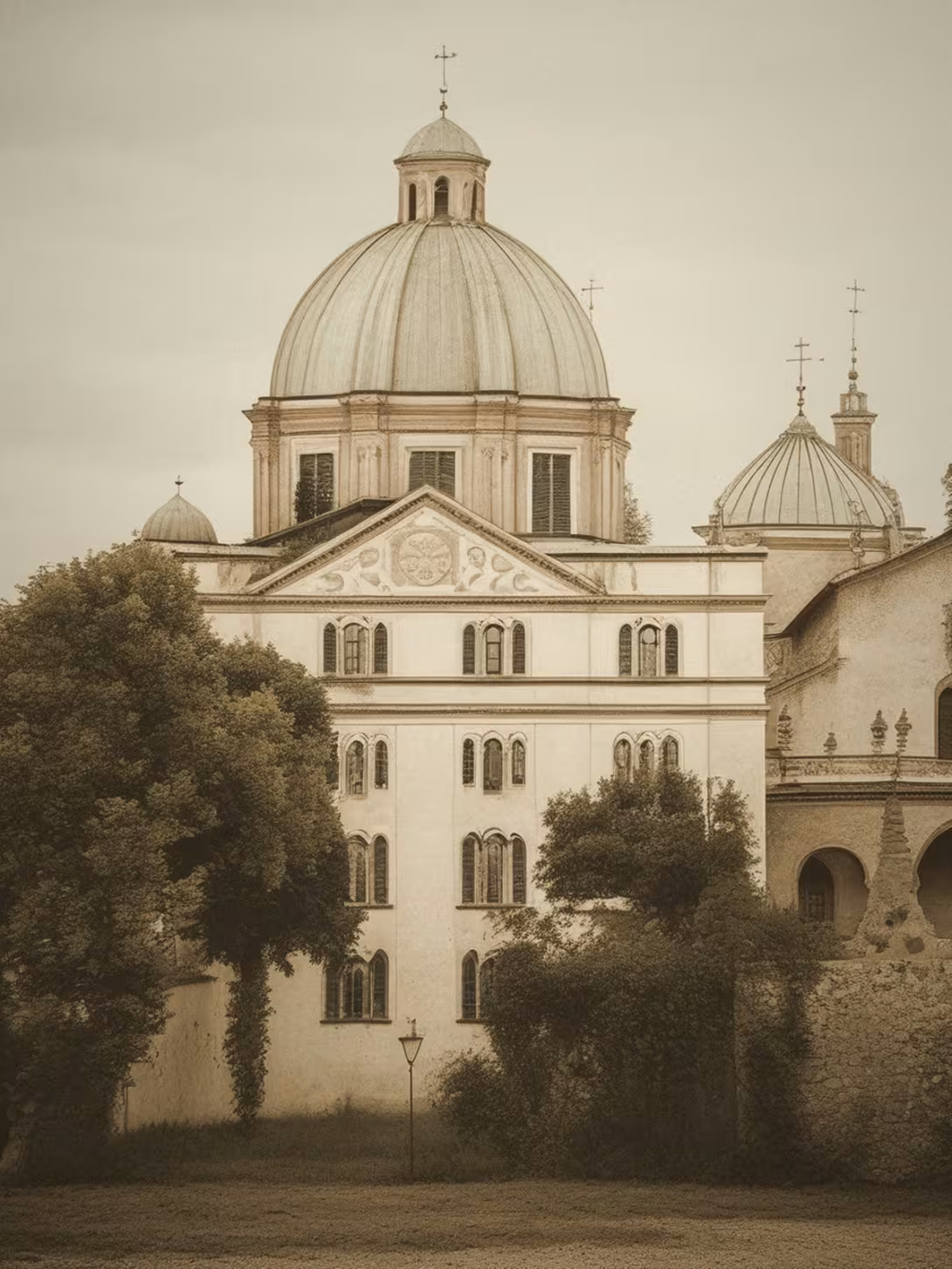
The historical appearance on the left is an AI-generated visualisation and serves as inspiration only.
Historical milestones
- X1252
- The construction of the monastery began on 21 May.
- 1378
- The monastery was reconstructed after the fire.
- 1648
- The damage suffered during the Swedish siege of Prague.
- 1663
- The Baroque reconstruction has begun.
- 1679
- Construction of the new church has begun.
- 1688
- The new church was sanctified.
- 1846
- Significant changes were made within Vincenc Kulhánek.
- 1908
- Large reconstruction started František Xaver Marat.
Architectural development
At first, the monastery was built in a Gothic style and has undergone a great Baroque transformation since 1663. The new church was designed by Jean-Baptiste Mathey and completed in 1688. At the end of the 18th century Ignác Jan Palliardi made further modifications. Significant Secesionist reconstruction took place in 1908-1912 under architect Josef Sakař, which led to the loss of many original Baroque buildings.
Historical events
In 1378 there were significant changes in reconstruction and altitude.
During the Swedish siege of Prague in 1648 the monastery was damaged.
The monastery was occupied by Nazi forces during World War II.
Communist authorities once again pushed order out in the mid-20th century.
Owners
Established by Czech Saint Agnes in 1252
Controlled by Knights of the Cross with Red Star until the 20th century
Points of interest
- The site of the monastery was strategically selected near the Charles Bridge (Charles Bridge), which makes it a key centre for pilgrims and sick people in the Middle Ages. This place has facilitated its role as both a religious sanctuary and a communication centre.
- One of Prague's last operating breweries was located in the monastery, which is remarkable that in 1844 it was the first Czech company to catch beer. The brewery ceased operation as a result of extensive reconstruction between 1908 and 1912.
- In 1378, the devastating fire led to significant efforts to reconstruct the monastery, including adjustments to the altitude that created the stage for the baroque transformation that began in 1663. This event meant one of many key moments in shaping the architectural development of the site.
The monastery experienced the occupation of both Nazi forces during World War II and later the Communist authorities, forcing the Knights of the Red Star to leave twice. Despite these challenges, it continued to serve its religious purpose in various political regimes.
- Architectural changes in the monastery reflect a mixture of styles from Gothic beginnings through Baroque modifications and Secesionist transformations led by Josef Sakař between 1908 and 1912. During this period, many original structures were replaced, which indicate a significant shift in aesthetic and functional web design.
Guide
This guide is narrated by a synthetic voice generated by artificial intelligence.
Show guide text
This text was created by artificial intelligence and has not been editorially reviewed. It may contain inaccuracies.
The Convent of the Crusaders with the Red Star is the mother house of the original Czech ecclesiastical knightly order founded by Saint Agnes of Bohemia. The complex is located in the Old Town. It is bounded by Křižovnické Square, the Vltava River, Platnéřská Street, and Křižovnická Street. The Church of Saint Francis of Assisi is part of it.
The Pope confirmed the order in 1237 as a hospitaller brotherhood. From their original location Na Františku, the brothers moved to the river and on May 21, 1252, construction of the convent began at the then Judith Bridge. It was completed during the reign of King Wenceslas II. The first church stood closer to the river and was dedicated to the Holy Spirit. From it, one space has been preserved beneath the façade facing the square, along with part of the portal with columns.
The foundation of the convent was a hospital. The Crusaders cared for pilgrims and the sick. For this purpose, they chose an advantageous location by the bridge, on the main road to the Old Town marketplace. The buildings were surrounded by a cemetery. After a fire in 1378, the convent was rebuilt. During the Hussite wars, the knights apparently did not leave completely, but the buildings fell into disrepair due to lack of funds. In 1526, a new hospital was added on the embankment.
The complex was heavily damaged in 1648 when the Swedes besieged the Old Town and fighting took place directly at the bridge gate. A comprehensive Baroque reconstruction could only begin in 1663. The new church, designed by Jean Baptiste Mathey, was built from 1679 and consecrated in 1688. The convent thus became one of the first Baroque order residences in the Czech Kingdom. In 1846, the building of the generalate and hospital was raised by one floor and received a gable with an attic and tympanum by architect Vincent Kulhánek.
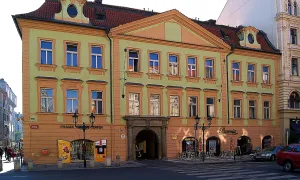
The last major reconstruction was carried out by Grand Master Francis Xavier Marat between 1908 and 1912. Most of the early Baroque buildings were demolished. The church remained, as did the wing of the generalate with the hospital and part of the late Gothic old prior's residence. The rest was replaced by a Secession Neobaroque new building by architect Joseph Sakar. The Crusaders' brewery disappeared in the process. It was the first in the Czech lands to begin bottling beer in 1844.
In the twentieth century, the Crusaders had to leave the convent twice, first during the Nazi occupation and again under communism. In June 1942, they lost the convent buildings and later the church as well. The convent was taken over by the Ministry of Transport and Technology. In the generalate wing sat the construction department of the Reichsprotektor's office.
Tips for visitors
The best time to visit the Knights of the Cross with a red star is during the late spring or early autumn when the weather is pleasant, which allows a comfortable survey of the monastery and its surroundings. These seasons offer a balance between avoiding peak tourist crowds in summer and colder winter temperatures. In addition, the visit these months provides beautiful natural lighting for photography, especially around sunset, improving architectural details of this historic site.
Charles Bridge and Crožovnická Square are nearby monuments that are easily accessible from the monastery on foot. Always check the current possibilities of public transport via online search before visiting.
When visiting the monastery, consider bringing comfortable walking shoes as you will probably explore on foot, both within and around the place. The camera is recommended to capture stunning architecture and calm atmosphere of the area. Due to the mix of medieval and modern elements around, wide-angle lens can be particularly useful for photography. Don't forget to bring water and perhaps light snacks if you plan to spend several hours exploring.
For families with children, the monastery offers an interesting historical experience. The nearby Charles Bridge offers a fun walk with many photographic opportunities, while Crožovnická Square is ideal for a peaceful walk or enjoying street artists who often find themselves in this lively area. A survey of this site together can be educational and fun for children who offer a view into the rich history of Prague.
In addition to the monastery itself, visitors should consider exploring nearby attractions within 30 minutes. The Charles Bridge offers a wonderful view of Prague Chateau over the River Vltava and is a great place for photography, especially during the golden hour. The square with a mix of historical buildings and modern cafés provides a view of the past and present city. Both locations are ideal for capturing memorable photos and enjoying the unique atmosphere of Prague.
Frequently asked questions
Can the monument be visited?
Religious buildings are usually open mainly during services; at other times a visit is normally arranged with the parish or the operator. We have not verified specific times.
Where is the monument?
Location: Platnéřská 191/2, Staré Město, Praha, Hlavní město Praha. The map on this page shows the exact spot.
Why is the monument protected?
It is listed in the Central List of Cultural Monuments of the Czech Republic as a cultural monument (register no. 38191/1-25).
Businesses nearby
Do you run a restaurant, accommodation, shop, museum, rental, wellness or other visitor service near this monument? Show yourself directly to the people heading to it — this is how they will see you in the app and on the web:
Events nearby

Zdroj akcí: otevřená data měst a obcí ČR (Národní katalog otevřených dat) a kalendář akcí Národního památkového ústavu.
Nearby
The monastery is located near the Charles Bridge and is surrounded by important historical monuments including the Cross Square and the River Vltava. The area contains a mixture of medieval architecture and modern urban development.
Accommodation nearby
Trips and activities nearby
Guided tours, tickets and activities nearby from GetYourGuide
Affiliate link: if you buy from the partner, we may receive a commission. The price for you does not change.
Search tours and activities →Themed route
Thematic walking tour: Křežovice Monastery and its historical surroundings
1. Crossroads Square (Square) Start your journey in the heart of this historic area, Crossroads Square, a place filled with history where you can feel the echoes of medieval Prague. This square is important for its architectural beauty and serves as a gateway to explore the rich past of the city. It is an ideal starting point to appreciate a mixture of historical structures that define this part of Prague.
2. The Monastery of Crips with Red Dense (Convention) Continue to the top point, the Monastery of the Crossroads with a red head, located in the Old Town. This monastery is famous for its stunning architecture and historical significance as a former hospital founded by the Order of the Knights of the Red Cross with the White Cross. The site offers visitors a view of Prague's religious and medical history, making it a crucial stop for anyone interested in the history of the city.
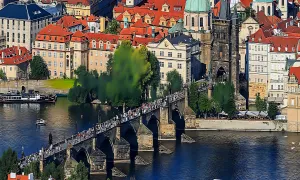
3. Charles Bridge (bridge) A short walk from the monastery takes you to the iconic Charles Bridge, one of Prague's most famous monuments. This medieval bridge is not only a miracle of engineering but also decorated with statues and offers stunning views of the Vltava River and Prague Chateau in the distance. It is an excellent place for photography and reflection, providing both historical context and stunning visions.
4. Vltava River (River) Close your tour by enjoying the peaceful beauty of the river Vltava for a while. The river flows through the heart of Prague and is at the heart of its development for centuries. Walking along his banks offers a peaceful end to your survey, allowing you to think about the historic journey you have just experienced while enjoying the natural charm that complements the city's rich architectural heritage.
This thematic tour provides a immersed experience of history and beauty around the Monastery of the Crossroads with a red head, highlighting key locations in its immediate vicinity.
Seasonal recommendations
Spring: The Crucifixion Monastery with previous acquisition times in the spring season will not reduce the beauty of many gardens that revive historical space. Sunshine days and low temperatures recalculate the optimistic process, where it is possible to use even peaceful walks around the garden area with the possibility of promising quota sets. Practical advice: visit on Sundays or in a warehouse where there are fewer people, and the lower shoes are suitable for the disease after exams. Thanks to spring sunshine today, it will be ideal for long profiles.
Summer: Summer recalculating a calm and warm spirit that is perfect for the demanding Monastery of the Cross with the stated dense. The sunny days strengthen the subtleties of architecture, while the stands of monastic buildings offer interest before heat. The atmosphere is full of life and activities that can lead to higher conceived challenging. Practical advice: visit the prano or I will use the evening for small temperatures and smaller crowds; the bright round, sunny and the water is persistent.
Autumn: A calm and small quantity of goods to be allocated to the historical environment. The November list is often cold and moist, which makes it cosy for a speech. Practical advice: go over with warm clothes because winter can only appear creatively; the days are shorter, so you will notice the hours opened and visit the monastery early in the day.
Winter: Winter value of the Monasteries with the written one-way value on historical buildings, verified ice lights and often covered with light dreams. The atmosphere is calm and quiet, which makes you feel very relaxed. Practical advice: pass with warm clothes and will be valid for healthy stimuli; the monastery can be reached, so you will notice the clock and visit it soon during the day.
Visualizations and artistic views


The visualisations are generated by artificial intelligence and serve as inspiration.
Photos from the area
Real photos taken near the monument


Zdroj a licence jsou uvedeny u každého snímku.
Tips from visitors
No tips yet. Be the first!
Log in and add your tip.
Sources and literature
Photos: VitVit / CC BY-SA 4.0, rozlišení zvýšeno umělou inteligencí — Wikimedia Commons. The author and licence also appear when you hover over the image.
Faktickým podkladem tohoto textu byl článek na Wikipedii, jehož autory jsou přispěvatelé Wikipedie. Článek je dostupný pod licencí CC BY-SA 4.0.
Location on the map

Příběhy a pověsti
Legendy, pověsti a příběhy spjaté s touto památkou
Příběh: Klášter křižovníků s červenou hvězdou na Starém Městě v Praze
Bylo to v pondělí ráno, kdy Martin zjistil, že nejhlubší tajemství kláštera se blížilo ke svému rozruchu. Zvonování prvního řeholního modlitby rezonovalo skr…
Číst příběh
Pověst: Klášter křižovníků s červenou hvězdou na Starém Městě v Praze
Traduje se, že ve chvílích největšího nebezpečí se nad klášterem křižovníků s červenou hvězdou vznáší záchranná přítomnost, kterou staří pražští vyprávěči na…
Číst příběhFotografie návštěvníků
Zatím žádné fotografie. Buďte první, kdo přidá fotografii z návštěvy!
Log in a přidejte svou fotografii nebo hodnoťte.
Za ověřenou návštěvu v aplikaci získáte víc bodů — poznáme podle GPS, že jste na místě.
Reviews and comments