



kostel Nanebevzetí Panny Marie (Bavorov) Church
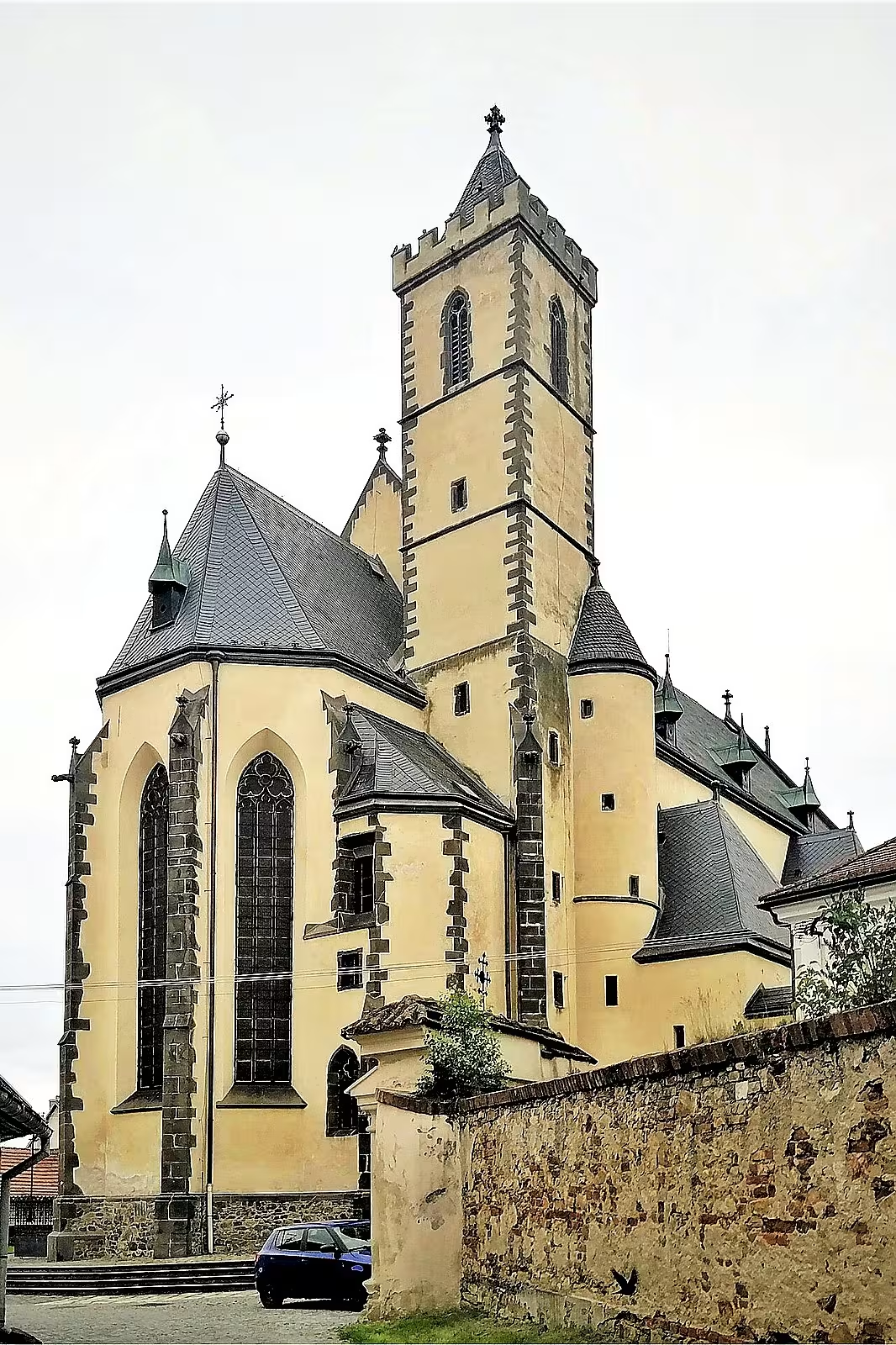
The Church of the Assumption of the Virgin Mary in Bavorov is a prominent Gothic structure that dominates the town with its architectural grandeur. Located in South Bohemia, this church stands as one of the most significant examples of regional Gothic architecture from the 14th century. Its historical importance is highlighted by its transformation from a filial to a parochial church under the influence of the Lords of Rožmberk.
The origins of the Church of the Assumption trace back to the mid-14th century, during a period when Bohemia was experiencing significant political and cultural developments. The Lords of Rožmberk played a crucial role in its history by persuading a parish priest to move from Velká Blanice to Bavorov in 1360, thus elevating the church's status. This transition marked the beginning of a new era for the church, which saw the construction of a Gothic structure on the site of an older church that had stood since around 1350.
Architecturally, the church features a three-nave rectangular layout with four pillars and half-pillars, all topped by slate roofs. Constructed using unpolished sandstone, it includes a polygonal presbytery on its north side, housing the smaller 'Rožmberská' tower with spiral stairs and a sacristy that was originally a chapel. A taller tower stands southwest of the main entrance, added in 1604 by builder Petr Vlach. The church's south portal is adorned with heraldic symbols of Jan z Rožmberka and Eliška z Halasu, indicating its connection to these influential figures.
Ownership and administration of the church have been closely tied to the Lords of Rožmberk, who were instrumental in its development. Notable events in its history include a significant fire in 1649 that caused damage to the church, leading to a reconstruction between 1652 and 1654 under architect Peter Spinetta. This reconstruction altered the church's layout from two-nave to three-nave. During both World Wars, bells were requisitioned from the tower, leaving only a bell from 1500.
Today, the Church of the Assumption remains a significant historical monument in Bavorov. It is accessible to visitors who wish to explore its rich history and architectural beauty. The church's enduring legacy as a masterpiece of South Bohemian Gothic architecture makes it a worthwhile destination for those interested in history and architecture. Its connection to the Lords of Rožmberk and its resilience through centuries of change invite visitors to appreciate its historical significance and architectural splendor.
Then and now
Drag the slider to compare how the landmark may have looked when it was built with the view today.
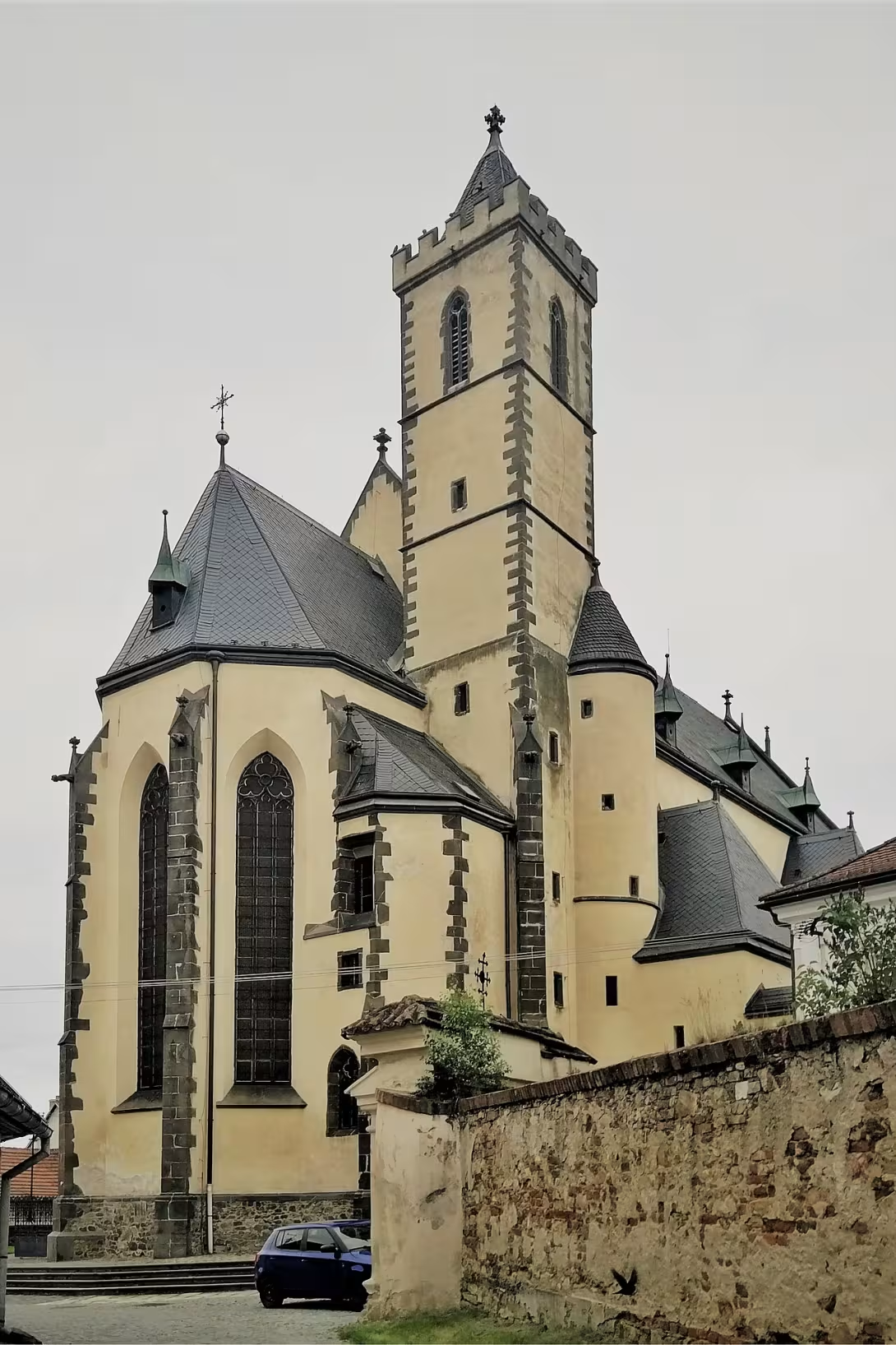

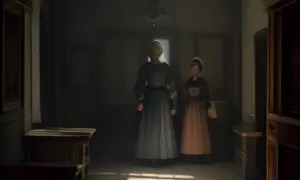
The historical appearance on the left is an AI-generated visualisation and serves as inspiration only.
Historical milestones
- 1360
- A new parish priest moved to Bavorov at the urging of the Lords of Rožmberk.
- 1384
- The Gothic church was completed around this year.
- 1604
- Construction began on the southwest tower.
- 1649
- A fire caused significant damage to the church.
Architectural development
The church was originally built in the mid-14th century using unpolished sandstone with slate roofing. It underwent significant changes after a fire in 1649, transitioning from a two-nave to a three-nave structure under the guidance of architect Peter Spinetta. The southwest tower was added in 1604 by builder Petr Vlach.
Historical events
In 1360, a new parish priest was persuaded by the Lords of Rožmberk to move from Velká Blanice to Bavorov, elevating the church's status from filial to parochial.
The current Gothic structure was completed around 1384 after replacing an older church on the same site.
A significant fire in 1649 caused damage to the church, leading to a reconstruction between 1652 and 1654 that altered its layout from two-nave to three-nave.
Owners
Initially under the influence of the Lords of Rožmberk after they acquired the estate from the extinct Bavor family, leading to significant developments in the church's history.
Points of interest
- The Church of the Assumption's status was elevated when a parish priest moved from Velká Blanice to Bavorov in 1360 at the behest of the Lords of Rožmberk, marking it as more than just a local church.
- A significant fire in 1649 caused considerable damage to the church, leading to its reconstruction between 1652 and 1654. This renovation changed its structure from two naves to three, under the guidance of architect Peter Spinetta.
- The south portal of the church features heraldic symbols belonging to Jan z Rožmberka and Eliška z Halasu, reflecting the influence these figures had on the church's history and architecture.
- During both World Wars, the church’s bells were requisitioned for military purposes, leaving only a single bell from 1500 remaining in the tower today, symbolizing its endurance through turbulent times.
- The taller tower southwest of the main entrance was added to the church in 1604 by builder Petr Vlach, showcasing an evolution in the church's architectural design and functionality over time.
Guide
This guide is narrated by a synthetic voice generated by artificial intelligence.
Show guide text
This text was created by artificial intelligence and has not been editorially reviewed. It may contain inaccuracies.
The Church of the Assumption of the Virgin Mary is the dominant feature of the South Bohemian town of Bavorov and ranks among the most significant Gothic structures in South Bohemia. It stands west of the town square, between Jirsíkova Street and Doctor Mareš Street.
As early as 1350, there was an older church here that belonged under the church in Velká Blanice. After the extinction of the Bavorov family line, the estate passed to the lords of Rožmberk. Shortly after 1360, they persuaded the vicar to relocate from Velká Blanice to Bavorov. The Bavorov church thus became a parish church, and a new building was constructed on the site of the old one. It was founded by the brothers Jošt, Petr, Oldřich, and Jan of Rožmberk. On the southern portal are the roses of Jan of Rožmberk and the coat of arms of Eliška of Halasu. Based on these, the church was completed between 1370 and 1389, most commonly cited as 1384. It could not have been later, as Jan of Rožmberk died in 1389. In 1384, the brothers established five chaplaincies at the church by charter and determined income for priests, teachers, and hospitals.
The church is constructed from unfinished granite. It has a polygonally enclosed chancel, on whose northern side stands a smaller tower called the Rožmberk Tower with a spiral staircase. There is also a sacristy, which was originally a chapel. Two slate roofs are connected by a brick gable with a cross finial. The roof over the presbytery is lower than the roof over the nave. The walls are supported by buttresses with finials, and most of them feature gargoyles in the form of fantastic creatures.
The higher bell tower on the southwest corner was begun in 1604 by Petr Vlach of Vodňany. In 1649, a city fire struck the church, the vault collapsed, and the entire structure was damaged. Between 1652 and 1654, the Eggenberg builder Petr Spineta reconstructed it, and the original two-aisled structure became a three-aisled church with four pillars. Another fire in 1867 damaged the large tower and destroyed the bells Pavel, Marek, and Marie. The tower was then repaired for two years by the Písek builder Špirhanzl. In December 1869, new bells were installed named Marie, Ida, Jan Nepomuka, and Adolf.
Between 1905 and 1908, the church underwent reGothicization according to plans by Josef Mocker. During both world wars, the bells were confiscated, and only the bell Prokop from 1500 remained on the tower. In 2007, repairs to the church facade and the adjacent rectory were completed.
At the entrance to the courtyard stands a crucifix of larger than life size. The fenced grounds are connected to the rectory by a bridge.
Frequently asked questions
Can the monument be visited?
Religious buildings are usually open mainly during services; at other times a visit is normally arranged with the parish or the operator. We have not verified specific times.
Where is the monument?
Location: Bavorov, Jihočeský kraj. The map on this page shows the exact spot.
Why is the monument protected?
It is listed in the Central List of Cultural Monuments of the Czech Republic as a cultural monument (register no. 16196/3-3991).
Businesses nearby
Do you run a restaurant, accommodation, shop, museum, rental, wellness or other visitor service near this monument? Show yourself directly to the people heading to it — this is how they will see you in the app and on the web:
Events nearby

Zdroj akcí: otevřená data měst a obcí ČR (Národní katalog otevřených dat) a kalendář akcí Národního památkového ústavu.
Nearby
Bavorov is surrounded by picturesque landscapes typical of South Bohemia, with nearby natural features and other historical sites within a 5 km radius.
Accommodation nearby
Themed route
Thematic Walking Tour: Bavorov and Its Surroundings
1. Kostel Nanebevzetí Panny Marie (Bavorov) - Church Begin your journey at the heart of Bavorov with the stunning Kostel Nanebevzetí Panny Marie. This church is a remarkable example of Baroque architecture, featuring intricate designs and beautiful frescoes. Its historical significance and architectural beauty make it an essential visit for anyone interested in religious history or art.
2. Historic Town Center of Bavorov - Historic Site After exploring the church, take a leisurely walk through the historic town center of Bavorov. The area is characterized by charming cobblestone streets and traditional South Bohemian architecture. This part of the tour offers insight into the local culture and history, providing an authentic experience of life in this picturesque region.
3. Surrounding Natural Landscapes - Nature Venture a short distance from Bavorov to immerse yourself in the stunning natural landscapes that surround the town. The area is known for its lush greenery and serene atmosphere, typical of South Bohemia. These landscapes offer a perfect setting for relaxation and reflection, allowing visitors to appreciate the region's natural beauty.
4. Local Historical Sites - Historic Site Conclude your tour by visiting nearby historical sites within a 5 km radius of Bavorov. While specific names are not listed, these locations provide additional context to the area’s rich history and cultural heritage. Exploring these sites offers a deeper understanding of the region's past and its influence on present-day Bavorov.
This thematic walking tour provides a comprehensive exploration of Bavorov and its surroundings, highlighting both historical and natural attractions.
Seasonal recommendations
Spring: The Nanebevzetí Panny Marie Church in Bavorov becomes a serene haven as spring breathes new life into the surrounding landscape. Visitors can enjoy the gentle warmth of the sun, which illuminates the church's intricate architecture and brings out vibrant colors from blooming flowers nearby. This season offers a peaceful atmosphere with fewer crowds, allowing for an intimate exploration of this historical site. When planning your visit, consider wearing layers as temperatures can vary during the day, and early mornings are ideal to avoid any lingering chill.
Summer: Summer at Nanebevzetí Panny Marie Church is marked by lush greenery and extended daylight hours, creating a picturesque setting for visitors. The warm weather encourages outdoor activities around the church grounds, making it an excellent time for family outings or leisurely walks. However, this season also sees higher visitor numbers, so arriving early in the day can help you avoid the crowds and fully enjoy the site's tranquil ambiance. Light clothing is recommended to stay comfortable under the summer sun.
Autumn: Autumn transforms Bavorov into a vibrant tapestry of reds, oranges, and yellows as leaves change color around Nanebevzetí Panny Marie Church. The crisp air adds a magical quality to your visit, with the church's historic architecture standing out against the autumnal backdrop. This season offers moderate temperatures ideal for exploration without the summer crowds or winter chill. A light jacket is advisable as evenings can be cooler, and visiting during weekdays may provide a quieter experience.
Winter: The Nanebevzetí Panny Marie Church in Bavorov exudes a unique charm during winter, with snow often adding a serene and picturesque quality to its surroundings. The church's stone façade takes on a different character under the soft glow of streetlights or early morning frost, creating an enchanting atmosphere perfect for photography enthusiasts. Visiting in the late morning can offer optimal lighting conditions while avoiding any potential cold-related closures.
Visualizations and artistic views


The visualisations are generated by artificial intelligence and serve as inspiration.
Photos from the area
Real photos taken near the monument


Zdroj a licence jsou uvedeny u každého snímku.
Tips from visitors
No tips yet. Be the first!
Log in and add your tip.
Sources and literature
Photos: Michal Kubečka / CC BY-SA 4.0 — Wikimedia Commons. The author and licence also appear when you hover over the image.
Faktickým podkladem tohoto textu byl článek na Wikipedii, jehož autory jsou přispěvatelé Wikipedie. Článek je dostupný pod licencí CC BY-SA 4.0.
Location on the map


Příběhy a pověsti
Legendy, pověsti a příběhy spjaté s touto památkou
Fotografie návštěvníků
Zatím žádné fotografie. Buďte první, kdo přidá fotografii z návštěvy!
Log in a přidejte svou fotografii nebo hodnoťte.
Za ověřenou návštěvu v aplikaci získáte víc bodů — poznáme podle GPS, že jste na místě.
Reviews and comments