






kostel Panny Marie Bolestné (Malá Lhota) Church
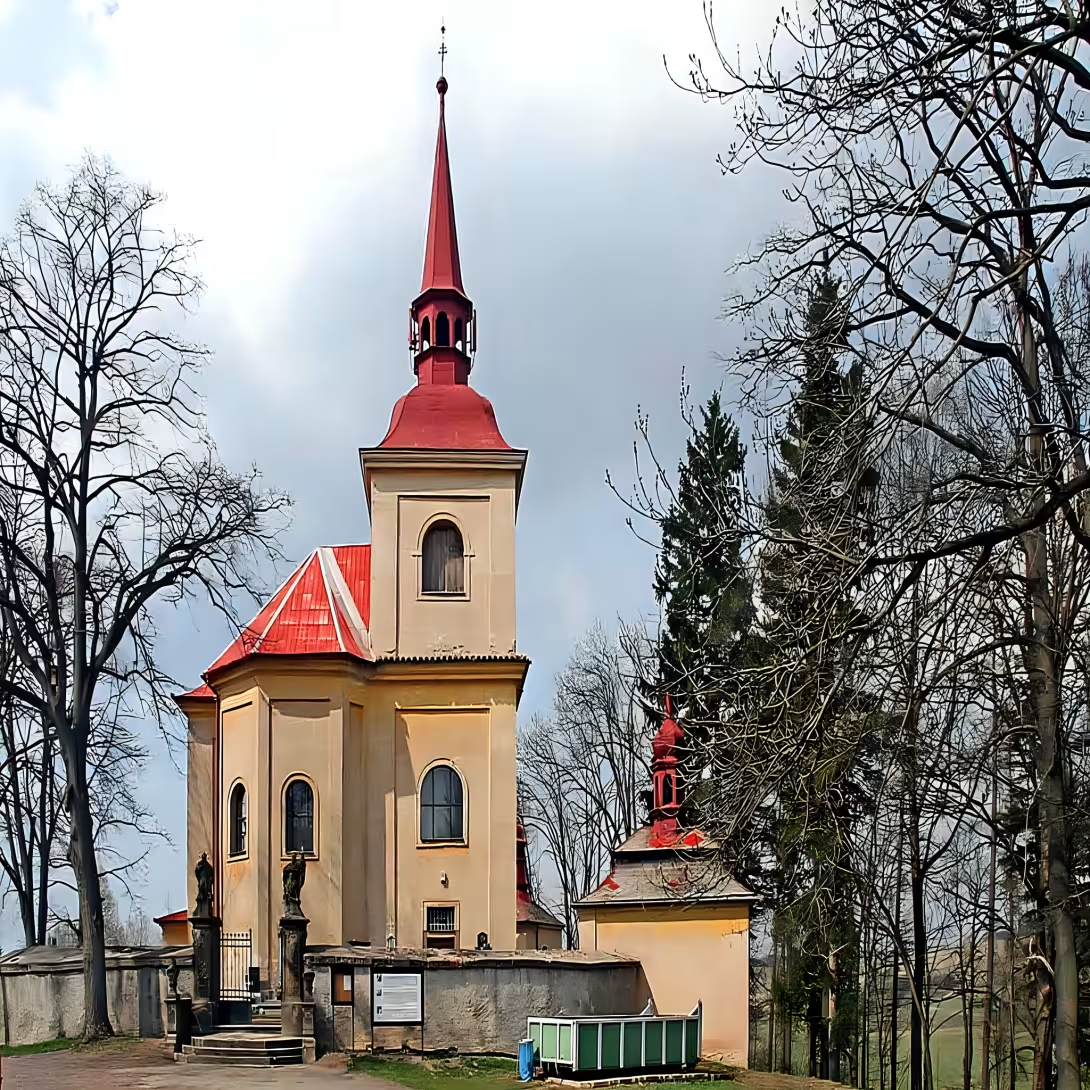
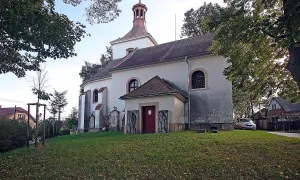
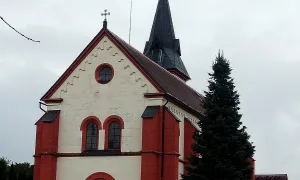
The Church of Our Lady of Sorrows in Malá Lhota is a Baroque pilgrimage church on Homoli Hill in Rychnov nad Kněžnou, within the Královéhradecký kraj region of the Czech Republic. Built between 1690 and 1696 by Countess Terezie Eleonora Alžběta z Ugarte, it reflects the Counter-Reformation spirit of late 17th-century Bohemia. Its grand staircase adorned with sculptures attracts many visitors. In 2018, the site was declared a national cultural monument due to its historical and architectural significance.
Emerging during Bohemia's Counter-Reformation, this period aimed to reaffirm Catholic dominance against Protestant influences. It saw a revival of religious art and architecture for spiritual renewal. Inspired by nearby pilgrimage sites like Nanebevzetí Panny Marie in Hemže and chrám P. Marie Pomocné on Chlumku u Luže, Countess Terezie Eleonora Alžběta z Ugarte commissioned this church to enhance local religious fervor and stimulate the economy through pilgrimages.
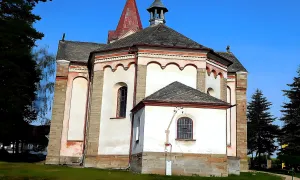
Architecturally, it is a notable example of late 17th-century Baroque design. Its grand staircase with sculptures is unique in scale across the country. Located on Homoli Hill, the church offers a commanding view over the landscape between Borovnice and Lhoty u Potštejna, enhancing its visual impact.
Countess Terezie Eleonora Alžběta z Ugarte commissioned the site and laid the foundation stone on May 12, 1692. Bishop Jan František Kryštof z Talmberka attended the celebrations. After her death, she was buried here, adding personal and spiritual significance.
Today, it remains a significant cultural and historical landmark. Its architectural features and historical context attract those interested in Baroque art and Bohemia's Counter-Reformation history. The church's designation as a national cultural monument highlights its importance to Czech heritage.
Visitors are invited to explore this remarkable site, where the architecture's grandeur and rich history offer insights into the past. Whether drawn by religious devotion or architectural curiosity, the Church of Our Lady of Sorrows promises an enriching experience.
Then and now
Drag the slider to compare how the landmark may have looked when it was built with the view today.
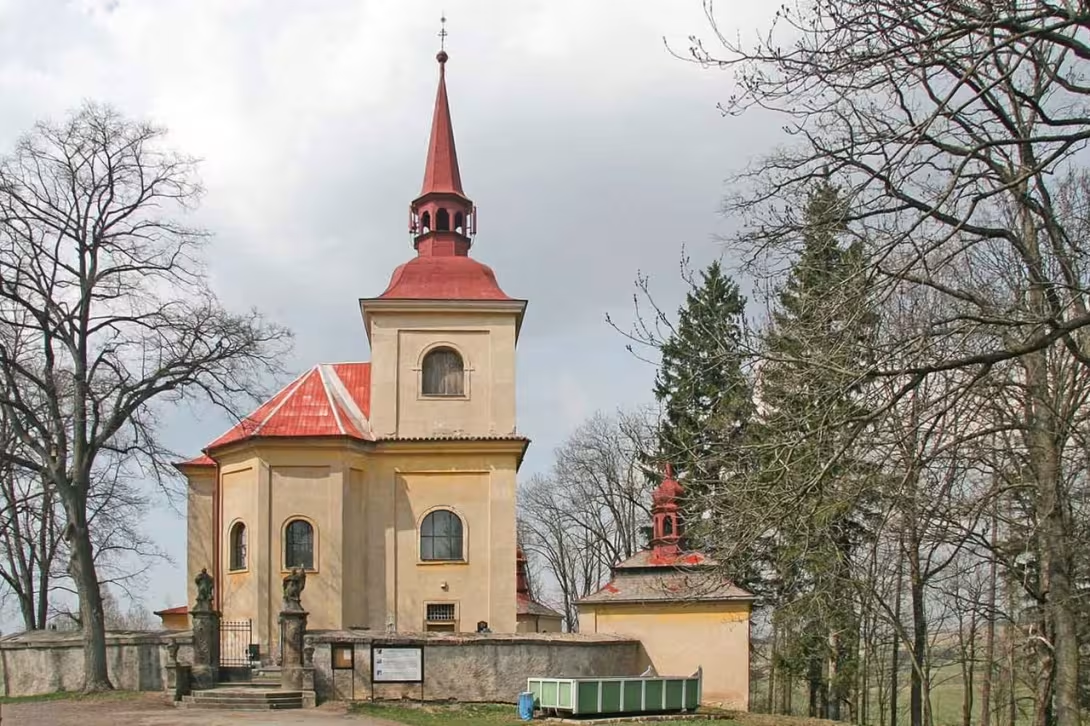
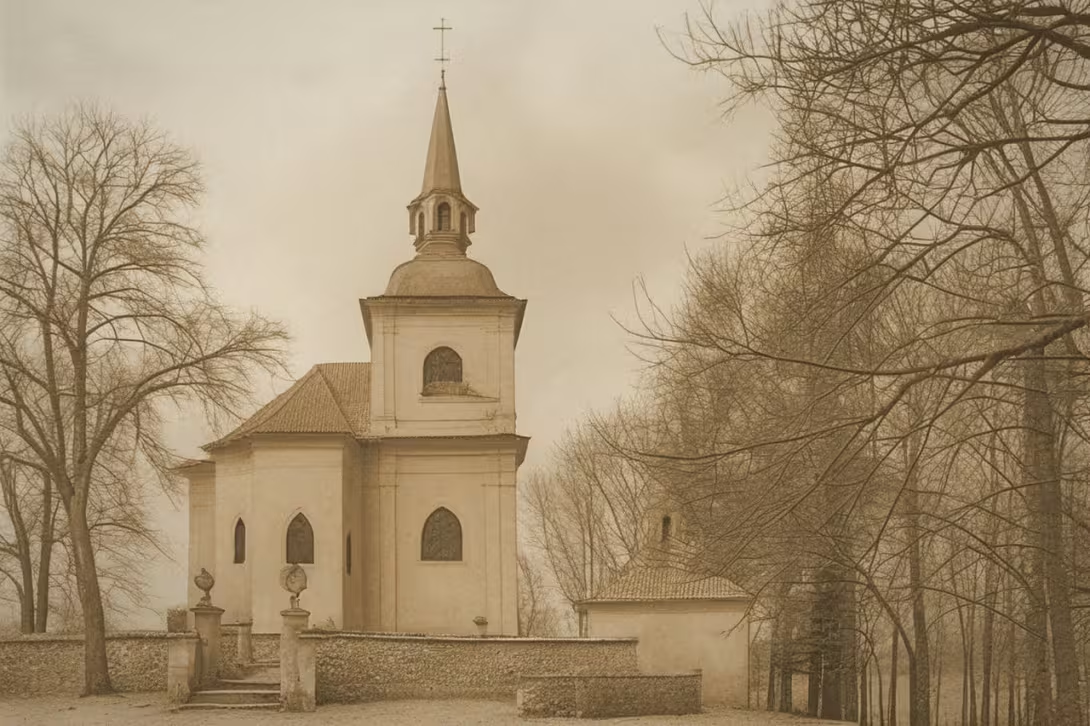
The historical appearance on the left is an AI-generated visualisation and serves as inspiration only.
Historical milestones
- 1690
- Zahájení stavby kostela Panny Marie Bolestné.
- 1692
- Přelomení základního kamene kostela.
- 1696
- Dokončení stavby kostela Panny Marie Bolestné.
- 2018
- Prohlášení za národní kulturní památku.
Architectural development
Constructed between 1690 and 1696, the church features Baroque architecture with a notable staircase adorned by sculptures. The design reflects the Counter-Reformation's influence in Bohemia during that period.
Historical events
- 1692
- The foundation stone of the church was laid on May 12, with celebrations attended by Bishop Jan František Kryštof z Talmberka.
- 2018
- The entire site was declared a national cultural monument of the Czech Republic.
Owners
Initially commissioned by Terezie Eleonora Alžběta z Ugarte in the late 17th century; no further ownership details provided.
Points of interest
- The Church of Our Lady of Sorrows in Malá Lhota was built between 1690 and 1696 by Countess Terezie Eleonora Alžběta z Ugarte. – It reflects the Counter-Reformation spirit of late 17th-century Bohemia, aiming to reaffirm Catholic dominance against Protestant influences. - The church features a grand staircase adorned with sculptures, unique in scale across the country. – Located on Homoli Hill, it offers a commanding view over the landscape between Borovnice and Lhoty u Potštejna. - Countess Terezie Eleonora Alžběta z Ugarte laid the foundation stone on May 12, 1692, with Bishop Jan František Kryštof z Talmberka attending the celebrations. – After her death, she was buried at this site, adding personal and spiritual significance.
Guide
This guide is narrated by a synthetic voice generated by artificial intelligence.
Show guide text
This text was created by artificial intelligence and has not been editorially reviewed. It may contain inaccuracies.
Church of Our Lady of Sorrows is a pilgrimage Roman Catholic church near the village of Lhoty u Potštejna in the Rychnov region. It stands on the summit of Homole at a height of 393 metres above sea level, between Lhoty and Borovnice. It lies in the middle of an imaginary cross formed by the intersection of lines drawn from Rychnov nad Kněžnou to Chocně and from Kostelce nad Orlicí to Ústí nad Orlicí. Below the summit lies the hamlet of Homole, which belongs to Borovnice. In 2018, the entire complex was declared a national cultural monument.
The pilgrimage site was established between 1690 and 1696 at the highest point of a long ridge. It was founded by Countess Theresa Eleonora Elizabeth of Ugarte, born Žďár. She came from a prominent and deeply Catholic noble family. She was the widow of Peter of Ugarte, a military commander of Vienna and owner of the Velké Meziříčí estate. Of her children, only her daughter Mary Maximilian Theresa reached adulthood. She married Francis Charles Záruba of Hustířan and lived with him at Starý zámek in Kostelce nad Orlicí. To have her mother nearby, she purchased the small estate of Borovnice in 1688 and settled in its Baroque castle.
It was a time of intensifying recatholization. The countess was apparently inspired by a somewhat older pilgrimage church in nearby Hemže u Chocně and also by the Church of Our Lady of Help at Chlumek u Luže, which was built by her older sister. The new sanctuary was to attract pilgrims from her estate and from the wider region. It was to strengthen the piety of the people and at the same time help the local economy, to which visitors brought income.
The money for construction came mainly from an inheritance. In 1688, the countess and four sisters divided the extensive estate of their brother Francis Adam Eusebius of Žďár among themselves. He was a Franciscan mystic and founder of a monastery in Hájek near Prague and the last man of his line in Bohemia. He had great influence on his sisters' piety.
The foundation stone was laid on May 12, 1692. The festivities lasted three days and were attended by the Bishop of Hradec Králové, John Francis Christopher of Talmberg. The countess also had a school established near the church, the only one in the wider area. She embellished her Borovnice estate and expanded it with additional plots of land.
After her death, she was buried directly in the Church of Our Lady of Sorrows on her beloved Homole. Borovnice together with Homole then passed to the Zárubas of Hustířan from Kostelce.
Tips for visitors
The best time to visit the Church of Our Lady of Sorrows in Malá Lhota is during late spring or early fall, when the weather is pleasant for exploring the scenic landscape around Homoli Hill. During these months, you can enjoy the vibrant colors of nature and avoid the peak tourist season, ensuring a more serene experience. Additionally, visiting on weekdays might offer a quieter atmosphere compared to weekends.
It’s best to verify current routes and schedules through a local transit website or app.
When visiting, consider bringing comfortable walking shoes as there are some paths leading up to the church that might be uneven. Also, pack a light jacket or sweater, especially if you plan on exploring in the evening when temperatures can drop. A camera is recommended for capturing the stunning views from Homoli Hill and the architectural details of the Baroque church.
For photography enthusiasts, the best spots are around the church where you can capture its Baroque architecture against the backdrop of the surrounding landscape. Early morning or late afternoon light provides the most dramatic lighting conditions, casting long shadows and highlighting textures. Additionally, the cross formed by lines from Rychnov nad Kněžnou to Chocen and Kostelec nad Orlicí to Ústí nad Orlicí offers a unique perspective for landscape shots.
Nearby attractions within 30 minutes include Borovnice and Lhoty u Potštejna, both offering charming local scenery and opportunities to explore more of the region's natural beauty. These areas are perfect for short walks or cycling trips, allowing visitors to immerse themselves further in the tranquil environment.
For families with children, the area around Homoli Hill provides a gentle hiking experience suitable for all ages. The church itself is an interesting historical site that can engage older kids with its history and architecture. Additionally, the surrounding landscape offers plenty of space for children to run and explore safely.
Frequently asked questions
Can the monument be visited?
Religious buildings are usually open mainly during services; at other times a visit is normally arranged with the parish or the operator. We have not verified specific times.
Where is the monument?
Location: Lhoty u Potštejna, Královéhradecký kraj. The map on this page shows the exact spot.
Why is the monument protected?
It is listed in the Central List of Cultural Monuments of the Czech Republic as a national cultural monument (register no. 442).
Businesses nearby
Do you run a restaurant, accommodation, shop, museum, rental, wellness or other visitor service near this monument? Show yourself directly to the people heading to it — this is how they will see you in the app and on the web:
Events nearby
Zdroj akcí: otevřená data měst a obcí ČR (Národní katalog otevřených dat) a kalendář akcí Národního památkového ústavu.
Nearby
Located on Homoli Hill, the church overlooks a scenic landscape between Borovnice and Lhoty u Potštejna. The area is marked by a cross formed by lines from Rychnov nad Kněžnou to Chocen and Kostelec nad Orlicí to Ústí nad Orlicí.
Accommodation nearby
Themed route
Trasa: Church of Our Lady of Sorrows and Surroundings
1. Church of Our Lady of Sorrows (main destination) - worth visiting for its unique architecture and history dating back to the 17th century. Explore the interior spaces and tower, which offers a beautiful view of the surrounding area.
2. Borovnice - picturesque village with historic buildings and beautiful scenery. Visit the local church and stroll through the streets.
3. Potštejnská hora - viewing platform with a stunning view of the surroundings. Stop here to listen to nature.
4. Church of Saints Peter and Paul in Lhoty u Potštejna - worth visiting for its unique architecture and history. Explore the interior spaces and visit the local cemetery.
5. Potštejn - picturesque village with historic buildings and beautiful scenery. Visit the local church and stroll through the streets.
Seasonal recommendations
Jaro
In the spring season, the Church of Our Lady of Sorrows is surrounded by blooming trees and flowers, creating a pleasant atmosphere. The specific spring lighting also creates delightful light that warms up the interior of the church. We recommend visiting the church during the spring season to enjoy nature and an atmosphere that is very unique at this time. The best times to visit are in the morning or late afternoon to avoid crowds of tourists. It's also advisable to wear warm clothing, as it can still be chilly inside the church even in spring.
Summer
Summer is the main season for visitors to the Church of Our Lady of Sorrows. The specific summer lighting creates a pleasant and warm light. During this time, the church is full of tourists eager to see beautiful frescoes and sculptures. We recommend visiting the church early in the morning or late afternoon to avoid crowds. It's also a good idea to bring a small mirror so you can photograph the interior without mirrors and reflections. Comfortable clothing is recommended as well, since you'll likely be standing or sitting for an extended period.
Autumn
Autumn is a beautiful season for visitors to the Church of Our Lady of Sorrows. The specific autumn lighting creates pleasant light that warms up the interior of the church. During this time, the church is full of people who want to see the beautiful colors of autumn nature. We recommend visiting in the late afternoon to avoid crowds. It's also a good idea to bring warm clothing, as it can be chilly inside the church. Bringing a camera is recommended so you can capture the beautiful autumn colors.
Winter
Winter is a quiet season for visitors to the Church of Our Lady of Sorrows. The specific winter lighting creates pleasant light that warms up the interior of the church. During this time, there are fewer tourists, allowing you to comfortably explore the interior of the church. We recommend visiting in the early morning or late afternoon to avoid cold weather. It's also a good idea to bring warm clothing for comfort. Bringing a camera is recommended so you can capture the beautiful light and atmosphere of the church.
Visualizations and artistic views


The visualisations are generated by artificial intelligence and serve as inspiration.
Photos from the area
Real photos taken near the monument


Zdroj a licence jsou uvedeny u každého snímku.
Tips from visitors
No tips yet. Be the first!
Log in and add your tip.
Sources and literature
Photos: Zp at Czech Wikipedia / CC BY-SA 3.0, rozlišení zvýšeno umělou inteligencí — Wikimedia Commons. The author and licence also appear when you hover over the image.
Faktickým podkladem tohoto textu byl článek na Wikipedii, jehož autory jsou přispěvatelé Wikipedie. Článek je dostupný pod licencí CC BY-SA 4.0.
Location on the map

Příběhy a pověsti
Legendy, pověsti a příběhy spjaté s touto památkou
Fotografie návštěvníků
Zatím žádné fotografie. Buďte první, kdo přidá fotografii z návštěvy!
Log in a přidejte svou fotografii nebo hodnoťte.
Za ověřenou návštěvu v aplikaci získáte víc bodů — poznáme podle GPS, že jste na místě.
Reviews and comments