






kostel svaté Alžběty Uherské v Teplicích Church
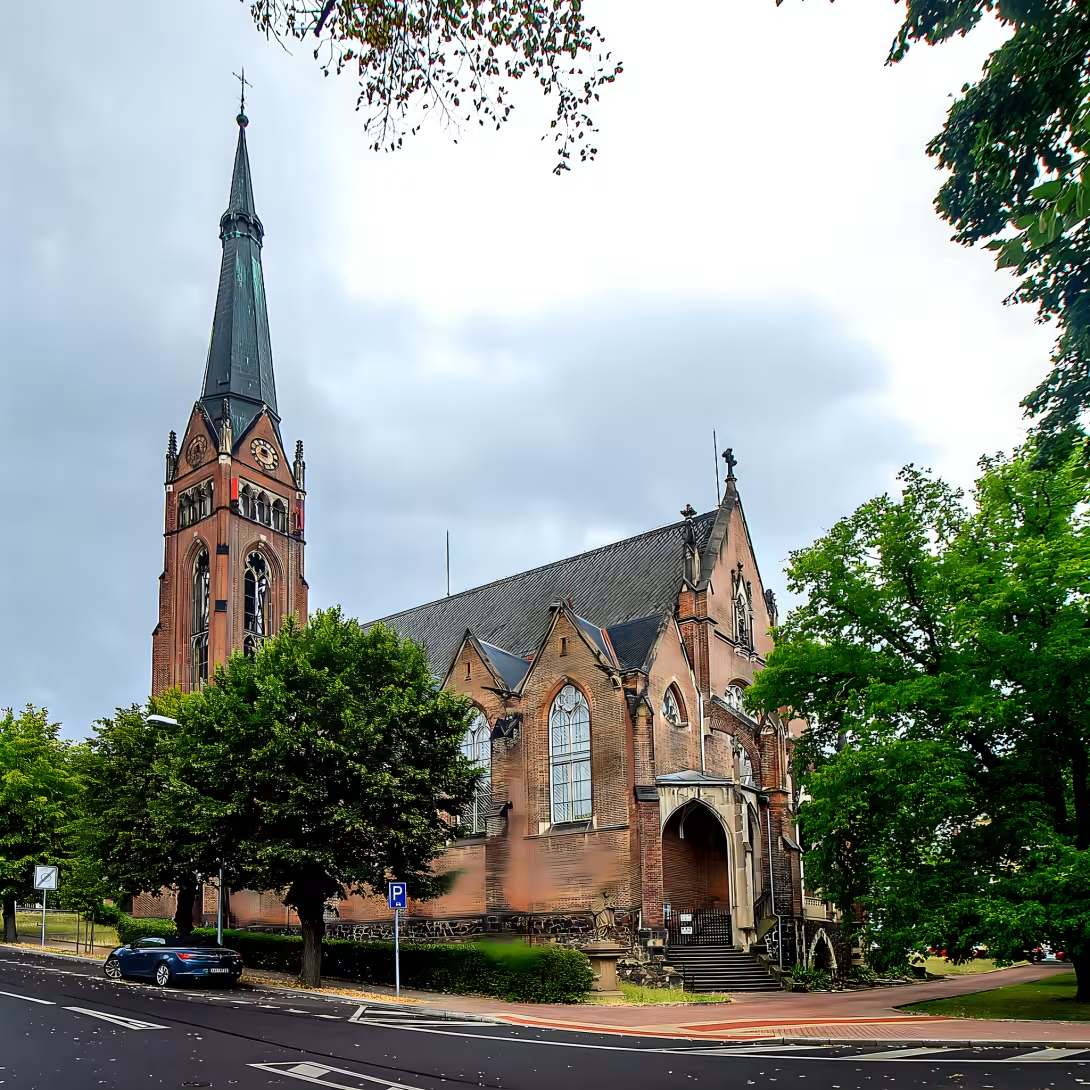
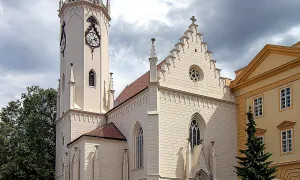
The Church of Saint Elizabeth of Hungary in Teplice-Šanov exemplifies neo-Gothic architecture within the spa park of Šanov. It stands as a testament to Teplice's historical ambitions and architectural evolution, serving both as a place of worship and a cultural landmark reflecting the area's rich heritage. Its strategic location offers scenic views of city landmarks, enhancing its significance in religious and community contexts.
The church's origins date back to mid-19th century rivalry between neighboring spa towns Teplice and Šanov. To elevate Šanov's status as a town, constructing a Catholic church was essential. Edmund Clary-Aldringen, owner of the Teplice estate, supported this initiative by donating 6% of profits from Lázeňský sad to Šanov. The renowned Viennese architect Heinrich von Ferstel was commissioned for the project.
Constructed primarily from brick masonry with limestone foundations and sandstone blocks for its entrance porch, the church showcases neo-Gothic style through its architectural elements. A notable addition is a four-story spire designed by Hermann von Riewel, Ferstel’s student, added between 1886 and 1888. This spire enhances the skyline and reflects collaborative construction efforts.
Since 1990, the church has been under the administration of the Community of Salesians from Teplice, marking a significant chapter in its history. In 1956, it served as a filming location for "Dědeček automobil," showcasing its versatility beyond religious functions.
The church's journey includes restoration and preservation efforts, notably between 1967 and 1969 when it was saved from demolition due to severe static issues. These interventions ensured structural integrity, allowing continued use as a place of worship and community gathering. In 1997, the church celebrated its 120th anniversary with the installation of a baroque statue of Saint John Nepomucene in front.
Today, the Church of Saint Elizabeth of Hungary stands as a testament to architectural resilience and cultural heritage. Despite technical challenges, it remains active for religious services under the Salesian community's care. Its location within the spa park offers visitors insights into neo-Gothic architecture and historical narratives that have shaped Teplice-Šanov.
Visiting this church provides an opportunity to explore Bohemia's rich history against its natural and cultural landscapes. It stands as a beacon of faith, artistry, and community spirit, inviting those who wish to delve into its storied past and appreciate its architectural beauty. The Church of Saint Elizabeth of Hungary in Teplice-Šanov is not just a monument; it is a living narrative that continues to inspire and engage visitors worldwide.
Then and now
Drag the slider to compare how the landmark may have looked when it was built with the view today.
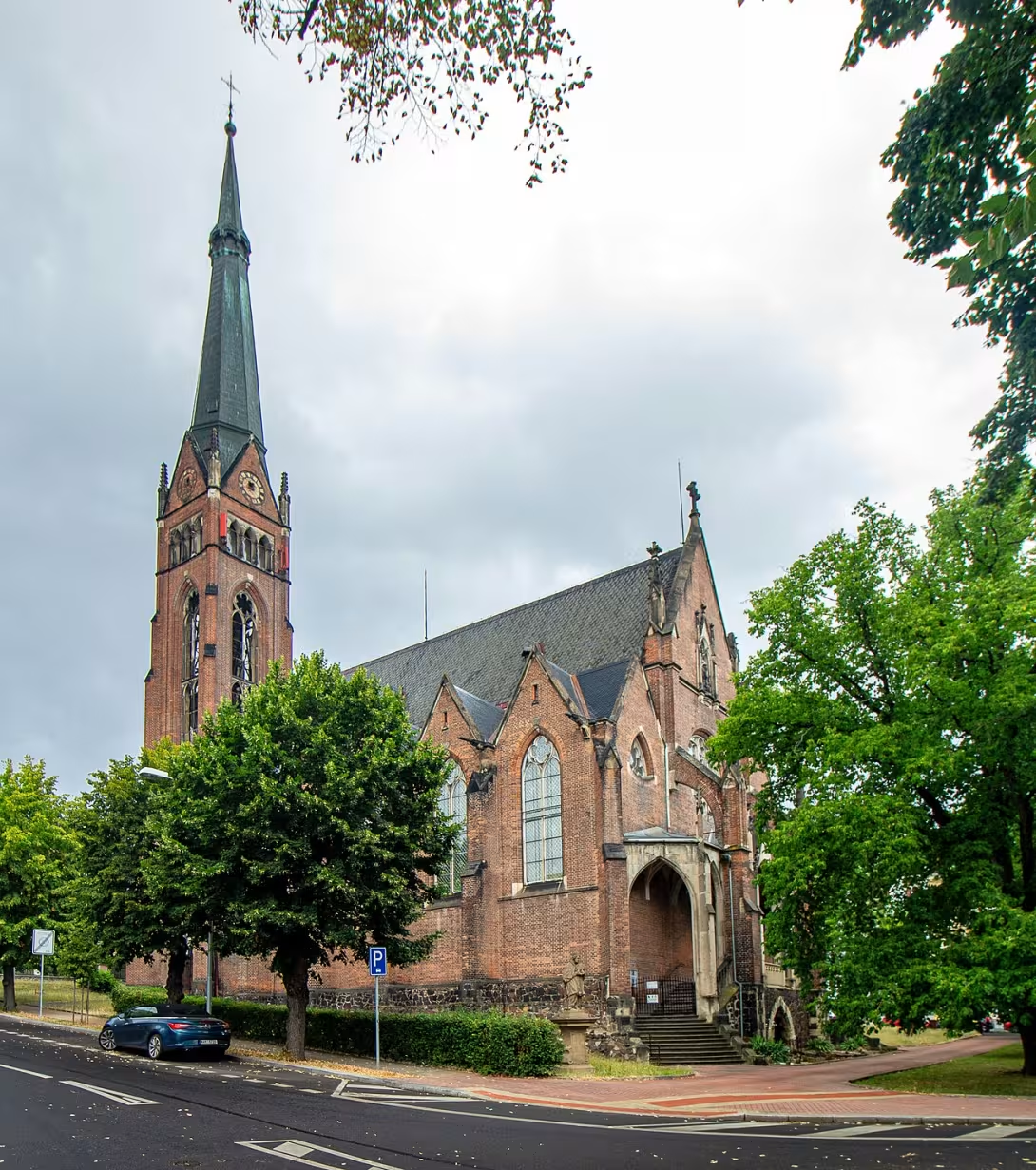

The historical appearance on the left is an AI-generated visualisation and serves as inspiration only.
Historical milestones
- 1864
- The cornerstone of the church was laid on November 18.
- 1967
- The church was saved from demolition and underwent structural reinforcements due to severe static issues.
Architectural development
Construction of the Church of Saint Elizabeth began in 1862 and was completed in 1877, with delays due to financial constraints and wartime interruptions. The church is built from brick masonry, featuring limestone foundations and sandstone blocks for its entrance porch. A four-story spire was added between 1886 and 1888 by Hermann von Riewel, a student of Ferstel.
Historical events
- 1862
- Construction began, but was delayed due to financial constraints and the Prusso-Austrian War.
- 1956
- The church served as a filming location for the movie 'Dědeček automobil'.
Points of interest
- The Church of Saint Elizabeth of Hungary was built during a mid-19th century rivalry between Teplice and Šanov, highlighting the competitive spirit to enhance local prestige through architectural endeavors.
- A unique feature of the church is its four-story spire designed by Hermann von Riewel, Heinrich von Ferstel’s student. This addition not only altered the skyline but also symbolized a collaborative effort in construction that spanned different generations of architects.
- In 1956, the church served as a filming location for "Dědeček automobil," showcasing its versatility beyond religious functions and embedding itself into Czech cinematic history.
- The church faced severe static issues between 1967 and 1969, leading to significant restoration efforts that saved it from demolition. This period marked a crucial intervention in preserving the architectural integrity of this historical site.
- Celebrating its 120th anniversary in 1997 with the installation of a baroque statue of Saint John Nepomucene, the church not only honored its past but also reinforced its cultural and religious significance within the community.
Guide
This guide is narrated by a synthetic voice generated by artificial intelligence.
Show guide text
This text was created by artificial intelligence and has not been editorially reviewed. It may contain inaccuracies.
Welcome to the Church of Saint Elizabeth of Hungary in Teplice-Šanov, a captivating example of neo-Gothic architecture nestled within the serene spa park of Šanov district. As you stand here, take a moment to appreciate its grandeur and how it harmonizes with the lush surroundings, offering views that connect you to Teplice's rich historical tapestry.
This church was born out of a mid-19th century rivalry between Teplice and Šanov, each striving to elevate their status through architectural excellence. The cornerstone was laid on November 18, 1864, marking the beginning of its construction, which would eventually symbolize local ambition and cultural heritage. By 1967, despite facing severe structural challenges that threatened its existence, the church underwent crucial reinforcements, saving it from demolition.
As you look around, notice the intricate details characteristic of neo-Gothic design. The craftsmanship is evident in every facet, inviting you to explore further. Pay special attention to the four-story spire designed by Hermann von Riewel—a unique feature that distinguishes this church and adds to its majestic skyline presence.
Behind this architectural marvel are key figures who played pivotal roles in its creation. Heinrich von Ferstel and Hermann von Riewel, renowned architects of their time, lent their vision to bring this structure to life. Additionally, historical personalities such as Edmund Clary-Aldringen and Franz Kerl contributed significantly to the church's story, each leaving an indelible mark on its legacy.
A fascinating aspect of this site is its embodiment of a competitive spirit prevalent during its construction era. The Church of Saint Elizabeth of Hungary stands not only as a place of worship but also as a testament to the ambition and cultural aspirations that defined its time.
As you conclude your visit, I encourage you to continue exploring Teplice-Šanov's spa park and beyond, discovering more about this charming district's history and culture. Thank you for joining us on this journey through architectural beauty and historical intrigue. May your curiosity lead you to further adventures in the heart of Ústecký kraj.
Tips for visitors
The best time to visit the Church of Saint Elizabeth of Hungary in Teplice-Šanov is during late spring or early autumn. During these months, you can enjoy mild weather and vibrant natural surroundings without the crowds typical of summer tourist seasons. The neo-Gothic architecture is particularly striking against the backdrop of blooming flowers in spring or colorful foliage in autumn. Additionally, visiting outside peak times allows for a more serene experience within the spa park setting.
Alternatively, public transport is also an option; you can use local buses or trams that service Teplice. For the most current routes and schedules, check a transportation app or website before your trip.
When visiting the Church of Saint Elizabeth of Hungary, consider bringing comfortable walking shoes as there may be some walking involved within the spa park area. A camera is recommended to capture the stunning architecture and scenic views. If you plan on spending time exploring the surrounding park, a light jacket might also be useful, especially in cooler months or evenings.
Photography enthusiasts will find several spots around the church ideal for capturing its neo-Gothic beauty. The best lighting conditions are typically during the golden hours of early morning or late afternoon when sunlight enhances the intricate details and creates dramatic shadows on the façade. Additionally, exploring different angles from within the park can provide unique perspectives of this architectural gem.
For families with children visiting the Church of Saint Elizabeth of Hungary, there is plenty to see nearby within a 30-minute drive. The Teplice Zoo offers an engaging experience for kids and adults alike, featuring a variety of animals and interactive exhibits. Additionally, the Teplice Chateau Gardens provide a lovely setting for family picnics and leisurely strolls amidst beautifully maintained landscapes.
Frequently asked questions
Can the monument be visited?
Religious buildings are usually open mainly during services; at other times a visit is normally arranged with the parish or the operator. We have not verified specific times. According to the heritage register the structure is in poor condition – do not enter it and take care nearby.
Where is the monument?
Location: Teplice, Ústecký kraj. The map on this page shows the exact spot.
Why is the monument protected?
It is listed in the Central List of Cultural Monuments of the Czech Republic as a cultural monument (register no. 43983/5-5267).
Businesses nearby
Do you run a restaurant, accommodation, shop, museum, rental, wellness or other visitor service near this monument? Show yourself directly to the people heading to it — this is how they will see you in the app and on the web:
Nearby
The church is situated within a spa park in the Šanov district of Teplice, offering scenic views and proximity to other historical sites in the area.
Accommodation nearby
Trips and activities nearby
Guided tours, tickets and activities nearby from GetYourGuide
Affiliate link: if you buy from the partner, we may receive a commission. The price for you does not change.
Search tours and activities →Themed route
Teplice Thematic Walking Tour
1. Church of Saint Elizabeth of Hungary
Type: Historical Church
Why Visit: This stunning Baroque church, located in the heart of a spa park in the Šanov district, is renowned for its exquisite architecture and serene atmosphere. It offers visitors a glimpse into Teplice's rich cultural heritage and provides scenic views that enhance the spiritual experience.
2. Šanov Spa Park
Type: Historical Park
Why Visit: Adjacent to the Church of Saint Elizabeth, this beautifully maintained park is perfect for leisurely strolls. It features lush greenery and historical pathways that reflect Teplice's long-standing tradition as a spa town. The park offers an ideal setting for relaxation and reflection after exploring the church.
3. Šanov District Historical Sites
Type: Cultural Landmarks
Why Visit: Explore the nearby historical sites within the Šanov district, which offer insights into Teplice's development as a spa destination. These landmarks provide context to the area’s cultural and architectural evolution, making them an enriching part of any visit.
4. Teplice Spa Facilities
Type: Wellness Centers
Why Visit: Experience the therapeutic benefits of Teplice's famous thermal waters at local spa facilities. Known for their healing properties, these centers offer a variety of treatments that have been attracting visitors seeking wellness and relaxation for centuries.
5. Šanov District Walking Paths
Type: Scenic Routes
Why Visit: Conclude your tour with a walk along the scenic paths in the Šanov district. These routes provide picturesque views of Teplice's natural beauty and historical architecture, offering a peaceful end to an enriching cultural journey.
This thematic walking tour offers a comprehensive exploration of Teplice’s historical and cultural highlights within the Šanov district, ensuring a memorable experience for all visitors.
Seasonal recommendations
Spring: Visiting the Church of Saint Elizabeth of Hungary in Teplice during spring offers a unique experience as nature begins to awaken. The surrounding landscape is painted with vibrant colors from blooming flowers and lush greenery, creating an enchanting atmosphere that complements the historical charm of the church. While the weather can be unpredictable, bringing occasional rain showers, it's a perfect time for photography enthusiasts looking to capture the contrast between the ancient architecture and the fresh spring palette. Visitors should consider wearing layers to accommodate fluctuating temperatures and carrying an umbrella just in case. Morning visits are recommended as they tend to have fewer crowds, allowing for a more peaceful exploration of this historical site.
Summer: Summer is an excellent time to visit the Church of Saint Elizabeth of Hungary due to its extended daylight hours, which enhance the natural lighting inside the church, highlighting architectural details that might be missed in other seasons. The warm weather encourages outdoor activities and exploration around Teplice, making it a popular destination during this period. However, visitors should anticipate larger crowds, especially on weekends and holidays, so arriving early is advisable to avoid long wait times. Comfortable walking shoes and light clothing are recommended for the summer heat, along with sun protection such as hats or sunglasses.
Autumn: Autumn brings a distinct charm to Teplice and its Church of Saint Elizabeth of Hungary, with the surrounding foliage transforming into warm hues of red, orange, and yellow. This picturesque setting creates a serene backdrop that enhances the historical ambiance of the church. The cooler temperatures make for comfortable walking tours around the area, although visitors should be prepared for sudden weather changes by dressing in layers. While the number of tourists typically decreases compared to summer, it's still wise to plan visits on weekdays or during off-peak hours to enjoy a more tranquil experience.
Winter: Winter at the Church of Saint Elizabeth of Hungary offers a magical atmosphere as snow blankets Teplice, turning the landscape into a winter wonderland. The church itself exudes a cozy warmth that contrasts beautifully with the crisp, cold air outside. Visitors should dress warmly in layers, wear waterproof boots, and bring gloves and hats to stay comfortable during their visit. Winter is a quieter time at the church, making it ideal for those seeking a peaceful retreat from the bustling tourist seasons.
Visualizations and artistic views


The visualisations are generated by artificial intelligence and serve as inspiration.
Photos from the area
Real photos taken near the monument


Zdroj a licence jsou uvedeny u každého snímku.
Tips from visitors
No tips yet. Be the first!
Log in and add your tip.
Sources and literature
Photos: VitVit / CC BY-SA 4.0, rozlišení zvýšeno umělou inteligencí — Wikimedia Commons. The author and licence also appear when you hover over the image.
Faktickým podkladem tohoto textu byl článek na Wikipedii, jehož autory jsou přispěvatelé Wikipedie. Článek je dostupný pod licencí CC BY-SA 4.0.
Location on the map

Příběhy a pověsti
Legendy, pověsti a příběhy spjaté s touto památkou

Fotografie návštěvníků
Zatím žádné fotografie. Buďte první, kdo přidá fotografii z návštěvy!
Log in a přidejte svou fotografii nebo hodnoťte.
Za ověřenou návštěvu v aplikaci získáte víc bodů — poznáme podle GPS, že jste na místě.
Reviews and comments