



Kostel svaté Markéty (Strakonice I) Church
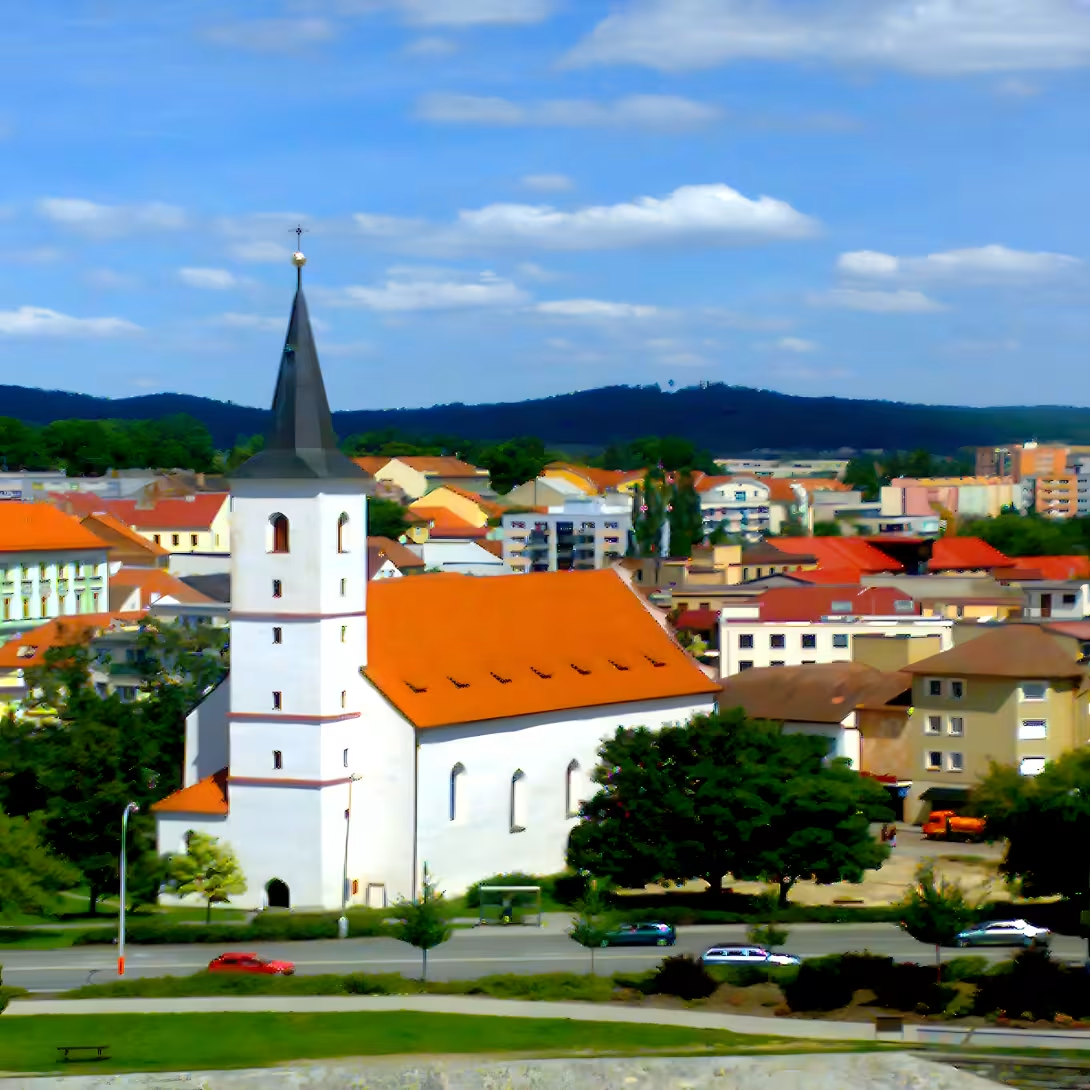
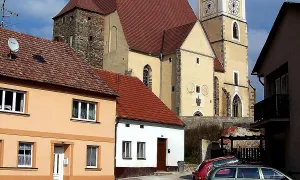
The Saint Margaret's Church is a late Gothic church with Renaissance elements, built between 1580 and 1583. This significant landmark in Strakonice's city center reflects the town's industrial and cultural heritage.
The church's origins date back to the 14th century, when a chapel likely stood on the site. The first written record of the chapel's existence comes from 1318, when Vilém Bavor confirmed a hospital and its dependencies to the Strakonice convent. Over time, the chapel underwent transformations, including a fire that destroyed it in 1442.
The current church was built during the Renaissance period, with construction beginning in 1580 and completing in 1583. Vincenzo Vogarelli from Bormia, Italy, was the architect responsible for the project. The church's design reflects late Gothic style with Renaissance elements, featuring a unique blend of architectural styles.
Throughout its history, the church has been used for both sacred and secular purposes. In the 16th century, it served as a place of worship for Strakonice's Protestant community. The church also hosted various guilds and altars, including the Strakonice tailors' guild, who were granted permission to build their own altar by Velkopřevor Jan ze Švamberka in 1482.
In 1777, the church underwent a baroque renovation, particularly on its eastern façade. Today, the Saint Margaret's Church remains an important cultural and historical landmark in Strakonice, offering visitors a glimpse into the city's rich past.
Located near the confluence of the Otava and Volyňka rivers, in the heart of Strakonice, the church is open to visitors who can explore its valuable interiors and appreciate its unique architectural style.
Then and now
Drag the slider to compare how the landmark may have looked when it was built with the view today.
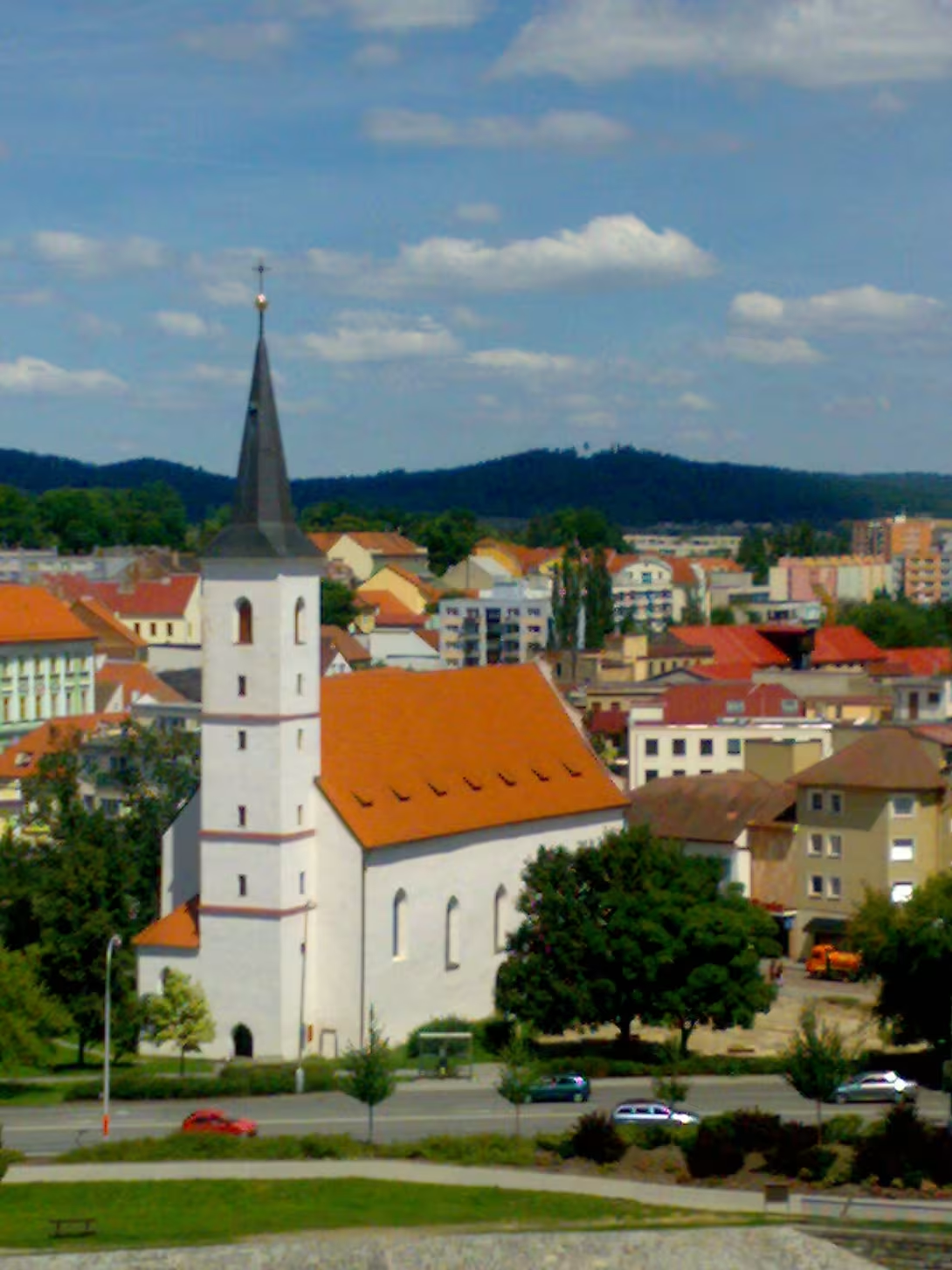

The historical appearance on the left is an AI-generated visualisation and serves as inspiration only.
Historical milestones
- 1318
- Vilém Bavor confirms a hospital and its dependencies to the Strakonice convent.
- 1442
- A fire destroyed the original chapel
- 1482
- Velkopřevor Jan ze Švamberka grants the Strakonice guild of tailors permission for their cechovní oltář.
- 1557
- The church is referred to as 'the church in a small town'.
Architectural development
The church was built in the late Gothic style with Renaissance elements. The original Gothic structure was expanded and rebuilt in the 16th century.
Historical events
Construction began in 1580
Completed in 1583
Baroque renovation in 1777
Points of interest
Here are 3-5 lesser-known or surprising facts about the Czech historical landmark, Saint Margaret's Church in Strakonice:
– The church has a unique blend of architectural styles, featuring both late Gothic and Renaissance elements. This is due to its construction during the Renaissance period, when different architectural styles were being combined.
– In the 16th century, the church served as a place of worship for Strakonice's Protestant community, making it an important hub for religious services in the region.
– The church has undergone several transformations throughout its history, including a fire that destroyed the original chapel in 1442. This event led to the construction of the current church between 1580 and 1583.
– Vincenzo Vogarelli from Bormia, Italy, was the architect responsible for designing the current church. His unique blend of architectural styles has made the church a significant landmark in Strakonice's city center.
– The church has been used for both sacred and secular purposes throughout its history. In addition to serving as a place of worship, it has also hosted various guilds and altars, including the Strakonice tailors' guild, who were granted permission to build their own altar in 1482.
Guide
This guide is narrated by a synthetic voice generated by artificial intelligence.
Show guide text
This text was created by artificial intelligence and has not been editorially reviewed. It may contain inaccuracies.
Church of Saint Margaret is a single-nave late Gothic church in the center of Strakonice, near the confluence of the Otava and Volyňka rivers. It was built between 1580 and 1583 and is one of the city's most striking landmarks. It is protected as a cultural monument.
Its origins date back to the Strakonice Hospitaller hospital. The oldest written record of it dates from 1225. At that time, King Přemysl Otakar the First confirmed the donation of Bolemila, wife of Bavorius of Strakonice. She gave the hospital and convent the estate of Chlum with the forest of Lazec, Koryta and the surrounding forests. The Strakonice hospital is thus the oldest in the Czech lands. In 1318, Václav Bavorius confirmed the hospital by the bridge to the convent, and in 1358 his rights were also confirmed by Charles the Fourth. There was probably already a chapel next to the hospital at that time, and its original dedication was later transferred to the new church.
At the end of the 14th or the beginning of the 15th century, the chapel was expanded. In 1442, a fire destroyed the hospital and in 1454 the Hospitaller Grand Master endowed it and possibly re-established it. In a document from 1464, the church is spoken of as new. It differed from the castle church of Saint Procopius and from the old parish church of Saint Wenceslas in Lom in the suburbs. Because the parish lay far from the city, the chapel also served parish functions. Around the end of the 14th century, a cemetery was established near it. The citizens of Strakonice buried their dead there until the 16th century, when the main cemetery was established at Saint Wenceslas.
The city guilds also had their altars here. In 1482, the tailors acquired it. In 1557, the main altar belonged to the butchers. Most of the inhabitants of Strakonice were Utraquist at the time. The church remained Utraquist until the Battle of White Mountain, despite being under the patronage of the Maltese priors from the castle convent.
In the 16th century, the building was already too small in scope. At the initiative of the city administration and Grand Prior Christopher of Vartenberg, it therefore underwent a comprehensive reconstruction, completed in 1583. It was led by the Italian Vincenzo Vogarelli from Bormio, settled in České Budějovice. A memorial plaque above the northern entrance with the date 1583 commemorates him. The church was built in the style of late Gothic and Renaissance. The builder used the older external walls of the original Gothic building and the then hospital building. The walls were then covered with sgraffito.
Tips for visitors
Best Time to Visit: The best time to visit the Saint Margaret's Church is during spring or autumn when the weather is mild and sunny, making it ideal for photography. Avoid visiting during peak summer months as the church can get crowded with tourists.
Frequently asked questions
Can the monument be visited?
Religious buildings are usually open mainly during services; at other times a visit is normally arranged with the parish or the operator. We have not verified specific times.
Where is the monument?
Location: U Sv. Markéty, Strakonice I, Strakonice, Jihočeský kraj. The map on this page shows the exact spot.
Why is the monument protected?
It is listed in the Central List of Cultural Monuments of the Czech Republic as a cultural monument (register no. 19156/3-3964).
Businesses nearby
Do you run a restaurant, accommodation, shop, museum, rental, wellness or other visitor service near this monument? Show yourself directly to the people heading to it — this is how they will see you in the app and on the web:
Nearby
The church is located near the confluence of the Otava and Volyňka rivers, in the center of Strakonice.
Accommodation nearby
Themed route
Strakonice I Tour
1. Otava River Embankment (Landmark) Start your journey at the picturesque Otava River Embankment, where you can enjoy a scenic view of the river and the surrounding landscape. 2. Volyňka River Bridge (Bridge) Cross the Volyňka River Bridge, which offers stunning views of the confluence of the two rivers. This is a great spot to take in the beauty of Strakonice. 3. Kostel svaté Markéty (Strakonice I) (Church) Finally, arrive at the main attraction: Kostel svaté Markéty (Strakonice I), a beautiful church located in the heart of Strakonice. Take some time to admire its architecture and history.
This tour route takes you through the charming town of Strakonice, showcasing its natural beauty and cultural heritage.
Seasonal recommendations
Here is the seasonal recommendation for visiting the historical landmark, Kostel svaté Markéty (Strakonice I):
Spring
As the snow melts away, the surrounding nature awakens, and the atmosphere becomes filled with the sweet scent of blooming flowers. The sunlight casts a warm glow on the historic church, making it an ideal time to visit. Be prepared for moderate crowds, especially during weekends. Dress comfortably in layers, as the temperature can fluctuate. Aim to arrive early in the morning or late in the afternoon to avoid the peak tourist hours.
Summer
The warm weather brings with it a lively atmosphere, perfect for families and outdoor enthusiasts. The surrounding park is in full bloom, making it an ideal spot for picnics or relaxation. Be prepared for larger crowds during peak summer months, especially on weekends. Arrive early to beat the heat and avoid the midday rush. Wear comfortable shoes and clothing suitable for outdoor activities.
Autumn
As the leaves turn golden, the atmosphere becomes cozy and inviting. The church's architecture takes on a warm, rustic tone, making it an ideal time to visit. Be prepared for moderate crowds, especially during weekends. Dress warmly, as the temperature can drop significantly in the evenings. Aim to arrive early in the morning or late in the afternoon to avoid the peak tourist hours.
Winter
The snow-covered landscape creates a serene and peaceful atmosphere, perfect for those seeking a quiet and contemplative experience. The church's architecture takes on a mystical quality, making it an ideal time to visit. Dress warmly in layers, as the temperature can drop significantly. Arrive early in the morning or late in the afternoon to avoid the peak tourist hours.
Visualizations and artistic views


The visualisations are generated by artificial intelligence and serve as inspiration.
Photos from the area
Real photos taken near the monument


Zdroj a licence jsou uvedeny u každého snímku.
Tips from visitors
No tips yet. Be the first!
Log in and add your tip.
Sources and literature
Photos: Helcapas / CC BY-SA 3.0, rozlišení zvýšeno umělou inteligencí — Wikimedia Commons. The author and licence also appear when you hover over the image.
Faktickým podkladem tohoto textu byl článek na Wikipedii, jehož autory jsou přispěvatelé Wikipedie. Článek je dostupný pod licencí CC BY-SA 4.0.
Location on the map

Příběhy a pověsti
Legendy, pověsti a příběhy spjaté s touto památkou
Fotografie návštěvníků
Zatím žádné fotografie. Buďte první, kdo přidá fotografii z návštěvy!
Log in a přidejte svou fotografii nebo hodnoťte.
Za ověřenou návštěvu v aplikaci získáte víc bodů — poznáme podle GPS, že jste na místě.
Reviews and comments