






Kostel svatého Bartoloměje v Praze Church
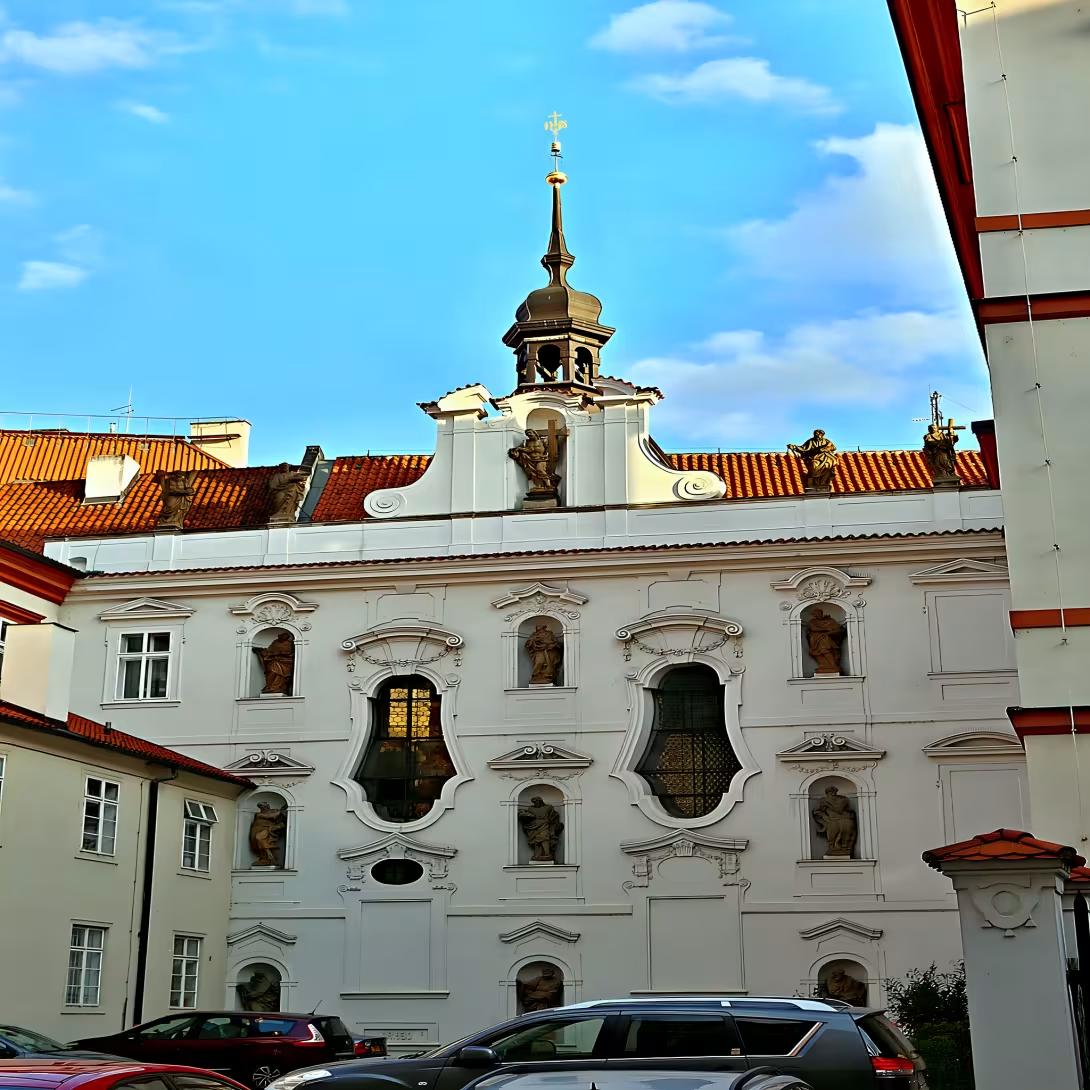
The Kostel svatého Bartoloměje v Praze, a Baroque church in Prague's Old Town, stands as a notable example of Czech architecture. Built between 1726 and 1731 according to Kilián Ignác Dientzenhofer's design, this striking monument showcases the country's Baroque style.
The site has a rich history dating back to the Middle Ages. Initially, it housed a brothel, which was later transformed into Jeruzalém, a school and refuge for repentant prostitutes. In 1372, Jan Milíč z Kroměříže converted the site into Jeruzalém, and in 1374, it became a Cistercian college.
The church's architecture is characterized by its striking contrast between the simple exterior and intricate interior. The building has undergone several transformations over the centuries, including a fire in 1678 that destroyed a previous chapel. After the Jesuit order was abolished in 1773, the church fell into disrepair and was eventually used as a storage facility.
In the 19th century, the church was acquired by the Congregation of Grey Sisters III. Order of St. Francis, who utilized it for various purposes until nationalization followed the communist takeover in 1949. During this period, the church was neglected and fell into disrepair.
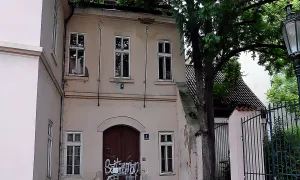
Today, the Kostel svatého Bartoloměje v Praze is a beautiful example of Baroque architecture, featuring intricate frescoes by Václav Vavřinec Reiner and stunning interior design. Visitors can access the impressive interior through the main entrance or via the courtyard facade, which showcases sculptures of twelve apostles, Christ, and the Virgin Mary.
This monument serves as a testament to Prague's rich history and its ability to adapt to changing times. Visitors are invited to explore this stunning church and experience its beauty firsthand.
Then and now
Drag the slider to compare how the landmark may have looked when it was built with the view today.
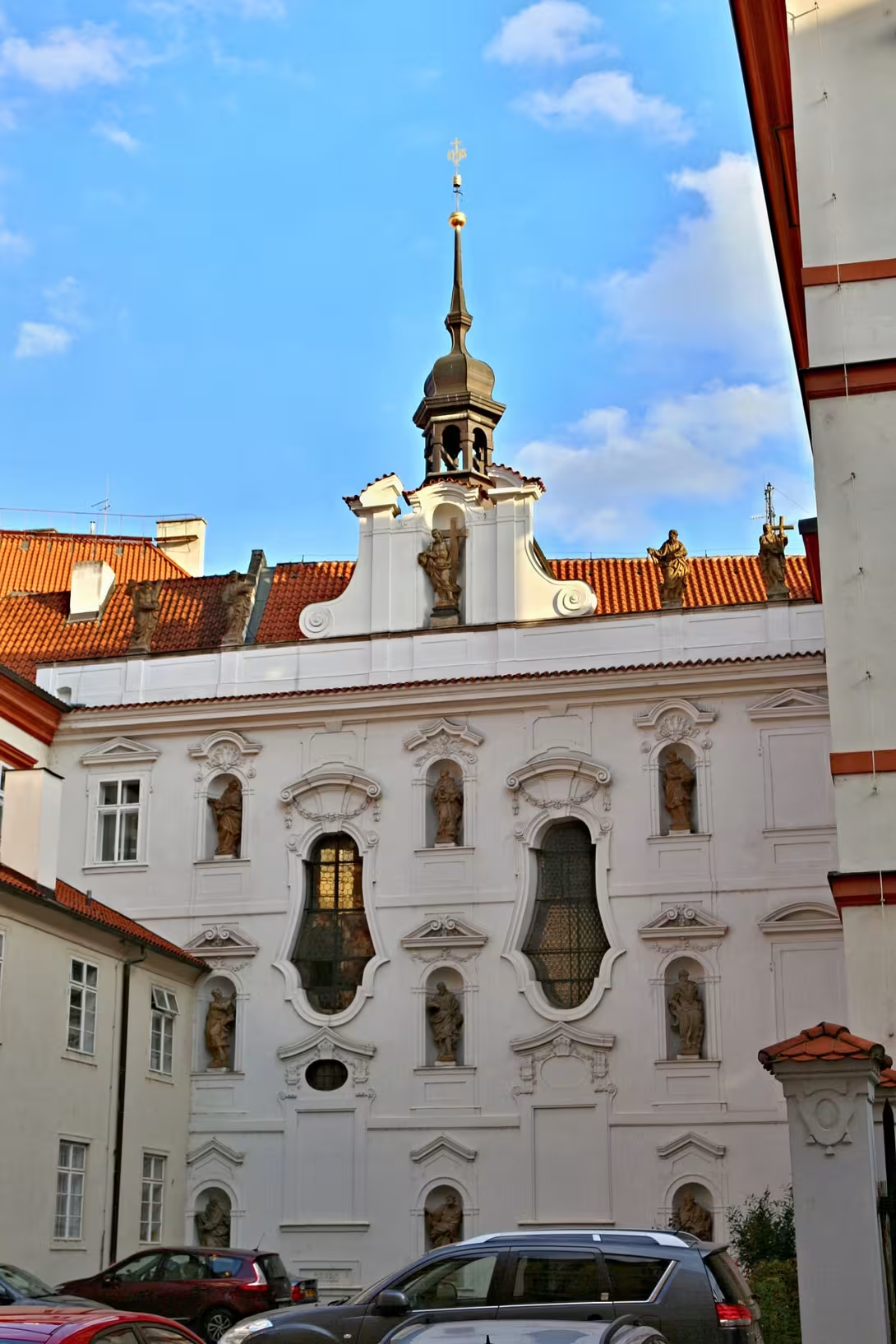
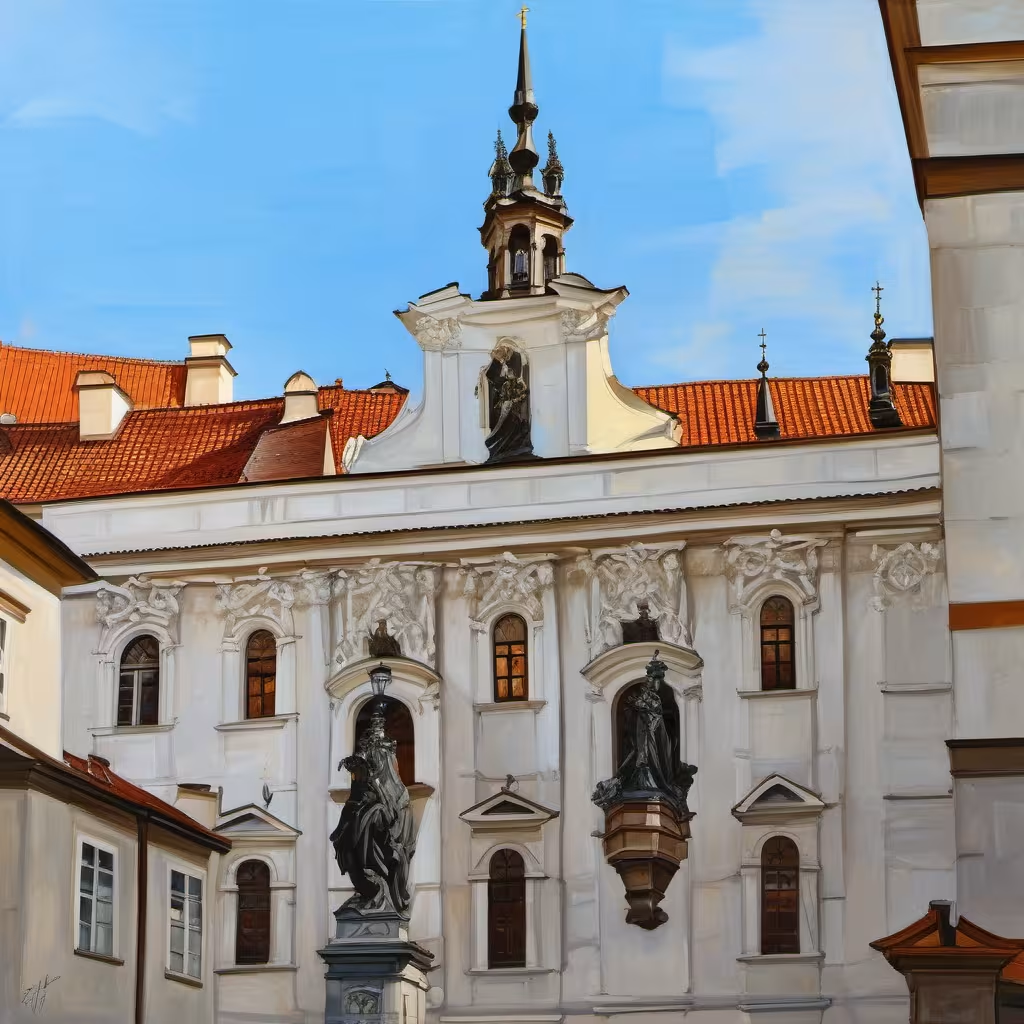
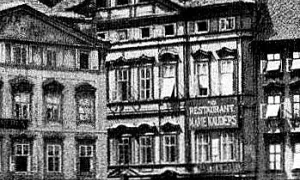
The historical appearance on the left is an AI-generated visualisation and serves as inspiration only.
Historical milestones
- 1372
- Jan Milíč z Kroměříže converts the site into Jeruzalém
- 1374
- The site becomes a Cistercian college
- 1678
- A fire destroys a previous chapel
- 1726
- Construction of the church begins according to Kilián Ignác Dientzenhofer's design
- 1731
- The church is completed
- 1773
- The Jesuit order is abolished and the church falls into disrepair
- 1949
- Nationalization follows the communist takeover
Architectural development
The church was built on the site of a former brothel, which was transformed into a Jeruzalém, a school and refuge for repentant prostitutes. The building has undergone several transformations over the centuries.
Historical events
1726-1731: Construction of the church
1678: Fire in the quarter destroys a previous chapel
1773: Jezuit order abolished
Owners
Jezuitský řád
Kongregace Šedých sester III. řádu sv. Františka
Points of interest
– The site where the church stands today was once a brothel in the Middle Ages, which was later converted into a school and refuge for repentant prostitutes.
– In the 14th century, the site was transformed into Jeruzalém, a Cistercian college, before becoming a Jesuit college in the 17th century.
Guide
This guide is narrated by a synthetic voice generated by artificial intelligence.
Show guide text
This text was created by artificial intelligence and has not been editorially reviewed. It may contain inaccuracies.
The Church of Saint Bartholomew is a highly baroque building on Prague's Old Town Square. It stands on Bartolomějská Street, not far from where medieval city walls once ran. It is dedicated to the Apostle Bartholomew and was built between 1726 and 1731 according to a design by Kilian Ignaz Dientzenhofer.
In the Middle Ages, a house of prostitution stood here, which was called Benátky. In 1372, under the rule of Charles the Fourth, Jan Milíč z Kroměříže transformed it into Jeruzalém. It was a preaching school and a refuge for repentant women who wanted to change their lives. Already in 1374, the house was converted into a Cistercian college named after Saint Bernard, called Bernardinum.
During the Hussite Wars, Jeruzalém was destroyed and the building then had secular owners until the seventeenth century. After the middle of the seventeenth century, it was acquired by the Jesuits. They began to build a chapel here, but it burned down in a fire of the district in 1678. From its ruins, the present church grew, consecrated in 1731. It served its purpose only until 1773. Then, during the Josephine reforms, the Jesuit order was dissolved and the church fell to the state. The paintings from the side altars were sold. Saint John of Nepomuk by Václav Vavřinec Reiner is today in the depot of the National Heritage Institute in Kutná Hora. The Crucifixion by Peter Brandl went to the church in Dolní Slivna.
From 1853 onwards, the church belonged to the Congregation of Grey Sisters of the Third Order of Saint Francis. After the communist coup, it was confiscated from them in 1949. The church then served as a warehouse and fell into disrepair. On Bartolomějská Street, the notoriously known State Security had its headquarters at that time, today the police are located there. The Grey Sisters received the church and cloister back in 1995, and fifteen of them live there today.
The broken facade on Bartolomějská Street is very restrained. Apart from a simple portal, it has only simply framed baroque windows. The small interior on an irregular ground plan contrasts sharply with it. It is richly articulated architecturally and decorated with artificial marble and gilding. The vault above the nave is covered with damaged frescoes by Václav Vavřinec Reiner depicting the martyrdom of Saint Bartholomew.
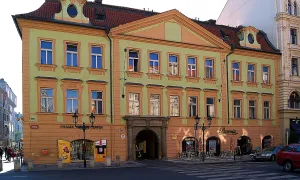
The courtyard facade is exceptional. It is accessible from Konviktská Street through the building of the transport faculty of the Czech Technical University. It forms a monumental facade of the courtyard and partially connects to neighboring older, simpler baroque buildings. It is independent of the arrangement of the interior, which is helped by the slanted window splays. Apart from real and blind windows, it is decorated with statues of twelve apostles, Christ and the Virgin Mary from the workshop of Matěj Václav Jäckel. They stand in niches and on the attic.
Tips for visitors
Best Time to Visit: The best time to visit the Church of St. Bartholomew is during spring and autumn when the weather is mild and there are fewer tourists. This allows you to fully appreciate the church's architecture and interior without feeling rushed or overwhelmed. Getting There: The church is located in the heart of Prague, making it easily accessible by public transportation or on foot. What to Bring: Wear comfortable shoes for walking and consider bringing a camera to capture the stunning interior and exterior views. Don't forget to bring some water and snacks, as you'll want to take your time exploring this beautiful church. Photography: The best spots for photography are inside the church, where you can capture the intricate frescoes and ornate details. Natural light pours in through the stained-glass windows, making it ideal for taking photos during the morning or late afternoon. What to See Nearby: Within a 30-minute walk, you'll find other historical landmarks like the Old Town Square, Charles Bridge, and St. Nicholas Church. Take your time exploring these iconic sites and enjoy the vibrant atmosphere of Prague's city center.
Frequently asked questions
Can the monument be visited?
Religious buildings are usually open mainly during services; at other times a visit is normally arranged with the parish or the operator. We have not verified specific times.
Where is the monument?
Location: Staré Město, Hlavní město Praha. The map on this page shows the exact spot.
Why is the monument protected?
It is listed in the Central List of Cultural Monuments of the Czech Republic as a cultural monument. It is protected as part of a larger listed ensemble.
Businesses nearby
Do you run a restaurant, accommodation, shop, museum, rental, wellness or other visitor service near this monument? Show yourself directly to the people heading to it — this is how they will see you in the app and on the web:
Events nearby

Zdroj akcí: otevřená data měst a obcí ČR (Národní katalog otevřených dat) a kalendář akcí Národního památkového ústavu.
Nearby
The church is located in the heart of Prague, surrounded by other historical landmarks and cultural institutions.
Accommodation nearby
Trips and activities nearby
Guided tours, tickets and activities nearby from GetYourGuide
Affiliate link: if you buy from the partner, we may receive a commission. The price for you does not change.
Search tours and activities →Themed route
Prague's Historic Heart
This thematic tour takes you on a journey through the heart of Prague, exploring its rich history and cultural heritage. The main attraction is the Kostel svatého Bartoloměje, a stunning church in the center of the city.
1. Old Town Square: Start your day at Old Town Square, one of the most iconic public spaces in Europe. Admire the famous Astronomical Clock and take a stroll around the square to soak up its vibrant atmosphere. 2. Týn Church: Just across from the church is Týn Church, a beautiful Gothic building with intricate stone carvings and stunning stained-glass windows. Its unique architecture makes it a must-see attraction in Prague. 3. Kostel svatého Bartoloměje: Finally, arrive at your main destination – the stunning Kostel svatého Bartoloměje. This 14th-century church is known for its beautiful Gothic architecture and peaceful atmosphere.
This tour takes you on a journey through the heart of Prague, exploring its rich history and cultural heritage. With these three stops, you'll get a taste of what makes this city so unique and special.
Seasonal recommendations
Spring
The spring season brings a fresh atmosphere to the Church of St. Bartholomew, with blooming flowers and greenery surrounding the building. The gentle sunlight casting through the windows illuminates the interior, making it a perfect spot for a peaceful visit. As the weather warms up, consider visiting early in the morning or late in the afternoon to avoid the crowds that gather during peak hours. Wear comfortable shoes and layers for unpredictable spring weather.
Summer
In the summer, the Church of St. Bartholomew comes alive with vibrant colors and lively atmosphere. The warm sunshine highlights the intricate details of the architecture, making it a perfect spot for photography enthusiasts. However, be prepared for larger crowds during peak tourist season. Plan your visit early in the morning or late in the evening to avoid the heat and chaos. Wear comfortable clothing and sunscreen for a pleasant experience.
Autumn
The autumn season brings a cozy atmosphere to the Church of St. Bartholomew, with the golden light of sunset casting a warm glow over the building. The surrounding trees display vibrant colors, creating a picturesque backdrop for your visit. As the weather cools down, consider visiting during the late morning or early afternoon when the crowds are smaller. Wear layers and comfortable shoes for a pleasant experience.
Winter
In the winter, the Church of St. Bartholomew takes on a serene atmosphere, with soft lighting illuminating the interior. The cold weather brings smaller crowds, making it an ideal time to visit if you prefer a peaceful experience. Dress warmly and consider visiting during the late morning or early afternoon when the church is less crowded.
Visualizations and artistic views


The visualisations are generated by artificial intelligence and serve as inspiration.
Photos from the area
Real photos taken near the monument


Zdroj a licence jsou uvedeny u každého snímku.
Tips from visitors
No tips yet. Be the first!
Log in and add your tip.
Sources and literature
Photos: VitVit / CC BY-SA 4.0, rozlišení zvýšeno umělou inteligencí — Wikimedia Commons. The author and licence also appear when you hover over the image.
Faktickým podkladem tohoto textu byl článek na Wikipedii, jehož autory jsou přispěvatelé Wikipedie. Článek je dostupný pod licencí CC BY-SA 4.0.
Location on the map

Příběhy a pověsti
Legendy, pověsti a příběhy spjaté s touto památkou
Příběh: Kostel svatého Bartoloměje v Praze
Bylo to v pondělí ráno, kdy Martin zjistil, že jeho duše byla vážně oslabena. Kolem něho se Praha probouzela s nevyhnutelným rušením trhu v Staroměstském nám…
Číst příběh
Pověst: Kostel svatého Bartoloměje v Praze
Podle místní pověsti, kterou si staří obyvatelé Starého Města předávali z úst do úst po celá staletí, nebylo místo v Bartolomějské ulici nikdy pouhou změtí k…
Číst příběhFotografie návštěvníků
Zatím žádné fotografie. Buďte první, kdo přidá fotografii z návštěvy!
Log in a přidejte svou fotografii nebo hodnoťte.
Za ověřenou návštěvu v aplikaci získáte víc bodů — poznáme podle GPS, že jste na místě.
Reviews and comments