

Kostel svatého Gotharda (Slaný) Church
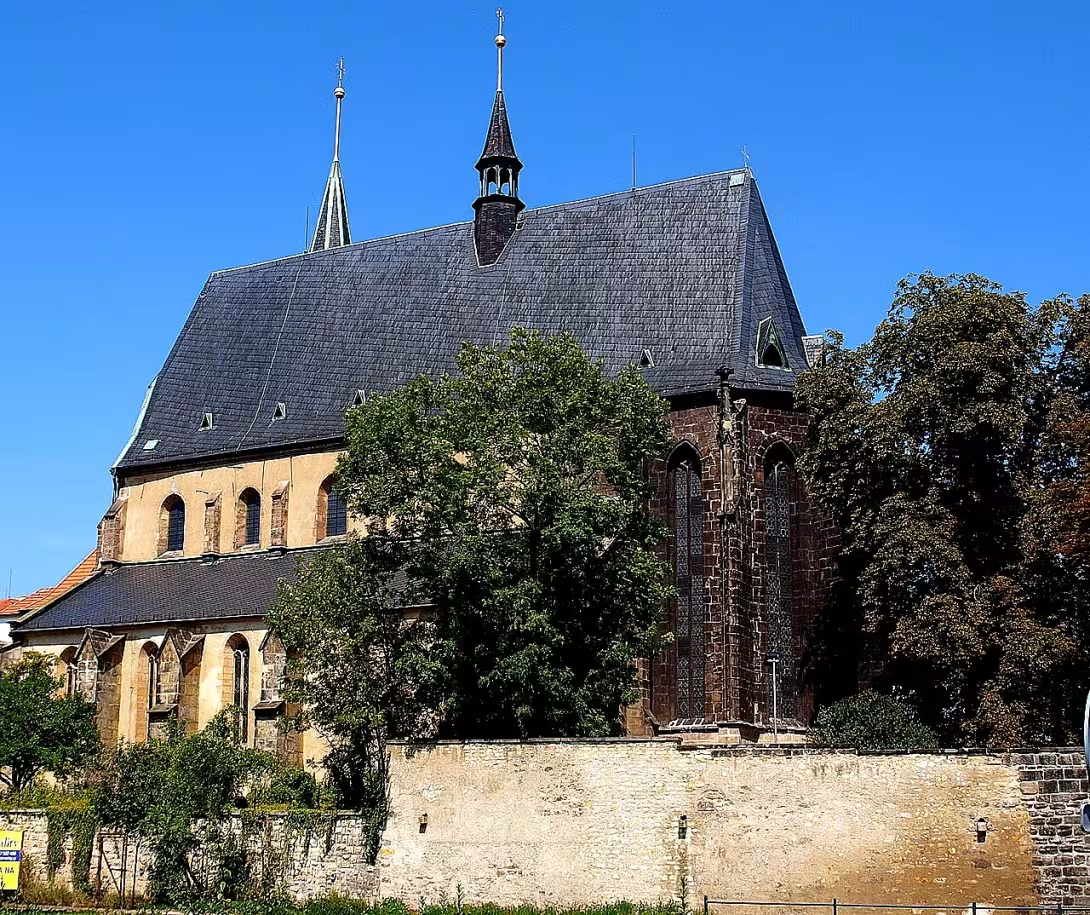
The Church of Saint Gothard in Slaný is the most significant Gothic sacred monument within the town, dominating its historical core while serving as a center for local Roman Catholic administration. Declared a cultural heritage site of the Czech Republic, this church is notable not only for its architectural evolution but also for its deep-rooted history dating back to the 12th century. Originally established by Benedictine monks from Ostrov Monastery, it reflects a journey from a Romanesque basilica to a Gothic structure over several centuries.
The origins of Kostel svatého Gotharda trace back to the 12th century when Benedictine monks founded it as part of their estate management in Slaný. The church's connection to Saint Gothard is significant, with historical ties linking him to the Ostrov Monastery where he served as an abbot. A legend suggests that a miraculous healing attributed to Saint Gothard led to the church’s construction, although this story is not definitively confirmed by early records. Historical sources suggest that while there was mention of such an event in 1137, it may have been confused with another location, Slapy.
Architecturally, the church began as a Romanesque basilica before transitioning into its Gothic form. The first significant phase of Gothic construction commenced in the mid-14th century, marked by the addition of a western tower to the existing structure. This period also saw the development of a northern aisle and main nave, culminating in a late-Gothic presbytery vaulted with starry and net patterns. These architectural elements are adorned by frescoes depicting Christ holding a chalice, symbolizing the reception of both bread and wine during communion.
Throughout its history, Kostel svatého Gotharda experienced several dramatic changes in ownership and administration. Initially managed by Benedictine monks, the church saw a shift when these occupants left Slaný during the Hussite Wars and did not return. Subsequently, religious administration was taken over by utrakvist and later Lutheran priests for two centuries.
Key events in the church's history include its capture during Easter in April 1425 by Taborite forces, which resulted in damage to the structure. This event necessitated immediate repairs, with significant reconstruction occurring around the mid-15th century when peace allowed for more extensive restoration efforts. These included raising and re-vaulting the main nave and adding a western porch.
Today, Kostel svatého Gotharda remains an accessible site of historical and architectural interest in Slaný. Its rich history and stunning Gothic features make it a worthwhile visit for those interested in exploring the cultural heritage of the Czech Republic. Visitors are invited to appreciate this monument's enduring legacy as both a spiritual center and a testament to centuries of architectural evolution.
Then and now
Drag the slider to compare how the landmark may have looked when it was built with the view today.
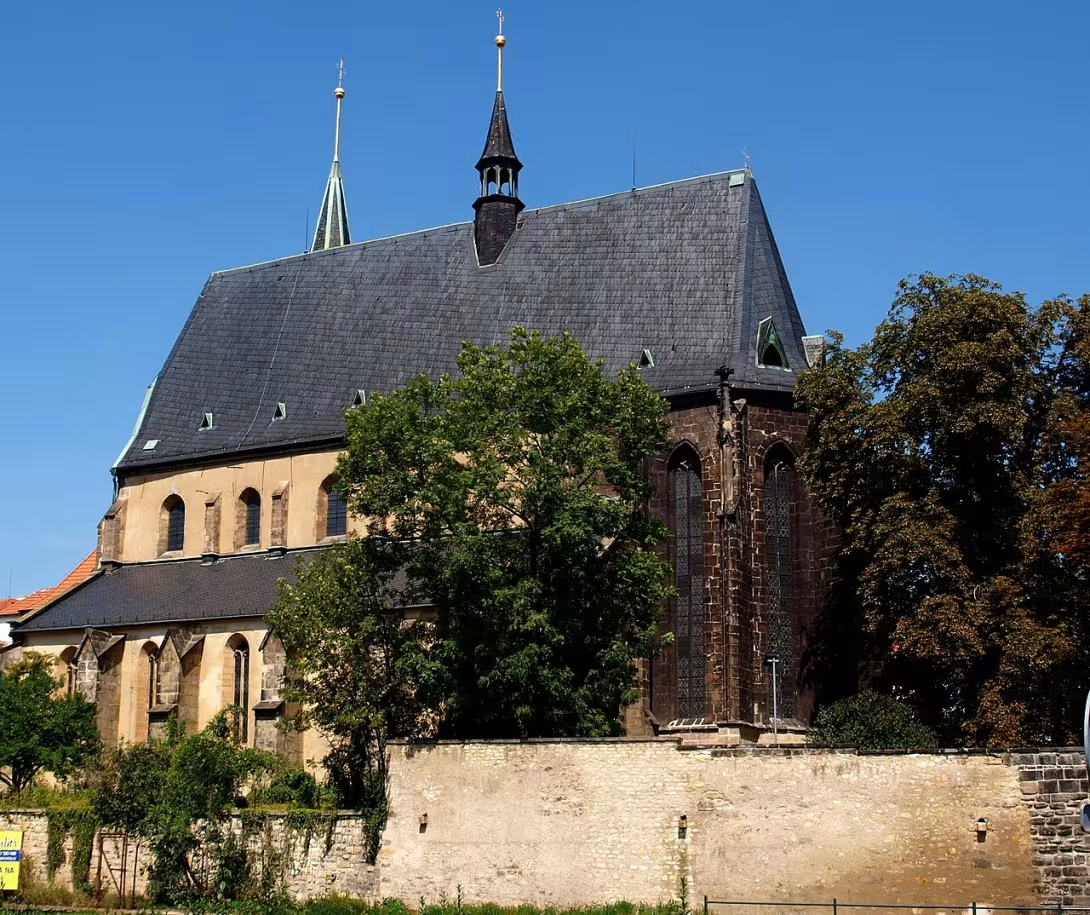
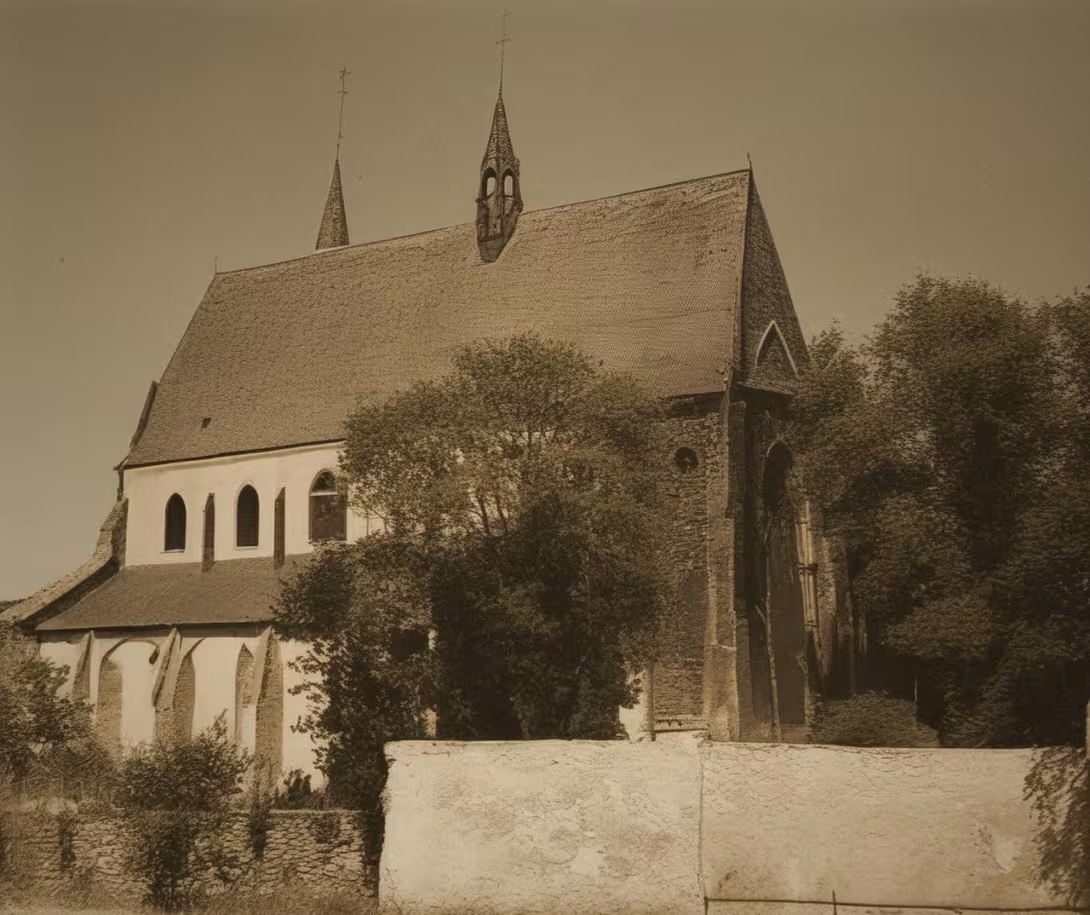
The historical appearance on the left is an AI-generated visualisation and serves as inspiration only.
Historical milestones
- 1137
- A legend mentions a miraculous healing attributed to Saint Gothard, leading to the church's construction.
- 1372
- The town was captured by Taborite forces during Easter in April, resulting in damage to the church.
Architectural development
The church initially started as a Romanesque basilica before transitioning into its Gothic form. The first significant Gothic phase began in the mid-14th century with the addition of a western tower. Later phases included the construction of a northern aisle, main nave, and presbytery, culminating in a late-Gothic presbytery vaulted with starry and net patterns.
Historical events
The church was originally established by Benedictine monks in the 12th century as part of their estate management.
In the mid-14th century, the first phase of Gothic construction began, including the addition of a western tower to the existing Romanesque structure.
During the Hussite Wars, the monastery's occupants left Slaný and did not return, leading to changes in religious administration.
Points of interest
- The legend of Saint Gothard's miraculous healing linked to the church’s construction is intriguing yet unconfirmed by early records, possibly confused with an event in Slapy rather than Slaný.
- During the Hussite Wars, Benedictine monks abandoned Kostel svatého Gotharda and never returned, leading to a significant shift in religious administration to utrakvist and later Lutheran priests for two centuries.
- In April 1425, Taborite forces captured the church during Easter, causing damage that required immediate repairs and extensive mid-15th-century reconstruction efforts once peace was restored.
- The church’s architectural transformation from a Romanesque basilica to a Gothic structure spanned several centuries, featuring unique starry and net patterns in its late-Gothic presbytery vaulting.
- Despite the turbulent history of ownership changes and military conflicts, Kostel svatého Gotharda remains an enduring symbol of Slaný’s historical core and architectural evolution.
Guide
This guide is narrated by a synthetic voice generated by artificial intelligence.
Show guide text
This text was created by artificial intelligence and has not been editorially reviewed. It may contain inaccuracies.
The Church of Saint Gothard is the most significant Gothic church building in Slaný and a dominant feature of the historic centre. It is the centre of the local Roman Catholic parish and a cultural monument of the Czech Republic.
It was founded in the twelfth century by Benedictines from the Ostrov monastery, who managed monastic property in the surrounding area. The dedication to Saint Gothard is also connected to them. The Ostrov monastery had a close connection to Saint Gothard through its ties to the mother monastery in Niederaltaich, where the saint served as abbot. The chronicle of the Vyšehrad canon mentions in the year 1137 a miraculous healing of a woman through Saint Gothard's intercession and the construction of a church dedicated to this saint. However, it mentions the village of Slapy. Some historians see this as a confusion with Slaný, though the exact date of the church's founding cannot be determined. What is certain is that by the end of the twelfth century there stood a Romanesque three-aisled basilica here. It continued to be used even after a royal city was established shortly after the year 1300 right next to the church, together with fortifications including a powerful Prague Gate, which was demolished in the nineteenth century.
The Gothic reconstruction began in the second half of the fourteenth century, most likely even before the city fire in the year 1372. First, the western tower was built, attached to the facade of the still-used Romanesque structure. This was followed by the northern side aisle and the main aisle with a new chancel. By the time of the Hussite wars, the Gothic three-aisled structure was complete. At the beginning of the Hussite upheaval, the Benedictines abandoned Slaný and never returned. Spiritual care was taken over for two centuries by Utraquist priests and later also by Lutheran clergy.
At Easter in April 1425, Taborite forces conquered the city. Some of the defenders were burned alive directly in the church tower and the entire structure was damaged. Major reconstruction came around the middle of the fifteenth century. In the year 1446 the tower roof was repaired, the main aisle was raised and given new vaulting, and a western vestibule was added. In the second half of the century, a late Gothic chancel with net and star vaulting was created. Soon it was decorated with wall paintings. In the centre is Christ with a chalice, a symbol of communion in both kinds, in the form of bread and wine. Angels with instruments of the Passion accompany him, and the figures of the evangelists, supplemented in the early seventeenth century.
On the exterior, the chancel is divided on the model of cathedrals by buttresses with crabs and cross flowers. The city coat of arms on the northern side shows that the city itself stood behind the construction. The late Gothic phase was concluded with a sacristy, completed in the year 1520. Unique is the preserved original late Gothic timber roof of the aisle and chancel.
Frequently asked questions
Can the monument be visited?
Yes. We verified the opening hours or admission on the official website (13. 10. 2026); you will find them in the visitor information on this page. Please double-check with the operator before you travel.
What are the opening hours and admission?
Details verified on the official website (13. 10. 2026) are listed in the visitor information on this page. Official website: https://www.farnostslany.cz/
Where is the monument?
Location: Slaný, Středočeský kraj. The map on this page shows the exact spot.
Why is the monument protected?
It is listed in the Central List of Cultural Monuments of the Czech Republic as a cultural monument (register no. 41891/2-564).
Businesses nearby
Do you run a restaurant, accommodation, shop, museum, rental, wellness or other visitor service near this monument? Show yourself directly to the people heading to it — this is how they will see you in the app and on the web:
Nearby
🏰 Historic sites (72)
- Vlastivědné muzeum ve Slaném 0.1 km
- Tomáš Garrigue Masaryk 0.2 km
- Oběti koncetračních táborů 0.4 km
- Antonín Dvořák 0.5 km
- Slánský menhir Tyršův kámen 1.0 km
- Pomník obětem 1. světové války 3.2 km web
- Svatý Jan Nepomucký 4.3 km
- Svatý Václav 4.3 km
- Bunkr Drnov - Muzeum studené války a protivzdušné obrany 5.0 km web
- sv. Jiří bojující s drakem 5.7 km
- Památník Antonína Dvořáka 6.0 km web
- sv. Onufrius 6.1 km
- Vojenská technika 6.1 km
- Zámek Zlonice 6.2 km
- Pomník Eduarda Bayera 6.2 km
- Železniční muzeum Zlonice 6.6 km Lisovice 7 +420 728 957315 web
- Pomník obětem 2. SV 7.0 km
- bývalý důl Mayrau 7.1 km
- Menhir 7.3 km
- Pyrám - Martinický obelisk 7.5 km
🍽️ Restaurants and dining (212)
- Café Bar Church 0.1 km
- Pivovar Antoš 0.1 km
- Lahůdky 0.2 km
- Fresh Corner 0.2 km
- Ristorante Pizzeria Hemerkův Statek 0.2 km
- Ungelt 0.2 km Masarykovo náměstí 4
- Kufr 0.2 km
- Prostor 0.3 km
- Hranolkárna 0.3 km
- Cukrárna u Kašny 0.3 km
- Mexická restaurace no. 89 0.3 km
- Pizza House 0.3 km
- bar "Na růžku" 0.3 km
- Pizzerie Na Hradbách 0.4 km
- El Alma 0.4 km
- Staré Slaný 0.4 km
- Na obláčku Cafe 0.4 km
- Kebab 0.5 km
- Kebab U Turka 0.5 km
- GRAND 0.5 km web
🏨 Accommodation (24)
- Hejtmanský dvůr 0.3 km web
- Ungelt 0.5 km
- Ubytovna Slaný Trilorn 0.8 km Pražská 804 +420 605 080 064 web
- Atlas 0.8 km
- U Bartoušků 7.9 km
- Hotel Pod Sluncem 8.2 km Třebíz 25 +420312521898 web
- Penzion 68 8.8 km
- Hoffmann 9.1 km
- Turistická ubytovna Centrum 9.4 km Váňova 322 +420603816906 web
- Hotel Merkur 9.5 km
- Ponte 9.6 km
- U Admirála 9.7 km web
- Penzion Iris 10.0 km
- Penzion Tonička 10.1 km
- Penzion Vila Sítná 10.3 km
- Ubytovna Racanda 10.3 km
- Hotel Kladno 10.3 km náměstí Sítná 3113 +420 312 523 119 web
- U Zlatého selátka 10.3 km
- Ubytovna Na zvonečku 10.3 km
- Ubytovna U Konvalinků 10.4 km
🚲 Rentals and sport (44)
- Studio BB 0.4 km
- eMsport 0.5 km
- Tenisové kurty 0.7 km
- Sokolovna 0.8 km
- Plovárna Slaný 1.1 km
- Sportovní hala Háje 1.1 km web
- Hokejbalové hřiště 1.7 km
- býv. voj. prostor 4.1 km
- Venkovní posilovna 5.2 km
- Sokolovna 6.1 km
- Střelnice na Haldě Vinařice 7.2 km web
- Sportovně-kulturní sdružení 8.6 km
- SOKOL 9.4 km
- Kola Jiří Hlubovský 9.4 km
- VehicleStore 9.5 km
- Živé vobrazy 9.6 km
- Sport Vision 9.8 km +420313101400 web
- Sportisimo 9.8 km Petra Bezruče 3388 +420226292590 web
- Sympa Sport2000 10.1 km +420774829852 web
- Snowboard - lyže - boty 10.2 km
🥾 Hiking and nature (156)
- U Antoše 0.1 km
- Modletický dům 0.1 km
- U Muzea 0.1 km
- U Autobusového nádraží 0.1 km
- Slánský pramen 0.4 km
- Park U křižovatky 0.4 km
- Slánská hora 0.5 km
- U Školky 0.5 km
- Louka Vítězná 0.6 km
- Park Plynárenská 0.7 km
- Punk park 0.8 km
- Lesopark Háje 0.9 km
- Park Skalka 0.9 km
- Kumpánova zahrada 1.0 km K. H. Borovského
- Lesopark Háje 1.0 km
- Netovická stráň 1.6 km
- Řipec 3.6 km
- Západní věž 4.0 km
- Východní věž 4.0 km
- Obůrka Podháj - soukromý zoopark 4.3 km 778802121 web
Accommodation nearby
Trips and activities nearby
Guided tours, tickets and activities nearby from GetYourGuide
Affiliate link: if you buy from the partner, we may receive a commission. The price for you does not change.
Search tours and activities →Themed route
Tematická výletní trasa: Kostel svatého Gotharda (Slaný)
1. Kostel svatého Gotharda (Slaný) - Hlavní cíl
- Typ: Historický kostel
- Proč stojí za návštěvu: Tento barokní kostel, postavený v roce 1730, je nejvýraznější architektonickou památkou Slaného. Jeho bohatě zdobené interiéry a historie ho činí fascinujícím místem pro milovníky dějin a umění.
2. Městský park (Slaný)
- Typ: Městský park
- Proč stojí za návštěvu: Nachází se v blízkosti kostela svatého Gotharda a nabízí klidnou zelenou útulku pro odpočinek. Park je ideálním místem k procházení, relaxaci nebo návštěvě koncertů a kulturních akcí pořádaných v létě.
3. Městské náměstí (Slaný)
- Typ: Náměstí
- Proč stojí za návštěvu: Centrálním místem Slaného, kde se nachází historická radnice a další architektonicky zajímavé budovy. Náměstí je živoucím srdcem města, které hostí různé akce a trhy.
4. Památník osvobození (Slaný)
- Typ: Památník
- Proč stojí za návštěvu: Nachází se na městském náměstí a slouží jako vzpomínka na osvobození Slaného v roce 1945. Je to místo pro reflexi a uctění památky těch, kteří bojovali za svobodu.
Tato trasa nabízí návštěvníkům přehledný pohled na historii a kulturu Slaného, s důrazem na jeho nejvýznamnější památky.
Seasonal recommendations
Spring: Visiting the Church of Saint Gothard during spring offers a unique experience as nature awakens around this historic site. The surrounding landscape is adorned with vibrant wildflowers and budding trees, creating a picturesque backdrop that enhances the architectural beauty of the church. As daylight extends, the soft morning light illuminates the intricate stonework, casting gentle shadows that add depth to its Gothic features. Visitors should be prepared for occasional rain showers typical of this season; therefore, wearing layers and carrying an umbrella is advisable. The weather can also bring a mix of temperatures throughout the day, so dressing in adaptable clothing is recommended. Spring tends to attract fewer tourists compared to summer, making it an ideal time for those seeking a peaceful visit.
Summer: The Church of Saint Gothard shines brightly during the summer months, with long daylight hours providing ample opportunity to explore its historical details and enjoy outdoor activities nearby. The lush greenery surrounding the church is at its peak, offering a serene environment perfect for leisurely walks or picnics in the vicinity. This season attracts more visitors due to favorable weather conditions, so arriving early can help avoid larger crowds. Comfortable walking shoes and light clothing are essential to stay cool during hot days. Additionally, taking advantage of the extended opening hours allows ample time to appreciate both the church's interior and its natural surroundings.
Autumn: Autumn is a magical time to visit the Church of Saint Gothard as it transforms into an enchanting landscape of warm hues. The falling leaves create a stunning tapestry that complements the historic architecture, offering a unique perspective with each season's change. Cooler temperatures make for comfortable exploration without the summer heat, and the air often carries a crispness that enhances the sensory experience of visiting such a storied site. Visitors should dress in layers to accommodate fluctuating weather conditions, which can range from mild days to chilly evenings. This season is less crowded than summer but still popular among tourists seeking the beauty of fall foliage.
Winter: Visiting the Church of Saint Gothard during winter offers a serene and contemplative atmosphere as snow blankets the surrounding landscape, creating a picturesque scene that enhances its historical charm. The church's Gothic architecture stands out starkly against the white backdrop, providing a unique visual experience. Winter conditions may lead to shorter opening hours and potential closures due to inclement weather, so checking in advance is advisable. Visitors should dress warmly with layers, including hats and gloves, as temperatures can be quite cold. Despite fewer tourists during this season, the church remains an inviting destination for those looking to enjoy its tranquil beauty amidst a winter wonderland.
Visualizations and artistic views


The visualisations are generated by artificial intelligence and serve as inspiration.
Photos from the area
Real photos taken near the monument

Zdroj a licence jsou uvedeny u každého snímku.
Tips from visitors
No tips yet. Be the first!
Log in and add your tip.
Sources and literature
Photos: VitVit / CC BY-SA 4.0 — Wikimedia Commons. The author and licence also appear when you hover over the image.
Faktickým podkladem tohoto textu byl článek na Wikipedii, jehož autory jsou přispěvatelé Wikipedie. Článek je dostupný pod licencí CC BY-SA 4.0.
Location on the map


Příběhy a pověsti
Legendy, pověsti a příběhy spjaté s touto památkou

Příběh: Kostel svatého Gotharda (Slaný)
Krvavý nůž v pravici mu kluzal z potem vlhkých dlaní, zatímco nad hlavou slyšel neutuchající řev táboritských vojáků, kteří právě prolomili městské hradby. M…
Číst příběh
Pověst: Kostel svatého Gotharda (Slaný)
Traduje se, že kdy dávno, v dobách, kdy středočeské roviny ještě nenesly jména dnešních měst a vesnic, putovala krajem nemocná žena. Nohy ji nevládly, hlas s…
Číst příběhFotografie návštěvníků
Přidat fotografiiZatím žádné fotografie. Buďte první, kdo přidá fotografii z návštěvy!
Kudy se sem dá dojít a dá se dovnitř?
Log in a přidejte svou fotografii nebo hodnoťte.
Za ověřenou návštěvu v aplikaci získáte víc bodů — poznáme podle GPS, že jste na místě.
Reviews and comments