






Kostel svatého Martina (Borová Lada) Church
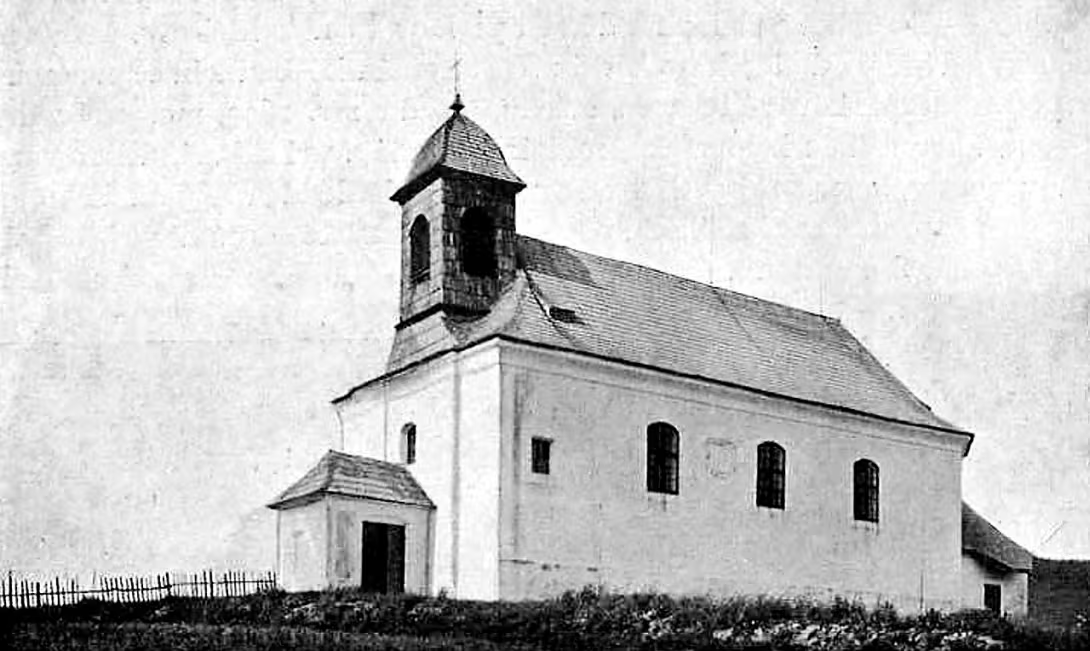
The Kostel svatého Martina, a classicist church in Borová Lada, Prachatice district, South Bohemian Region, was once a cultural monument. Despite its designation, it eventually fell into disrepair and was demolished in 1976.
Construction began in 1796, replacing an earlier wooden chapel. Josef Binder designed the building, with Johann Hainzer serving as master builder. Renovations took place between 1906-1907. Although declared a cultural monument in 1963, the church continued to deteriorate and was eventually demolished in 1976.
The single-nave building features a three-sided presbytery and sacristy. The roof was covered with shingles, and walls were undecorated. The interior has a flat ceiling and is lit by segmentally arched windows. The main altar features a painting of Saint Martin, created by Ignác Gerzick.
The church's history is marked by neglect and abandonment. After World War II, the church ceased to serve its original purpose and gradually fell into disrepair. Efforts were made to preserve the building, but restoration proved too costly. Demolition was met with resistance from local authorities, ultimately leading to the structure's destruction in 1976.
Today, the site where the Kostel svatého Martina once stood serves as a reminder of the region's rich cultural heritage. Although the physical building is gone, its history and significance remain an important part of the community's identity. Visitors can still explore the surrounding area, offering a glimpse into the past.
Then and now
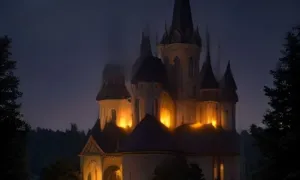
Drag the slider to compare how the landmark may have looked when it was built with the view today.
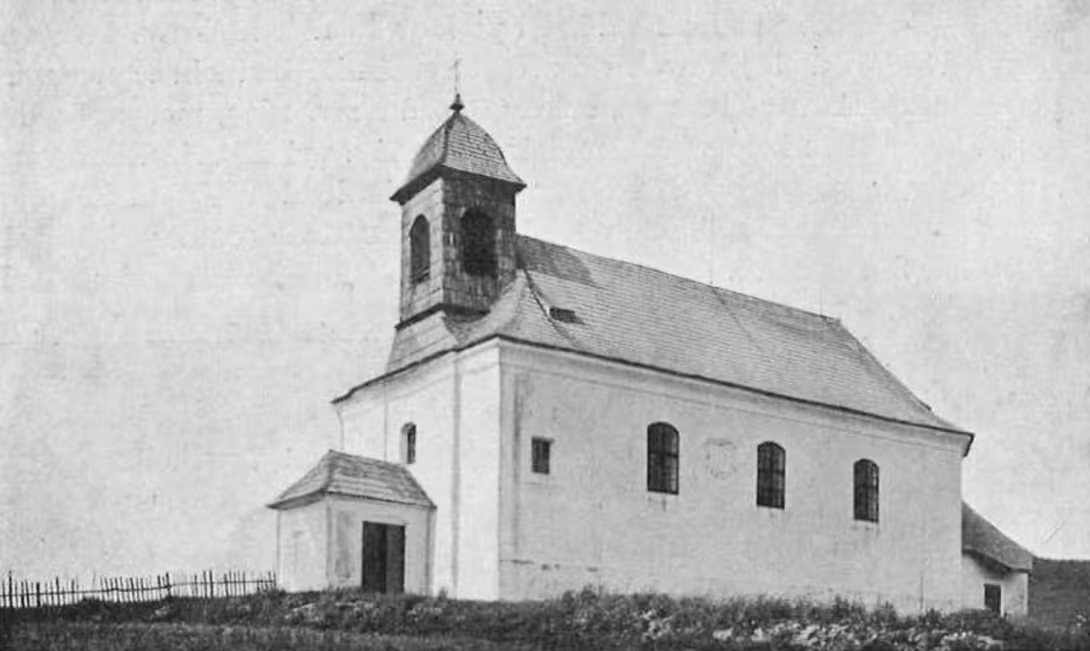

The historical appearance on the left is an AI-generated visualisation and serves as inspiration only.
Historical milestones
- 1796
- Construction of the Kostel svatého Martina began
- 1906
- Renovations took place between 1906-1907
- 1963
- The church was declared a cultural monument
- 1976
- Demolition of the Kostel svatého Martina
Architectural development
The church was built on the site of a wooden chapel, with a single nave and a three-sided presbytery. The roof was covered with shingles, and the walls were undecorated.
Historical events
Construction began in 1796
The church was renovated in 1906-1907
Demolition occurred in 1976
Points of interest
– Despite being declared a cultural monument in 1963, the Kostel svatého Martina was demolished just 13 years later in 1976 due to neglect and disrepair.
– The church's main altar features a painting of Saint Martin created by Ignác Gerzick, which is now lost forever as the building was destroyed.
– After World War II, the church ceased to serve its original purpose and gradually fell into disrepair, with efforts to preserve it ultimately proving too costly for restoration.
– The Kostel svatého Martina's history is marked by neglect and abandonment, serving as a reminder of the region's rich cultural heritage, which remains an important part of the community's identity despite the physical building being gone.
Guide
This guide is narrated by a synthetic voice generated by artificial intelligence.
Show guide text
This text was created by artificial intelligence and has not been editorially reviewed. It may contain inaccuracies.
The Church of Saint Martin stood in Nový Svět, today part of the Borová Lada municipality in the Prachaticko region. It was a parish church and its cemetery served people from neighboring settlements such as Černá Lada, Hrabětické Lady, Paseky, Šindlov, Zahrádky or Zelená Hora. Today the church no longer stands. It was demolished in nineteen seventy-six.
Spiritual administration was established here in seventeen eighty-eight. At that time, a curacy was set up by a wooden chapel of the Holy Spirit from the previous year. In the same year, the registers of baptisms and marriages began, with the registers of deaths starting a year later. In eighteen fifty-five, the curacy became a parish. Around the nineteen fifties, the parish was moved to Nová Huť.
The church was built in seventeen ninety-six and seventeen ninety-seven in place of the wooden chapel, during the time of reforms under Emperor Joseph the Second. It was paid for by the Religious Fund. The project was prepared by Josef Binder, a builder from Vimperk, and the construction was carried out by Johann Hainzer, a master mason from the Bavarian Röhrnbach. At the beginning of the twentieth century the church was renovated.
It was a simple single-nave building with a presbytery, that is a chancel, and a low wooden tower on the western facade. The roof and tower were covered with shingles. The walls were undecorated, only the facade was divided by a pair of pilasters. Inside there were flat reed ceilings and in the western part of the nave stood a choir loft. The furnishings were also modest. The main altar was originally formed by a wall painting of Saint Martin by Ignác Gerzicka, organist from Malý Zdiков. Only in eighteen fifty-seven was it replaced by an altar with a painting of Saint Martin by F. Tomáš from Jindřichův Hradec. The organ was built in eighteen ten.
After nineteen forty-eight, inhabitants moved away from the area and the church ceased to serve for worship. In nineteen sixty-three it was declared a cultural monument. From nineteen sixty-six, district offices and conservators attempted its restoration and considered that it could serve as a repository for the South Bohemian Museum. However, construction companies delayed the repairs, so the district department of education and culture turned to the prosecutor's office. Nevertheless, the church could not be even secured. Vandals damaged it and its furnishings were stolen. Further attempts at rescue between nineteen seventy-one and nineteen seventy-four also failed.
Eventually the church was taken over by the local people's committee of Borová Lada. They requested the removal of monument protection and permission for demolition. The church was already in a state of disrepair and repair seemed too expensive. In the second half of nineteen seventy-six it was therefore demolished together with the cemetery.
Tips for visitors
Best Time to Visit: The Kostel svatého Martina is best visited during the spring and summer months when the surrounding landscape is lush and green. Avoid visiting during peak winter weather as the site may be closed due to snow or ice accumulation. What to Bring: Wear comfortable shoes for walking around the site, and bring a camera to capture the stunning views of the surrounding countryside. Don't forget to bring sun protection (sunscreen, hat) as there can be limited shade. Photography: The best spots for photography are from the north side of the church, where you can capture the beautiful views of the valley. Try to visit during the golden hour (early morning or late afternoon) for optimal lighting conditions. What to See Nearby: For those interested in exploring more of the region, consider visiting the nearby village of Borová Lada, which offers a glimpse into traditional Czech rural life.
Frequently asked questions
Can the monument be visited?
Religious buildings are usually open mainly during services; at other times a visit is normally arranged with the parish or the operator. We have not verified specific times. According to the heritage register the structure is in poor condition – do not enter it and take care nearby.
Where is the monument?
Location: Borová Lada, Jihočeský kraj. The map on this page shows the exact spot.
Businesses nearby
Do you run a restaurant, accommodation, shop, museum, rental, wellness or other visitor service near this monument? Show yourself directly to the people heading to it — this is how they will see you in the app and on the web:
Events nearby
Zdroj akcí: otevřená data měst a obcí ČR (Národní katalog otevřených dat) a kalendář akcí Národního památkového ústavu.
Accommodation nearby
Themed route
Thematic Tour Route
Main Goal: Kostel svatého Martina (Borová Lada), a beautiful Baroque church in Borová Lada, Prachatice District, South Bohemian Region.
Route:
1. Růžový vrch (Rozovy Vrch), a hill with a stunning view of the surrounding countryside. This viewpoint is perfect for taking in the scenery and getting a sense of the area's natural beauty. 2. Borová Lada village, where you can explore the charming streets, visit local shops, and get a feel for rural life in South Bohemia. 3. Kostel svatého Martina (Borová Lada), our main goal! This beautiful Baroque church is a must-see attraction in the area.
This route takes you on a scenic journey through the countryside, with stunning views from Růžový vrch and a charming village to explore before reaching the highlight of the tour: the Kostel svatého Martina.
Seasonal recommendations
Here are the seasonal recommendations for visiting the historic landmark, Kostel svatého Martina (Borová Lada):
Spring
As you approach the church in the spring, you'll be greeted by the sweet scent of blooming flowers and the warm sunshine. The surrounding landscape is a tapestry of green, with new life bursting forth from the earth. Take advantage of the mild weather to explore the area without the crowds that arrive during peak summer months.
Practical tips: Arrive early to avoid the morning rush, and wear comfortable shoes for exploring the nearby trails. Bring a camera to capture the vibrant colors of the blooming flora.
Summer
In the summer, the church is surrounded by lush greenery and the air is filled with the sounds of birdsong. The warm weather makes it an ideal time to take a leisurely stroll around the property or enjoy a picnic on the adjacent hill. Be prepared for larger crowds, especially during weekends and school holidays.
Practical tips: Plan your visit early in the morning or later in the afternoon to avoid the peak sun hours. Wear sunscreen, a hat, and comfortable clothing to ensure a pleasant experience.
Autumn
As autumn arrives, the church is bathed in a warm golden light, with the surrounding trees displaying vibrant hues of orange, yellow, and red. The crisp air carries the scent of ripe fruit and woodsmoke, adding to the cozy atmosphere. Take advantage of the smaller crowds to explore the property at your leisure.
Practical tips: Dress warmly for the cooler weather, and bring a scarf or hat to keep you cozy. Arrive early to avoid the morning rush and enjoy the peaceful atmosphere.
Winter
In the winter, the church takes on a serene quality, with snowflakes gently falling onto the surrounding landscape. The cold air is crisp and clean, making it an ideal time for a brisk walk around the property or a warm cup of coffee by the fireplace.
Practical tips: Plan your visit during the week to avoid weekend crowds, and wear warm clothing, including gloves and a hat. Bring a camera to capture the stunning snow-covered scenery.
Visualizations and artistic views


The visualisations are generated by artificial intelligence and serve as inspiration.
Photos from the area
Real photos taken near the monument


Zdroj a licence jsou uvedeny u každého snímku.
Tips from visitors
No tips yet. Be the first!
Log in and add your tip.
Sources and literature
Photos: M. Würstl / Public domain — Wikimedia Commons. The author and licence also appear when you hover over the image.
Faktickým podkladem tohoto textu byl článek na Wikipedii, jehož autory jsou přispěvatelé Wikipedie. Článek je dostupný pod licencí CC BY-SA 4.0.
Location on the map

Příběhy a pověsti
Legendy, pověsti a příběhy spjaté s touto památkou
Fotografie návštěvníků
Zatím žádné fotografie. Buďte první, kdo přidá fotografii z návštěvy!
Log in a přidejte svou fotografii nebo hodnoťte.
Za ověřenou návštěvu v aplikaci získáte víc bodů — poznáme podle GPS, že jste na místě.
Reviews and comments