



Kostel svatého Mikuláše (Úboč) Church
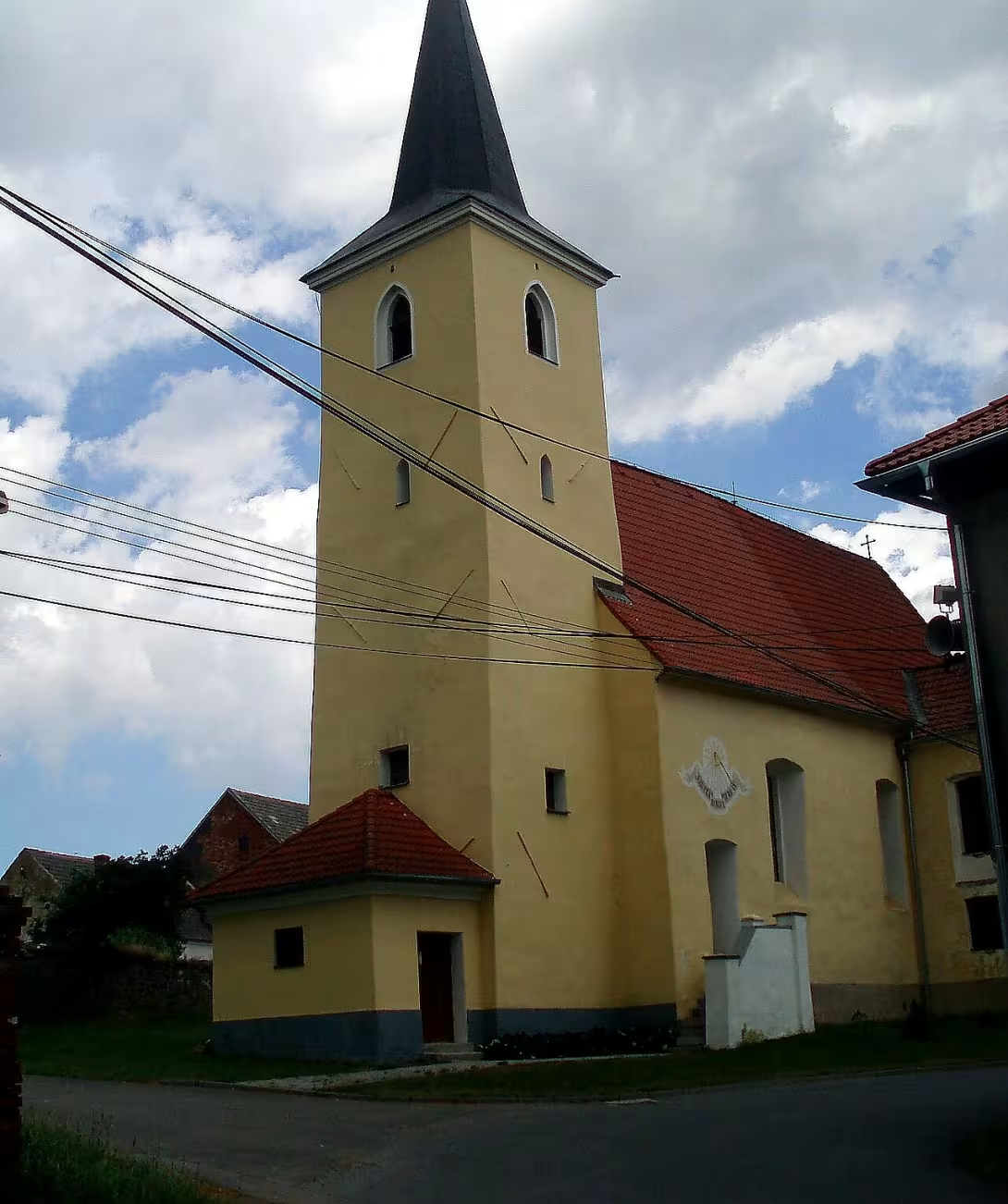
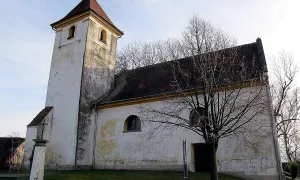
The church is located on the north edge of the village Úboč, in its almost highest location, where it occupies the dominant position of the landscape along with the tower. Its surroundings are guarded from the north and east by a wall, while on the other sides it is lined by infrastructure. Not far from the church, there is a rectory with a distinctive Mansard roof built in 1728. In the famous parish garden, a significant part of the extensive fortress was preserved - the remains of the fortress established in the turn of the 13th and 14th centuries, which once dominated this place.
The building of the church dates back to the 13th century, when it was built as an early Gothic one-ship temple. From this original stage, the ship's masonry and, in particular, the lower part of the prism tower, which is an eloquent testament to the Romanesque era, has been preserved until today. Over time, the building changed. In the second half of the 14th century, a new presbytery and sacristy were added to enrich the interior. A more fundamental change came during the Baroque - in 1763 the chapel of St. Anne was built with an oratory and a staircase annex. In the same period, the main ship was probably bridged. The nineteenth century brought further adaptation: in 1852 the tower was increased by one floor. The latest reconstruction took place in 1994, when the roof and facade were fixed.
Architecturally, it is a one-boat rectangular church with a prism tower on the запададо side. The core of the building consists of a polygonal presbytery, which is equipped without exception with Gothic cross-ribs and thick windows with original circles - details of its Gothic origin. The northern wall of the presbytery is preserved by a gothic wall sanctuary, in the south the original seat with a segment enchantment. The presbytery opens up to the ship with a monumental pointy victory arch, which is elegantly watered on both sides. The presbytery is connected to the north side of the sacristy with the cross vault and to the south a spacious square chapel of St. Anne. The ship is arched by a vaulted vault with lunettes and illuminated by rectangular windows with segment finish. The entrance to the circle is located in the southern corner of the ship, where the walled open passage leads. The square tower boasts a low hall that protects the entrance portal.
The Church of St. Nicholas is a place where centuries of history can be read - from goth to Baroque to modern style. The visitor will find a building here that was not lightly preserved in ancient form, but was changing live according to the needs and views of its times. This dynamic concept of the restaurant makes the temple a remarkable textbook of architectural development.
Then and now
Drag the slider to compare how the landmark may have looked when it was built with the view today.
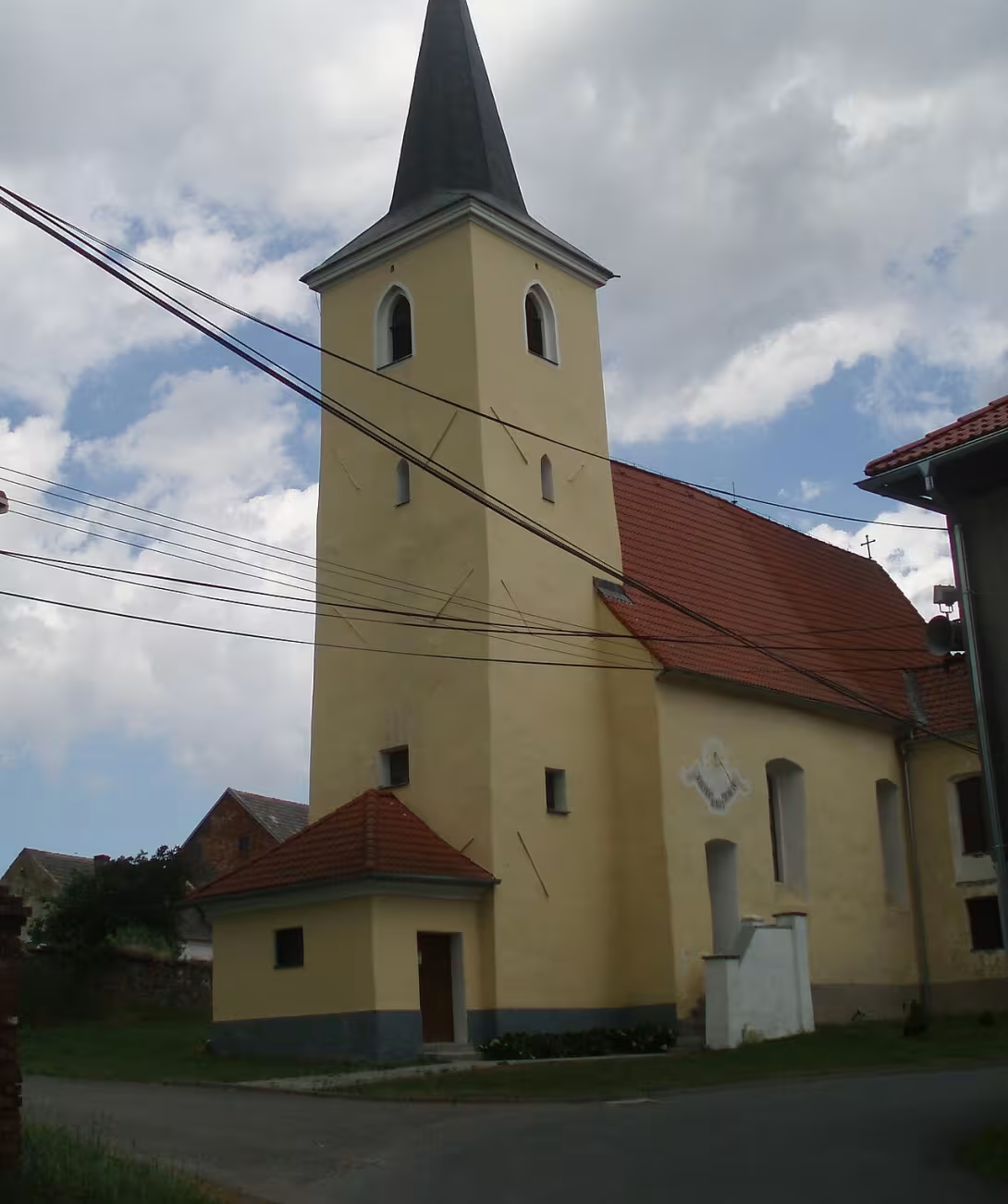
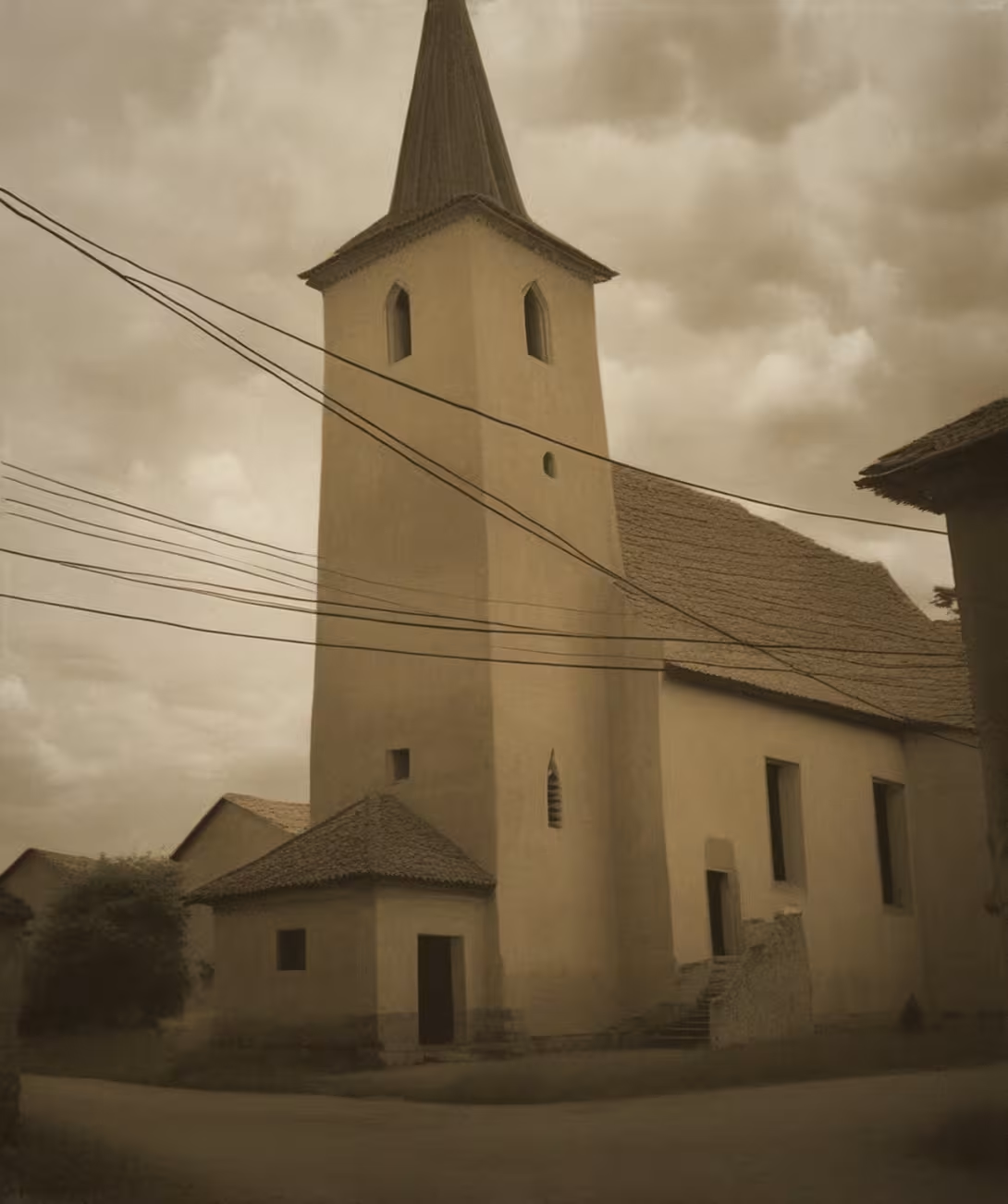
The historical appearance on the left is an AI-generated visualisation and serves as inspiration only.
Historical milestones
- 13th Century
- The origin of the original early Gothic ship and the lower part of the prism tower.
- 14th century (2nd half)
- Rebuilding the presbytery and adding sacristy.
- 1763
- Baroque reconstruction with the construction of St. Anne's Chapel and oratory.
- 1852
- Raise the tower by one floor.
Architectural development
The original early Gothic ship and the lower part of the tower from the turn of the 12th and 13th centuries are a masonry of stone. In the second half of the 14th century, a presbytery was added with a cross vault and sacristy, which are typical of the highest Gothic architecture. The Baroque adjustments from 1763 brought the chapel of St. Anne with the oratory and the stairwell, while the ship was probably overarched by a vaulted arch with lunettes. In the 19th century there was an increase in the tower and further simplification of the interior.
Historical events
- zlom 13th and 14th century
- The foundation of the original early Gothic ship and the lower part of the tower, connected with the fortress on the site of today's parish garden.
- 1763
- Baroque reconstruction of the church, where St. Anne's Chapel was built and the oratory.
- 1852
- Increase the prism tower by one floor.
- 1994
- The last extensive roof and facade repair.
Points of interest
- Church of St. Nicholas in Úboči stands at the highest point of the village and along with the tower dominates the surrounding landscape.
- The masonry of the ship and the lower part of the prism tower come from an early Gothic building from the 13th century, with the tower part of Romanesque origin.
- In 1763, the Baroque chapel of St. Anne was built with an oratory and a staircase annex.
In 1852, the tower was raised by one more floor.
- A part of the fort from the turn of the 13th and 14th centuries, which once dominated the place, survived near the church.
Guide
This guide is narrated by a synthetic voice generated by artificial intelligence.
Show guide text
This text was created by artificial intelligence and has not been editorially reviewed. It may contain inaccuracies.
The Church of Saint Nicholas is together with its tower the landmark of the village of Úboč in the Plzeň Region. It stands on the northern edge of the sloping village, almost at its highest point. The space around the church is enclosed by a boundary wall on the north and east sides, while roads border it on the other sides.
Opposite the church stands a rectory with a mansard roof, built in seventeen twenty-eight. In the rectory garden, a significant part of an extensive fortified site has been preserved. It is a remnant of a fortress that emerged here at the turn of the thirteenth and fourteenth centuries.
The church itself is an early Gothic single-nave building from the thirteenth century. From that period, the walls of the nave and the lower part of the prismatic tower have apparently been preserved. In the second half of the fourteenth century, a new chancel and sacristy were added. During the Baroque reconstruction in seventeen sixty-three, the Chapel of Saint Anne with an oratory and an extension with a staircase were created. Probably at the same time, the main nave received a vault. Further modifications came in the nineteenth century, and in eighteen fifty-two the tower was heightened by one story. The most recent restoration took place in nineteen ninety-four, when the roof and façade were repaired.
The church has a rectangular nave, at the front of which on the western side stands a prismatic tower. Its entrance portal is protected by a low vestibule. To the east, a polygonal chancel reinforced with buttresses adjoins the nave. It is vaulted with a ribbed cross vault and has pointed windows with original tracery. In the north wall of the chancel a Gothic wall tabernacle has been preserved, that is, a niche for storing sacred objects. In the south wall is the original sedile, a seating niche, with an arched surround.
The chancel opens into the nave through a pointed triumphal arch, which is fluted on both sides. From the north, a sacristy with a ribbed cross vault adjoins the chancel, and from the south, a square chapel of Saint Anne.
The nave is covered with a barrel vault with lunettes and light is let in through rectangular windows ending in a mild arch. In the southern corner of the nave is a brick uncovered entrance to the gallery.
Frequently asked questions
Can the monument be visited?
Religious buildings are usually open mainly during services; at other times a visit is normally arranged with the parish or the operator. We have not verified specific times.
Where is the monument?
Location: Úboč, Plzeňský kraj. The map on this page shows the exact spot.
Why is the monument protected?
It is listed in the Central List of Cultural Monuments of the Czech Republic as a cultural monument (register no. 29632/4-2244).
For kids
Imagine going back to when our ancestors were starting to build municipal settlements. Now it's where St. Nicholas' church stands today in Úboči. When you're there, you'd feel like you're in a game whenever you opened up an amazing beautiful hill and decorated towers.
Businesses nearby
Do you run a restaurant, accommodation, shop, museum, rental, wellness or other visitor service near this monument? Show yourself directly to the people heading to it — this is how they will see you in the app and on the web:
Nearby
- The remains of the fortress from the turn of the 13th and 14th century, where the church stands.
- A Baroque rectory with a mansard roof from 1728.
- Local water flow that flows near the village and landscape.
Accommodation nearby
Themed route
Thematic cruise route: Medieval tracks and Baroque architecture in Úboči
1. Church of St. Nicholas * Type: * Sacral monument, Gothic-Baroque church. * Why visit? * A unique building connecting the late Gothic core with baroque modifications, hiding valuable decorative elements and historical tombstones. Its location on the site of the former fortress gives the visit an impression of a connection between the past and the present.
2. Fortress Úboč * Type: * Archaeological site (in the parish garden area). * Why visit? * The remains of the 13th-14th century fortress, which reveal the medieval history of the village. Their proximity to the church proves that the sacral structure replaced the original defensive mansion - a rare example of the transformation of functions in one place.
3. Fara Úboč * Type: * Baroque rectory (1728). * Why visit? * A typical Baroque country parish with a Mansard roof illustrating the church life of the village in the 18th century. Her visit closes the circle between church, fortress and spiritual administration.
4. Úboč stream * Type: * Natural element (surrounding the village). * Why visit? * A calm flow that surrounds the village and gives the landscape a natural harmony. Its shores offer a short walk overlooking the church and rectory - ideal to relax between historic stops.
* Route: * Start at the church, proceed to its premises to the hardness, visit the rectory opposite and finish by walking along the Úboč creek. All points are close to each other (up to 200 m), so the route can be completed in 1-1.5 hours.
Seasonal recommendations
Spring In the spring months the church of St. Nicholas in Úboči dresses in light and green, when the sun's rays intersect through bright stained windows and reflect on freshly washed stone walls. The surrounding area of the church is still quiet before the surrounding trees and bushes bloom, and the air smells of moisture after melting snow. The atmosphere is calm, almost meditative, as if the monument was waiting for visitors who can enjoy its beauty without disturbing crowd. Practically best to visit the church in April or early May when the weather is stable and the temperature is pleasant. Comfortable shoes are recommended, because after rainy days the roads to the monument can be muddy. The ideal time is the afternoon when the sun shines directly into the interior and creates magical shadows on frescoes. Since spring attendance is usually lower, there is no need to worry about long queues at the entrance.
Summer In the summer months, St. Nicholas' church becomes more lively when its surroundings turn into a green paradise with flowering trees and flowers. The warm sun rays form a light and shadow game on the stone walls of the church that highlights its architectural details. In the main summer season, however, it is necessary to count on the higher attendance rate, especially on Sunday and the holiday of St. Catherine (November 25, but in summer it is more about the tourist season). It is recommended to come early in the morning to avoid crowds or in late afternoon hours when tourists return to the cities. Suitable is light, but the sun's protective clothing and hat, because the shadow inside the church is limited. In summer the church is opened longer, but in hot days it can be pleasantly cold inside, so wear a light sweater.
Autumn Autumn brings to Úboče golden colours of leaves and a calm atmosphere, where the church of St. Nicholas appears to be a cozy shelter from the cold wind. The sun shines low above the horizon, and its light penetrates the interior of the church through the stained glass, forming fine, warm shades on the wall. The surrounding area is often covered with a thin carpet of fallen leaves, which gives the visit a romantic touch. In September and October the attendance is lower than in summer, but in November, especially around St. Catherine's Day, the church can be visited by more pilgrims. Warmer clothes are recommended because evenings are usually cold, and comfortable shoes, because forest roads can be wet. The best time is the afternoon when light becomes softer and the church looks like a fairy tale.
Winter In winter, the church of St. Nicholas will turn into a picturesque winter scenery, where white snow covers the roof and surrounding trees, and sunlight reflects the ice crusts. The interior of the church is at this time illuminated by the warm light of candles and lamps, which creates an intimate and peaceful atmosphere. In advent time, the church is often visited by believers, but only limited hours can be opened in December, especially on Sunday. It is recommended to warm but comfortable clothes, because outside it is cold and the wind penetrating. Fixed shoes are also suitable because the path to the church can be frozen or snowy. The best time to visit is this afternoon when light becomes softer and the church looks like a fairy tale. In winter, the attendance rate is lower, but in the pre-Christmas period it may increase.
Visualizations and artistic views


The visualisations are generated by artificial intelligence and serve as inspiration.
Atmosphere of the place
This atmospheric visualisation of the place and period was generated by artificial intelligence. It is not real footage of the location.
Tips from visitors
No tips yet. Be the first!
Log in and add your tip.
Sources and literature
Photos: Daniel Košinár / CC BY 3.0 — Wikimedia Commons. The author and licence also appear when you hover over the image.
Faktickým podkladem tohoto textu byl článek na Wikipedii, jehož autory jsou přispěvatelé Wikipedie. Článek je dostupný pod licencí CC BY-SA 4.0.
Location on the map




Příběhy a pověsti
Legendy, pověsti a příběhy spjaté s touto památkou
Fotografie návštěvníků
Zatím žádné fotografie. Buďte první, kdo přidá fotografii z návštěvy!
Log in a přidejte svou fotografii nebo hodnoťte.
Za ověřenou návštěvu v aplikaci získáte víc bodů — poznáme podle GPS, že jste na místě.
Reviews and comments