






Kostel Zvěstování Panny Marie (Miletín) Church
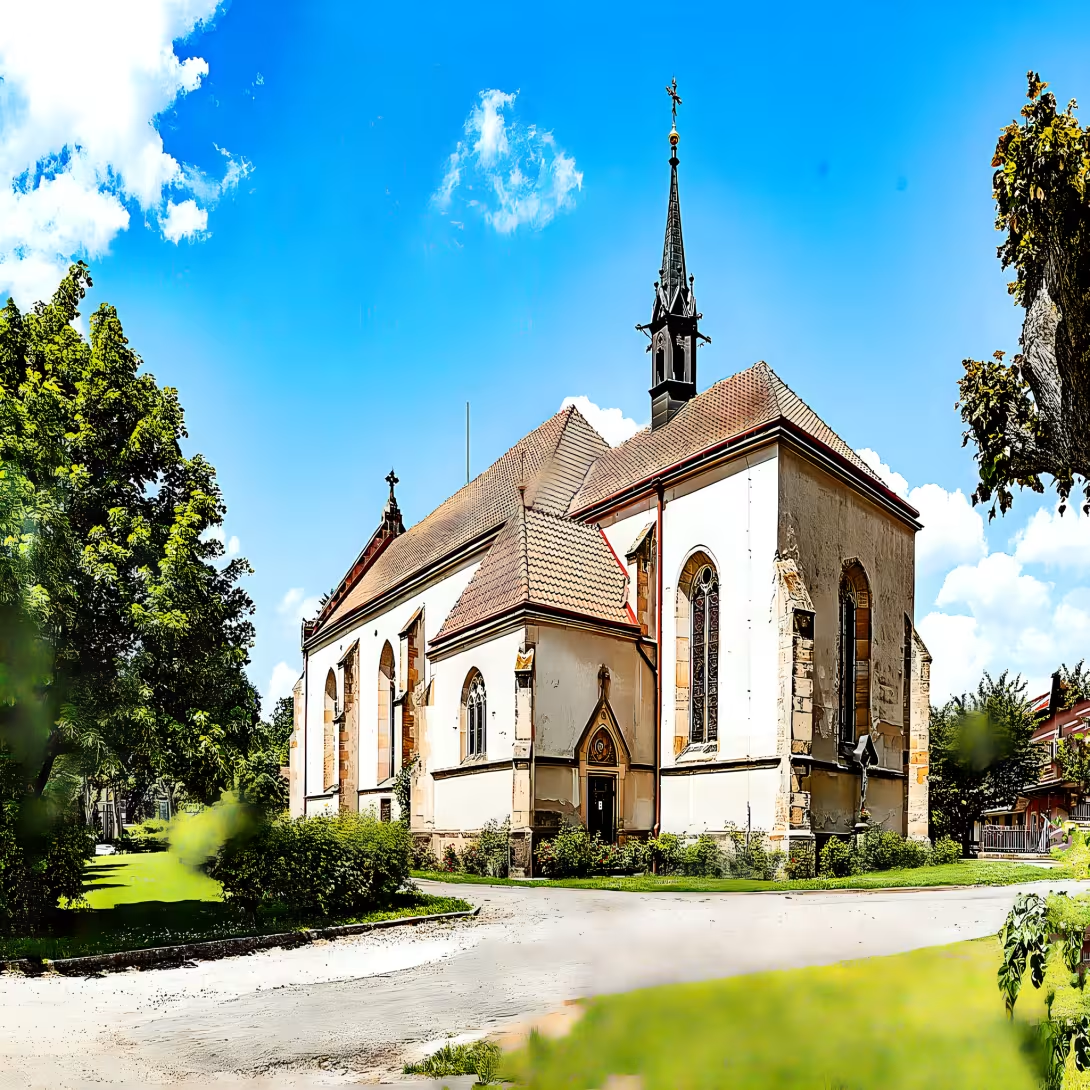
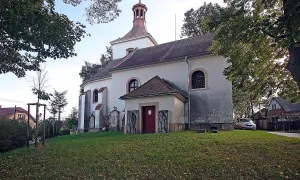
The Church of the Annunciation of the Virgin Mary in Miletín is a Roman Catholic filial church with historical significance as a former parish church. Situated in Miletín within Královéhradecký kraj, this Gothic structure was originally built by the Teutonic Order in 1241. Today, it stands as a cultural monument of the Czech Republic, showcasing its rich history and architectural evolution through various renovations over centuries.
The church's origins trace back to 1241 when the Teutonic Order constructed a stone chapel dedicated to the Virgin Mary, marking Miletín's ecclesiastical importance. That same year, the Order established control over Miletín, leading to the development of an associated settlement that evolved into today’s town. During the Hussite Wars, Diviš Bořek z Miletínka took charge of the church, introducing a period where dualist religious practices were conducted within its walls. This era lasted until the Battle of White Mountain, after which Jesuits assumed ecclesiastical administration in 1629.
Architecturally, the Church of the Annunciation has undergone several transformations since its Gothic origins. Between 1607 and 1608, a chapel was added to the south side of the church, forming what is now known as the Chapel of the Holy Sepulchre. The Baroque period brought significant changes under Baron Josef Jan Sosnovec z Vlkanova between 1768 and 1769, including the addition of a small room and porch leading to the cemetery wall. These renovations utilized many old tombstones in its construction. A devastating fire in 1846 severely damaged the church, necessitating extensive restoration efforts that culminated in the installation of a new tile roof by 1853.
Ownership and administration of the church have seen notable figures over time. The Teutonic Order initially held control until the Hussite Wars period when Diviš Bořek z Miletínka took charge. Later, Jesuits assumed ecclesiastical responsibilities in 1629. In the mid-18th century, Marie Anna Magni and her husband Ferdinand, hrabě z Morzinu, contributed significantly to the church's interior by adding new altars and a pulpit base that remains in Bezník with a statue of the Virgin Mary. Baron Josef Jan Sosnovec z Vlkanova later introduced Baroque elements during his tenure.
Key events in the church’s history include its initial construction by the Teutonic Order, the Hussite Wars period under Diviš Bořek z Miletínka, and Jesuit administration starting in 1629. The fire of 1846 was a pivotal moment that led to major restoration efforts, including a new roof and cross procession additions in 1880.
Today, the Church of the Annunciation stands as a testament to its historical and architectural journey. Visitors can explore its rich history through preserved elements and renovations. Its significance is not only religious but also cultural, offering insights into the region's past. The church remains accessible to those interested in exploring Miletín’s heritage, making it a worthwhile destination for anyone intrigued by Gothic architecture and Czech history.
Then and now
Drag the slider to compare how the landmark may have looked when it was built with the view today.
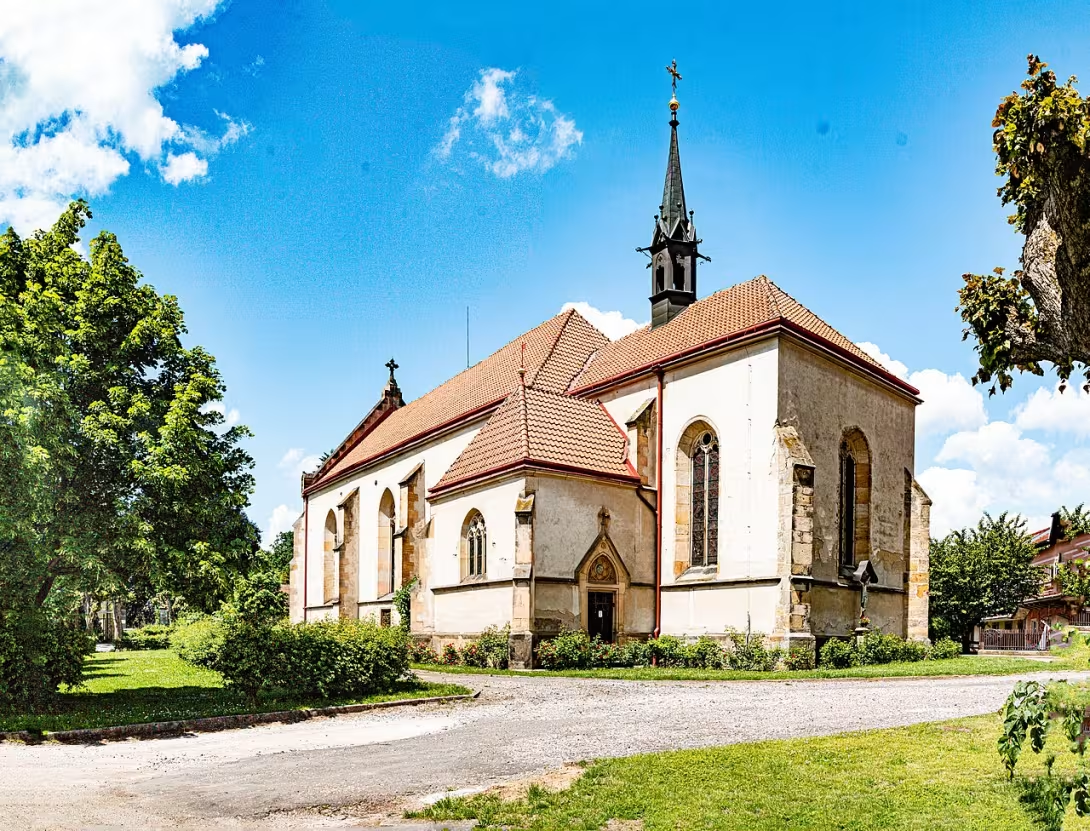
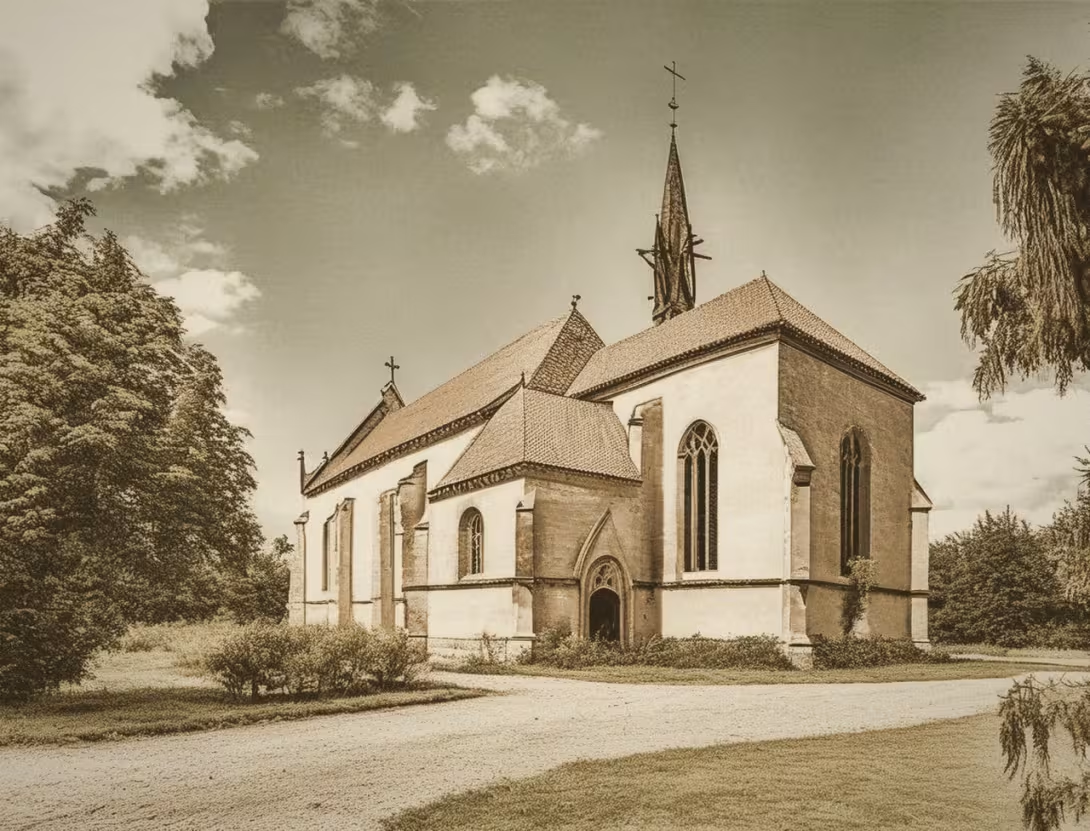
The historical appearance on the left is an AI-generated visualisation and serves as inspiration only.
Historical milestones
- 1241
- Construction of the original chapel by the Teutonic Order.
- 1607–1608
- Addition of a chapel on the south side, forming today's Chapel of the Holy Sepulchre.
- 1768–1769
- Baroque renovations by Baron Josef Jan Sosnovec z Vlkanova.
- 1846
- A fire severely damaged the church, leading to extensive restoration.
Architectural development
The church underwent several architectural phases, starting with its Gothic origins in 1241. In 1607-1608, a chapel was added to the south side, forming the basis of today's Chapel of the Holy Sepulchre. The Baroque period saw significant changes under Baron Josef Jan Sosnovec z Vlkanova between 1768 and 1769, including the addition of a small room and porch leading to the cemetery wall. Post-fire restoration in 1846-1853 led to a new roof with tile covering.
Historical events
1241: Construction of the original chapel by the Teutonic Order.
Hussite Wars: Control passed to Diviš Bořek z Miletínka.
1629: Jesuits took over ecclesiastical administration.
1846: A devastating fire severely damaged the church.
Owners
Teutonický řád (1241)
Diviš Bořek z Miletínka (Hussite Wars period)
Jezuitské správy (1629 onwards)
Marie Anna Magni and Ferdinand, hrabě z Morzinu (1744–1766)
Points of interest
- The Church of the Annunciation was originally a stone chapel built by the Teutonic Order in 1241, marking Miletín's early ecclesiastical significance and its strategic importance for the Order.
- During the Hussite Wars, Diviš Bořek z Miletínka led the church through an era where dualist religious practices were conducted, reflecting a unique period of religious diversity within its walls.
- The Baroque renovations by Baron Josef Jan Sosnovec z Vlkanova between 1768 and 1769 incorporated old tombstones into the construction of new additions like the small room and porch, showcasing an innovative reuse of historical materials.
- After a devastating fire in 1846, the church underwent extensive restoration that included installing a new tile roof by 1853, highlighting its resilience and the community's commitment to preserving its heritage.
- Marie Anna Magni and Ferdinand, hrabě z Morzinu, significantly contributed to the church’s interior during the mid-18th century with new altars and a pulpit base, which still exists in Bezník with a statue of the Virgin Mary, illustrating personal legacies intertwined with ecclesiastical history.
Guide
This guide is narrated by a synthetic voice generated by artificial intelligence.
Show guide text
This text was created by artificial intelligence and has not been editorially reviewed. It may contain inaccuracies.
The Church of the Annunciation of the Virgin Mary in Miletín is today a subsidiary church, formerly a parish Roman Catholic church, and is protected as a cultural monument. Its foundations date back to the year 1241. At that time, a stone chapel was built here dedicated to the Virgin Mary, patroness of the Order of German Knights. The Order acquired Miletín in the same year and built a monastery in the vicinity of the fortress. A settlement grew up around it, which essentially formed the basis of today's town. From 1270 onwards, the local church is recorded as a parish church.
During the Hussite Wars, the monastery was taken over by Diviš Bořek of Miletínka, a leader from the neighbouring fortress, and he introduced spiritual care in both kinds. Chalice worship services were held in the chapel until the Battle of White Mountain. In 1629, the Jesuits took over the church administration.
The earliest records of structural modifications date from 1607 and 1608. Under the patronage of Bartholomew of Valdstein, a chapel was added on the southern side at that time, which later became the Chapel of the Holy Sepulchre. A choir with an external staircase was also created. In the years 1744 to 1766, the interior was cared for by Countess Marie Anna Magni and her husband Ferdinand, Count of Morzin. The church acquired new altars, including in 1754 a side altar of Saint Anna, and a new pulpit. From the original pulpit from 1662, only a stone base remained. Priest Baudyš donated it to Bezník, where a statue of the Virgin Mary still stands on it today. Baron Joseph John Sosnovec of Vlkanov then had the church thoroughly renovated in the Baroque style in 1768 and 1769. Many old tombstones were used in the cemetery wall at that time.
On 17 June 1846, a fire broke out in the church, which had started in the manor barns. The entire roof burned down and the fire spread to the school, rectory and tower. Reconstruction proceeded slowly. A new roof with tile covering was completed only in the autumn of 1852, and a year later a new belfry was added. Only in 1861, thanks to Priest Augustine Buchtel, was the church whitewashed and the interior restoration began. In the years 1879 to 1882, the last remnants of the cemetery disappeared and new linden trees were planted. In 1881, the Countess of Thun-Hohenstein donated a painting of the Visitation of the Virgin Mary to the main altar.
The church gradually became too small to accommodate the faithful from the extensive parish. In 1892, therefore, Priest Šubrt began preparations for a neo-Gothic reconstruction and expansion of the nave towards the west according to designs by architect Bohuslav Moravec. From 1894 onwards, the Society for the Expansion of the Parish Church of the Lord contributed to the financing through public collections, as did the owner of the estate.
Tips for visitors
The best time to visit the Church of the Annunciation of the Virgin Mary in Miletín is during late spring or early autumn, when the weather is mild and pleasant for exploring both the church and its surrounding landscapes. During these seasons, the natural beauty of the area is at its peak, with lush greenery and vibrant wildflowers enhancing your experience. Additionally, visiting outside of the summer high season can mean fewer crowds, allowing you to appreciate the historical architecture and serene atmosphere more fully.
Public transport options are also accessible, with local buses serving the area; however, specific schedules should be verified through a transportation search tool prior to your visit. If you're driving from nearby cities, the journey typically takes about an hour, making Miletín a convenient day trip destination.
When visiting the church and its surroundings, it's recommended to bring comfortable walking shoes as there are paths leading to various points of interest in the area. A hat or sunscreen is advisable if traveling during warmer months, given the outdoor nature of some attractions. Additionally, carrying a water bottle will help keep you hydrated throughout your exploration.
For photography enthusiasts, the church offers several picturesque spots for capturing its Gothic architecture and historical details, especially during the golden hours of early morning or late afternoon when the light is soft and warm. The surrounding natural landscapes also provide beautiful backdrops for photos, with paths leading to scenic viewpoints such as Parkáň.
Families with children will find Miletín a delightful place to visit, combining cultural heritage with outdoor activities. Nearby, within about 30 minutes, you can explore the historical castle and enjoy the natural beauty of the surrounding landscapes. These areas offer opportunities for both educational experiences and leisurely walks or picnics in nature.
Frequently asked questions
Can the monument be visited?
Religious buildings are usually open mainly during services; at other times a visit is normally arranged with the parish or the operator. We have not verified specific times.
Where is the monument?
Location: Na Parkáni, Miletín, Královéhradecký kraj. The map on this page shows the exact spot.
Why is the monument protected?
It is listed in the Central List of Cultural Monuments of the Czech Republic as a cultural monument (register no. 32265/6-1257).
Businesses nearby
Do you run a restaurant, accommodation, shop, museum, rental, wellness or other visitor service near this monument? Show yourself directly to the people heading to it — this is how they will see you in the app and on the web:
Nearby
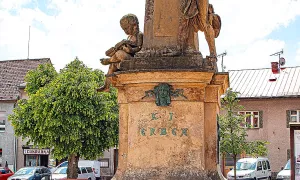
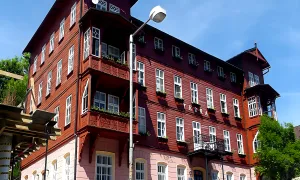
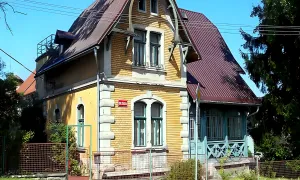
The church is located in Miletín, surrounded by historical buildings including a castle. The area features natural landscapes with paths leading to nearby landmarks such as Parkáň.
Accommodation nearby
Themed route
Thematic Walking Tour: Miletín and Its Historical Charm
1. Kostel Zvěstování Panny Marie (Miletín) - Church Begin your journey at the heart of Miletín with a visit to the Kostel Zvěstování Panny Marie, an architectural gem that stands as a testament to the town's rich history. This church is not only a place of worship but also a cultural landmark offering stunning views and intricate designs that captivate visitors.
2. Historical Buildings - Architectural Ensemble After exploring the church, take a leisurely walk through Miletín’s charming streets to admire the surrounding historical buildings. These structures provide a glimpse into the past, showcasing traditional architecture and offering insights into the town's development over centuries.
3. Parkáň - Natural Landmark Conclude your tour with a visit to Parkáň, accessible via scenic paths that lead from Miletín. This natural landmark offers serene landscapes perfect for relaxation and reflection, allowing you to appreciate the harmonious blend of nature and history in this region.
This thematic walking tour provides an enriching experience through Miletín's historical and natural attractions, offering a comprehensive glimpse into its cultural heritage.
Seasonal recommendations
Spring: The arrival of spring brings a gentle transformation to the Church of the Annunciation of the Virgin Mary in Miletin, with nature awakening around this historic site. The blooming flowers and fresh greenery create an enchanting backdrop that enhances the church's serene atmosphere. This is an ideal time for photography enthusiasts looking to capture the harmonious blend of architecture and natural beauty. Visitors should consider bringing a light jacket as temperatures can still be cool in the mornings, and it’s wise to arrive early to enjoy a quieter experience before larger crowds gather.
Summer: Summer offers vibrant energy at the Church of the Annunciation with longer daylight hours allowing for extended visits. The lush landscape surrounding the church is particularly striking during this season, providing an idyllic setting for leisurely walks or picnics in the nearby areas. However, it's important to be mindful of the increased number of visitors due to the peak tourist season. Arriving early in the morning can help avoid crowds, and wearing comfortable clothing along with sun protection is advisable as temperatures can rise significantly.
Autumn: Autumn paints Miletin in warm hues, creating a picturesque scene around the Church of the Annunciation. The changing leaves offer a stunning contrast against the church's architecture, making it an excellent time for photography or simply enjoying the tranquil atmosphere. As days become shorter and cooler, visitors should dress warmly and consider carrying a light scarf or sweater. This season is generally less crowded than summer, providing a more relaxed visit.
Winter: Winter transforms Miletin into a serene, snow-covered landscape that adds a magical touch to the Church of the Annunciation. The church's architecture stands out beautifully against the white backdrop, offering a unique and peaceful experience for visitors seeking quiet reflection or picturesque views. Due to shorter daylight hours and potential closures during extreme weather, it’s important to check opening times in advance. Dressing warmly with layers is essential, as temperatures can be quite cold, and bringing gloves and a hat will ensure comfort during your visit.
Visualizations and artistic views


The visualisations are generated by artificial intelligence and serve as inspiration.
Photos from the area
Real photos taken near the monument


Zdroj a licence jsou uvedeny u každého snímku.
Atmosphere of the place
This atmospheric visualisation of the place and period was generated by artificial intelligence. It is not real footage of the location.
Tips from visitors
No tips yet. Be the first!
Log in and add your tip.
Sources and literature
Photos: Petr1888 / CC BY-SA 4.0, rozlišení zvýšeno umělou inteligencí — Wikimedia Commons. The author and licence also appear when you hover over the image.
Faktickým podkladem tohoto textu byl článek na Wikipedii, jehož autory jsou přispěvatelé Wikipedie. Článek je dostupný pod licencí CC BY-SA 4.0.
Location on the map

Příběhy a pověsti
Legendy, pověsti a příběhy spjaté s touto památkou

Fotografie návštěvníků
Zatím žádné fotografie. Buďte první, kdo přidá fotografii z návštěvy!
Log in a přidejte svou fotografii nebo hodnoťte.
Za ověřenou návštěvu v aplikaci získáte víc bodů — poznáme podle GPS, že jste na místě.
Reviews and comments