



Křížová cesta ke kapli svatého Karla Boromejského v Telči Way of the cross
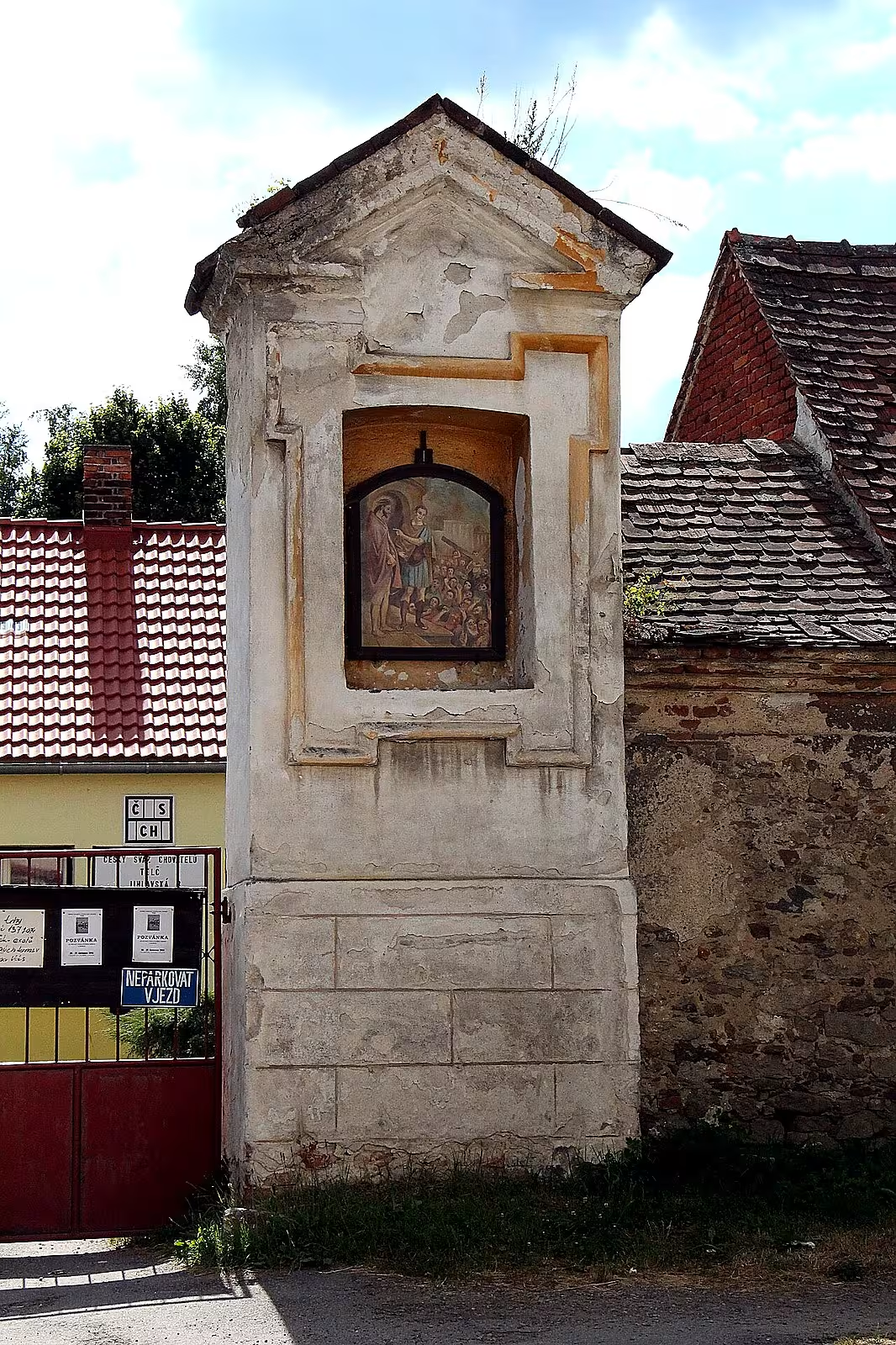
The cross road in Telč-Štěpnice is a Baroque sacral area leading from the city towards Vanovo. It includes eight walled niche chapels, fourteen depictions of the last journey of Jesus Christ and the chapel of St. Charles Boromei. This collection of monuments, protected as a real-estate cultural monument of the Czech Republic, was created in the second half of the 17th century. It is an important document of period piety and noble beneficence.
The history of the place is closely linked to the Slavat family. The chapel of St. Charles Boromei was built in the second half of the 17th century as a thank you for saving the life of Jan Karl Jáchym of Slavats, who accidentally fell into the wolf pit on October 13, 1662. The complaint for construction came from the nobleman himself, the donor became his mother, Countess Františka Slavatová. The author of the architectural design remains unknown.
The architectural ensemble consists of eight walled niche chapels and fourteen stops of the cross road. At the end of the route at the chapel of St. Charles of Boromei stands the cross and statues of St. John the Evangelist, the Virgin Mary and Saint Mary Magdalene. The paintings for the cross-road were moved to the premises from the chapel of the Holy Virgin after new paintings were created for her.
Over the centuries, the site has undergone significant changes. In 1797 a park was founded at the crossroads, which was in honor of the owner of the estate, Count Leopold Podstatzké- Lichtenstein, named Leopold Park. Other modifications took place in 1881, when the main lime alley was renamed the Crown Prince Rudolf and Princess Stephen. However, this name was not used in the common language and the common name Lipka was introduced among the locals.
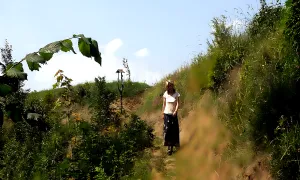
Today it is accessible to visitors who are heading from Telč towards Vanov around Nadymák and Roštejn ponds. The location offers the possibility of a tour of the historical Baroque complex in an area of growing green.
The cross road in Telč-Štěpnice represents valuable proof of Baroque culture and noble history of the region. Visiting this place allows you to look into the spirit world of the 17th century and appreciate the historical value of preserved sacral buildings in the picturesque surroundings of Telč.
Then and now
Drag the slider to compare how the landmark may have looked when it was built with the view today.
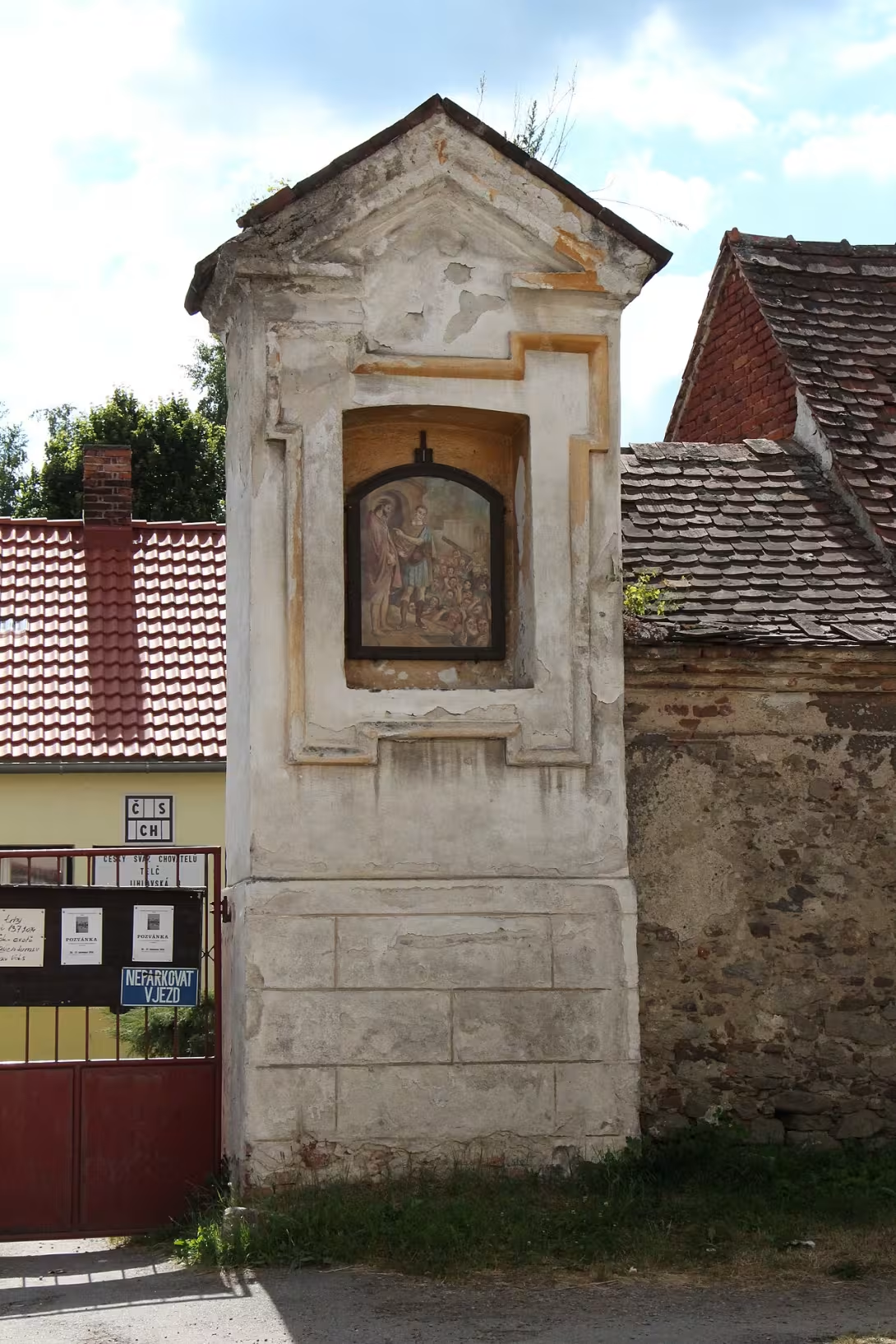

The historical appearance on the left is an AI-generated visualisation and serves as inspiration only.
Historical milestones
- 1662
- The fall of John Karl Jáchym from Slavaty to the wolf pit, which led to a decision on the construction of the chapel.
- 1797
- The establishment of Leopold Park around the cross road.
- 1881
- Renaming of the Lip Lane to the Crown Prince Rudolf and Princess Stepanka.
Architectural development
The area was built in Baroque style in the second half of the 17th century. It consists of eight walled niche chapels and the final chapel of St. Charles Boromei. In later periods the location was affected by the park modifications, in particular by the establishment of Leopold Park at the end of the 18th century.
Historical events
1662: The fall of John Karl Jáchym from Slavaty to the wolf pit and the subsequent impetus to the construction of the chapel. 1797: The establishment of Leopold Park at the crossroads. 1881: Rename of the Lip Lane in honor of Rudolf Habsburg and Princess Stephen.
Points of interest
- The chapel of St. Charles Boromei was built as a thank you for saving the life of John Karl Jáchym of Slavats, who fell into the wolf pit during the hunt in 1662. The complaint for the construction was given by the nobleman himself and the donor became his mother, Countess Františka Slavatová. The author of the architectural design of the entire building remains unknown. - The paintings for the cross road were moved to the premises from the chapel of the Holy Virgin after new paintings were created. - In 1797, a park was founded at the crossroads, which was in honor of the owner of the estate, Count Leopold Podstatzkého-Lichtenstein, named Leopold Park. - In 1881, the main lime alley was renamed Crown Prince Rudolf and Princess Stephen. However, this official name was not adopted and the locals started using the simple name Lipka.
Guide
Show guide text
This text was created by artificial intelligence and has not been editorially reviewed. It may contain inaccuracies.
Welcome to Telč, specifically in its peaceful and spiritually important part called Štěpnice. You're standing at the very beginning of something very special. Before your eyes, there is a path that is not just an ordinary path for walking, but a space for reflection, for silence, and for a path that leads through history, faith, and deep human destinies. Feel this atmosphere. Do you feel the calm that exists here? This cross road will now guide you towards Van and each next step will bring you closer to the goal that came from an unexpected and dramatic twist of fate.
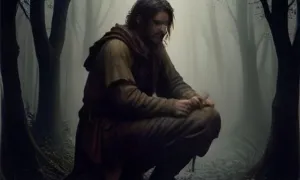
In order to truly understand why this place is standing here and why it is so important, we must go back to the past with you by 1662. Imagine the landscape back then. The woods around today's Telch were much denser, darker and much less passable than today. For the nobles who went hunting, nature was a place of constant tension and constant threat. It was then that a moment took place that changed the life of a powerful noble family forever. Jan Karel Jáchym Slavata, a man of great stock, has been hunting in these woods. But at that moment fate struck unexpectedly and cruelly. He fell into a wolf pit as he moved in a difficult terrain. Imagine the horror, the helplessness, and the absolute immortality, where one finds himself in the depths, in the darkness, where every second turns into a struggle for survival. This incident was not just an accident; He has become an incentive for something very noble.
Now look around you and pay attention to how this sacral path is beaten. It's not just a simple route, it's an elaborate whole. This whole cross road represents an important sacral entity that will now guide you. Feel the rhythm of this journey. You have eight gimped niche chapels. These chapel are not just buildings, they are stops for your eyes and for your mind. Each of them is like a chapter in a book that tells the story of perseverance. In addition to these chapels, you will find fourteen images following the last path of Jesus Christ. Feel how this architecture guides you, how it slows you down and allows you to see every stop as a step in time. Although the names of the particular architects who created this design have been lost in history, the whole composition seems harmonious and meaningful. Feel the structure, feel the path that leads you further into the landscape.
While you continue, remember the people behind this place. While Jan Karel Jáchym Slavata survived his fall and thanks to incredible luck he could continue his life, it was his mother, Countess Františka Slavatová, who decided to create this place. It's a fascinating story about maternal love, about deep gratitude and how powerful the impulse can be to create something eternal. She was the donor who made this rescue a permanent monument. It is a combination of a personal tragic experience and a public religious work that you are facing today.
Now let's move on to the goal itself. When you finally get close to the chapel of St. Charles Boromei, pay attention to it. This chapel was built in the second half of the seventeenth century just as an expression of that deep gratitude. By her body you will see the cross and statues of St. John Evan. Feel this present, feel the calm that radiates this place. The whole area is also closely connected to nature, which has been changing and rich over time around the cross road. In 1797 Leopold Park was founded here, which gave the whole place another layer of beauty and structure. Later, in 1881, this journey was even more enamored with planting, when the lime alleyway was renamed the Crown Prince Rudolf and Princess Stephen. This whole space represents a combination of human work, faith and gradual growth of nature.
The interesting thing that might make you think again is the contrast between the danger posed by the wolf pit and the peace offered by this park and the chapel. One unfortunate fall into the depths was able to create such a significant sacral entity that resisted centuries. It is a constant reminder of how fragile human life is and how powerful it can be to thank you for saving when you find yourself on the edge of everything.
Now, however, I will not keep you any longer. Continue your journey, walk between the chapels, feel the silence and let yourself drift through the atmosphere of this place. Explore every stop, perceive the shadows and light as they fall on the walls of the niche, and enjoy this peaceful moment in history. I wish you a beautiful and inspiring walk.
Tips for visitors
To visit the Cross Road we recommend choosing the morning hours during the working week or early afternoon weekend when the quieter atmosphere is suitable for contemplation. The light in this time beautifully depicts the details of the niche chapels, which will be especially appreciated by the lovers of sacral architecture. The location is easily accessible by foot from the historical centre of Telč, or you can use the car that you park in the surrounding parts of the city; We recommend to verify the exact transport connections in the current connection search engine. With you pack comfortable shoes suitable for a longer walk in nature and a bottle of water, as the route leads through more open terrain. We recommend to the photographers to focus on detailed images of the niche in contrast to the surrounding landscape, the best lighting conditions for the images are shortly after sunrise or before sunset. For families with children, it is a pleasant walk that combines learning history with movement in the fresh air, and the route can be easily adjusted to the pace of the smallest visitors.
Frequently asked questions
Can the monument be visited?
This is a structure in a public space that can usually be seen from outside free of charge. We have not verified that this particular one is freely accessible.
Where is the monument?
Location: Telč-Štěpnice, Kraj Vysočina. The map on this page shows the exact spot.
Why is the monument protected?
It is listed in the Central List of Cultural Monuments of the Czech Republic as a cultural monument (register no. 1000153094_0006). It is protected as part of a larger listed ensemble.
Businesses nearby
Do you run a restaurant, accommodation, shop, museum, rental, wellness or other visitor service near this monument? Show yourself directly to the people heading to it — this is how they will see you in the app and on the web:
Events nearby
Zdroj akcí: otevřená data měst a obcí ČR (Národní katalog otevřených dat) a kalendář akcí Národního památkového ústavu.
Nearby
The historical center of Telč, Nadymák and Roštejn ponds, Leopold Park.
Accommodation nearby
Trips and activities nearby
Guided tours, tickets and activities nearby from GetYourGuide
Affiliate link: if you buy from the partner, we may receive a commission. The price for you does not change.
Search tours and activities →Themed route
1. Historical Centre of Telč - Historical Centre. Walk around the Renaissance square, admiring preserved houses with attic shields and picturesque town hall, which is one of the most beautiful in the Czech Republic.
2. Leopold Park - City Park. A short walk from the square leads to a large park with branched alleys, old lime and quiet benches, ideal for relaxation and observation of local flora.
3. Nadymmak pond. From the park, continue along the green shores to the pond where the surrounding trees are reflected and you can see ducks and swans in a quiet environment.
4. Roštejn pond. The next section (800m) leads along the way to another water surface, which offers romantic views and an opportunity to photograph a water paradise.
5. Křížová cesta ke kapli svatého Karla Boromejského v Telči (others) - religious monument. From the pond Roštejn you can go (1.2 km) along a quiet path to the chapel, where you can admire the Baroque interior dedicated to St. Charles Boromejský, and soak up the spiritual atmosphere of the place.
Seasonal recommendations
Spring: In spring there is a new life when trees flourish and nature awakens into a colorful world. Light is soft and pleasant for the eyes in this period. For a visit it is advisable to take several layers of clothing because the morning cold can be tight. The road can be muddy because of spring rain, so choose quality walking shoes.
Summer: In the summer, the surrounding area is full of green and the sun illuminates the entire route. Due to the increased interest of visitors in the main summer time, we recommend that you come early in the morning to enjoy your peace and avoid the greatest heat. Don't forget the cap and drinking mode. The shadow in the woods will give you refreshments during your walk.
Autumn: Autumn moons bring a nostalgic and deep mood to a place that ideally matches the spiritual meaning of the cross road. The golden colours of leaves and occasional morning fog create a magical environment. It is necessary to prepare for cooler air and damp, thus choosing a waterproof jacket. The best time to visit is in the morning when the light is brightest.
Winter: Zimą place turns into a quiet and remote world where snow dampens all sounds. The mood is rough and meditative, which promotes contemplation at the chapel. Due to low temperatures and shorter time of day it is necessary to have very warm clothes and shoes with good grip on a slippery surface. We recommend planning a visit around noon hours to use maximum light.
Visualizations and artistic views


The visualisations are generated by artificial intelligence and serve as inspiration.
Photos from the area
Real photos taken near the monument

Zdroj a licence jsou uvedeny u každého snímku.
Tips from visitors
No tips yet. Be the first!
Log in and add your tip.
Sources and literature
Photos: Magdalena Čížková / CC BY-SA 3.0 — Wikimedia Commons. The author and licence also appear when you hover over the image.
Faktickým podkladem tohoto textu byl článek na Wikipedii, jehož autory jsou přispěvatelé Wikipedie. Článek je dostupný pod licencí CC BY-SA 4.0.
Location on the map


Příběhy a pověsti
Legendy, pověsti a příběhy spjaté s touto památkou
Fotografie návštěvníků
Zatím žádné fotografie. Buďte první, kdo přidá fotografii z návštěvy!
Log in a přidejte svou fotografii nebo hodnoťte.
Za ověřenou návštěvu v aplikaci získáte víc bodů — poznáme podle GPS, že jste na místě.
Reviews and comments