






Měšťanský dům (Fryštát) House
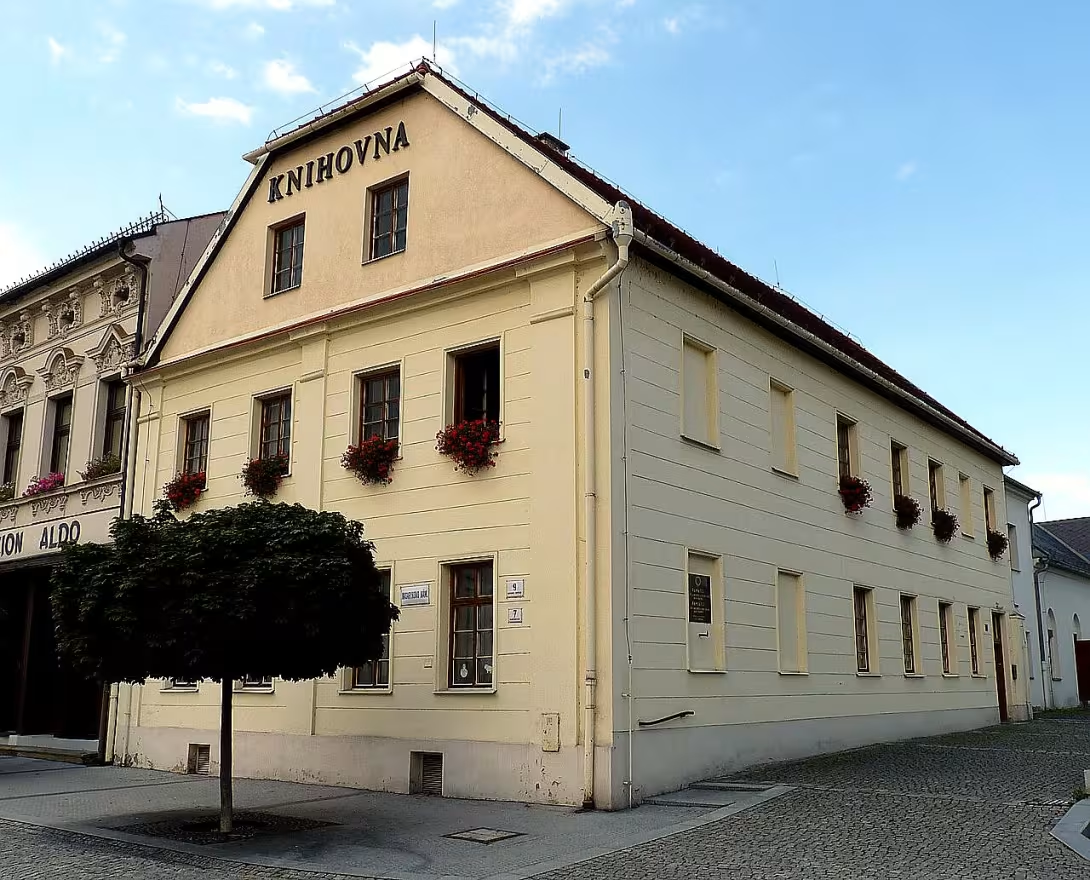
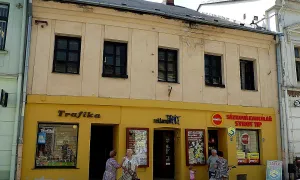
The town house No. 9 on Masaryk Square in Fryštát is an important cultural monument of the Czech Republic. It combines the Renaissance foundations from the 17th century with the Baroque reconstruction from the turn of the 18th and 19th centuries. The building serves as a library today and belongs to the oldest preserved buildings in the historic city centre.
The history of the building dates back to the pre-white mountain period when its Renaissance core was created. The Baroque rebuilding, which imprinted the building today's form, reflected the changes of the city building at that time. During the 20th century the house underwent several modifications, including the economic shed ports in 1908 and 1918 according to the design of Franz Czemiel.
Architecturally, it is a walled, plastered storey house on a rectangular floor plan with a valbed roof covered with bags. The shield facade oriented into the square is broken by strip barefoot and pilasters with Roman heads. They carry a profiled crown ledge and a trapezoidal shield with two windows. The window side of the house has seven window axes. In the interior, there was a low mazhaus, encircled by a cross nail vault with lunettes, which is partly disrupted by modern interventions. The adjoining room has two fields of cross vaults, while the floor has beam ceilings. The basements with stone tiles are covered with valenas and have their own staircases.
After the end of World War I the house performed the function of the office and served as a residence for the castle manager. In 1951, one of the buildings was demolished due to poor technical condition. The extensive reconstruction of the facade, windows, doors and roof cover was repaired in 1971 according to the design of the engineer Bednářová.
Today, this townhouse is used as a library and is open to the public. The visit offers an opportunity to explore historical architecture in the heart of Fryštát, which is closely linked to the nearby castle and urban development of the historical centre of Karviné. The preserved Renaissance and Baroque elements make this building a valuable testament to the life of townspeople in the past centuries.
Historical milestones
- 1908
- The extension of the shed according to the design by Franz Czempiel.
- 1918
- The extension of another economic building.
- 1951
- The demolition of one of the buildings due to bad engineering.
- 1971
- Reconstruction of the building according to the project Ing. Bednářová.
Architectural development
The original Renaissance core was supplemented by Baroque reconstruction. In 1908 and 1918 the farm shed was added to the house. The reconstruction in 1971 focused on the reconstruction of the facade, windows and the exchange of roof coverings.
Historical events
In 1951, part of the building was demolished due to poor technical condition. In 1971, extensive reconstruction of the building was carried out according to the project Ing. Bednářová.
Points of interest
- The house connects the Renaissance foundations from the seventeenth century with the Baroque reconstruction from the turn of the eighteenth and nineteenth centuries. - In the interior, a low mazhaus was preserved, encased in a cross-crest vault with lunnets. - After the end of World War I, the house served as an office and residence for the castle manager. - In nineteen hundred and fifty-one, one of the farm buildings was demolished due to poor technical condition. - The building serves today as a library and belongs to the oldest preserved buildings in the historic city centre.
Guide
Show guide text
This text was created by artificial intelligence and has not been editorially reviewed. It may contain inaccuracies.
Welcome. You are standing in front of one of the oldest houses in Fryštát, specifically in front of city house number nine at Masaryk Square. This house is now known as a library, but its walls were not used to read or store books until recently. Let's look back together at his historical development and discover what this home space could have witnessed over the centuries of its existence.
If you look forward, you will immediately be intrigued by its shield facade - typical of this area - and also by the valb roof, which you can imagine as a roof shaped like a valleys, which is slightly curved. These elements are now just traces of architectural tradition, but they come from a time when this house was only a future building.
The core of this house dates back to the Renaissance era, namely the 17th century when its cellars were built. Back then, the house was part of a vibrant urban environment where people lived, worked and managed. At that time Fryštát was an important city in Moravia, and each house had its function - whether it was a living space, a trade hall or a storage facility.
Then came the Baroque, and with it a new direction in architecture. At the turn of the 18th and 19th centuries, this house was rebuilt. The Baroque reconstruction brought new conditions into the interior, changed appearance and adapted the building to the needs of the new era. Since some walls were already standing by then, the reconstruction was rather a modification than a new construction.
Let's look at some particular moments from his history that shaped him. In 1908 a small annex - shed - was added to the house according to the design of architect Franz Czempiel. Czempiel was at the time an active architect in the region and his work influenced the appearance of many buildings in the area. This annex probably served as a place to store things that were not needed inside the house.
Twenty years later, in 1918, another economic building was added to the house. This was already at a time when many things changed - the First World War ended, political structures were changing, and people were looking for stabilization in their home. This building probably served as a storage site or work space.
Then it was time for the winter of this building. In 1951, one of the built-in buildings was demolished due to poor technical condition. It was a time when priorities changed in our region - buildings had to be safe, and if they were no longer applicable, they were demolished. It was chaos and rebuilding everything around us.
And then the recovery came. In 1971 the house was reconstructed according to the project Ing. Bednářová. This woman was at that time one of the few female architects in Czechoslovakia and her work contributed to the preservation of many historical buildings in the region. Thanks to her, this house could survive until today.
Now that you're standing in front of the house, you can imagine that his interior was completely different. In the original times there was a low mazhaus - a space that was encapsulated by a cross-crest vault with lunnets. This is a specific type of roof that is characteristic of a certain period and style of buildings. Such arches were popular because they allowed to spread the hardness of the roof cover evenly all the way to the ground.
After the end of World War I, this house was reused significantly. He served as an office - the place where the doctor worked and received patients - and as a residence for the castle manager. This means that within a few years the house was a place of personal life, work and service.
It is interesting that this house combines two distinct periods - Renaissance roots from the seventeenth century and Baroque reconstruction from the turn of the eighteenth and nineteenth centuries. This is common for some buildings, but for this house it means that every stone has a story. Each wall can talk about a different century, about a different style, about a different life for the people who inhabited it.
If you look at the facade, you can imagine what it looked like centuries ago, decades ago, years ago. What sounds there were - footsteps of people walking down stairs, rustling leaves in the cellar, the voice of children playing in front of the house. It was all part of the life that was going on.
Get carried away in this environment. Feel the atmosphere that lasted here until today. Even though the house serves as a library, its walls remember all the stories, all the emotions and all the days it was for something else in this building.
I suggest you look at the surrounding areas. Take a look at Masaryk Square, which is the center of the city today, but once it was a place of markets, gathering people and public gatherings. Every house in the square has a story, and this house number nine is just one of them.
Thank you for taking us through the historic journey of this house. We will go back for a while to his presence - like the library, where the thoughts and dreams of readers meet today. But remember, every book you bring here finds its place between the lines, just like every person who came here before you found its place between these walls.
I hope you were interested in this entry into the history of the Town House in Fryštát. I wish you many other discoveries and stories that these cities and villages can tell. Whether you're drawn to curiosity, love of history or simply the desire to discover new things - this house is a proud witness of all these paths.
If you want to learn more, do not hesitate to look inside. The library will welcome you and perhaps show you some history records to help you understand how this house used to be alive and full of human life.
I would like to invite you to explore again. I'm sure you'll decide where your next stop is. And even if you feel tired, remember that every rock below you and every home element around us carry a story that waits only to be told.
Sincerely and with the wish of many interesting discoveries.
Tips for visitors
The best time to visit is in the morning during the working week, when the library is quiet and you can easily see the historical vaults and Renaissance foundations of the house without much excitement.
The location is located right in the historic centre, where you can easily walk from nearby public transport stops. If you arrive by car, use public parking in the vicinity of Masaryk Square; Check the current parking possibilities according to the traffic signs.
Take the camera with you to capture details of Baroque architecture. Inside the building move quietly because it is a functioning library, and respect the privacy of readers.
The best light for exterior images is in the morning when the sun lights the front of the house on the square. Inside, focus on the details of the vaults that stand out in natural lighting from the windows.
It is ideal for families with children to join a visit with a walk around Masaryk Square. The Fryštát Castle is nearby with an adjacent park that offers a space for relaxation and games, and the entire historical centre of Karviné is suitable for easy family walk.
Businesses nearby
Do you run a restaurant, accommodation, shop, museum, rental, wellness or other visitor service near this monument? Show yourself directly to the people heading to it — this is how they will see you in the app and on the web:
Nearby
Zámek Fryštát, Masarykovo náměstí, historické centrum Karviné.
Accommodation nearby
Themed route
1. Castle Fryštát, historical construction. This building is a great place to start a tour. 2. Měšťanský dům (Fryštát) (library), library building. The main destination of the journey, which offers a quiet environment. 3. Masaryk Square, City Square. A place suitable for a short rest. 4. historical centre of Karviné, the urban part. Final walk in the old part of town.
Seasonal recommendations
Spring: In the spring of the town house in Fryštata offers visitors a celebration of new life, when nature wakes up from winter sleep. The green trees and flowering shrubs create a beautiful background for a historical monument that is illuminated by softer sunlight. This time of year is ideal for visiting due to mild weather and the presence of few people, allowing a peaceful and intimate experience. We recommend wearing clothes suitable for mild temperature with the possibility to approach gloves or cloaks if the weather changes.
Summer: In the summer period, the city house in Fryštát is a popular destination for visitors seeking heat relief. Sunshine days and long evenings bring ideal conditions for exploring the sights, but at the same time, high temperatures can be challenging. In the main summer season, it is recommended to visit early morning or late afternoon to avoid peak hours and crowds. Clothes should be light and light, with sun protection as a hat or umbrella.
Autumn: In autumn months, Fryštát offers visitors a view of colour sheets and milder weather. This season is characteristic of a calm atmosphere where the townhouse is transformed into a background full of grey and golden shades of nature. Visit the memory during the third part of the day to enjoy mild sunlight and avoid cold evenings. Clothes should include top with built-in insulation and rain protection because autumn is known for sudden weather.
Winter: Winter in Fryštata brings the townhouse a unique atmosphere covered with snow and ice. When the days become shorter, the lighting of the historical monument is supplemented by light lamps or candles, which creates a romantic experience. Visit her during the day because the opening hours are usually shorter and evening visits are rare due to cold. It is important to have a warm dress with head, hands and feet to protect yourself from cold and possible snow or rain.
Visualizations and artistic views

The visualisations are generated by artificial intelligence and serve as inspiration.
Photos from the area
Real photos taken near the monument


Zdroj a licence jsou uvedeny u každého snímku.
Tips from visitors
No tips yet. Be the first!
Log in and add your tip.
Sources and literature
Photos: Michal Klajban / CC BY-SA 3.0 — Wikimedia Commons. The author and licence also appear when you hover over the image.
Faktickým podkladem tohoto textu byl článek na Wikipedii, jehož autory jsou přispěvatelé Wikipedie. Článek je dostupný pod licencí CC BY-SA 4.0.
Location on the map
Příběhy a pověsti
Legendy, pověsti a příběhy spjaté s touto památkou
Fotografie návštěvníků
Zatím žádné fotografie. Buďte první, kdo přidá fotografii z návštěvy!
Log in a přidejte svou fotografii nebo hodnoťte.
Za ověřenou návštěvu v aplikaci získáte víc bodů — poznáme podle GPS, že jste na místě.
Reviews and comments