






Palác Chicago Palace
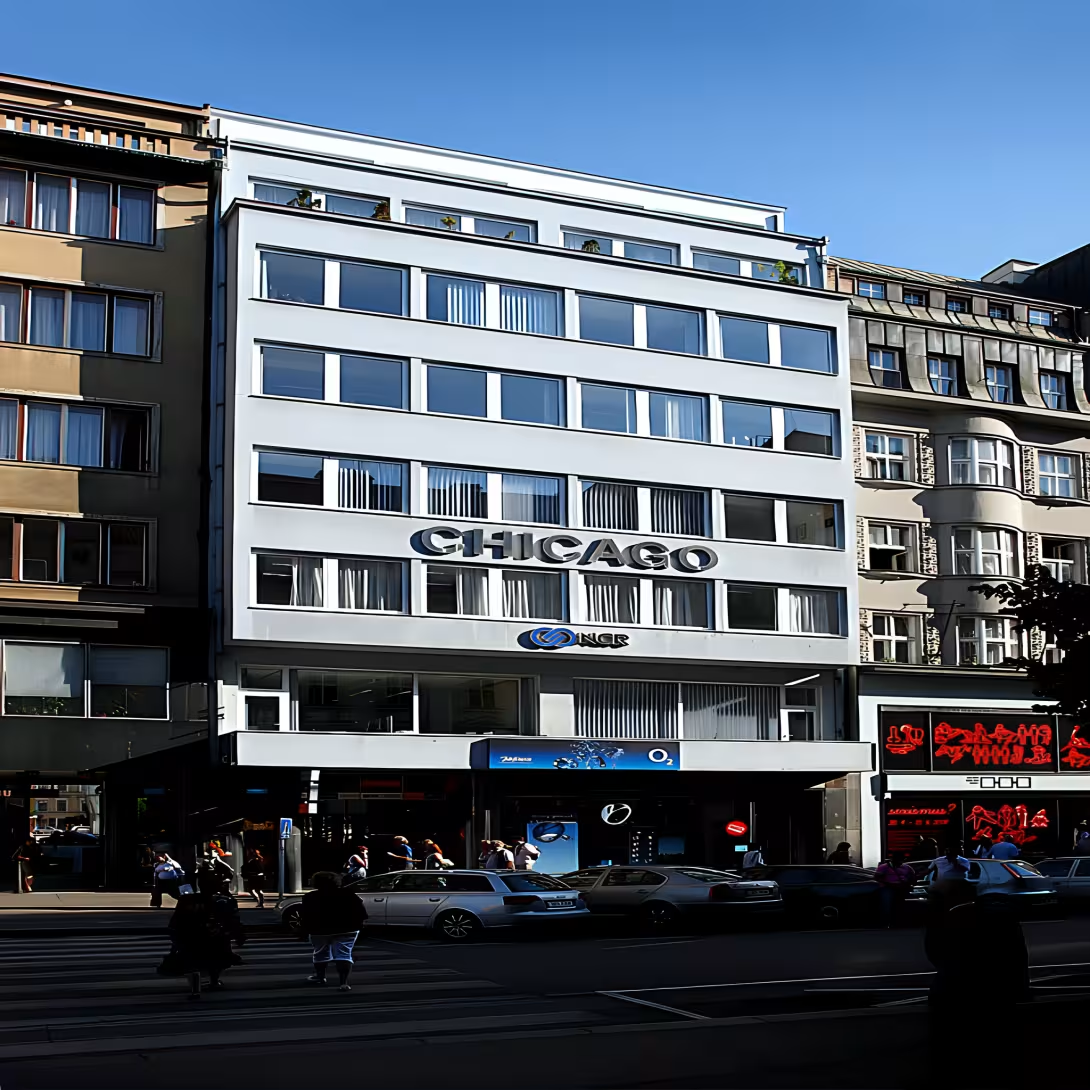
Palác Chicago is located in Prague in New Town in the location between the streets of Kharvátov 11 and National 32, in close proximity to Václav Spála Gallery. This pastoral location in the centre of the city makes it a significant landmark for anyone who moves in the historical heart of Prague.
The history of the palace begins in 1927 when Jindřich hrabě Kolowrat-Krakowský built it. The interesting thing is that the palace was created as a result of a property exchange - Kolowrat built it in exchange for a castle in Týnka which he sold to the builder and construction entrepreneur Jaroslav Polívka. This year, the record in the agrarian magazine Role, which describes the palace as one of the most modern newly built works in Prague, is only comparable to the then Bat Palace.
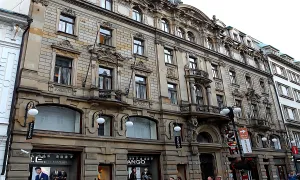
The building was built at the site of the original Neo-Renaissance house, which had a prism turret. The architecture was addressed by a prominent representative of the Interwar Avant Guard Josef Havlíček. The construction took place in 1927-1928. The palace has seven floors with a reinforced concrete structure with a flat roof, which was a great modern innovation for its time. The facade with orientation to the National Class is characterized by belt windows, in the ground floor there are display cabinets of business premises. The original course of Charvat Street to the National Class (formerly Ferdinand's) was closed by this new construction and adjacent tenement house, and was solved by the location of the passage.
The palace was equipped with advanced elements in the pattern of American skyscrapers, which was the top standard at the end of the twentieth century. In the building was set up a shop of agricultural products which were supplied from Kolowrat's businesses in Týnce. This combination of modern architecture with the function of a commercial and office house was characteristic of interwar urbanism.
The Palác Chicago currently serves primarily as an office building with commercial premises on the ground floor. Its functionalist architecture and dominant position in the urban structure of Prague still make it an interesting example of how Czech architecture participated in the construction of a modern city between world wars.
Then and now
Drag the slider to compare how the landmark may have looked when it was built with the view today.
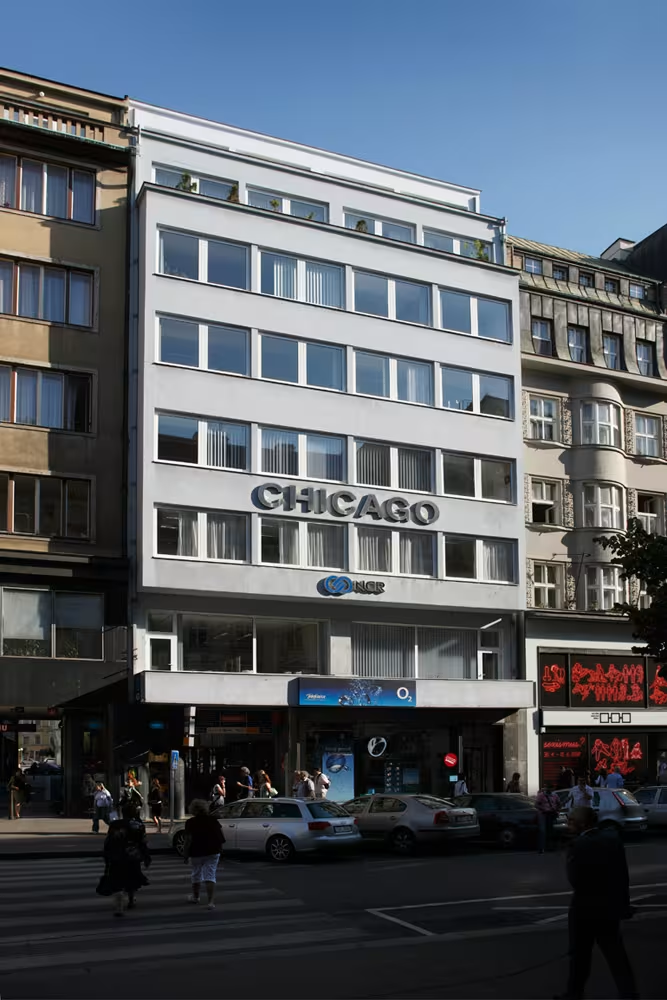
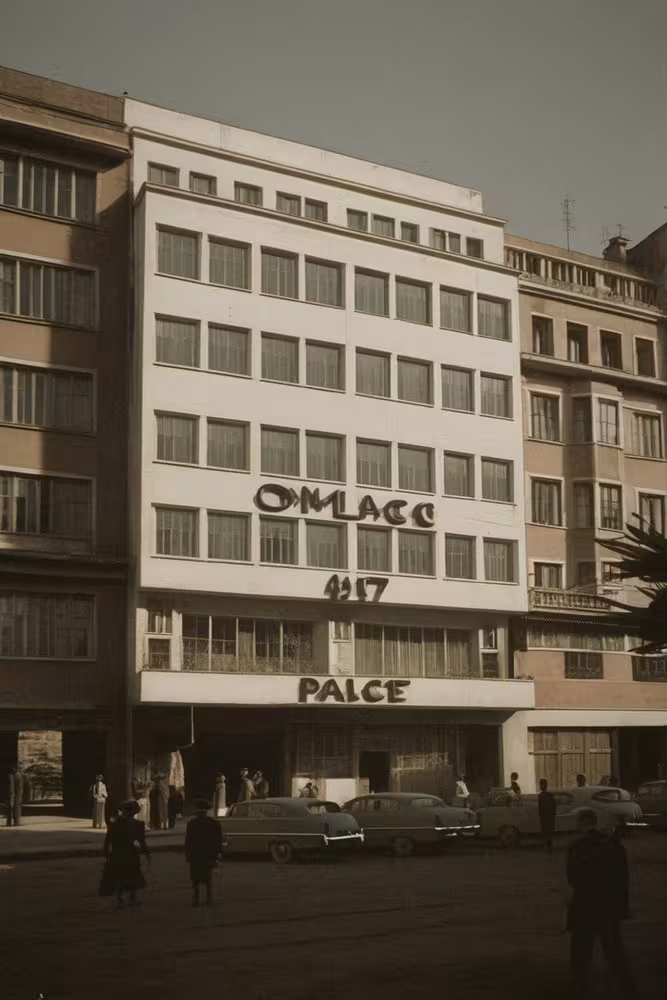
The historical appearance on the left is an AI-generated visualisation and serves as inspiration only.
Historical milestones
- 1927
- Opening of the palace by Count Kolowrat-Krakowski
- 1928
- Completion of the construction of a modern functionalist palace
- End of the 1920s
- Establishment of a shop for agricultural products in the building
- Present
- Use of the building as an office complex with business premises
Architectural development
Seven storey building with reinforced concrete structure and flat roof. The facade is characterized by belt windows and interpreters on the ground floor. The construction replaced an earlier Neo-Renaissance house with a prism turret.
Historical events
1927-1928: construction of the palace at the site of the neo-renaissance house no. 58.
Owners
Jindřich hrabě Kolowrat-Krakowský (builder), Jaroslav Polívka (won the castle in Týnka in exchange for the palace in 1927).
Points of interest
- The palace was created as a result of the property exchange, when Jindřich hrabě Kolowrat-Krakowský built it in exchange for the castle in Týnka. - The magazine Role described it as one of the most modern works in Prague, comparable to the then Bat Palace. - The construction was equipped with advanced elements in the pattern of American skyscrapers. - The building was set up to sell agricultural products from businesses in Týnka. The flat roof was a great modern innovation for its time.
Guide
This guide is narrated by a synthetic voice generated by artificial intelligence.
Show guide text
This text was created by artificial intelligence and has not been editorially reviewed. It may contain inaccuracies.
Welcome to the heart of Prague, a place where the history of every stone and every line meets a bold vision of the future. You're standing in front of one of the most striking symbols of modern thinking in our metropolis. Look around you, you're in New Town, in an area that is so crucial and alive to Prague. It is here, at the interface of the streets of Kharvatov and National, that a building stands before your eyes, which at the time of its creation is likely to shock and admire its surroundings. Palác Chicago. Although its name may trigger memories of a distant American metropolis, its soul is deeply Prague, and yet it is constantly heading towards the horizons of the new world.
Now let's go back in time together to understand why this place looks just like this. Imagine the end of the 1920s. Praha is a city that is undergoing a huge transformation. The old world, represented by decorative and heavy buildings, is beginning to give way to new periods of optimism, speed and functionality. It was during this period between 1927 and 1928 that a whole new chapter began to be written here. At the place where the traditional Neo-Renaissance house was built, she was determined to build something that defined a modern city.
This bold move was not random. A man with a great name and even more visionary - Jindřich hrabě Kolowrat-Krakowský - was behind the whole creation of this palace. His role in this story is fascinating. The building of the palace was not only a question of architecture, but a result of a very interesting property exchange. The Count has decided to boldly move his interest in the advancement of this modern palace in exchange for his castle in Týnka. It was a decision that symbolized the transition from a traditional, rural aristocratic way of life to a dynamic, urban and commercial world that was just then beginning to dominate.
Now pay attention to the very construction that is surrounding you. Notice the purity and rhythm of this facade. The architecture you are currently observing was one of the most modern in Prague at the time of its completion. It was created by masters of their field, Josef Havlíček and Jaroslav Polívka. These architects didn't just want to build buildings, they wanted to create new ways of life. If you look at the palace's overall composition now, you can see in it the invisible but strong inspiration that came from the other side of the ocean.
Notice how this building is trying to communicate from heaven. Its shapes and lines are not random, they are inspired by American skyscrapers, which at that time represented the peak of human technical progress and ambition. Although it is not a skyscraper in the true sense of the word, its spirit is present here in every detail that goes towards efficiency, light and modern use of space. At the time of its creation, this building was considered to be the ultimate peak of modern construction.
If you want to understand how much this object was perceived as revolutionary, we need to look at the then professional public. The magazine Role, which at that time was an important voice for modern ideas, wrote very strong sentences about this palace. He described it as one of the most modern works in the whole of Prague and compared it to the then Bata Palace, which was the highest possible laur at the time. This gives us a clear idea that you are facing a monument which, at the time of its creation, was not just an ordinary building but a manifesto of a new era.
But it is interesting to see how the fate of this place changed over the decades. The modern palace, built with such an emphasis on the future, had to respond over time to the changing needs of the city. At the end of the 1920s, for example, an agricultural product shop was set up in the building, an interesting contrast between its cosmopolitan, American spirit and the daily needs of the city's inhabitants. The modern architectural miracle became part of ordinary urban life, which served people in many different forms.
Today, this palace has returned to its original, ambitious essence, albeit in a different format. It is mainly used as a complex of office spaces, supplemented by commercial spaces that revive this place again. It is a fascinating cycle - from revolutionary architectural work, to practical use for the needs of the time, to the current role of the modern business centre in the heart of the metropolis.
If you look at the palace, you might think of one question that might create some mystery in us. How did it happen that in such a traditional part of Prague, where history intersects in every alley, someone was able to promote such a radical and foreign vision? Perhaps the answer is precisely that big changes always begin with the bold steps of individuals like Count Kolowrat-Krakowski, who did not hesitate to abandon the old certainty for the opportunity to create something completely new.
Now we leave you with your imagination and the feeling this building has left in you. You are witnessing great ambitions and architecture, which is not afraid to dream of skyscrapers in the middle of Europe. I suggest you continue your walk around New Town. See other facades around, feel the rhythm of these streets and try to find a story in every building that hides behind her lines. Praha is filled with such moments when what we see meets what has been dreamed of in the past. We thank you for your journey together and we will help you to continue to discover the beauty of our city.
Tips for visitors
For the best observation of architecture we recommend a visit on bright days, when the sunlight will highlight the shapes of the building beautifully. The best time is the morning when there are fewer people on the streets and light is ideal for photography.
You can easily reach the monument by public transport or walking. If you are planning to arrive by car, use parking in the surrounding parts of the city; Check the current connection of the means of transport in the Internet search engine.
We recommend to bring comfortable shoes and equipment for shooting details of functionalism. For the best images use natural light during the day to highlight the geometric shapes of the palace.
You can stop by the Václav Spála Gallery or explore the National Class. For families with children it is interesting to walk this part of the city thanks to the possibility of observing different styles of buildings and architecture.
Frequently asked questions
Is Palác Chicago open to the public?
Yes, Palác Chicago is open to the public on business days from 10: 00 to 16: 00 and on weekends from 11: 00 to 17: 00.
How do I get to the place by car / public transport?
Palác Chicago is available by public transport line Or B, get off at 'Museum' or 'Republic Square' or park on the surrounding streets.
How much is the entrance fee and is it paid on the spot?
Admission is paid on site, the current price list can be found on the official site of the sights.
Is the tour suitable for children and seniors?
Yes, Palác Chicago is suitable for families with children and seniors. The tour is wheelchair-free and has special spaces for disabled people.
How long does the tour take?
The tour of the Palace of Chicago takes about 1 hour, but we recommend to reserve more time for the full experience of this architectural monument.
What are the opening times and booking is required?
The Palác Chicago is open on business days from 10: 00 to 16: 00 and on weekends from 11: 00 to 17: 00. Reservation is not necessary, but we recommend making it in advance for groups over 10 people.
What's interesting in the immediate vicinity?
In the immediate vicinity of the Palace of Chicago is the Square of the Republic with its historic buildings such as the Old Prague Town Hall. After 30 minutes of walking you can also visit the Prague City Museum or the National Museum.
Businesses nearby
Events nearby

Zdroj akcí: otevřená data měst a obcí ČR (Národní katalog otevřených dat) a kalendář akcí Národního památkového ústavu.
Nearby
Václav Spály Gallery, National Class.
Accommodation nearby
Trips and activities nearby
Guided tours, tickets and activities nearby from GetYourGuide
Affiliate link: if you buy from the partner, we may receive a commission. The price for you does not change.
Search tours and activities →Themed route
1. National class (street) - Walk on one of Prague's most important roads with rich history. 2. Václav Spály Gallery (gallery) - A place for art lovers where interesting exhibitions take place. 3. Palác Chicago (Palace) - Top of the road where you can admire the unique architecture and atmosphere of the building.
Seasonal recommendations
Spring: During the spring season Palác Chicago lights up with sunlight, which shines on its historic facades and creates an attractive atmosphere. Flowers begin to blossom around the palace, which gives the surrounding life and color. Visit him in the early afternoon hours when there are fewer people and the sun illuminates architectural details. It is recommended to wear a warm coat with a vest because the weather can still be cold.
Summer: For years, Palác Chicago is surrounded by greenness and sunlight, creating ideal conditions for walking around it. In the main summer season the palace can be very visited, so it is advisable to come earlier in the afternoon or on Sunday when there are usually smaller crowds. Wear light clothes and sunglasses for sun protection.
Autumn: In the autumn period, Palác Chicago offers wonderful experiences with a colourful leaf that adds a melancholy and beautiful tone to the surroundings. The sun becomes colder, so it is advisable to visit it in the early afternoon, when the temperature is more pleasant. It is recommended to wear top clothes and a blanket to protect against cold winds.
Winter: In winter, Palác Chicago offers unique views when its architecture is decorated with snow or light from inside. The atmosphere is quieter and fewer visitors, which allows a deeper exploration of the palace. Opening hours may be shorter, so make sure you have time before the trip. Wearing warm clothes and shoes suitable for ice is essential for a comfortable visit in winter weather.
Visualizations and artistic views


The visualisations are generated by artificial intelligence and serve as inspiration.
Photos from the area
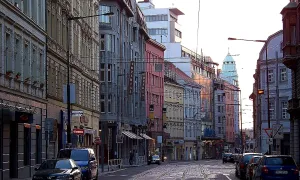
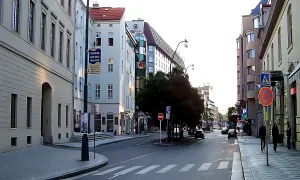
Real photos taken near the monument


Zdroj a licence jsou uvedeny u každého snímku.
Atmosphere of the place
This atmospheric visualisation of the place and period was generated by artificial intelligence. It is not real footage of the location.
Tips from visitors
No tips yet. Be the first!
Log in and add your tip.
Sources and literature
Fotografie: Maresovhan / CC BY-SA 4.0, rozlišení zvýšeno umělou inteligencí — Wikimedia Commons. The author and licence also appear when you hover over the image.
Faktickým podkladem tohoto textu byl článek na Wikipedii, jehož autory jsou přispěvatelé Wikipedie. Článek je dostupný pod licencí CC BY-SA 4.0.
Location on the map
More monuments – Nové Město
Show all in the municipality


Příběhy a pověsti
Legendy, pověsti a příběhy spjaté s touto památkou
Fotografie návštěvníků
Zatím žádné fotografie. Buďte první, kdo přidá fotografii z návštěvy!
Přihlaste se a přidejte svou fotografii nebo hodnoťte.
Za ověřenou návštěvu v aplikaci získáte víc bodů — poznáme podle GPS, že jste na místě.
Reviews and comments