



Palác Platýz Palace
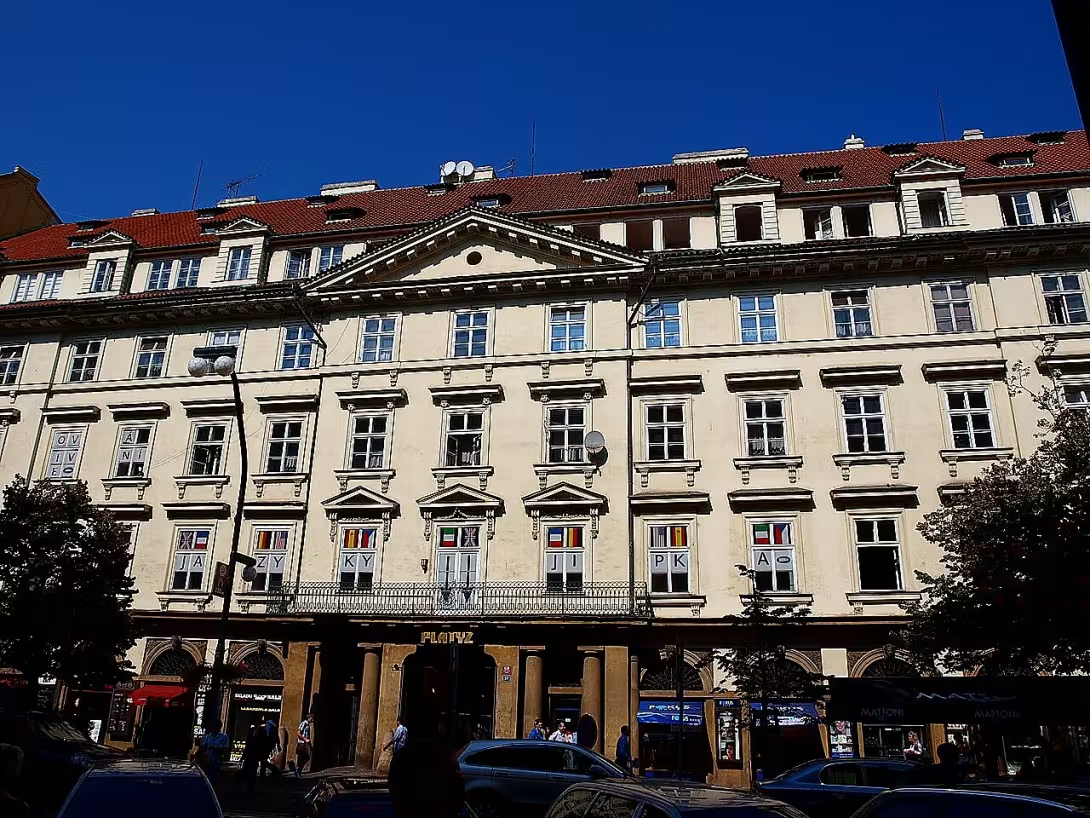
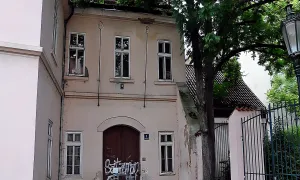
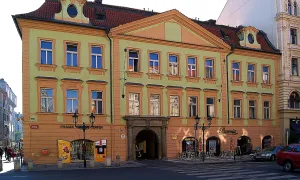
Palác Platýz stands as a grand urban palace in Prague's historic center, located at Národní 416/37 with a courtyard opening into Uhelného trhu. This architectural marvel has undergone several transformations from Renaissance to Empire style and is recognized as a cultural monument of the Czech Republic. Originally constructed by Friedrich Burgundský in the mid-14th century, it reflects various historical periods through its architecture, making it an intriguing site for visitors interested in Prague's rich history.
The origins of Palác Platýz trace back to the mid-14th century when Friedrich Burgundský, a member of Emperor Charles IV’s court, built a palace on this site. The structure was described as resembling a castle with a high tower, according to Václav Hájek z Libočan's chronicles. By 1405, the property had transitioned into the hands of Jan Bradatý ze Stříbra, a Prague entrepreneur who hosted a significant disputation on Wycliffe’s writings in 1408.
The architectural journey of Palác Platýz began with Renaissance elements and evolved through various styles over centuries. In 1586, Jan Platais z Plattenštejna acquired the palace, renaming it after himself. He commissioned renovations that included a Renaissance-style façade and an added portico on the courtyard's first floor, some remnants of which are still visible today. His son, Jan Arnošt, later became a bishop and secured rights to sell foreign wines and accommodate travelers at their home.
Ownership shifted again in 1637 when Jan ze Šternberka took possession, initiating baroque modifications and creating the passageway connecting Uhelný trh with Národní třída. The palace flourished under Jan Leopold Paar from 1715 to 1797, who established a renowned fencing school and postal office within its walls. A bust of Paar was placed on the main staircase as a tribute.
In 1813, František Daubek purchased Palác Platýz and transformed it into one of Prague's oldest and largest rental properties. Architect Jindřich Hausknechť oversaw its conversion to Empire style, reorienting the main entrance from Uhelného trhu towards Národní třída.
Today, Palác Platýz remains a significant historical site in Prague’s Old Town, near other notable landmarks such as Národní třída. Its rich history and architectural evolution make it an essential visit for those exploring the cultural heritage of Prague. Visitors can appreciate its storied past while enjoying its current role as a preserved monument within one of Europe's most historic cities.
Then and now
Drag the slider to compare how the landmark may have looked when it was built with the view today.
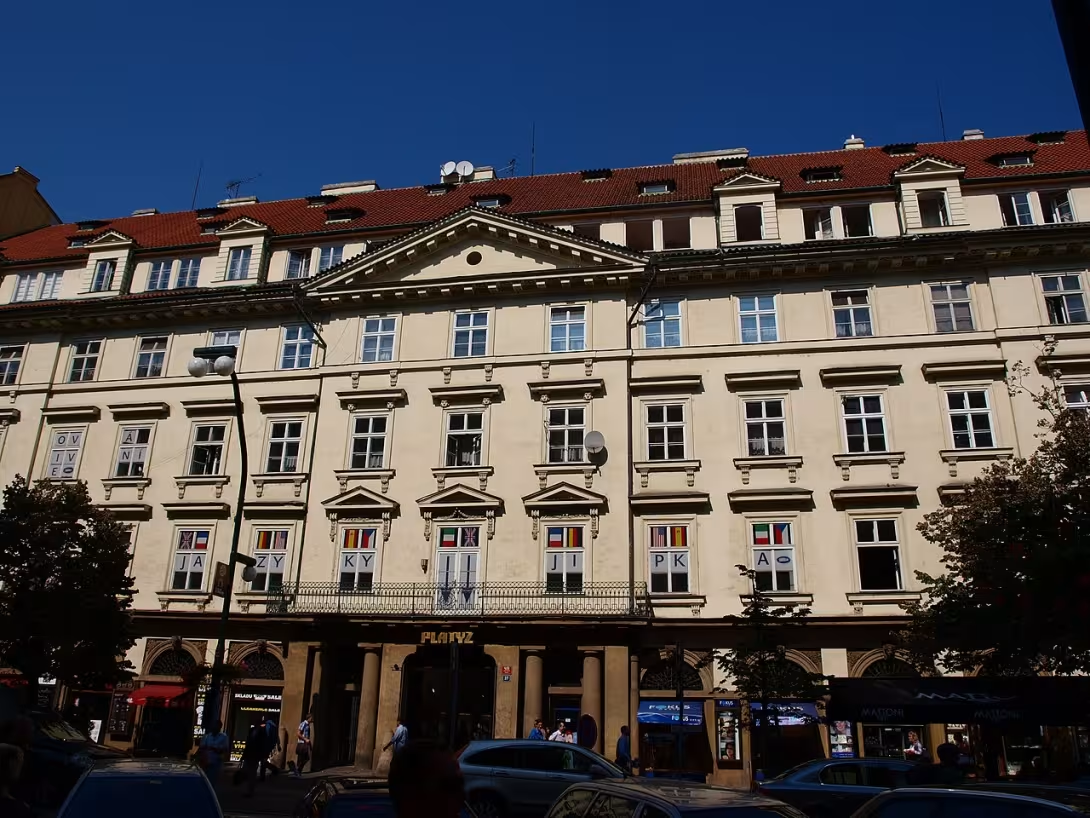
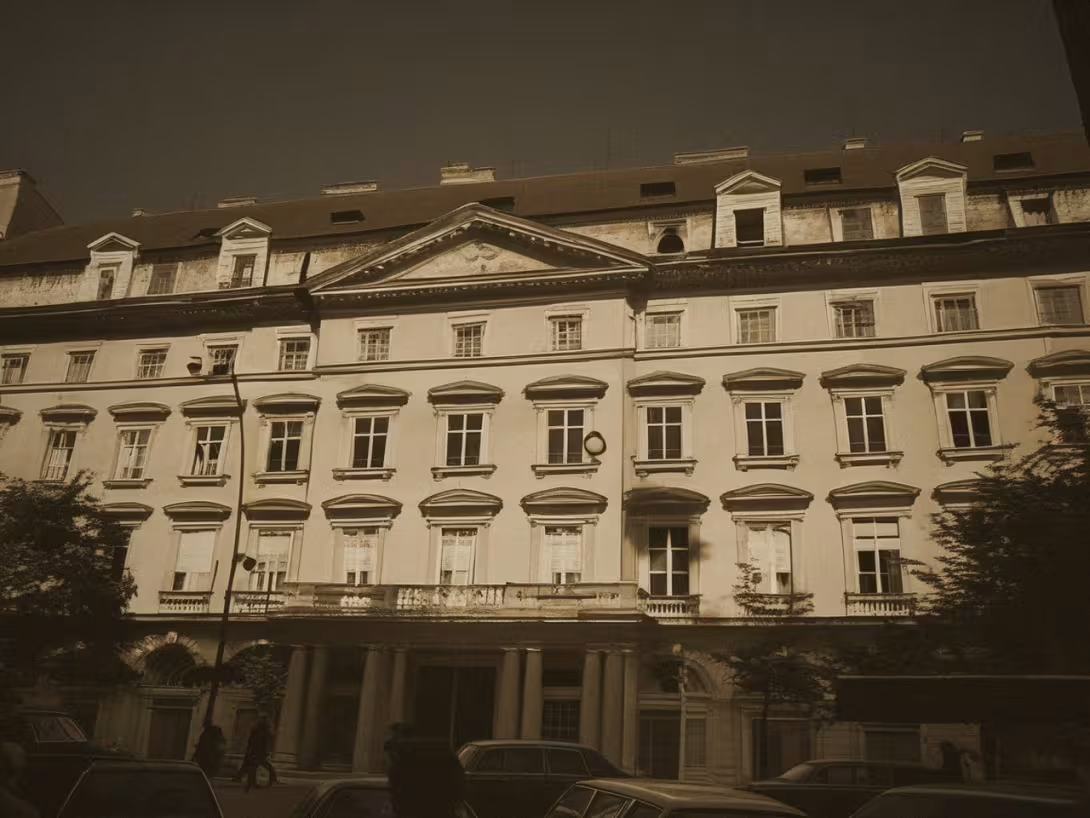
The historical appearance on the left is an AI-generated visualisation and serves as inspiration only.
Historical milestones
- 1408
- Disputation on Wycliffe's writings
- 1715
- Establishment of fencing school and postal office
Architectural development
Palác Platýz was initially constructed with elements of Renaissance architecture, later modified to Empire style by František Daubek. The palace underwent significant changes including the addition of a portico and reorientation of its main entrance.
Historical events
Disputation on Wycliffe's writings in 1408
Establishment of a renowned fencing school and postal office under Jan Leopold Paar
Owners
Friedrich Burgundský (mid-14th century)
Jan Bradatý ze Stříbra (1405-1586)
Jan Platais z Plattenštejna (1586-1637)
Jan ze Šternberka (1637-1715)
Jan Leopold Paar (1715-1797)
Jakub Wimmer (1797-1813)
František Daubek (from 1813)
Points of interest
- The palace was originally built by Friedrich Burgundský to resemble a castle with a high tower, reflecting its strategic and defensive purposes during the mid-14th century. - In 1408, Jan Bradatý ze Stříbra hosted an important disputation on Wycliffe’s writings at the palace, highlighting its role as a center for intellectual and religious debate in Prague.
- The passageway connecting Uhelný trh with Národnii třída was created during Jan ze Šternberka's ownership in 1637, significantly enhancing the connectivity of central Prague.
- A renowned fencing school operated within Palác Platýz from 1715 to 1797 under Jan Leopold Paar, contributing to its reputation as a hub for martial arts and training.
- Architect Jindřich Hausknechť was responsible for transforming the palace into Empire style in 1813, reorienting the main entrance towards Národní třída and adapting it for modern use.
Guide
This guide is narrated by a synthetic voice generated by artificial intelligence.
Show guide text
This text was created by artificial intelligence and has not been editorially reviewed. It may contain inaccuracies.
Welcome to the historic heart of Prague, where you stand before the majestic Palác Platýz, a grand urban palace nestled in this vibrant city center. As you gaze upon its impressive façade, imagine stepping back into time, where history and architecture intertwine to tell captivating stories.
The origins of Palác Platýz trace back to the mid-14th century when it was commissioned by Friedrich Burgundský. Originally designed to resemble a castle with a high tower, this structure served strategic and defensive purposes during its early years. The palace's evolution through various architectural styles—from Renaissance to Empire—mirrors the rich tapestry of Prague’s history.
As you take in the scene before you, notice the intricate details that speak volumes about its storied past. The courtyard invites exploration, hinting at centuries of gatherings and events within these walls. Observe how the architecture has gracefully adapted over time, reflecting different historical periods while maintaining a cohesive aesthetic.
Palác Platýz is not just an architectural marvel; it's also a witness to pivotal moments in history. In 1408, Jan Bradatý ze Stříbra hosted a significant disputation on Wycliffe’s writings here, marking the palace as a center of intellectual discourse. Later, in 1715, this historic site became home to a fencing school and a postal office, further embedding itself into the cultural fabric of Prague.
The palace has been shaped by several notable architects, including Jindřich Hausknecht, whose work contributed to its enduring legacy. Historical figures like Jan Platais z Plattenštejna, Jan Leopold Paar, and František Daubek have all left their mark on this remarkable site.
Now, let your curiosity lead you as you explore further. Each corner of Palác Platýz holds a piece of history waiting to be discovered. Whether it’s the architectural details or the echoes of past events, there's always something new to uncover.
As we conclude our journey through time at Palác Platýz, I invite you to continue exploring this magnificent palace and its surroundings. There is much more to see in Prague, each corner revealing another layer of history. Thank you for joining me today, and enjoy the rest of your adventure!
Tips for visitors
The best time to visit Palác Platýz is during the late spring or early fall when the weather is pleasant, allowing you to comfortably explore both the palace's interior and its surrounding areas. These seasons offer moderate temperatures and fewer crowds compared to peak tourist months, enhancing your experience of Prague’s historic charm.
Public transportation is highly recommended; you can easily access the palace using trams or buses that stop at nearby stations such as Národní třída.
When visiting Palác Platýz, consider bringing comfortable walking shoes as you'll likely explore both inside the palace and its surroundings. A camera is essential to capture the architectural beauty of the palace, especially in natural light during mid-morning or late afternoon when shadows add depth to photographs. The courtyard offers a picturesque spot for photography.
Nearby attractions within 30 minutes include Národní třída, known for its vibrant cultural events and shopping opportunities, and Uhelný trh, which provides a glimpse into Prague's historical market life. These sites offer additional exploration options after visiting the palace.
For families with children, Palác Platýz can be an engaging experience if you plan accordingly. The palace’s courtyard is spacious enough for kids to explore safely. Consider timing your visit around lunchtime when many nearby cafes and restaurants are open, providing a chance for a family meal or snack.
Frequently asked questions
Can the monument be visited?
Some buildings of this kind are open for guided tours, others serve another purpose or are privately owned. We have not verified whether and when this monument is open – please ask the operator.
What are the opening hours and admission?
We have not verified the opening hours or admission. Current information is published by the operator.
Where is the monument?
Location: Národní 416/37, Staré Město, Praha, Hlavní město Praha. The map on this page shows the exact spot.
Why is the monument protected?
It is listed in the Central List of Cultural Monuments of the Czech Republic as a cultural monument (register no. 38483/1-206).
Businesses nearby
Do you run a restaurant, accommodation, shop, museum, rental, wellness or other visitor service near this monument? Show yourself directly to the people heading to it — this is how they will see you in the app and on the web:
Events nearby

Zdroj akcí: otevřená data měst a obcí ČR (Národní katalog otevřených dat) a kalendář akcí Národního památkového ústavu.
Nearby
Palác Platýz is situated near Národní třída and Uhelný trh, surrounded by other historical sites in Prague's Old Town.
Accommodation nearby
Trips and activities nearby
Guided tours, tickets and activities nearby from GetYourGuide
Affiliate link: if you buy from the partner, we may receive a commission. The price for you does not change.
Search tours and activities →Themed route
Tematická Výletní Trasa: Historické Srdce Prahy
1. Palác Platýz (Palác) - Proč stojí za návštěvu: Palác Platýz, nacházející se v srdci pražského Staré Města, je impozantním příkladem barokní architektury. Původně postaven pro hraběte Františka Antonína Kolovrat-Krakovského, sloužil jako sídlo významné aristokratické rodiny a dnes hostí různé kulturní akce. Jeho historická architektura nabízí pohled na život vyšší společnosti 18. století.
2. Národní třída (Historický náměstí) - Proč stojí za návštěvu: Národní třída, nacházející se přibližně ve vzdálenosti 200 metrů od Paláce Platýz, je jedním z nejznámějších a nejslavnějších náměstí v Praze. Je známé svou krásnou architekturou a historickými památkami, jako jsou Národní divadlo a Škodovy sady. Toto místo bylo důležitým centrem kulturního života v Praze po staletí.
3. Uhelný trh (Historické náměstí) - Proč stojí za návštěvu: Uhelný trh, nacházející se blízko Národní třídy, je malé historické náměstí s bohatou minulostí. Bývalo to místo pro obchodování a setkávání lidí a dnes slouží jako klidný zelený prostor uprostřed hlavního města. Jeho historické budovy a malebné uličky nabízejí pohled na život v minulosti.
4. Staroměstská radnice (Historická památka) - Proč stojí za návštěvu: Staroměstská radnice, nacházející se asi 500 metrů od Paláce Platýz, je ikonickou historickou budovou s výraznou gotickou architekturou. Je známá svou věží Panna Marie a slavným orlojem na jejím střeše. Tato radnice byla důležitým centrem městské správy a historie, což ji činí nezbytnou pro každého návštěvníka Starého Města.
Tato trasa vás provede skrze klíčová místa pražské historie a architektury, nabízejíc pohled na bohatý kulturní dědictví města.
Seasonal recommendations
Spring: Visiting Palác Platýz during spring offers a unique experience as the city of Prague awakens to vibrant colors and gentle warmth. The blossoming trees and gardens surrounding the palace provide a picturesque backdrop, enhancing its historical elegance with natural beauty. Spring light is soft and diffused, casting a warm glow that highlights architectural details in a way that other seasons cannot replicate. This period sees moderate visitor numbers, making it an ideal time for those wishing to explore without the crowds of peak tourist season. To make the most of your visit, consider wearing layers; mornings can be brisk while afternoons become pleasantly mild. Arriving early allows you to enjoy the palace grounds in relative tranquility before more visitors arrive.
Summer: Summer is a popular time to visit Palác Platýz due to Prague's lively atmosphere and extended daylight hours. The sun casts long, dramatic shadows that accentuate the intricate designs of the palace façade, creating a striking visual contrast. This season brings lush greenery and blooming flowers, making the surrounding gardens particularly enchanting. However, summer also means larger crowds as tourists flock to enjoy Prague's cultural offerings. To avoid the busiest times, plan your visit for early morning or late afternoon when temperatures are cooler and the palace is less crowded. Comfortable walking shoes and light clothing are recommended, along with sun protection, as you explore both indoors and out.
Autumn: Autumn at Palác Platýz offers a serene and atmospheric experience as Prague transforms into a tapestry of reds, oranges, and golds. The cooler temperatures provide an ideal setting for leisurely strolls through the palace gardens, now adorned with fallen leaves that crunch underfoot. This season's softer light enhances the architectural details of the palace, creating a warm, inviting ambiance. Visitor numbers typically decline compared to summer, allowing for a more relaxed exploration. Dressing in layers is advisable as mornings can be chilly while afternoons remain mild. An early visit ensures you enjoy the autumnal beauty before the day cools down.
Winter: Winter at Palác Platýz presents a magical experience with Prague cloaked in snow and festive lights, offering a unique perspective on its historical architecture. The palace takes on an ethereal quality as snow blankets its surroundings, creating a picturesque scene reminiscent of classic European winter landscapes. Winter crowds can be smaller outside of major holidays, providing a quieter visit. Dress warmly in layers and wear comfortable shoes suitable for potentially icy paths. Planning your visit during mid-week mornings can help you avoid any lingering holiday tourists while enjoying the palace's winter charm.
Visualizations and artistic views


The visualisations are generated by artificial intelligence and serve as inspiration.
Photos from the area
Real photos taken near the monument


Zdroj a licence jsou uvedeny u každého snímku.
Tips from visitors
No tips yet. Be the first!
Log in and add your tip.
Sources and literature
Photos: VitVit / CC BY-SA 3.0 — Wikimedia Commons. The author and licence also appear when you hover over the image.
Faktickým podkladem tohoto textu byl článek na Wikipedii, jehož autory jsou přispěvatelé Wikipedie. Článek je dostupný pod licencí CC BY-SA 4.0.
Location on the map

Příběhy a pověsti
Legendy, pověsti a příběhy spjaté s touto památkou

Fotografie návštěvníků
Zatím žádné fotografie. Buďte první, kdo přidá fotografii z návštěvy!
Log in a přidejte svou fotografii nebo hodnoťte.
Za ověřenou návštěvu v aplikaci získáte víc bodů — poznáme podle GPS, že jste na místě.
Reviews and comments