






Puklicův dům House
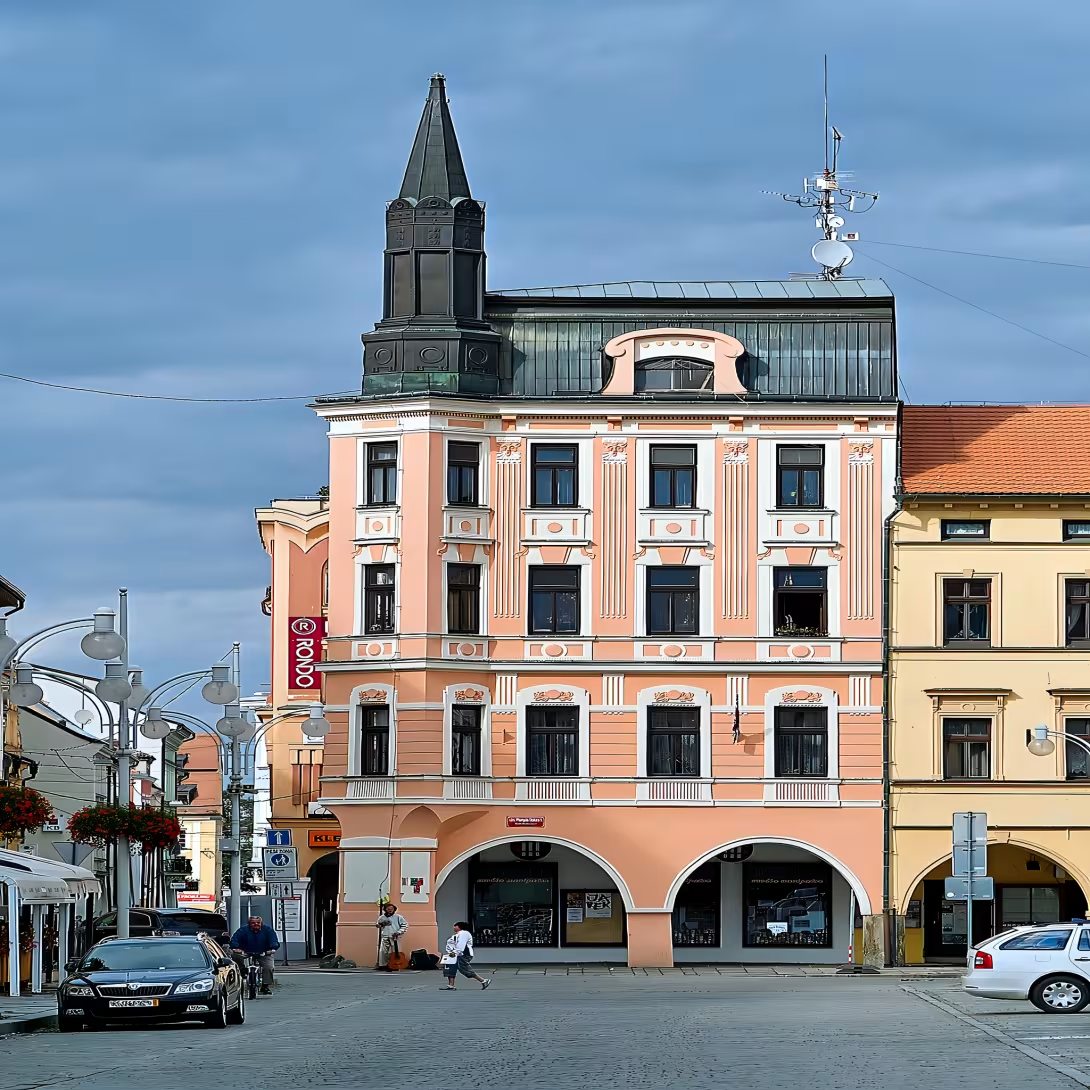
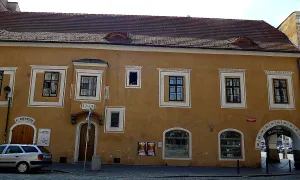
Puklicův dům is a historic town house at the northwest corner of Přemysl Otakar II Square in České Budějovice 1. This protected cultural monument features Art Nouveau elements and is linked to a violent political assassination in the 15th century.
The structure stands on a Gothic plot and retains a Renaissance core. Its early history reflects the ethnic and political tensions of 15th-century Bohemia. Specifically, it relates to the conflict between Czech citizens and the House of Rožmberk during the reign of King George of Poděbrady.
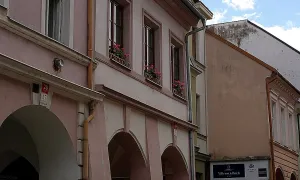
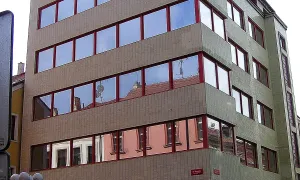
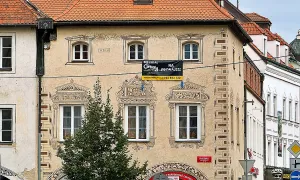
The current architectural form includes a superstructure added in the second half of the 19th century. The facade and corner turret are designed in the Art Nouveau style, with the turret completed in 1902. Its shape drew inspiration from American skyscrapers of that period. On the side facing the main square, the building features an arcade that does not extend to Krajinská street. During a reconstruction in the 1980s, a late Gothic beamed ceiling was discovered and restored in the first-floor hall. Although there were requests to return the house to its original state during this period, the project was not realized. The original superstructure was likely wooden, making restoration difficult.
The house is named after Ondřej Puklice ze Vztuh, the first Czech mayor of České Budějovice, who was murdered here in 1467. Puklice opposed the Rožmberks and their German supporters within the city. The conflict peaked when Puklice learned that a Dominican preacher named Mondl was traveling between towns to report on a curse placed upon King George of Poděbrady. Puklice convened the city council and decided to close the city to prevent the preacher from entering. In response, opponents Tomáš Frühauf and Matěj Rabenhaupt organized a revolt. A tinsmith named Jan Aufunddahin broke through the doors, and a mob attacked Puklice, dragging him down the stairs into the street. After regaining consciousness and writing his final will, the mortally wounded mayor was carried in tubs to the city jail. He died on Friday after Corpus Christi, around May 21, 1467.
Today, the building houses a CD shop and the British Centre. It serves as a physical record of the city's architectural evolution and its turbulent political past.
This monument provides a concrete link to the medieval power struggles of the region and the transition to modern urban styles. It is a significant site for any visitor exploring the historical layers of České Budějovice.
Then and now
Drag the slider to compare how the landmark may have looked when it was built with the view today.
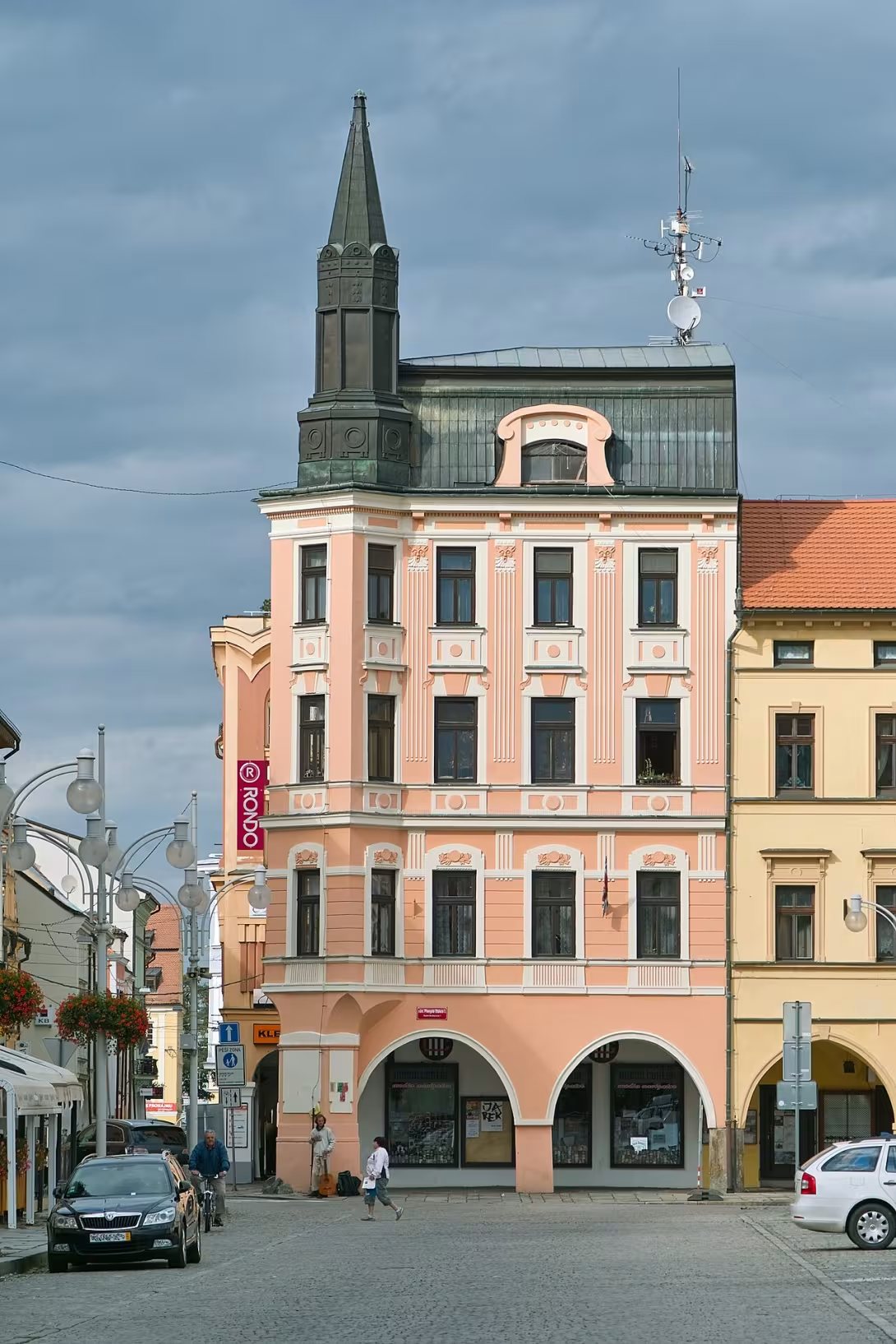
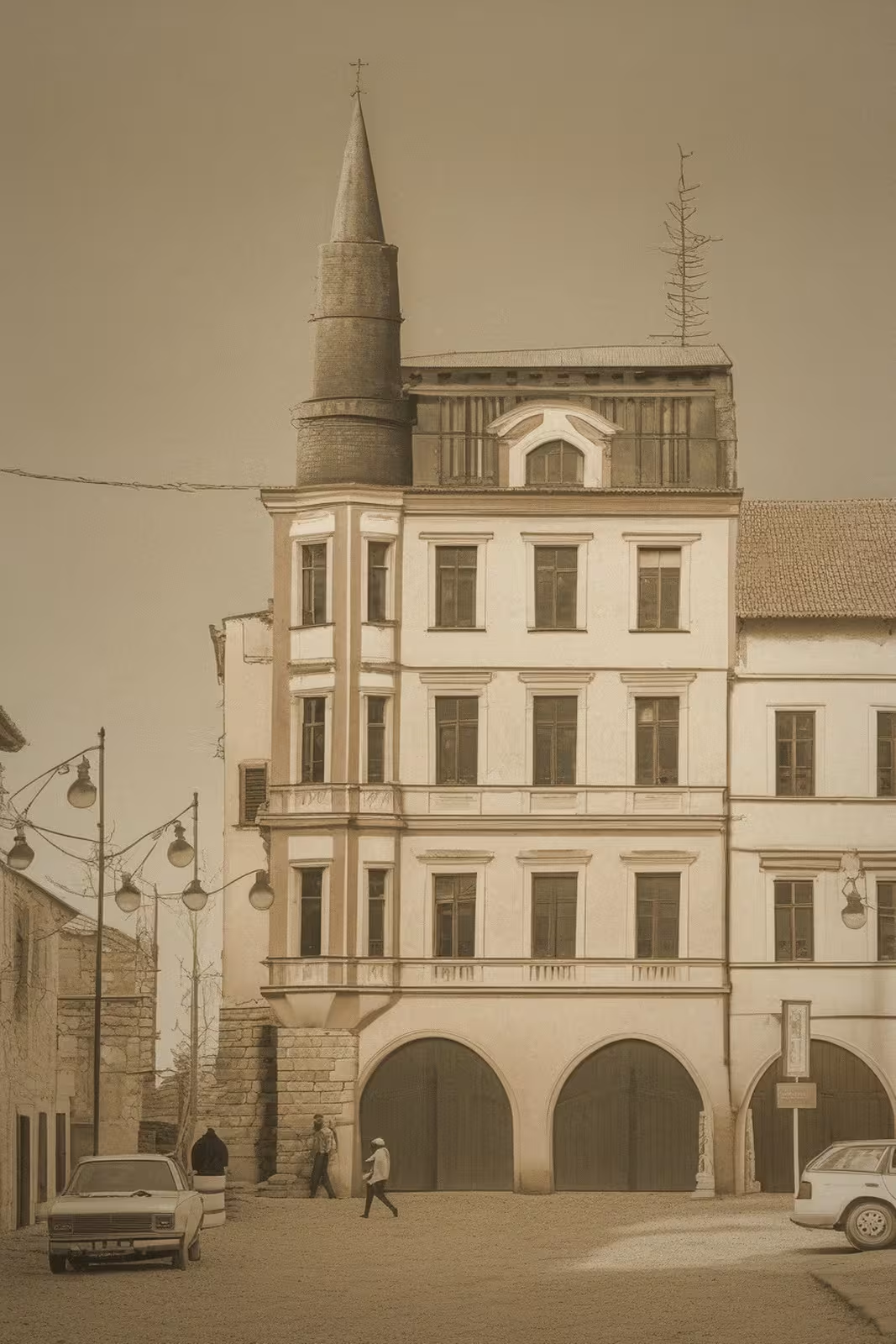
The historical appearance on the left is an AI-generated visualisation and serves as inspiration only.
Historical milestones
- 1467
- The murder of Mayor Ondřej Puklice ze Vztuh following a revolt by his opponents.
- 1902
- Completion of the Art Nouveau corner turret.
- 1980
- Reconstruction of the house and restoration of the late Gothic beamed ceiling.
Architectural development
The house evolved from a Gothic plot to a Renaissance core, with a superstructure added in the second half of the 19th century. The facade and the corner turret were redesigned in the Art Nouveau style, with the turret completed in 1902. During a reconstruction in the 1980s, a late Gothic beamed ceiling was discovered and restored in the first-floor hall.
Historical events
In 1467, the first Czech mayor of České Budějovice, Ondřej Puklice, was brutally attacked in his home by political opponents before eventually dying from his injuries.
Points of interest
– The historic town house features Art Nouveau elements and is linked to a violent political assassination in the 15th century.
– The structure stands on a Gothic plot and retains a Renaissance core, reflecting ethnic and political tensions of 15th-century Bohemia.
– The building's current architectural form includes a superstructure added in the second half of the 19th century, with an Art Nouveau-style facade and corner turret completed in 1902.
– A late Gothic beamed ceiling was discovered and restored during a reconstruction in the 1980s.
Guide
Show guide text
This text was created by artificial intelligence and has not been editorially reviewed. It may contain inaccuracies.
Welcome to the heart of Cesky Krumlov. As you stand here on the expansive Přemysl Otakar II Square, take a moment to absorb the atmosphere of this historic center. The square itself is a masterpiece of urban planning, but as you turn your gaze toward the northwest corner, your attention is drawn to a building that serves as a silent witness to centuries of transformation. You are standing directly in front of Puklicův dům. At first glance, you might see a structure that feels perfectly integrated into the elegant, rhythmic flow of the square, but do not let its graceful exterior deceive you. This building is far more than just a beautiful facade; it is a complex tapestry of architectural layers and a vessel for one of the most dramatic chapters in our local history.
As you look at the building, try to see past the surface. What you are observing is a fascinating architectural evolution. While the building presents a striking Art Nouveau character to the modern world, its soul is much older. If we could peel back the layers of time, we would find that Puklicův dům is built upon a deep Gothic foundation. Beneath the decorative elements of the later eras lies a Renaissance core, a sturdy heart that has survived through the changing tides of politics and fashion. It is a building that has literally grown and changed with the city, adapting its skin to match the spirit of each new century.
Please, take a moment to look up at the corner of the building. Notice the distinctive corner turret. This elegant feature was completed in 1902, providing the house with that quintessential Art Nouveau flair that defines its current silhouette. It gives the building a sense of movement and grace, standing as a landmark that helps define the very corner of Přemysl Otakar II Square. It is a reminder of a time when the city was embracing modernity and artistic expression, yet even then, the architects were building upon the heavy, historic bones of the past.
However, the true weight of Puklicův dům is not found in its ornamentation, but in the shadows of its history. To understand this place, we must travel back to the 15th century, a time of intense social and political upheaval. The year was 1467, and the air in Cesky Krumlov was thick with tension. This very site was the stage for a violent and decisive political conflict. It was here that the city was rocked by the murder of the Mayor, Ondřej Puklice ze Vztuh. He fell victim to a sudden and brutal revolt led by his political opponents. This was not merely a local dispute; it was a moment of profound instability that reflected the deep-seated ethnic and political tensions simmering within the city at the time. When you stand here, you are standing on the ground where the power dynamics of the medieval world were violently contested.
The names associated with this house carry the weight of that era. Beyond the tragic figure of Ondřej Puklice ze Vztuh, the history of this location is intertwined with individuals like Tomáš Frühauf and Matěj Rabenhaupt. These are the people whose lives, ambitions, and conflicts are etched into the very stones of this plot. Their stories are the threads that connect the modern visitor to the turbulent reality of the 1400s.
As we move from the stories of the past to the preservation of the present, it is worth noting how much effort has been made to honor these layers. During a significant reconstruction in 1980, great care was taken to restore the late Gothic beamed ceiling. This restoration allowed the building to reclaim a piece of its ancient identity, ensuring that even as the house serves modern purposes, its medieval heritage remains palpable to those who know where to look.
It is quite a contrast, isn't it? Today, the building has transitioned from a site of political violence and high-stakes governance to a place of modern social life. It currently houses a CD shop and a British pub, places where people gather for leisure rather than conflict. There is a certain poetic irony in the fact that a site once defined by the sharp edges of a political revolt is now a place where music is sold and people come to relax and converse.
If there is one thing to take away from your encounter with Puklicův dům, it is the idea of resilience. This building has survived the transition from the Gothic era to the Renaissance, through the political storms of the 15th century, and into the artistic revolutions of the early 20th century. It has stood firm while the world around it changed completely. It is a physical manifestation of the city's ability to endure, to rebuild, and to reinvent itself without ever truly forgetting where it came from.
As you continue your walk around Přemysl Otakar II Square, I invite you to keep looking for these hidden layers in the other buildings around you. Every corner of Cesky Krumlov has a story waiting to be uncovered, often hidden just beneath a beautiful facade. Thank you for joining me at Puklicův dům. Please, enjoy the rest of your journey through our beautiful city.
Tips for visitors
The best time to visit Puklicův dům is during the spring and autumn seasons when the weather is mild and pleasant. This allows you to fully appreciate the historic town house's architecture and surroundings.
Parking options are available near Přemysl Otakar II Square, with a short walk leading to the house. Alternatively, you can use public transportation, such as buses or trams, which stop nearby.
When visiting Puklicův dům, it's recommended to bring a camera to capture its stunning architecture and surroundings. The best spots for photography are around Přemysl Otakar II Square, where the morning sunlight provides a beautiful backdrop.
If you're looking to explore more of České Budějovice, there are several attractions within a 30-minute walk from Puklicův dům. Some popular options include [list specific nearby attractions].
Businesses nearby
Do you run a restaurant, accommodation, shop, museum, rental, wellness or other visitor service near this monument? Show yourself directly to the people heading to it — this is how they will see you in the app and on the web:
Events nearby
Zdroj akcí: otevřená data měst a obcí ČR (Národní katalog otevřených dat) a kalendář akcí Národního památkového ústavu.
Nearby
The house is situated on the northwest corner of Přemysl Otakar II Square, the central square of České Budějovice.
Accommodation nearby
Trips and activities nearby
Guided tours, tickets and activities nearby from GetYourGuide
Affiliate link: if you buy from the partner, we may receive a commission. The price for you does not change.
Search tours and activities →Themed route
Tematická výletní trasa
Stop 1: Přemysl Otakar II Square This historic square is the heart of České Budějovice, and a great place to start your journey. Take in the sights and sounds of this bustling hub, surrounded by beautiful architecture and lively atmosphere.
Stop 2: Puklicův dům The main attraction of our tour, Puklicův dům is an impressive Baroque house that dates back to the 17th century. Its stunning facade and rich history make it a must-see for anyone interested in architecture or local culture.
Stop 3: Town Hall Located just across from Puklicův dům, the Town Hall is another iconic landmark in the heart of České Budějovice. This beautiful building has been standing since the 14th century and offers stunning views of the surrounding city from its tower.
This tour takes you on a journey through the historic center of České Budějovice, showcasing some of the city's most impressive landmarks and cultural attractions. With its rich history, stunning architecture, and lively atmosphere, this tour is sure to be an unforgettable experience.
Seasonal recommendations
Spring
What's special about visiting Puklicův dům during spring? The blooming flowers and greenery surrounding the historic landmark create a picturesque atmosphere. As the weather warms up, the outdoor spaces become more inviting.
Practical tips: Arrive early to avoid crowds, dress comfortably for the mild temperatures, and plan your visit during the morning or late afternoon when the sun is not too harsh.
Summer
During the summer months, Puklicův dům comes alive with vibrant colors and lively atmosphere. The warm weather makes outdoor activities enjoyable, and the surrounding parks are perfect for a stroll.
Practical tips: Plan your visit early in the day to beat the crowds, wear light and breathable clothing, and don't forget sunscreen and a hat for protection from the sun.
Autumn
As autumn arrives, Puklicův dům takes on a cozy charm. The fall foliage creates a stunning backdrop, while the crisp air invigorates visitors.
Practical tips: Wrap up warm as it can get chilly in the mornings and evenings, plan your visit during the week to avoid weekend crowds, and take advantage of the golden light for photography.
Winter
During the winter season, Puklicův dům takes on a serene quality. The snow-covered landscape creates a peaceful atmosphere, while the warmth inside is inviting.
Practical tips: Dress warmly as it can get cold outside, plan your visit during the morning or early afternoon when the sun is not too harsh, and take advantage of the cozy indoor spaces for a break from the chill.
Visualizations and artistic views


The visualisations are generated by artificial intelligence and serve as inspiration.
Photos from the area
Real photos taken near the monument


Zdroj a licence jsou uvedeny u každého snímku.
Tips from visitors
No tips yet. Be the first!
Log in and add your tip.
Sources and literature
Fotografie: Xth-Floor / CC BY-SA 3.0, rozlišení zvýšeno umělou inteligencí — Wikimedia Commons. The author and licence also appear when you hover over the image.
Faktickým podkladem tohoto textu byl článek na Wikipedii, jehož autory jsou přispěvatelé Wikipedie. Článek je dostupný pod licencí CC BY-SA 4.0.
Location on the map
More monuments – České Budějovice 1
Show all in the municipality
Příběhy a pověsti
Legendy, pověsti a příběhy spjaté s touto památkou
Fotografie návštěvníků
Zatím žádné fotografie. Buďte první, kdo přidá fotografii z návštěvy!
Přihlaste se a přidejte svou fotografii nebo hodnoťte.
Za ověřenou návštěvu v aplikaci získáte víc bodů — poznáme podle GPS, že jste na místě.
Reviews and comments