






Rohanský palác Palace
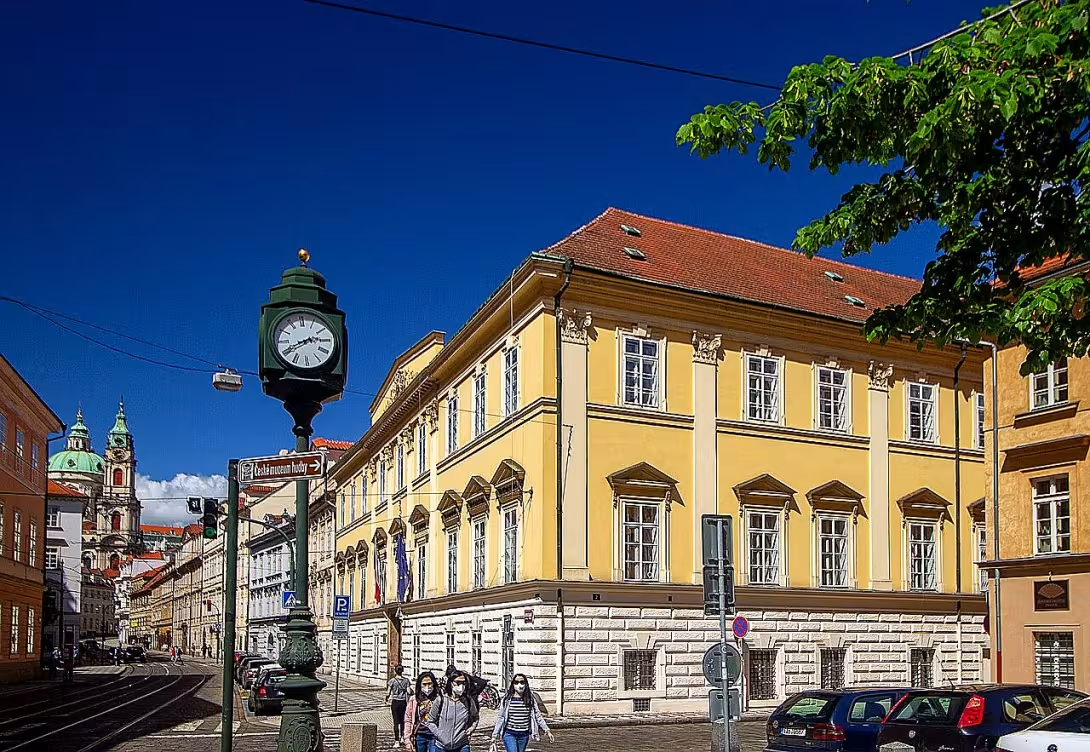
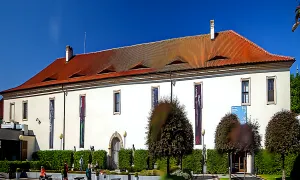
Rohanský palác stands in Prague on the Malá Strana in the street system Karmelitská, Haranto and Maltese Square. I also know them under other names - such as Tyrolovsky, Ottovsky, Montenegro or Kuron Palace - which reflects its changing owners throughout history. It's protected as a cultural monument.
The building was built gradually. Around 1571, the German builder Bonifác Wohlmut united three houses on a given plot to create a Renaissance palace. Later came the fourth building; In 1596, Jeremiah Tirol bought it. One of these houses, especially the so-called Ottovský house near Maltese Square, became the place of German opera performances between 1700 and 1713. They remained separated for a long time until the Chernins of Chudenice bought them at the end of the 18th century.
Under the leadership of Jan Vojtěv Černín, these parts were reconnected in 1792. Four years later, in 1796, the palace underwent a major classical reconstruction according to the design of architect Josef Zobel. In the same year Peter Biron, the Duke of Curon, and Zemgal, bought it. His daughter Marie Pavlín of Hohenzollern-Hechingen, who inherited the palace in 1800, had some interiors modified by architect Louis Montoyer in 1807. In 1816, Duke Charles Alain Rohan of Bouillon-Montbazone became the owner. Under the influence of his brother Ludwig Viktor Meriadek, who took care of the palace from 1838 to 1841, the construction took a late classical form according to the design of architect Vincent Kuhlánek.
Architecturally, it is a large two-storey building with a rectangular ground plan, which is narrowed down in the part oriented on the Maltese Square. The middle wing divides space into a pair of inner yards. The main facade on Carmelite Street is significantly symmetrical with nine axes. The middle part consists of a three-axis risalite section decorated with four Corinthian columns and completed with a low shield with a Rohan coat of arms. The ground floor passage has a simple stone lining, and an oval medallion with a picture of the Virgin Mary is situated above the window of the first floor.
The side facade in Harant Street will attract the attention of the so-called Syrian window, behind which is one of the most valuable inner spaces - the Great Mirror Hall. This representation hall has cluster ceilings and an inlaid floor and remains the most stylishly preserved part of the palace. It's Louis Montoyer's work. The rear facade facing the Maltese square is presented by five axes of separate Pilasters with Ionian headers. The inner middle wing of украuje nikka containing vases with lion heads.
Since 1919, part of the palace has been rented to the Ministry of Education. After 1945, the Communist regime confiscated it. Today in the building is the Ministry of Education, Youth and Sports of the Czech Republic. / p >
Then and now
Drag the slider to compare how the landmark may have looked when it was built with the view today.
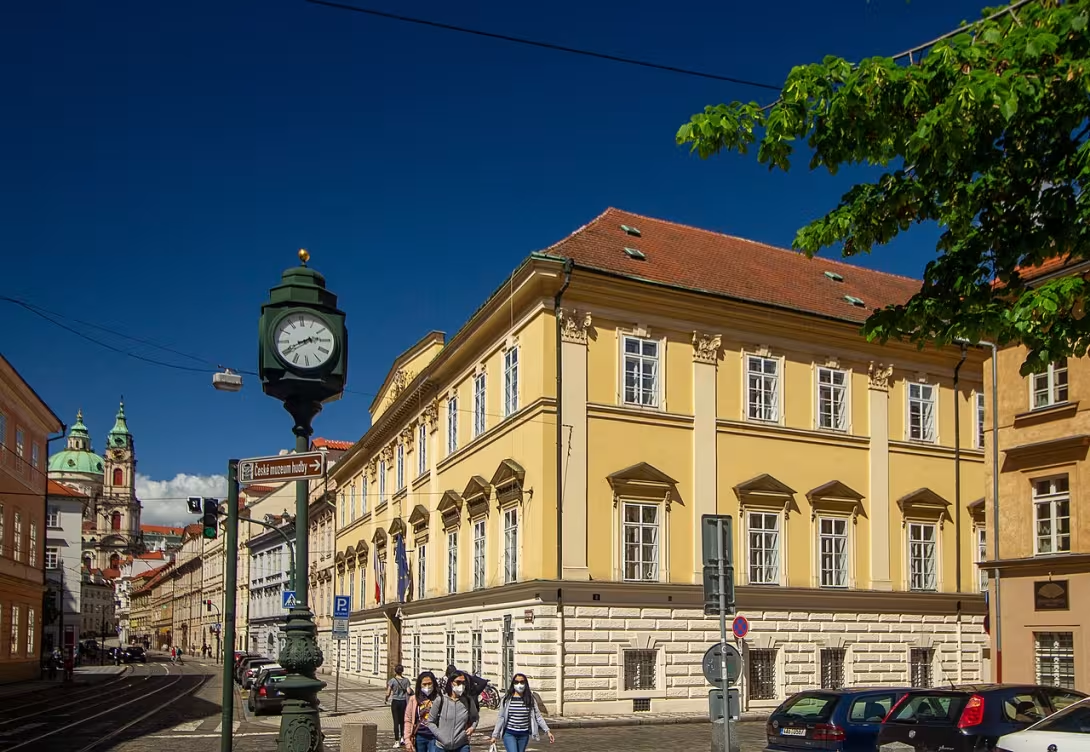
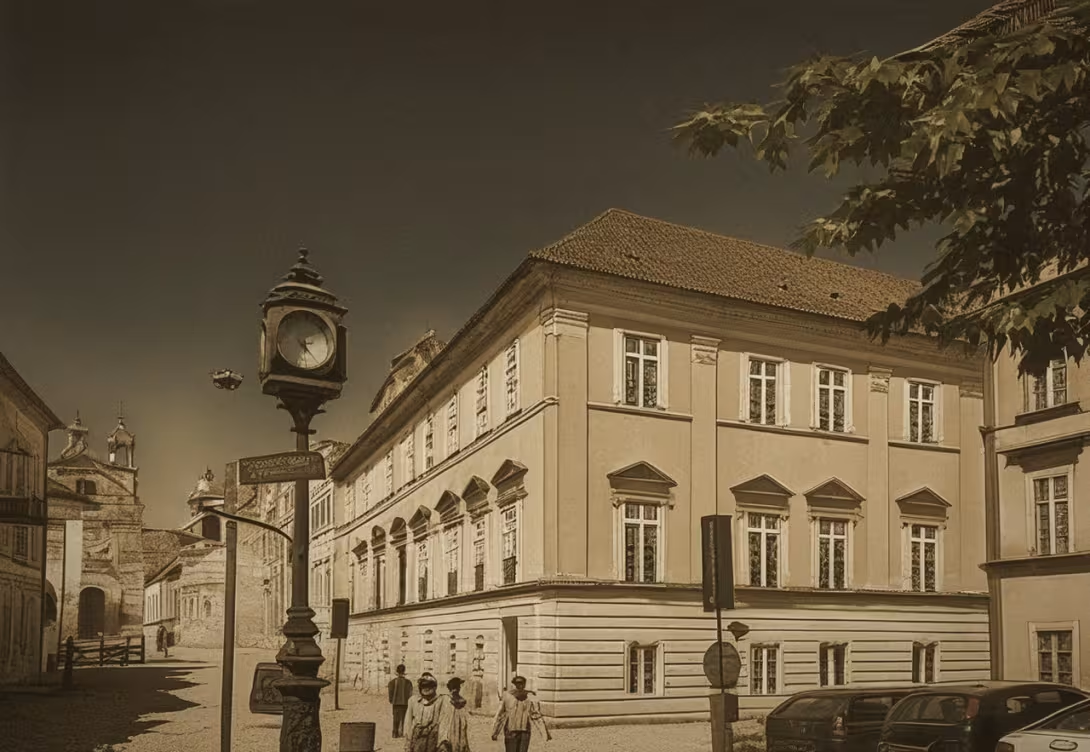
The historical appearance on the left is an AI-generated visualisation and serves as inspiration only.
Historical milestones
- 1571
- The birth of the Renaissance Palace after the unification of three houses by Bonifac Wohlmut.
- 1792
- The unification and beginning of the Classicist reconstruction under the direction of the Chernins.
- 1796
- Classicist reconstruction of Josef Zobel and sale of the palace to Duke Peter Biron.
- 1807
- Interior modifications by architect Louis Montoyer for Duchess Marie Pavlín.
- 1838-1841
- The latest classical reconstruction according to
Architectural development
The original Renaissance core from 1571 was gradually expanded and rebuilt. The Baroque reconstruction took place in the 18th century, followed by classical rework of Josef Zobel in 1796. In the 19th century, the Vincenc Kulhánek palace was built into a late classical form. The facades are decorated with columns, nobodies and coat of arms. The interiors are richly decorated, especially the Great Mirror Hall from 1807.
Historical events
- 1571
- The unification of three houses into one Renaissance building by architect Bonifac Wohlmut.
- 1792
- The blacks of Chudenice have reunited scattered objects and have them classically rebuilt.
- 1807
- Interior modifications by architect Louis Montoyer for Duchess Marie Pavlín.
- 1945
- The palace was confiscated by the Communist regime and transferred to state property.
Owners
- 1571-1596
- 1596
- 1792-1796
- 1796-1800
- 1800-1816
- 1816-1919
- 1945- present
Points of interest
- The palace was built gradually when the German builder Bonifác Wohlmut connected three houses on one parcel around 1571 and created a Renaissance building.
- Between 1700 and 1713, one of the houses, the so-called Ottovský house at Maltez Square, served as a place for German opera performances.
- In 1792, individual parts of the palace were connected under the leadership of Jan Vojtěv Černín of Chudenice.
- In 1796 the palace underwent classical reconstruction according to the design of Josef Zobel.
Guide
This guide is narrated by a synthetic voice generated by artificial intelligence.
Show guide text
This text was created by artificial intelligence and has not been editorially reviewed. It may contain inaccuracies.
Welcome to the heart of Prague's Little Party, one of the most beautiful and atmospheric neighborhoods of our capital. Stop for a moment, take a deep breath and just feel the surroundings. You are standing in front of the Rohan Palace, a building that is a silent but proud witness to centuries of Prague history. Look at the building ahead. What you see today is not just one house, but a complex architecture that has evolved over time and adapted to the tastes of its owners and to the trends of time. Feel its size and the way it dominates the space around it. It is a place where noble elegance meets the urban character of Prague.
To understand how this palace became what it is today, we have to move far back in our minds until 1571. Introduce yourself in the 16th century Prague, during the Renaissance flowering. It was at this time that the foundation of this complex began to emerge. A German builder named Bonifác Wohlmut had an ambitious plan. Instead of building one new house, he decided to unite three existing houses on one parcel. With this clever move he created a representative Renaissance palace, which was a symbol of wealth and influence at the time. This initial phase was crucial because it determined the extent and nature of the entire complex. The Renaissance brought harmony and humanity to architecture, and although the palace later went through many changes, this original foundation remained hidden in it.
Now that you're standing in front of the front, let's watch the building change together. The architecture of the Rohan Palace is a fascinating journey through time. If you look at the general appearance, you will see that the building is not uniform in one style, but it is the result of successive reconstructions. From the original Renaissance complex, the palace gradually turned into a baroque building and finally into what prevails today, which is a classical style. The classicism you perceive in the building has brought with it order, symmetry and a certain peace that contrasts with baroque passion.
The breaking point occurred in 1792. At that time, the palace was dominated by the Chernín family, who began with a large classical reconstruction. They wanted the palace to match the latest European trends of the time. A few years later, in 1796, architect Josef Zobel entered the game. His work helped the palace gain his present face. and it was this year that the palace was sold to Duke Peter Biron. Imagine what it must have been like when a new, powerful family entered these premises with new ideas of beauty and luxury.
Now let's think about what's inside, even if you're standing outside. In 1807 the architect Louis Montoyer came to the ranks, who was hired by Duchess Maria Pavlína. Montoyer focused mainly on interior modifications. The aim was to create spaces that would not only be functional but, above all, stunning. The most famous part of the palace is the Great Mirror Hall. Imagine a space full of light, mirrors reflecting the surrounding area, and above all a beautiful inlaid floor, where the wood forms complex geometric and floral patterns. It is a place where, in the past, social meetings of the highest society took place, where there were whispers about politics and dancing in the light of thousands of candles.
The last major architectural intervention came from 1838 to 1841. At that time Vincenc Kulhánek got the job, which completed the last classical reconstruction according to its project. The Kullboy has made the palace look as it is today. Thanks to it, the building is perceived as a harmonious whole that fits elegantly into the tissue of the Little Side.
If you're standing in front of the palace, you might be wondering if there have been any unusual stories. One of the most interesting attractions returns us to the beginning of the eighteenth century, namely between 1700 and 1713. At that time, one of the houses that formed the palace complex, the so-called Ottovský house at Maltese Square, served as a place for German opera performances. Try to close your eyes for a moment and imagine how the music filled the streets of Prague. It was a center of culture and entertainment that attracted art lovers from all over the city. It's fascinating to think that one and the same building could have been a nobleman's residence and theatre at different times.
But the history of the palace does not only have its golden side. As any significant landmark in Prague, Rohanský palác felt the hard wounds of the twentieth century. In 1945, after World War II, the palace was confiscated by the Communist regime. The building went into state ownership, which meant the end of the era of private noble settlements in this place. So the palace stopped being home to one family and became part of state property, which brought about changes in its use and maintenance.
Now look again at the building in front of you. Feel her layers. Under the classical facade is a baroque spirit and even deeper the Renaissance basis of Bonifac Wohlmut. It's like a historical palimpsest where every new generation wrote their own story through the previous one. Rohanský palác is not just a pile of rocks and plaster, it's a record of the ambitions, tastes and fates of the people who made it. From the German builder to the mighty dukes to the government.
Thank you for stopping by this beautiful monument for a moment. I hope this short trip to history helped you see Rohanský palác in a new light. Now I invite you to look around in peace, maybe pay attention to the details in the area, or just let the small party atmosphere drift. Explore the surrounding streets that hide many other secrets, and enjoy your stay in Prague. I wish you a pleasant continued journey and many other discoveries. Goodbye.
Frequently asked questions
Is Rohanský palác open to the public?
Yes, Rohanský palác is open to the public. The tour is only possible when accompanied by a guide.
How do I get to the place by car / public transport?
The best way is to arrive by bus No. 136 or 147, which stop at Maltese Square. Here you can switch to tram No 2 or 5, which stops at the Malá Strana.
How much is the entrance fee and is it paid on the spot?
Payment is made directly at the entrance to the palace.
Is the tour suitable for children and seniors?
Yes, the tour is suitable for families with children as well as for seniors. The Palace has barrier-free access and special tours are available for disabled people.
How long does the tour take?
The tour takes approximately 45 minutes. Entrance is only possible with the guide.
What are the opening times and booking is required?
The palace is open from Tuesday to Friday from 10: 00 to 16: 00. Sundays and public holidays are closed. Reservation is not necessary, but it is recommended for groups over 10 people.
For kids
Imagine going back 455 years and getting a chance to visit one of the most beautiful palaces in Prague - Rohanský palác! It was like entering a fairy tale where kings, nobles and artists met.
It's like time stopped. The palace stood in the middle of beautiful green and its building was full of life details. Who lived here? The nobles who built their home here. What happened here? Concerts, dance evenings, balls and banquets. It was a time when nobles ruled the world and their palaces were a symbol of power and wealth.
Businesses nearby
Events nearby

Zdroj akcí: otevřená data měst a obcí ČR (Národní katalog otevřených dat) a kalendář akcí Národního památkového ústavu.
Nearby
{'memories': [{\ 'nazen': 'Church of St. Nicholas', 'distance': '500 metres', 'description': 'Gothic Church of the 13th century with later Baroque adaptations.'}, {'Nazen': 'Malostran Town Hall', 'distance': '800 metres', 'description': 'Renaissance Town Hall with a historical corner house'}, 'nazen': 'Church of St. Simon and Judy', 'distance': '1 km', 'description': 'Baroque Church of the 18th century in Maltesian Square'}], 'prikazny': [{'Malestranska Street', 'description': 'Historical street with a number of Renaissance and Baroque houses'.]}]]]]]]]]]]]]
Accommodation nearby
Trips and activities nearby
Guided tours, tickets and activities nearby from GetYourGuide
Affiliate link: if you buy from the partner, we may receive a commission. The price for you does not change.
Search tours and activities →Themed route
1.Rohanský palác * Type: * Historical palace with Baroque facade and rich interior decoration. * Why visit? * A unique example of the Prague aristocratic architecture of the 17th century, connected with the family of Rožmberk and later with important personalities of Czech history. Interiors with frescos and sculptures derived from the Italian Baroque are a rare example of the time.
2. Church of St. Nicholas * Type: * Gothic church with Baroque adjustments. * Why visit? * One of the oldest sacral structures of the Little Party, where medieval roughness is mixed with elegant baroque elements. The internal equipment, including the organ, is evidence of the development of music culture in Prague.
3. Lesser Town Hall * Type: * Renaissance Town Hall with corner house. * Why visit? * Symbol of Malá Strana self-government, built in the 16th century, with typical Renaissance architecture in Prague. The National House with tower and clock is an iconic place that complements the historic atmosphere of the street.
4. Church of St. Simon and Judy * Type: * Baroque church in Maltese Square. * Why visit? * An interesting example of Baroque sacral architecture with rich sculpture decoration. The church is connected to the order of Maltese knights and offers a quiet environment in the middle of a busy centre.
Seasonal recommendations
Spring In spring months, Rohanský palác is surrounded by light, which penetrates through glazed arcades and illuminates its interiors with fine, variable shades. The gardens are starting to come to life - the bushes are blooming, the trees are dressed in green leaves and the air is saturated with the scent of wet stone and the first spring flowers. The atmosphere is calm, almost intimate, because the tourist crowds are not yet as abundant as in summer. It is recommended to visit the palace in March or April, when it is pleasant outside and the interiors are often lit with natural light. Walking around the gardens is suitable even in lighter clothes, but with umbrella - spring weather can be unpredictable. The best time to visit is in the afternoon, when the light in the interiors becomes softer and photos gain a magical touch.
Summer In the summer months, Rohanský palác will turn into a living scenario where the sun's rays reflect off white facades and create a game of shadows in the arcades. The gardens are in full bloom, full of greenery and flowers that attract visitors to relax on benches. The atmosphere is alive, but still retains the charm of the historic place - evening hours, when the sun burrows behind the Little Party houses, provide the palace with mysterious elegance. However, in the main summer season it is necessary to count on the crowd, especially in the morning. It is recommended to arrive early in the morning or late in the afternoon when the interior is a pleasant shade and there is still no heat outside. Light, breathable clothes are ideal, but don't forget the sunglasses and hat - the sun in Prague alleys can be intense.
Autumn Autumn brings golden and red shades to the Rohan Palace, which are reflected in windows and tiles. The trees in the gardens dress up in a colorful dress, while the air is slightly cold and saturated with the scent of fallen leaves. The atmosphere is calm, almost melancholic, and the palace acts as a cozy shelter from autumn winds. In September and October, the visit is ideal - the crowds are retreating, and interiors, illuminated by artificial light, are gaining on secrets. Warmer clothes are recommended, especially in November, when the weather can change quickly. The best time for a tour is in the afternoon when light becomes softer and shadows longer, which gives photographs a dramatic impression. In advent time, the palace gains on the Christmas atmosphere, although without explicit holiday decorations.
Winter Winter Rohanský palác is like drawn from a fairy tale - snow diapers on rooftops and freezing air create a magical atmosphere that is still highlighted by artificial lighting of interiors. The gardens are covered with white carpet, and the cold sun gives the whole place silver shine. In winter the visit is quieter because tourists prefer to stay warm, but the opening hours of the palace are shorter. It is recommended warm but stylish clothing - thick wool scarves, gloves and shoes with good grip, because Prague alleys can be slippery. The best time to visit is in the afternoon, when lamps are lit up in the interiors and the palace gets intimate. Evening tours, if offered, bring a unique atmosphere, as the freezing air blends with the heat of the shining windows.
Visualizations and artistic views


The visualisations are generated by artificial intelligence and serve as inspiration.
Photos from the area
Real photos taken near the monument


Zdroj a licence jsou uvedeny u každého snímku.
Tips from visitors
No tips yet. Be the first!
Log in and add your tip.
Sources and literature
Fotografie: VitVit / CC BY-SA 4.0 — Wikimedia Commons. The author and licence also appear when you hover over the image.
Faktickým podkladem tohoto textu byl článek na Wikipedii, jehož autory jsou přispěvatelé Wikipedie. Článek je dostupný pod licencí CC BY-SA 4.0.
Location on the map

Příběhy a pověsti
Legendy, pověsti a příběhy spjaté s touto památkou

Fotografie návštěvníků
Zatím žádné fotografie. Buďte první, kdo přidá fotografii z návštěvy!
Přihlaste se a přidejte svou fotografii nebo hodnoťte.
Za ověřenou návštěvu v aplikaci získáte víc bodů — poznáme podle GPS, že jste na místě.
Reviews and comments