



Rybářská brána Gate
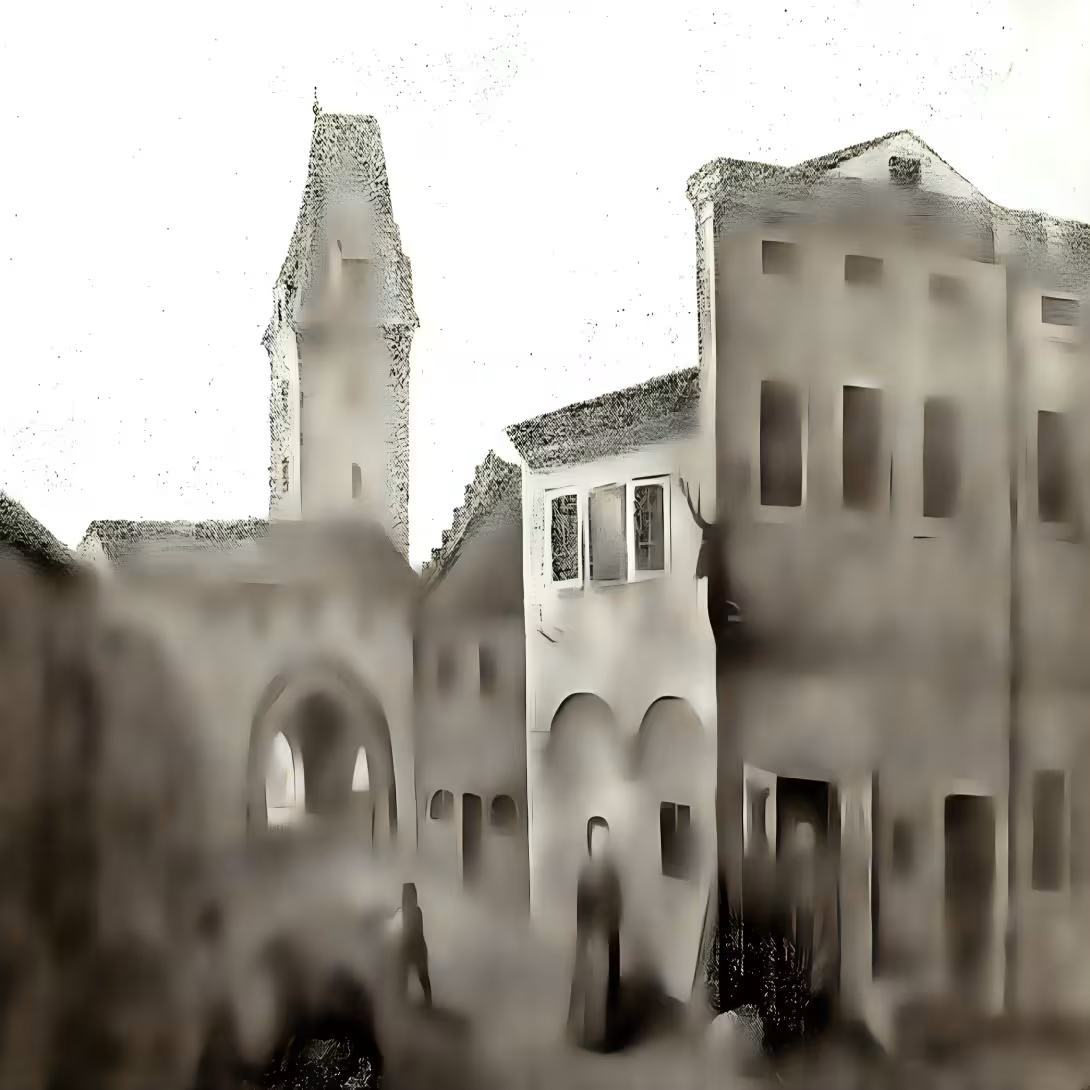
Objekt se nedochoval — na místě dnes nestojí. Následující text popisuje jeho historii, ne současnou návštěvu.
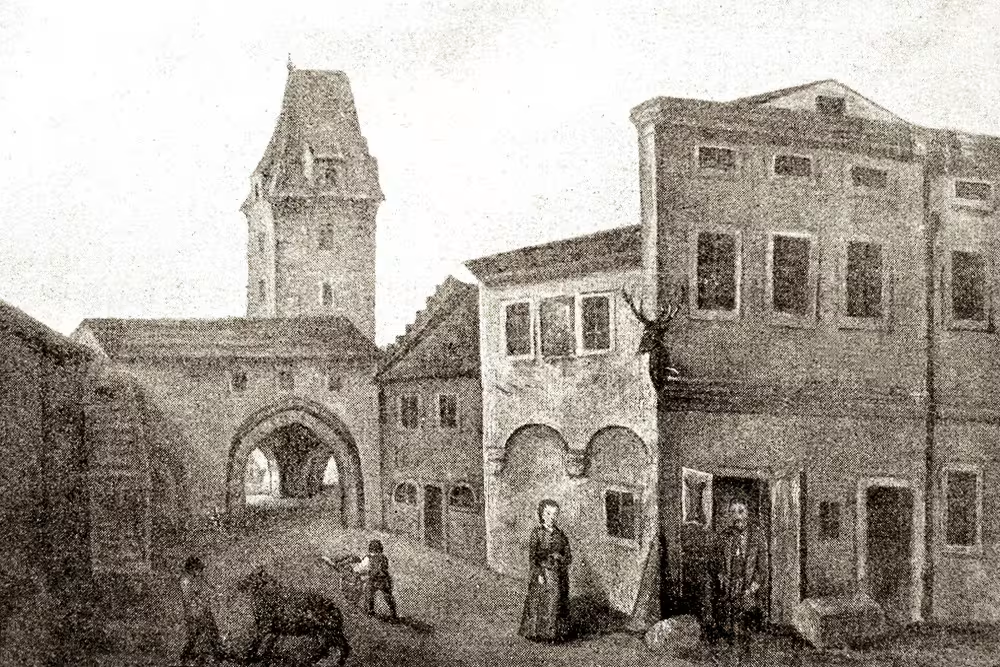
Rybářská brána, also known as Fischertor or Mühltor in German, was a significant Gothic secondary city gate on the western edge of České Budějovice. Its exact construction date is uncertain; it may have been linked to the Budějovice castle from the 13th century or expanded during King Václav IV's reign at the end of the 14th century. The gate evolved into a tall, polygonal tower with a Gothic arch passage equipped with gates and possibly battlements. It featured at least two floors with rectangular windows and was reinforced by stone armature. The top floor had a high gabled roof with dormers on each side.
The origins of Rybářská brána are somewhat uncertain, but historical sources suggest it may have been associated with the Budějovice castle from as early as the 13th century. Alternatively, its development could be linked to the expansion of city fortifications during King Václav IV's reign at the end of the 14th century. This period was marked by significant architectural advancements across Europe, characterized by pointed arches and intricate stone work typical of Gothic architecture.
Architecturally, Rybářská brána is notable for its transformation from a simple entry point to a more complex structure. Initially serving as a low access point to water, it developed into a tall polygonal tower with a distinctive Gothic arch passage. The gate was equipped with gates and possibly battlements, featuring at least two floors adorned with rectangular windows. Stone armature reinforced the structure's edges, while the top floor boasted a high gabled roof with dormers on each side.
Ownership of Rybářská brána changed dramatically in 1872 when it was demolished to facilitate better access to a nearby mill owned by the heirs of Vincenc Karabáček. The grain mill society, which purchased the property for 60,000 gold coins, dismantled the gate under the pretext of improving access. This led to the construction of the First Artistic Roller Mill on its site, marking a significant shift in the area's use and landscape.
A key curiosity surrounding Rybářská brána is the reason for its demolition. While officially attributed to improved mill access, some speculate it was also motivated by the desire to eliminate the need for gate passage records, which were maintained by the gatekeepers. This theory suggests a strategic move by the grain mill society to streamline operations and reduce administrative burdens.
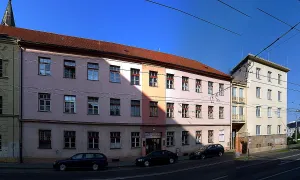
Today, Rybářská brána no longer stands as a physical structure but remains an important part of České Budějovice's history. The site where it once stood is now occupied by a modern hotel, formerly the location of the First Artistic Roller Mill. Although the gate itself cannot be visited, its historical significance and architectural evolution continue to captivate those interested in Gothic architecture and urban development.
Rybářská brána holds value as a testament to the architectural ingenuity and strategic considerations of its time. Its story invites reflection on how urban landscapes evolve and adapt over centuries. Visitors to České Budějovice are encouraged to explore this historical narrative, appreciating the layers of history that have shaped the city's identity.
Then and now
Drag the slider to compare how the landmark may have looked when it was built with the view today.

The historical appearance on the left is an AI-generated visualisation and serves as inspiration only.
Historical milestones
- 1872
- The gate was demolished to improve access to the mill, leading to the construction of the First Artistic Roller Mill.
Architectural development
Originally a low entry point to access water, Rybářská brána developed into a tall polygonal tower with a Gothic arch passage. It featured at least two floors with rectangular windows and stone armature for reinforcement. The top floor was covered by a high gabled roof with dormers on each side.
Historical events
1872: The gate was demolished to facilitate better access to the mill owned by the heirs of Vincenc Karabáček, under the pretext of improving access for the grain mill society. This led to the construction of the First Artistic Roller Mill on its site.
1995: A study was prepared by BAHA company for the restoration of both Rybářská and Pražská brány, but no investor was found, leaving the project unrealized.
Points of interest
- The Rybářská brána was originally associated with the Budějovice castle from as early as the 13th century, highlighting its long-standing historical significance in the region.
- Some speculate that the demolition of Rybářská brána in 1872 was not just for mill access but also to eliminate gate passage records, suggesting a strategic move by the grain mill society to streamline operations and reduce administrative burdens.
- The transformation of Rybářská brána from a simple entry point into a complex Gothic structure reflects the architectural advancements during King Václav IV's reign at the end of the 14th century, showcasing typical features like pointed arches and intricate stone work.
- After its demolition, the site where Rybářská brána once stood became home to the First Artistic Roller Mill, marking a significant shift in the area's use from medieval defense to industrial development.
- Despite no longer existing physically, Rybářská brána remains an important part of České Budějovice’s history, with its site now occupied by a modern hotel, continuing to captivate those interested in Gothic architecture and urban evolution.
Guide
This guide is narrated by a synthetic voice generated by artificial intelligence.
Show guide text
This text was created by artificial intelligence and has not been editorially reviewed. It may contain inaccuracies.
The Fishermen's Gate, in German Fischertor, was a Gothic secondary gate on the western edge of České Budějovice. It was also called the Miller's Gate, in German Mühltor. It no longer stands today.
When it was built is not entirely clear. Historian Tomáš Durdík acknowledges two possibilities. It could have been connected with the České Budějovice castle, meaning the thirteenth century. It could just as well have been built during the expansion of the city walls under Václav the Fourth, that is from the end of the fourteenth century.
At the beginning it was just a low gate that allowed access to water. Gradually it developed into a tall prismatic tower with a broken Gothic passageway. This passageway was closed by gates and perhaps also a drawbridge, which was called a comb. In size, the gate was similar to the Iron Maiden or Rabenštejn Tower. Above the passageway there were at least two floors with rectangular windows, and the edges of the tower were reinforced by stone corner masonry. The highest floor was covered by a high hip roof, with a dormer under a lean-to roof on each side. From the city side, a guardhouse was attached to the gate, and from the outer side there were slaughterhouses.
The end of the gate is connected with the neighbouring Přední mill, originally called Dvorský. The mill had been in operation since the end of the thirteenth century. On March twenty-first, eighteen seventy-two, the heirs of the deceased Vincenc Karabáček, siblings Antonín, Čeněk and Anna, sold it for sixty thousand guilders to a millers' association. The new owners removed the old building and that same year built the First Joint Art Cylinder Mill in its place. The hotel Budweis is in its building today.
At that time, the millers pushed through the demolition of the Fishermen's Gate with the city council. They cited better access to the mill as the reason. However, it is not known that the mill ever had any problems with the gate. Jan Schinko therefore suggested that it was something else. The guards at the gate recorded all passages, and by removing it the millers freed themselves from this inspection.
Around nineteen ninety-two, when one hundred and twenty years had passed since the demolition, there began to be talk of restoring the gate. In nineteen ninety-five, the BAHA company prepared a study for the restoration of the Prague Gate and the Fishermen's Gate. However, an investor was not found and the project was not carried out.
Businesses nearby
Do you run a restaurant, accommodation, shop, museum, rental, wellness or other visitor service near this monument? Show yourself directly to the people heading to it — this is how they will see you in the app and on the web:
Events nearby
Zdroj akcí: otevřená data měst a obcí ČR (Národní katalog otevřených dat) a kalendář akcí Národního památkového ústavu.
Nearby
Rybářská brána was located on the western edge of České Budějovice. The area is now occupied by a modern hotel, formerly the site of an artistic roller mill.
Visualizations and artistic views


The visualisations are generated by artificial intelligence and serve as inspiration.
Photos from the area
Real photos taken near the monument


Zdroj a licence jsou uvedeny u každého snímku.
Tips from visitors
No tips yet. Be the first!
Log in and add your tip.
Sources and literature
Photos: autor neuveden / Public domain, rozlišení zvýšeno umělou inteligencí — Wikimedia Commons. The author and licence also appear when you hover over the image.
Faktickým podkladem tohoto textu byl článek na Wikipedii, jehož autory jsou přispěvatelé Wikipedie. Článek je dostupný pod licencí CC BY-SA 4.0.
Location on the map
More monuments – České Budějovice
Show all in the municipality

Příběhy a pověsti
Legendy, pověsti a příběhy spjaté s touto památkou

Fotografie návštěvníků
Zatím žádné fotografie. Buďte první, kdo přidá fotografii z návštěvy!
Log in a přidejte svou fotografii nebo hodnoťte.
Za ověřenou návštěvu v aplikaci získáte víc bodů — poznáme podle GPS, že jste na místě.
Reviews and comments