






Pražská brána (České Budějovice) Gate
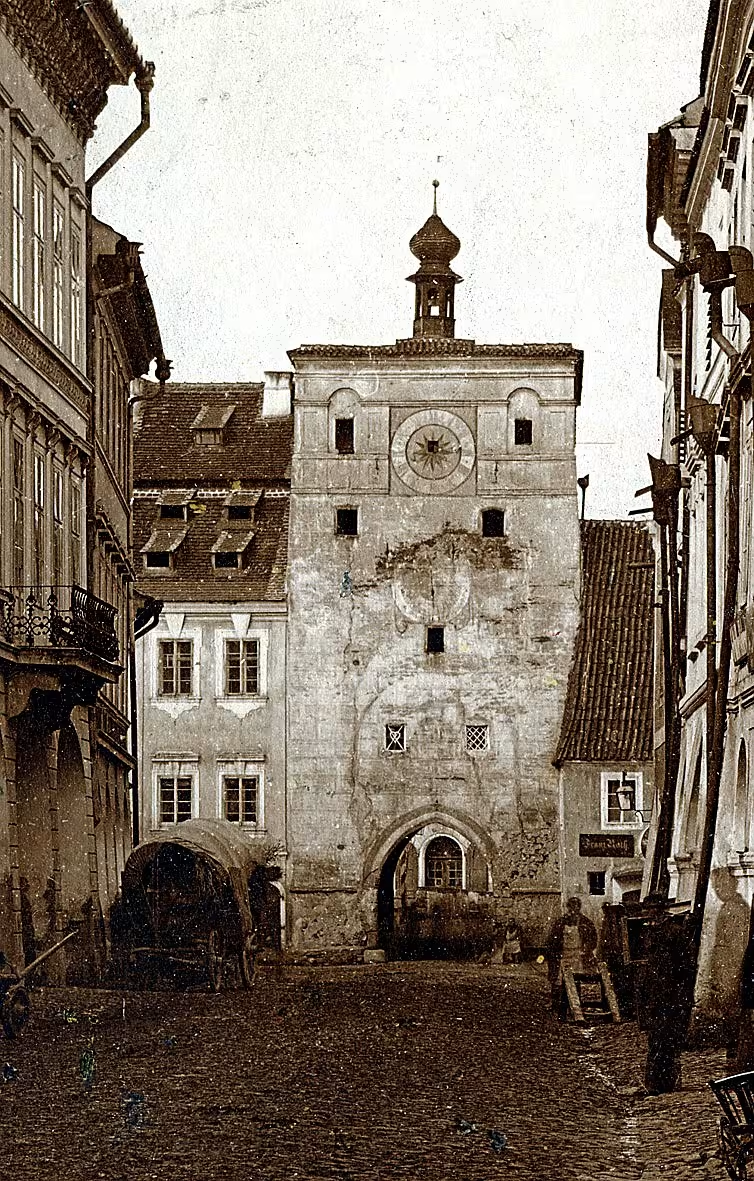
Objekt se nedochoval — na místě dnes nestojí. Následující text popisuje jeho historii, ne současnou návštěvu.
It can be assumed that the gate existed already in 1304, when the city resisted the attack of Albrecht I. Habsburg. The first written mention dates back to 1335. The tower structure with a rectangular base reached a width of nine metres, a length of 13 metres and a height of 18 and a third meters. The Gothic part was nine and a half meters long, later reconstruction extended it towards Mariánska Square. At the turn of the 15th and 16th centuries there were modifications; However, the alleged base stone of 1487 could not be verified.
In the 16th century, probably around 1558, when the bell was hung on the tower, Renaissance modifications were made. The entrance was guarded by a door at both ends of the passage, secured by a ridge. The Gothic portal was three and a half to four meters. The medium-sized right-angled windows used to serve as gun holes. The foothold was strengthened by a massive horseshoe barbak 45 meters long with its own Renaissance gate. As a result of the fire in 1641, the attics probably replaced the original roof. Practical elements were added in the 17th century: in 1605 hours on the facade, in 1607 with a solar dial.
The gate witnessed the key moments of urban history. In 1461 he entered the Prague Gate with the sound of fanfare and battalions King George of Podebrad with his wife Joan of Rožmitál. The dramatic event was January 13th, 1611, when the soldiers of the Bishop of Pasov entered the city. They used a cunning plan - a truck with goods had a drawbridge set up over the Mlyn sewer and hidden units invaded the city. Here was killed city scribe Shimon the shy of Trebnice. The first commemorative plaque in České Budějovice (original in the South Bohemia Museum, replica since 1995 on Krajinská 212 / 43) was placed on his memory. In 1631 the gates of Czech crown jewels passed; those in St. Nicholas' church survived the subsequent Saxon invasion and were returned to Prague in 1633.
In 1867, after Linecká and Vienna were demolished, the decision was made to break down the Prague Gate - the last city gate of Budějovice. City Hall justified the demolition of the need to air and heal the Landscape class. Barbadian was gradually disposed of, the Renaissance bridge section in 1880. The relaxed space was called "The Gate." In 1995, BAHA carried out a study on the renewal of the gate, but without the investor the project was not implemented.
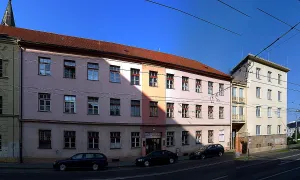
Today the gate was preserved by the west wall, to which Taxberger's house was added. The opposite house "At the Prague Gate" bears on the facade the stucco relief of the original gate and the building that preceded it - the pupil's house or the Roth house, which died in 1927. These latest tracks allow visitors to imagine how massive the city gates of České Budějovice were in the past.
Then and now
Drag the slider to compare how the landmark may have looked when it was built with the view today.
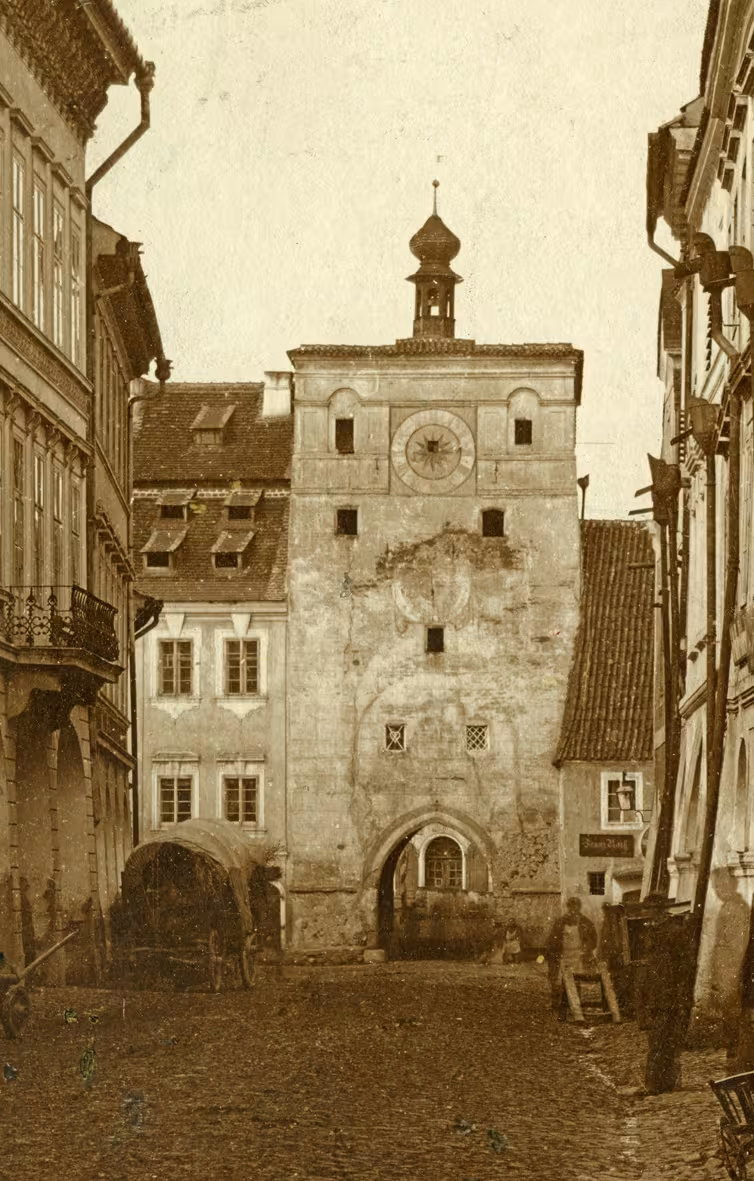
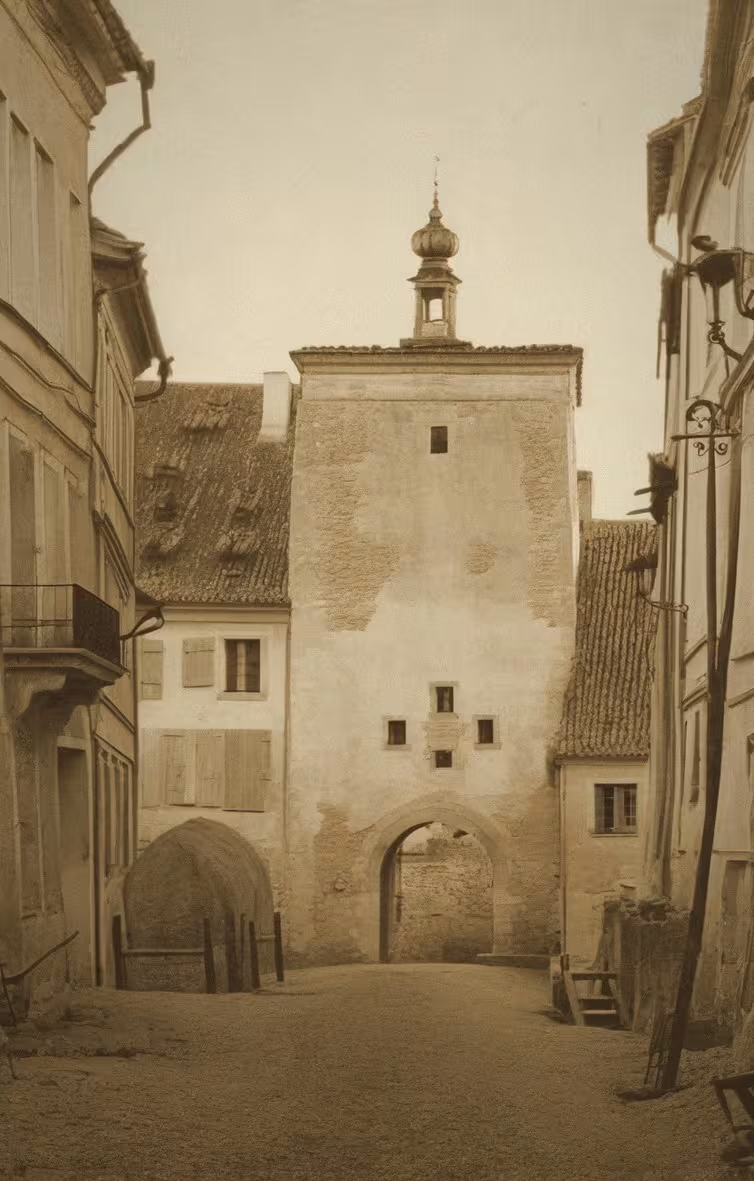
The historical appearance on the left is an AI-generated visualisation and serves as inspiration only.
Historical milestones
- 1304
- Respecting the attack of Albrecht I of Habsburg, the gate probably already existed.
- 1335
- First written mention of the Prague Gate.
- 1558
- Renaissance modifications and hanging the bell on the tower.
- 1605
- The location of the clock on the front of the gate.
- 1867
- The demolition of the Prague Gate.
Architectural development
Originally a Gothic gate with a height of 18.3 metres and a width of 9 metres was later extended towards Mariánska Square. In the 16th century, it underwent Renaissance modifications, including hanging the bell and building a barbadian. In the 17th century it was strengthened by baroque elements such as ravelines and clock on the facade. The materials included stone and wood, with the Gothic portal reaching a height of 3.5-4 metres.
Historical events
In 1304, Albrecht I of Habsburg resisted the gate.
In 1611 it was taken as the site of a tragic incident when the town scribe Shimon Slug of Trebnice was killed in the invasion of Pasovsky.
In 1631, Czech crown jewels were brought to the city via the Prague Gate, where they survived the Saxon invasion.
In 1867 the gate was demolished because of the modernization of Krajinská Street.
Points of interest
- The gate could have existed in 1304 when the city resisted the attack of Albrecht I of Habsburg, but the first written mention of it was from 1335.
- The Gothic part of the gate was nine and a half meters, later extended towards Mariánska Square.
- In the 16th century, probably 1558, a bell was hung on the tower and Renaissance modifications were made.
- In 1611, soldiers entered the city with the Bishop of Passover's drawbridge across the Mlyn sewer, killing the city scribe Simon Slug of Trebnice.
- In 1631 they passed through the gate of Czech crown jewels which survived the Saxon invasion and were returned to Prague in 1633.
Guide
This guide is narrated by a synthetic voice generated by artificial intelligence.
Show guide text
This text was created by artificial intelligence and has not been editorially reviewed. It may contain inaccuracies.
Welcome to Czech Budejovice. You just stopped at the north end of Krajin Street, in a place that in the past represented one of the most important points of the city. Even though there is no monumental structure before your eyes, which you could immediately touch, believe me, the space in which you are standing is filled with history. Do you feel the atmosphere of a place where people's lives once collided with the constant movement of people coming from outside? You are standing exactly where the Prague Gate once stood, an important symbol of the power, protection and trade of this city.
Let's go back in time together and try to reconstruct what was here. To understand the meaning of this place, we have to look deep into the Middle Ages. History tells us of troubled times when it was taken as an essential element for the survival of the city. Already in 1304, when the city had to face the attack of Albrecht I of Habsburg, the gate was probably already standing over the streets and served as the first line of defense. Although the first clear written mention of it appears only in 1335, its presence in the period events is almost certain. The Prague Gate was not just an ordinary passage; It was a gate that determined the rhythm of the city, which controlled the movement of goods and people and which was a symbol of urban autonomy.
Now pay attention to how this place has changed over the centuries. If you could look through time, you wouldn't see just one type of construction, but a fascinating blend of different architectural styles. Originally, it was a Gothic tower with a fixed rectangular base. This gothic part was impressive, it was over nine and a half metres tall, and over time it was further extended towards Mariánska Square, making the gate increasingly dominant in the urban landscape.
With the arrival of new epoch, the gate was changed along with the people who inhabited it. In the 16th century, namely around 1558, the gate passed through Renaissance modifications. Imagine that moment when the first bell of the new bell that was hung up on the tower spread out. That sound must have been a clear signal to the people back then that the city was alive, that time was passing and that the gate was still watching over their security. A hundred years later, in 1605, the gate was once again enriched with another detail, which added nobility to it - hours were placed on its facade. Imagine how people around here stopped to check on time while buyers, soldiers, and citizens of the city were passing by. Over time, baroque adaptations were added to these elements, which added another layer of beauty and complexity to the gate.
But now we have to look at what you see around you right now. The Prague gate as a whole does not exist anymore. Her era ended in 1867 when the gate was determined to demolish. It was a time of great change when cities had to adapt to a new way of life, wider streets and more modern movement. Even though the gate was removed, her legacy did not disappear entirely. If you look around, you can see traces of her left behind, especially in the form of a western wall. This wall is a silent witness of the ancient size and a reminder of how powerful this place was.
But there is also one interesting mystery that could think of you. How is it that we know about the gate from 1304 when it resisted attacks, but it doesn't appear in written records until 31 years later? This gap in history makes us think about how little of the reality at that time remains written down and how much history consists of invisible fragments. Could the gate have been built long before it got to the chronicle, or perhaps its existence was so obvious at the time that people didn't even have to record it? This ambiguity gives the place a hint of the mystery that we still feel.
But now we will not just keep you looking at what is missing. Instead, we invite you to continue your walk through this historic territory. Every other street you take and every wall you meet can lead you to the other stories that have taken place in these cities. The Prague Gate was only one of the many guards that once surrounded this city, but its spirit remains here. We wish you a pleasant continuation in discovering the beauty and secrets of Czech Budejovice. Take a look at the city, feel its rhythm and let yourself drift through the history that is present in every stone. Goodbye.
For kids
Imagine going back to the past to the city of České Budějovice. The city had a different name, but people lived here as they did today. There were markets, squares and narrow streets. And it was in one of these narrow sections where the Prague Gate was located.
It was like a small fortress protecting the city from raids and dangerous robbers. The city was full of life, people gathering in markets and churches. And the Prague Gate was the gateway to the city.
Businesses nearby
Do you run a restaurant, accommodation, shop, museum, rental, wellness or other visitor service near this monument? Show yourself directly to the people heading to it — this is how they will see you in the app and on the web:
Events nearby
Zdroj akcí: otevřená data měst a obcí ČR (Národní katalog otevřených dat) a kalendář akcí Národního památkového ústavu.
Visualizations and artistic views


The visualisations are generated by artificial intelligence and serve as inspiration.
Photos from the area
Real photos taken near the monument

Zdroj a licence jsou uvedeny u každého snímku.
Atmosphere of the place
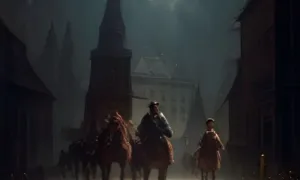
This atmospheric visualisation of the place and period was generated by artificial intelligence. It is not real footage of the location.
Tips from visitors
No tips yet. Be the first!
Log in and add your tip.
Sources and literature
Photos: Jan Gustav Richter / Public domain — Wikimedia Commons. The author and licence also appear when you hover over the image.
Faktickým podkladem tohoto textu byl článek na Wikipedii, jehož autory jsou přispěvatelé Wikipedie. Článek je dostupný pod licencí CC BY-SA 4.0.
Location on the map


Příběhy a pověsti
Legendy, pověsti a příběhy spjaté s touto památkou
Fotografie návštěvníků
Zatím žádné fotografie. Buďte první, kdo přidá fotografii z návštěvy!
Log in a přidejte svou fotografii nebo hodnoťte.
Za ověřenou návštěvu v aplikaci získáte víc bodů — poznáme podle GPS, že jste na místě.
Reviews and comments