



Tichá Fortress
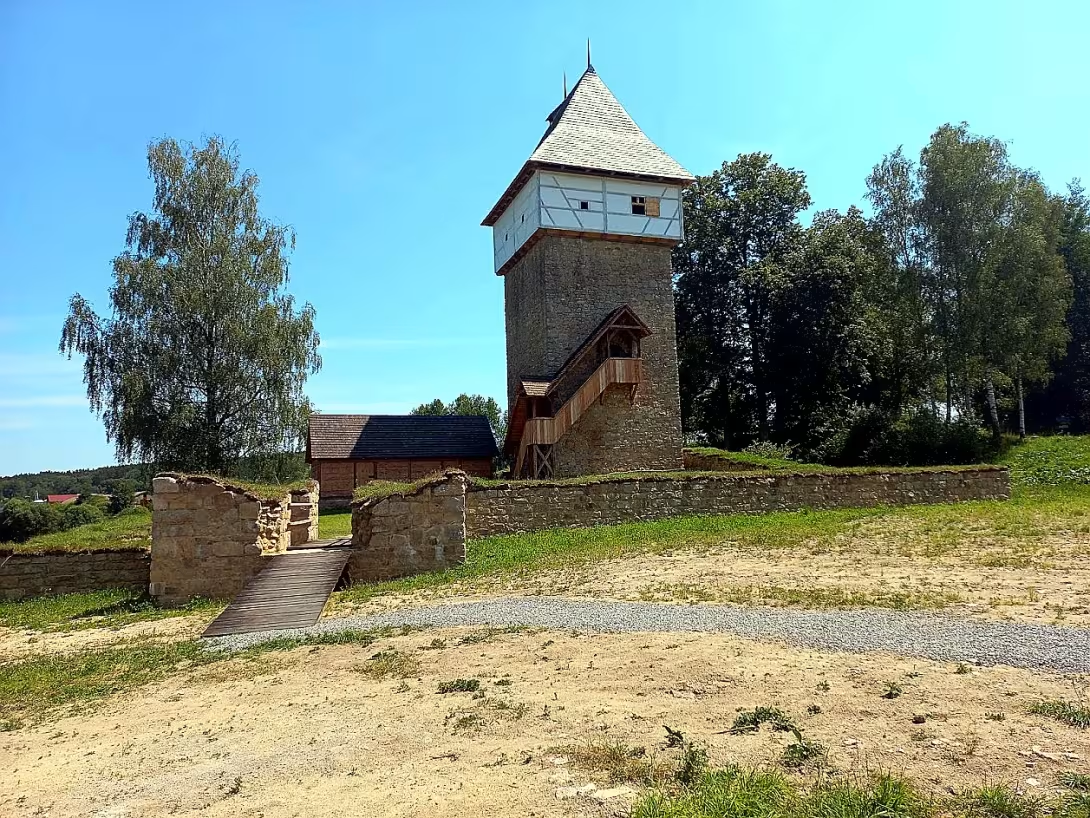
Tichá is a Gothic fortress from the 13th century, which stands on the shore of the same-name pond in the village Tichá near Lower Dvořiště in the district of Český Krumlov. The monument stands out with a preserved defensive tower. Thanks to its extraordinary resilience, it survived the attempt to fire in 1978 and represents the only construction of its kind in the Czech Republic, which was restored solely by historical methods.
There are few reports of the oldest history of the mansion. Its origin dates back to the 13th century, when intense colonization and development of noble settlements took place in Czech countries. The first written mention of the building dates back to 1360, when the fort belonged to John and Beneš from Velešín. That's when Peter and Jošt of Rožmberk asked for their will.
The fort features a square plan tower with dimensions 8.1 times 8.23 meters. Its walls are up to 3.5 metres thick, making it a massive fortification. The original entrance was on the first floor. The ground entrance was only demolished later when the tower was dismantled on a building block. The interior lighting was provided by shooting windows in the east and south walls. The fortress was surrounded in the past by a moat powered from the Hlovi pond. The archaeological survey revealed the foundations of another square tower.
In 1387 the fortress won Oldřich z Rožmberka. In the following centuries it was managed by purcrabs, among which Ojíř was listed in 1412 and between 1433 and 1454 Jan z Petrovic. In the 15th century, namely between 1471 and 1486, the captain of Čáp z Radonic had the decaying object repaired. Since 1541, the fortress was part of the Neo-hrad estate, which in 1620 was won by Karel Bonaventura Buquoy. After a series of fires in 1687, 1707 and 1789 Jan Buquoy had the fort rebuilt into a brewery.
The dramatic moment in modern history was 1978. At the time, the border guards tried to blow up the tower because it was near the border electric fence. Thanks to the extreme wall thickness, however, the construction resisted the destruction and was only damaged. In 2008 the building was purchased by the Association of Hrady in Malš together with the municipality of Dolní Dvořiště. The subsequent reconstruction, completed in 2021, included waste disposal, archaeological research and reconstruction using historical methods without modern tools. During the work was restored the paved floor and a new chisel roof was fitted with shingles.
Today, after a basic reconstruction cost approximately CZK 25 million, the fortress is open to the public. Since 2022 it has been part of the Czech-Austrian route Zemská cesta. Visiting this place offers an opportunity to see an authentic, restored Gothic architecture that is unique in the Czech environment. The fortress in Tiché shows the resilience of historical buildings and modern efforts to save cultural heritage.
Then and now
Drag the slider to compare how the landmark may have looked when it was built with the view today.
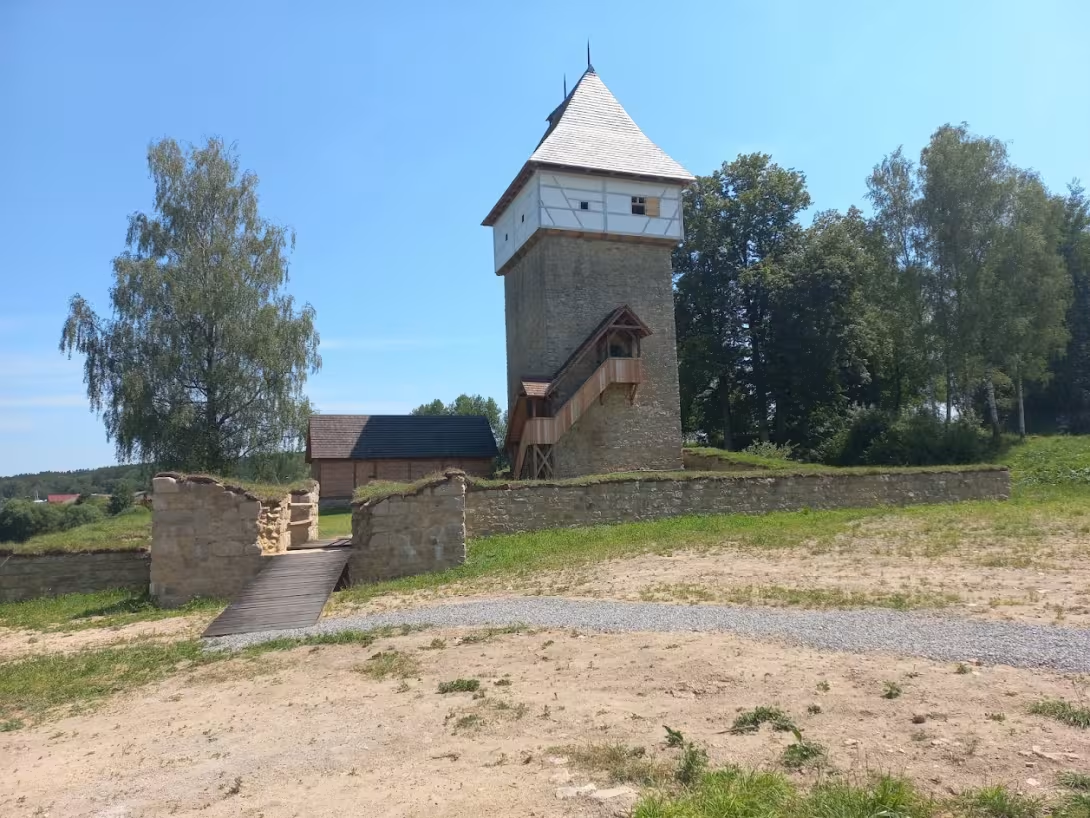
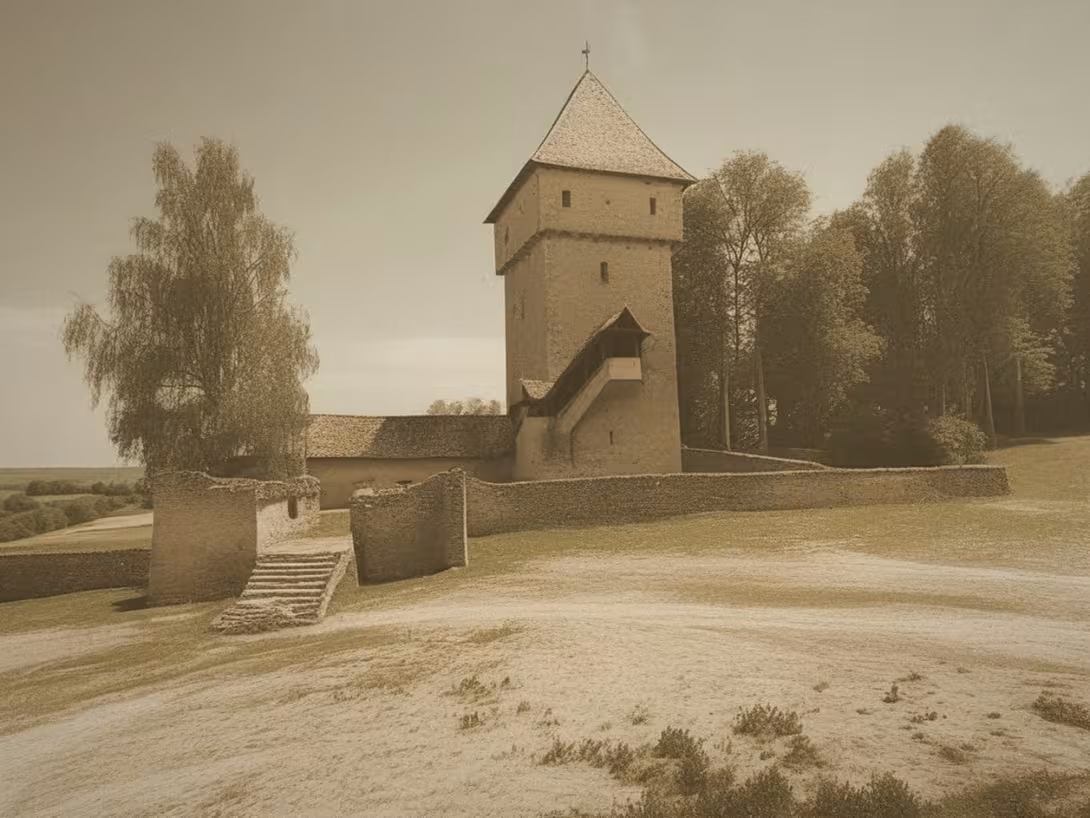
The historical appearance on the left is an AI-generated visualisation and serves as inspiration only.
Historical milestones
- 1360
- First written mention of the fort.
- 1789
- Rebuilding the fort into a brewery.
- 1978
- An attempt by border officers to blow the tower.
- 2021
- Completion of the basic restoration of the fortress.
Architectural development
The original Gothic tower with a square plan had walls up to 3.5 metres thick. In the 18th century it was adapted for the operation of the brewery. During the recent reconstruction, the paved floor was restored and a new shingles roof was fitted.
Historical events
1360: First written mention of the fort. 1789: Rebuilding the fort into a brewery. 1978: Failed attempt by border officers to blow the tower. 2021: Completion of the basic restoration of the fortress.
Owners
Jan and Beneš z Velešína (1360), Oldřich z Rožmberka (1387), House of Buquoys (from 1620), Association of Chateaux in Malš and the municipality of Lower Dvořiště (from 2008).
Points of interest
- The fortress stands out with a preserved defensive tower, which is the only construction of its kind in the Czech Republic restored by exclusively historical methods. - The tower has walls up to 3 feet thick, thanks to which in 1978 it resisted an attempt by border guards to remove it. - The original entrance to the tower was located on the first floor, while the ground floor entrance was demolished later when the tower was dismantled on the building stone. - After a series of fires in the 17th and 18th centuries, Jan Buquoy had the fort converted into a brewery. - When the reconstruction was completed in 2021, the paved floor was restored and a new chute roof was fitted with shingles.
Guide
Show guide text
This text was created by artificial intelligence and has not been editorially reviewed. It may contain inaccuracies.
Welcome to the fortress in the village Tichá. You are standing right in front of a place that carries the incredible weight of centuries and at the same time a strange, deep silence that gives this location its name. Take a look at this Gothic structure that stands before your eyes. While time tried to change her face, erase her or destroy her completely, this monument still resists and reminds us that some things are stronger than the century itself. Feel the atmosphere of this place where the fragrance of history, the weight of stone and the memories of people who once lived here, ruled or worked.
Let's go back deep into the past together to understand why this building was built in the first place. The roots of this fortress go back to the thirteenth century, until the safety and protection of the nobility were absolutely necessary. However, you will find the first clear written evidence of the existence of this place only in the year 13-60. At that time, the fortress was a symbol of power and stability for its owners. It wasn't just a building, it was a strategic point that affected life around here. Over the next century, however, the role of this place has changed. History is not linear, it's a constant stream of change. In the eighteenth century, namely the 1970s, there was a major transformation. This original defense house was converted into a brewery. Imagine the huge contrast. The place where the knights' steps were previously made and political disputes were settled became a place for craft, for production and for the economic life of the village. This era brought a new life to the fortress, but with time came its sad chapter. The building began to wither away, lose its functionality, and gradually fell into decay until the world seemed to forget about it.
But now pay attention to the architecture that now surrounds you. Focus your view mainly on the dominant element of the complex - the incredible defensive tower. It is a truly unique one that you would find very difficult to find throughout the Czech Republic. This tower excels by being restored exclusively by historical methods. This means that no modern materials were used to restore it, which would have disrupted its original character, but everything was going the way the builders would have done at the time of its creation. If you look at its massive walls, try to realize their incredible thickness. They're up to three and a half meters. This mass is not random. It's proof of the medieval need to create an impenetrable barrier. And it was this thickness of the walls that became a rescue for the whole memory in later years. Notice also the structure of the building. The original entrance to the tower was not located on the ground floor, as is customary for ordinary buildings. For security reasons, it was on the first floor. This had to require special measures to ensure that only those who were called up could enter the tower and that the enemy did not have easy access to its internal spaces.
This fortress is not just a set of stone blocks, but it is interwoven with stories of particular people whose names are bound to this place. Over the centuries, there have been people from major families. We can mention here John from Velešín or Beneš from Velešín, who were key figures in this area. In history there are also names associated with the most powerful noble families such as Oldřich z Rožmberka. This link to powerful families shows how important this place was for political and social order at the time. In the history of the fortress there are also figures such as Ojíř, Jan z Petrovic or Čáp z Radonic. Each of these names represents a different chapter, a different era, and a different way that people perceived this place. Later, Karel Bonaventura Buquoy or Tomáš Durdík also moved here. Each of them contributed to the fact that this monument carries within it layers of different fates and times.
However, we must now touch one of the most dramatic and fascinating moments in the recent history of this place, which of you may cause special feelings. Let's approach the year one thousand nine hundred seventy-eight. At that time, the situation in this area was quite different from today. The fortress was located in the immediate vicinity of the Iron Curtain, a border that was a symbol of a divided world and constant tension. As part of an attempt to take off, the border guards at the time tried to damage the tower. Imagine the incredible power and tension that existed at that time. The shot aimed directly at this historic monument was an act that could have meant its final end. But this is where the incredible strength and resilience of architecture showed up. Thanks to the massive walls of three and a half meters thick, the tower resisted and stood still. This moment is a reminder of a time when this monument was at risk not only because of its age, but also because of the political tension that ruled at that time.
Fortunately, however, the story of the fort in Silent does not end in tragedy. On the contrary, after years of neglect and danger, a new, more promising story began to be written. Thanks to the tireless efforts of the Castle Association in Malš and the village of Dolní Dvořiště, this monument has begun to be reborn. Their work was crucial to making this Gothic fortress not just a pile of wreckage, but a living witness to history. The process of recovery was long and patient, and its peak was the year two thousand twenty-one when the process of basic recovery was completed. It is through this effort that you are able to stand here today and perceive the beauty and strength of this place.
We now urge you to continue your search and find your own moments of silence and wonder. Explore the surroundings, perceive the atmosphere, and let the history that still breathes here consume you. Every stone and every wall here has a story waiting to be discovered. Thank you for spending this moment with us and for choosing to visit this special place. We wish you a pleasant further discovery.
Tips for visitors
The best time to visit is during sunny days from late spring to early autumn. During this period you will enjoy the historic atmosphere of the fortress and surrounding nature, with the light falling on the Gothic masonry creating ideal conditions for shooting details of architecture.
If you use public transport, we recommend checking the current connection to the village of Lower Dvořiště in the national search engine, as the frequency of connections may vary.
For your trip, take with you fixed shoes suitable for movement in and around the historical building. Don't forget the camera, the best pictures are taken from the exterior in the morning or late afternoon sun, which highlights the structure of the stone masonry.
For families with children the location is suitable as a stop on a trip to nature. Children can explore the surroundings of the fortress and ponds, while the journey is easy and offers plenty of space to move in the fresh air.
In the immediate vicinity you can visit the pond Tichá and the pond Hlové, which offer quiet places to relax. For more active visitors, the ideal choice is a walk along the Czech-Austrian trail Zemská cesta, which leads by picturesque landscape near the village of Lower Dvořiště.
Frequently asked questions
Can the monument be visited?
Some buildings of this kind are open for guided tours, others serve another purpose or are privately owned. We have not verified whether and when this monument is open – please ask the operator.
What are the opening hours and admission?
We have not verified the opening hours or admission. Current information is published by the operator.
Where is the monument?
Location: Tichá, Jihočeský kraj. The map on this page shows the exact spot.
Why is the monument protected?
It is listed in the Central List of Cultural Monuments of the Czech Republic as a cultural monument (register no. 1000152233).
Businesses nearby
Do you run a restaurant, accommodation, shop, museum, rental, wellness or other visitor service near this monument? Show yourself directly to the people heading to it — this is how they will see you in the app and on the web:
Nearby
Pond Tichá, pond Hlové, village Lower Dvořiště, Czech-Austrian trail Earth Road.
Accommodation nearby
Trips and activities nearby
Guided tours, tickets and activities nearby from GetYourGuide
Affiliate link: if you buy from the partner, we may receive a commission. The price for you does not change.
Search tours and activities →Themed route
1.Tichá (fortress) - Historical landmark. The main destination of the trip, where you can admire the remains of the original fortress. 2. Pond Tichá - Water area. A place for a short stop and relaxation in nature. 3. Pond Grove - Water area. Another picturesque pond in the immediate vicinity of the village. 4. Earth Road - Path. An international route along the Czech-Austrian border. 5. Lower Court - Municipality. Final stop in the neighbouring village.
Seasonal recommendations
Spring: In the spring period, the Tichá fortress is transformed into a haven full of life and new beginnings. The sun rays illuminating the walls of the old chateau give the impression of a secret that is accompanied by a flowering surrounding area. Green meadows and first flowers create an unforgettable atmosphere, ideal for visiting. It is advisable to visit the fort at the beginning of spring, when it is not too hot yet and the crowds will not reach it. It is recommended to wear clothes according to temperature - light gloves and short coat can be useful in colder wounds.
Summer: During the summer period Tichá grows a fortress full of life, where the surroundings are green and flowering. Sunshine brings warm colors to ancient stone walls, creating ideal conditions for photography. More visitors can gather here in the main summer season, so it is a good idea to come earlier in the afternoon to explore the memory in a quieter atmosphere. Remember the sun protection - short gloves and hat are necessary as well as sufficient amount of drinking water.
Autumn: In the autumn period Tichá gains the fortress of melancholic charm. Leaves on trees are transformed into golden and red shades, giving the surroundings unique beauty. The sunny days in this period illuminate the fortress with fine rays that decorate roofs and walls. You would visit her best at the beginning of autumn, when it is not too cold yet and the crowds will not get there. Wear a warm coat and shoes suitable for dry and sometimes wet soil to make your visit as comfortable as possible.
Winter: Winter Tichá fortress offers a completely different feeling - peace and mystery. The sunny days illuminate the stones in bright colours, while snow can provide the area with a romantic atmosphere. For winter it is recommended to come at a calmer time when there are fewer visitors and the opportunity to explore the memory at its own pace.
Visualizations and artistic views


The visualisations are generated by artificial intelligence and serve as inspiration.
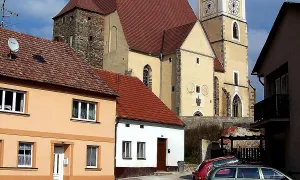
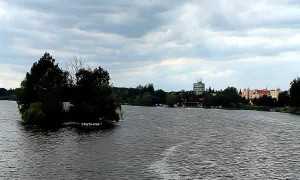
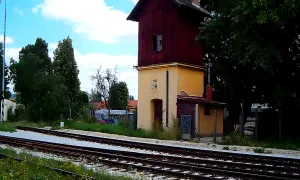
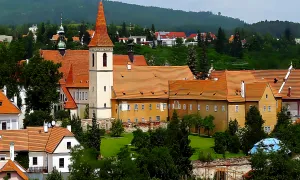
Photos from the area
Real photos taken near the monument

Zdroj a licence jsou uvedeny u každého snímku.
Tips from visitors
No tips yet. Be the first!
Log in and add your tip.
Sources and literature
Photos: Svenkaj / CC BY-SA 4.0 — Wikimedia Commons. The author and licence also appear when you hover over the image.
Faktickým podkladem tohoto textu byl článek na Wikipedii, jehož autory jsou přispěvatelé Wikipedie. Článek je dostupný pod licencí CC BY-SA 4.0.
Location on the map

Příběhy a pověsti
Legendy, pověsti a příběhy spjaté s touto památkou

Fotografie návštěvníků
Zatím žádné fotografie. Buďte první, kdo přidá fotografii z návštěvy!
Log in a přidejte svou fotografii nebo hodnoťte.
Za ověřenou návštěvu v aplikaci získáte víc bodů — poznáme podle GPS, že jste na místě.
Reviews and comments