






Vila Pod Doubravkou 10 Villa
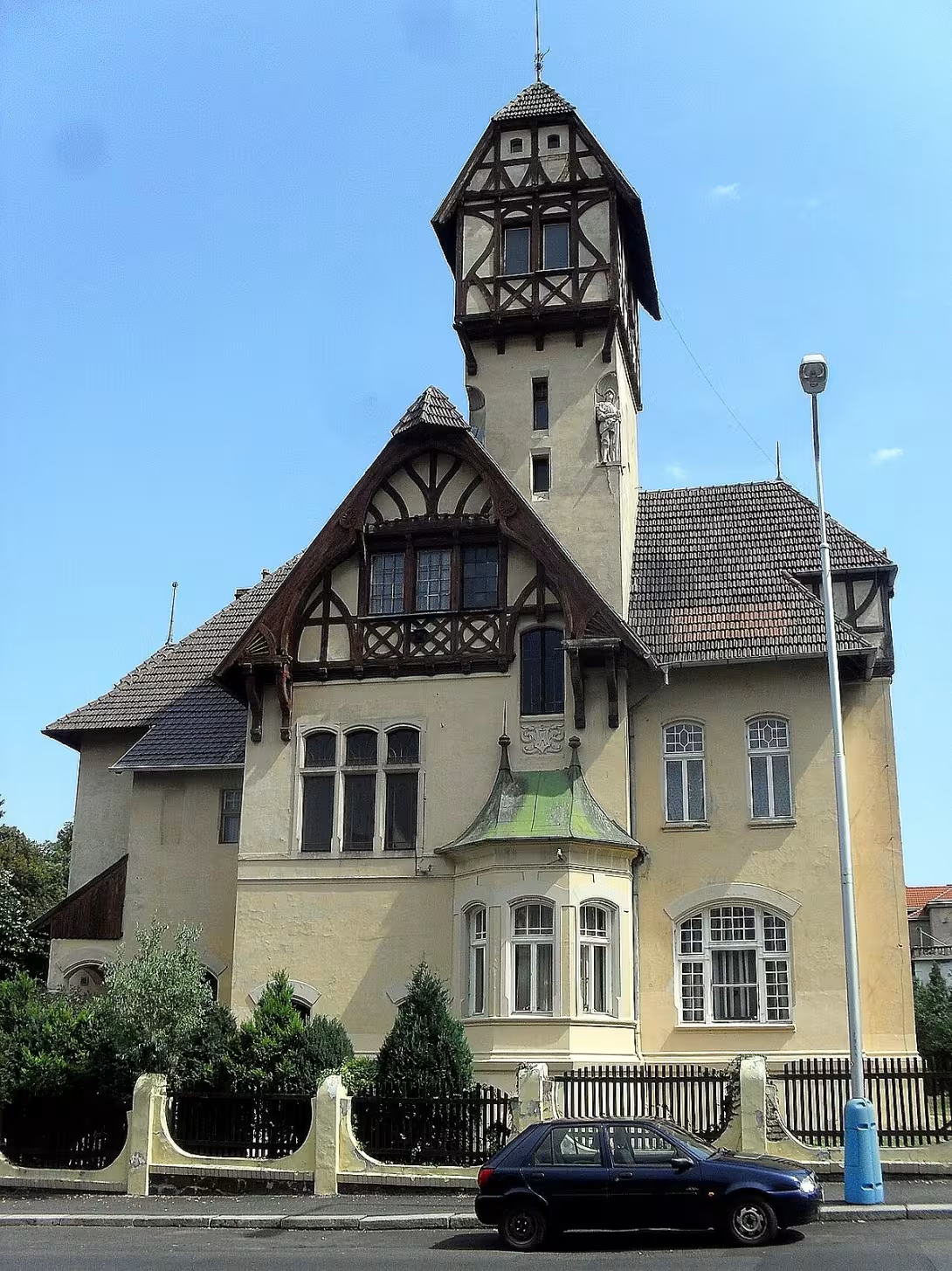
Vila Pod Doubravkou 10, also known as Dům s rytířem or Villa Gustava Jirsche, is a notable architectural landmark in Teplice, Czech Republic. Built between 1900 and 1906 by architect Gustav Adolf Jirsch, the villa features a unique blend of Heimatstil and Secessionist influences. It includes a striking 25-meter tower with battlements and a knight's statue at its peak, reminiscent of German castle architecture. The design also incorporates segmented windows, decorative stucco work, and stained glass interiors, showcasing early 20th-century architectural innovation.
Constructed during Bohemia's cultural and architectural transformation, the villa reflects the Heimatstil movement's popularity in northern Bohemia, which emphasized regional styles and traditions. Concurrently, Secessionism introduced modernist elements into architecture. Inspired by these movements, Gustav Adolf Jirsch designed Vila Pod Doubravkou to harmonize traditional and contemporary styles. The influence of villa Schwarzer in Kandřín-Kozlí, Poland, is evident, suggesting architectural inspiration or borrowing.
Architecturally, the villa combines Heimatstil with Secessionist elements like segmented windows and decorative stucco work. Its 25-meter tower with battlements and a knight's statue enhances its castle-like appearance. These choices reflect Jirsch's skill in integrating diverse influences into a cohesive design.
The villa is located at the corner of Pod Doubravkou and Josef Suka streets in Teplice, historically known as Schlossbergerstraße (Doubravská) and Beethovenstraße (Beethovenova). Its strategic location adds to its prominence within the town.
Today, Vila Pod Doubravkou 10 remains a significant cultural and architectural site in Teplice. Its unique style blend and historical importance make it an intriguing destination for architecture and history enthusiasts. The villa's distinctive features, such as the towering knight statue and intricate design elements, continue to captivate visitors.
Vila Pod Doubravkou 10 stands as a testament to early 20th-century Bohemian architectural creativity and cultural influences. Its combination of Heimatstil and Secessionist styles offers a unique glimpse into the past, making it valuable for historical study and aesthetic appreciation. Visitors are invited to explore this remarkable villa and experience its enduring charm firsthand.
Historical milestones
- 1900
- Construction of Vila Pod Doubravkou 10 began.
- 1906
- Completion of Vila Pod Doubravkou 10 by Gustav Adolf Jirsch.
Architectural development
The villa was designed by Gustav Adolf Jirsch, who incorporated a mix of architectural styles. The dominant Heimatstil is complemented by Secessionist elements such as the segmented windows and decorative stucco work. A prominent feature is the 25-meter tower with battlements, topped by a knight's statue.
Historical events
1900-1906: Construction of Vila Pod Doubravkou by Gustav Adolf Jirsch.
Points of interest
- Vila Pod Doubravkou 10, also known as Dům s rytířem or Villa Gustava Jirsche, is a notable architectural landmark in Teplice, Czech Republic. - Built between 1900 and 1906 by architect Gustav Adolf Jirsch, the villa features a unique blend of Heimatstil and Secessionist influences. - The design includes a striking 25-meter tower with battlements and a knight's statue at its peak, reminiscent of German castle architecture. - Architecturally, it combines Heimatstil with Secessionist elements like segmented windows and decorative stucco work. - Vila Pod Doubravkou 10 remains a significant cu
Guide
Show guide text
This text was created by artificial intelligence and has not been editorially reviewed. It may contain inaccuracies.
Welcome to Teplice. Please take a moment to settle in and look around you. You are standing before one of the most striking and eclectic architectural landmarks in the city: Vila Pod Doubravkou 10. As you first lay eyes on this building, you might feel as though you have stepped out of the modern street and into a romanticized vision of the past. It is a structure that refuses to blend in, demanding your attention with its bold silhouette and its peculiar, almost fairytale-like atmosphere. Take a deep breath and let your eyes wander over the facade, noticing how the building seems to tell a story of ambition, art, and a deep love for architectural experimentation.
To understand why this villa looks the way it does, we have to travel back to the very beginning of the twentieth century. The construction of Vila Pod Doubravkou 10 began in 1900, a time of great transition in European art and architecture. This was an era where the rigid rules of the past were being challenged by new, flowing movements, and architects were eager to leave their personal mark on the landscape. The man behind this vision was Gustav Adolf Jirsch, a prominent local architect who decided to create a residence that would serve as both a home and a testament to his professional skill. For six years, from 1900 until its completion in 1906, the site was a hive of activity as Jirsch meticulously brought his complex plans to life.
Now, I invite you to look closer at the architectural style. If you feel a sense of contradiction in the design, you are seeing exactly what Gustav Adolf Jirsch intended. The villa is a fascinating blend of two very different influences: Heimatstil and the Secessionist movement. On one hand, you have the Heimatstil, or the homeland style, which sought to evoke a sense of regional identity and traditional comfort, often drawing inspiration from rural architecture and the natural landscape. On the other hand, you see the influence of the Secession, the early twentieth-century movement that broke away from academic traditions to embrace organic lines, stylized ornamentation, and a modern sense of elegance. When you look at the building, try to spot where the cozy, traditional elements of the homeland style meet the daring, avant-garde flourishes of the Secession. It is this tension between the old and the new that gives the villa its unique character.
Now, let us direct your attention upward. The most arresting feature of the property is undoubtedly the tower. Standing at an impressive twenty-five meters, it dominates the surrounding area and gives the villa a presence that is more akin to a castle than a private residence. As you gaze up, notice the top of the tower. You will see battlements, those notched parapets typically found on medieval fortifications. This choice was entirely intentional, designed to evoke a sense of nobility and strength. But the true crown of the tower is the statue of the knight. This figure, perched high above the street, is the defining symbol of the building. It is because of this striking detail that many locals and visitors refer to the property not by its address, but as Dům s rytířem, or the House with the Knight. The knight stands as a silent guardian over Teplice, adding a layer of mystery and romanticism to the entire estate.
As you stand here, imagine Gustav Adolf Jirsch himself walking through these doors. For an architect, building one's own home is the ultimate creative freedom. There is no client to please, no budget committee to satisfy—only the vision of the creator. Every curve of the wall and every detail of the tower was a choice made by Jirsch to express his identity. He wanted to create a space that was not just a shelter, but a piece of art. The villa became a physical manifestation of his architectural philosophy, blending the security of tradition with the excitement of the modern age. While the historical records of the people who lived here after him may be less prominent, the spirit of Jirsch remains embedded in the very stone and mortar of the building.
There is something almost enigmatic about the knight atop the tower. Why a knight? In the early 1900s, there was a widespread fascination with the chivalric codes of the Middle Ages, a longing for a time of honor and heroism amidst the rapid industrialization of the world. By placing a knight on his roof, Jirsch was not just decorating his home; he was making a statement about the values he admired. The knight transforms the villa from a mere piece of real estate into a landmark of imagination. It invites us to wonder about the stories that might have inspired the architect and the dreams he had while sketching the plans for this towering spire.
As you continue to observe the villa, I encourage you to walk slowly around the perimeter. Notice how the light hits the different surfaces of the facade and how the tower changes its profile as you move. Feel the atmosphere of this corner of Teplice, where the elegance of the Belle Époque still lingers in the air. The Vila Pod Doubravkou 10 is more than just a blend of Heimatstil and Secession; it is a reminder of a time when architecture was used to evoke emotion and spark curiosity.
Before you move on to your next destination, take one last look at the knight watching over the city from his twenty-five-meter perch. It is these small, daring details that make the architectural history of Teplice so rich and diverse. Whether you see it as a whimsical fantasy or a sophisticated architectural study, the Villa Gustava Jirsche remains a testament to the boldness of the human spirit and the desire to create something truly timeless.
Thank you for joining me for this brief exploration of Vila Pod Doubravkou 10. I hope you enjoyed discovering the secrets of the House with the Knight. Please feel free to linger a while longer and take a few photographs of the tower before you continue your journey through the beautiful streets of Teplice. Enjoy the rest of your walk and the many other treasures this city has to offer. Farewell for now.
Businesses nearby
Do you run a restaurant, accommodation, shop, museum, rental, wellness or other visitor service near this monument? Show yourself directly to the people heading to it — this is how they will see you in the app and on the web:
Accommodation nearby
Trips and activities nearby
Guided tours, tickets and activities nearby from GetYourGuide
Affiliate link: if you buy from the partner, we may receive a commission. The price for you does not change.
Search tours and activities →Themed route
Tematický Výletní Trasa z Teplic
1. Vila Pod Doubravkou 10 (Vila) Start your tour at this historic building known for its architectural design and beautiful gardens. Vila Pod Doubravkou 10 offers visitors a view of the tranquil countryside, making it an ideal place to relax and learn about local history.
2. Okolní Lesy (Příroda) Just a short distance from the villa are picturesque forests that provide a perfect spot for a leisurely walk or picnic. These green areas offer peace and an opportunity to observe local fauna and flora, making it an ideal place to rest after visiting the villa.
3. Historické Sídliště Teplice (Městský Výlet) Follow the route towards the historic part of the city of Teplice, where you'll find ancient houses and architectural landmarks. Explore streets rich in history and enjoy the atmosphere of traditional urban life in Teplice.
4. Místní Trhy (Kulturní Zážitek) Visit one of the local markets to learn more about regional specialties and traditions. These places are full of life and offer a chance to explore local gastronomy and artisan products.
5. Plavecké Středisko (Sportovní Aktivity) Conclude your tour at the swimming center, which offers opportunities for relaxation or active entertainment. This spot is ideal for those who want to unwind by the shore or watch sporting events.
This route offers a variety of experiences from historical and cultural to natural and active, allowing you to fully explore the area around Vila Pod Doubravkou 10.
Seasonal recommendations
Spring brings a sense of renewal to Vila Pod Doubravkou 10. The surrounding greenery begins to wake up, and the soft, morning light highlights the architectural details of the villa. It is a peaceful time to appreciate the budding nature and the fresh atmosphere. Visitors should wear layered clothing to adapt to fluctuating temperatures and consider visiting during the weekdays to enjoy a quieter experience.
During the summer, the villa is surrounded by lush, deep green foliage, creating a vibrant and lively atmosphere. The high sun provides excellent visibility for photography, though the midday heat can be intense. To avoid the peak tourist crowds of the main summer season, it is best to arrive early in the morning. Lightweight, breathable clothing is highly recommended for comfort.
Autumn transforms the area around Vila Pod Doubravkou 10 into a palette of gold and orange. The atmosphere becomes more nostalgic and serene, especially during the misty mornings or the golden hour of the late afternoon. Since the weather can be unpredictable, waterproof footwear and a light jacket are essential. This is an ideal time for those seeking a contemplative visit away from the summer rush.
In winter, the villa takes on a stark, elegant appearance, often accented by frost or a blanket of snow. The atmosphere is quiet and intimate, offering a different perspective on the historical site. Visitors must dress in warm, thermal layers to withstand the cold. It is also advisable to check for shorter winter opening hours before planning the trip to ensure the site is accessible.
Visualizations and artistic views


The visualisations are generated by artificial intelligence and serve as inspiration.
Photos from the area
Real photos taken near the monument


Zdroj a licence jsou uvedeny u každého snímku.
Tips from visitors
No tips yet. Be the first!
Log in and add your tip.
Sources and literature
Fotografie: Qwertz0451 / CC0 — Wikimedia Commons. The author and licence also appear when you hover over the image.
Faktickým podkladem tohoto textu byl článek na Wikipedii, jehož autory jsou přispěvatelé Wikipedie. Článek je dostupný pod licencí CC BY-SA 4.0.
Location on the map
Příběhy a pověsti
Legendy, pověsti a příběhy spjaté s touto památkou
Fotografie návštěvníků
Zatím žádné fotografie. Buďte první, kdo přidá fotografii z návštěvy!
Přihlaste se a přidejte svou fotografii nebo hodnoťte.
Za ověřenou návštěvu v aplikaci získáte víc bodů — poznáme podle GPS, že jste na místě.
Reviews and comments