



Vozovna Střešovice Museum
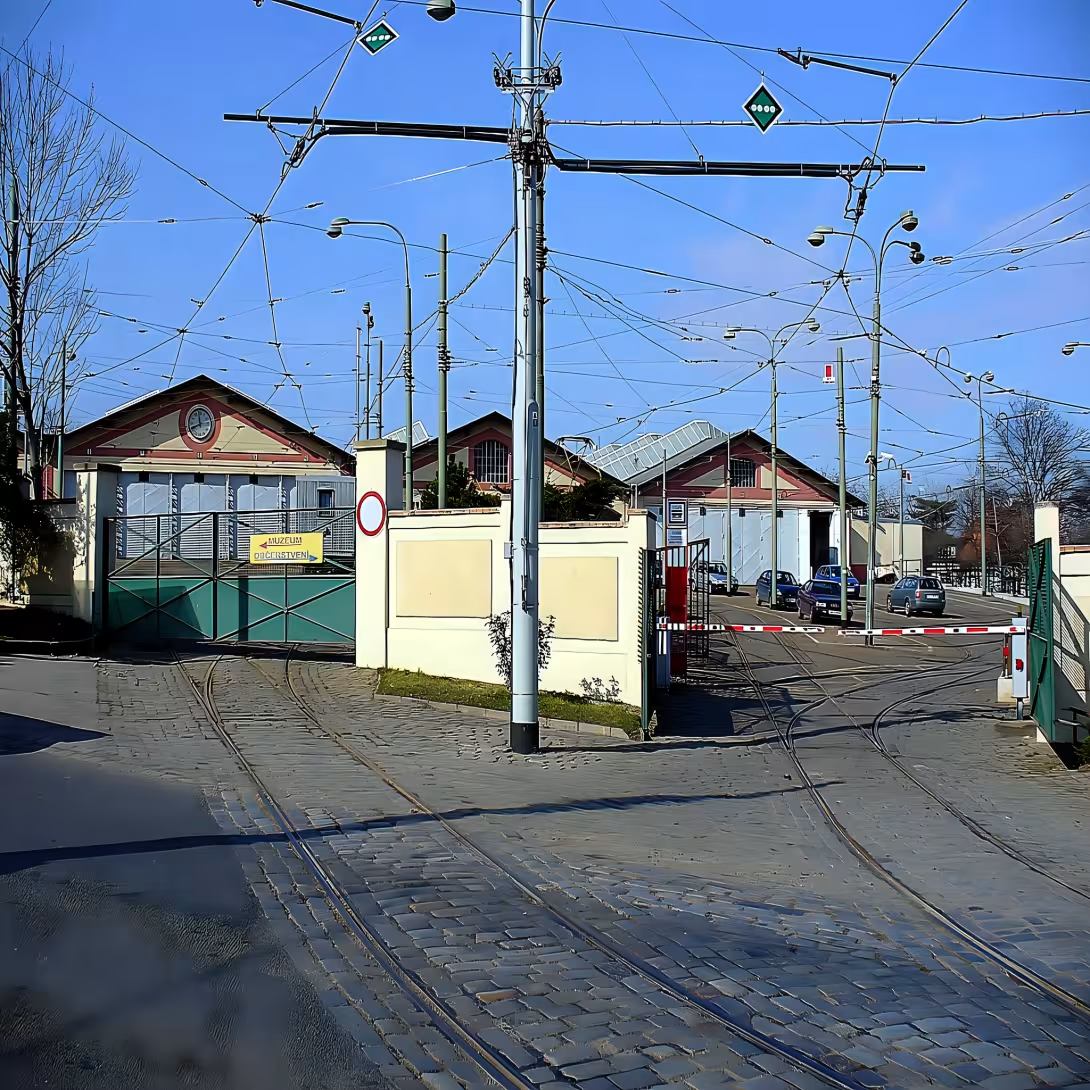
Vozovna Střešovice is a historical public transport museum in Prague. It is located in the eastern part of Střešovice near the intersection of the streets of Patočková and Sugar Varnický. The building was created in the early 20th century. This unique technical monument was declared a cultural monument on 12 December 1991.
The development of the road station was linked to the development of Prague electric tram transport. Originally, the building was to be built in U airport waterworks, but one of the owners of the land was prevented by construction because of the price too high. The project was subsequently moved to Střešovice, where the Ministry of Railways approved it on 4 July 1908. The construction was completed on 1 September 1909. The operation started on 24 October of the same year following the extension of the line from the station Bruska.
The road house belonged to a series of buildings according to a uniform pattern, where also areas in Kosíří and Strašnice fell. Originally, it was a three-boat structure with a wooden supporting structure and an eternite cover. Each ship had five tracks. The first two were at the same height, while the third was 1.2 meters below. Nine tracks have been underwritten for maintenance purposes. Behind the first ship was a locksmith's workshop and background. Between 1923 and 1925, the fourth ship, which was walled with a wooden roof and had all the tracks under the cellar, arrived. In 1930-1931, older parts were extended and their roofs replaced by steel structures. The capacity of the road was thus increased to 129 cars. The original wooden folding doors were gradually replaced by steel openers.
There is also a separate administrative building with offices and service apartments. In 1923, a firehouse was built, to which a waiting room, a station and a doorman were added in 1924. While the waiting room was converted into a fire depot in 1938, the space of the former armory today serves as a restaurant.
The carriage plant, which falls under the Transport Company of Prague, has undergone several operational changes over the years. Since 28 August 1936 the first two tracks of the first ships were reserved for trolleybuses, later the trolleybus track was added to the third track. Trolleybus cars were left here until 1 September 1959. In the mid-1950s there were modifications to the track for new T-series trams and in 1965 the first Tatra T3 cars appeared. The railway yard in front of the road station was converted into a capacity Karlovy Vary outage with increased tram band in the years 1959-1960.
Since September 1992, the yard has not served normal operation. Currently, the City Public Transport Museum and the Center of Contract Tours are located here. The building serves as a depot for historical trams of lines 41 and 42, also for vehicles of the Tatra T2 and T3 type that operate the nostalgic line 23. For museum needs there is a trolleybus track on the fourth track, which is used for handling exhibits and short tests.
Vozovna Střešovice represents a valuable archive of the technical development of Prague transport in the original authentic environment. Visiting this museum offers a direct insight into the history of urban mobility.
Then and now
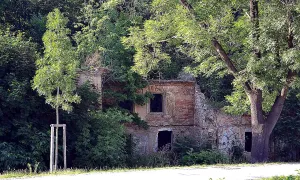
Drag the slider to compare how the landmark may have looked when it was built with the view today.
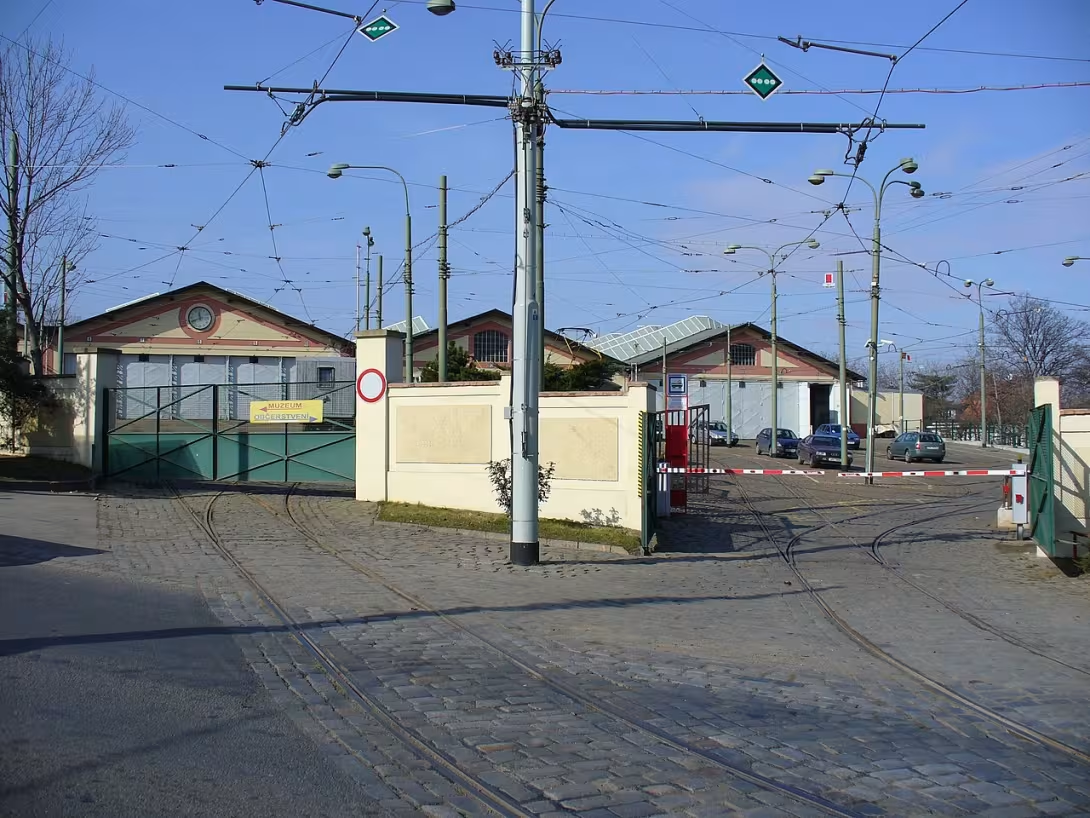
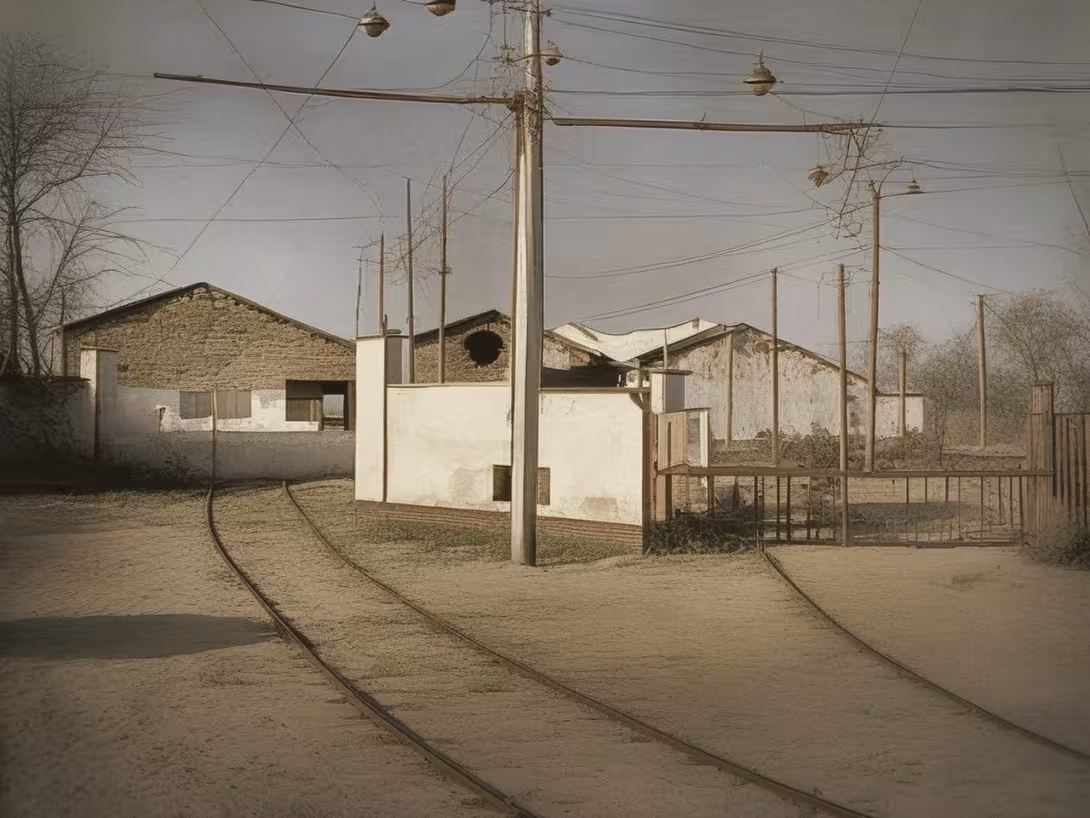
The historical appearance on the left is an AI-generated visualisation and serves as inspiration only.
Historical milestones
- 1909
- Completion of construction and start of operations
- 1923
- Building a firehouse, now serving as a restaurant
- 1936
- Reservation of first and second tracks of first ships for trolleybuses
- 1991
- Declaration for cultural monument
Architectural development
Originally a three-boat building with wooden structure and eternite cover. In 1923-1925 the fourth ship was added and in 1930-1931 the older ships were extended and their roofs replaced by steel structures. The original wooden folding doors were gradually replaced by steel openings.
Historical events
24 october 1909 start-up of road operations; 12 december 1991 declaration for cultural heritage; september 1992 end of normal operation and transformation into a museum.
Owners
Transport business in Prague
Points of interest
- The building was founded in the early 20th century and was declared a cultural monument in 1991. - Originally, the construction was to be in U airport waterworks, but the high price of the land moved the project to Střešovice. - Architecturally it belonged to a series of constructions according to a uniform pattern together with areas in Košíří and Strašnice. The space of the former firehouse today serves as a restaurant. - Since September 1992, the road does not serve ordinary traffic and a public transport museum is located here.
Guide
Show guide text
This text was created by artificial intelligence and has not been editorially reviewed. It may contain inaccuracies.
Welcome to one of the most beautiful parts of Prague. You're standing in front of a building that keeps the spirit of old times and sounds that once accompanied the daily life of thousands of citizens of this city. The Vozovna Střešovice stands before you. The first impression of this place is fascinating because time has stopped here. Take a look at this building, which today serves as a Public Transport Museum. It's a place where technology, history and nostalgia meet. You see the calm that exists on the premises today, but let's try to move back in time more than a hundred years together, to a time when there was a place where the brakes were blowing and the wheels moving around.
Let us now look at how this monument was created and why it was found here. We are at the beginning of the twentieth century, namely in the year one thousand nine hundred and nine, when the construction was completed and its full operation started. At that time, the city grew sharply and the need for an efficient transport system was huge. The interesting thing, however, is that this road was not supposed to be in Rostovice at all. The original plans put her on the street at the airport water station. So why did the project move here? The answer is very pragmatic and human. Land in the area of the Letenské vodárny was too expensive at the time. The high price of land has forced planners to look for another location, so this is where you're standing today.
Now pay attention to the architecture itself. If you look at the overall shape of the building, you'll see that it's not a random piece of the building, it's part of a wider system. This road was built according to a uniform pattern. What does that mean in practice? This means that there were other similar sites in Prague, specifically in Kosíří and Strašnice, which were designed in the same way. Notice this is a so-called tripod road. This system of three ships at the time was ideal for organizing the movement of cars. If you look closer at the structure, you will find that the carrier part of the building is removed from the wood. The wooden construction gives the whole building a specific character and heat, which you will not find in modern concrete constructions. Look at the facade and feel the atmosphere of the place that has been designed to be primarily functional but also representative for its time.
If we continue to explore the history of this place, we will encounter interesting changes in its use. The carriage was not just a static place for trams. In the year one thousand nine hundred twenty-three, a firehouse was built on the premises. It is fascinating to realize that the space that today serves as a restaurant where you can enjoy a rest and refreshment was once home to firefighters and their equipment. This shows us how the functions of buildings change over time and adapt to new needs. Another significant change came in a thousand nine hundred thirty-six. At that time, the first and second tracks were reserved for the first trolleybuses. Trolleybuses were a modern alternative at the time and their presence here shows how the city sought to develop different modes of transport within a single area.
Most of us today know Vozovna Střešovice primarily as a museum. However, it is important to note that the transition from normal operation to museum activity was not sudden. Since the year one thousand nine hundred and ninety-two, the construction has no longer served ordinary traffic in the sense that there are no ordinary lines that you use to travel around the city. Instead, it became a home for nostalgic lines and historic cars. It's a place where machines are carefully maintained that could otherwise die. The official recognition of the importance of this place came on the 12th of December in the year one thousand nine hundred ninety-one, when the road was officially declared a cultural monument. This has ensured its development and protection for future generations.
Let's stop for a moment with an interesting thing that might not be visible right away, but it gives us context about how thought was made at the time. Imagine the debates in the city councils when it was decided to move the building because of the land price. It is a reminder that even the greatest historical monuments often arose for very practical and banal economic reasons. The fact that we are today admiring this wooden structure and the uniform pattern of the three-ship road station is the result of a compromise between the vision of architects and the financial reality of the time.
Now that you know the basic story of this place, I suggest you step deeper into the compound. Look at the cars that rest here and imagine what the streets of Prague looked like a century ago. Feel the scent of old wood, iron and oils, which are an essential part of every museum of technology. Take a walk between the tracks and see if you can imagine the ruckus that existed here in the year one thousand nine hundred and nine, when the trams first started.
Vozovna Střešovice is not just a building, it is a living book about Prague transport. It's a place where practical engineering meets the aesthetic value of wooden architecture. Whether you're interested in technology or just looking for a quiet place with history, this museum will offer you much more than just a look at old cars.
Thank you for your attention and for coming with me from the beginning of this building to its present form. Now the word is yours. Explore the corners of this cultural monument, take a moment in the premises of the former armory and let yourself be carried away by memories of old Prague. I wish you a pleasant stay and an inspiring exploration of this unique place. Goodbye.
Tips for visitors
The best time to visit is late spring or autumn when temperatures are pleasant to walk between historic cars. Transport to the premises is possible by car and public connections, verify specific routes in maps. Take comfortable shoes to the yard because the space is large and the floors are industrial. The best places for photo lovers are indoor halls with high ceilings and rows of trams, while natural light from windows creates interesting shadows on metal surfaces. With the children you will appreciate the opportunity to see the cars close up and explore their interior. Near is the eastern part of Střešovice and the border with Hradčany, which are ideal places for a short walk in the vicinity of the intersection of the streets of Patočková and Sukrovarnický.
Frequently asked questions
Can the monument be visited?
Some buildings of this kind are open for guided tours, others serve another purpose or are privately owned. We have not verified whether and when this monument is open – please ask the operator.
What are the opening hours and admission?
We have not verified the opening hours or admission. Current information is published by the operator.
Where is the monument?
Location: Střešovice. The map on this page shows the exact spot.
Why is the monument protected?
It is listed in the Central List of Cultural Monuments of the Czech Republic as a cultural monument (register no. 1000153644).
Businesses nearby
Do you run a restaurant, accommodation, shop, museum, rental, wellness or other visitor service near this monument? Show yourself directly to the people heading to it — this is how they will see you in the app and on the web:
Events nearby

Zdroj akcí: otevřená data měst a obcí ČR (Národní katalog otevřených dat) a kalendář akcí Národního památkového ústavu.
Nearby
Východní část Střešovic, hranice s Hradčany, křižovatka ulic Patočkovy a Cukrovarnické.
Accommodation nearby
Trips and activities nearby
Guided tours, tickets and activities nearby from GetYourGuide
Affiliate link: if you buy from the partner, we may receive a commission. The price for you does not change.
Search tours and activities →Themed route
Here is the design of the thematic route:
1. The crossing of the streets of Patočková and Sugar town (travel knot) - The starting point of the route where the main impact routes meet in this part of the village. 2. Eastern part of the Střešovice (urban district) - A tradable area with a typical building that connects the path to the main monument. 3. Boundary with Hradčany (border of urban areas) - A place where the character of the surrounding area changes and starts the transition to the neighbouring area. 4. Vozovna Střešovice (museum) - The main destination of the trip, where historical cars and urban transport techniques can be viewed.
Seasonal recommendations
In the spring, the surroundings of the road area awaken to the colours and the first trees flourish. The light is soft and pleasant, which creates a fresh atmosphere. We recommend light coating of clothing and visiting in the morning when the air is the cleanest.
In the summer months it dominates intense sun and hot air. Nature is in full bloom and green. It is advisable to choose light, breathable substances and drive yourself to visit in the early morning hours to avoid the greatest heat.
Autumn brings golden colours of leaves and more frequent fogs that give the place a mysterious touch. The lighting is golden and soft. It is practical to carry a waterproof jacket and shoes suitable for wet terrain.
In winter, the atmosphere is quiet and quiet, especially when snow covers the landscape. The light is gray and the days are short. Hot clothing, thermo-pads and fixed footwear with anti-slip soles are essential.
Visualizations and artistic views


The visualisations are generated by artificial intelligence and serve as inspiration.
Photos from the area
Real photos taken near the monument

Zdroj a licence jsou uvedeny u každého snímku.
Tips from visitors
No tips yet. Be the first!
Log in and add your tip.
Sources and literature
Photos: Doktory / CC BY-SA 3.0, rozlišení zvýšeno umělou inteligencí — Wikimedia Commons. The author and licence also appear when you hover over the image.
Faktickým podkladem tohoto textu byl článek na Wikipedii, jehož autory jsou přispěvatelé Wikipedie. Článek je dostupný pod licencí CC BY-SA 4.0.
Location on the map
Příběhy a pověsti
Legendy, pověsti a příběhy spjaté s touto památkou
Fotografie návštěvníků
Zatím žádné fotografie. Buďte první, kdo přidá fotografii z návštěvy!
Log in a přidejte svou fotografii nebo hodnoťte.
Za ověřenou návštěvu v aplikaci získáte víc bodů — poznáme podle GPS, že jste na místě.
Reviews and comments