



Zámecká jízdárna Český Krumlov Chateau
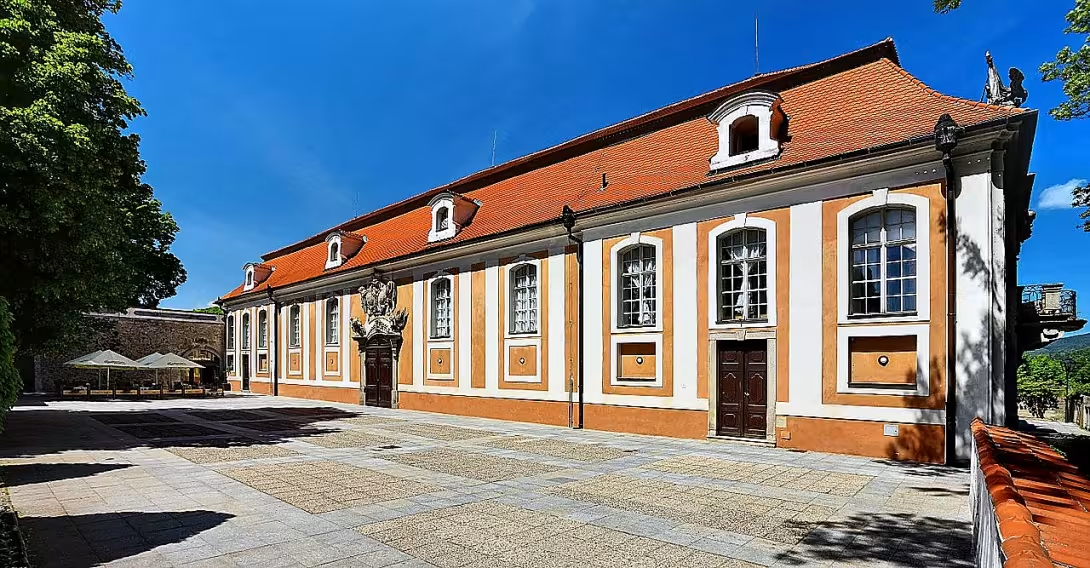
Castle Riding Hall is located in the western part of the Českomlov Chateau as part of a comprehensive complex of buildings dedicated to riding training and chateau administration. It is a building in the architectural style of the Viennese Baroque, which is a unique historical document of the 18th century in Czech countries.
The beginnings of the construction dates back to the time of the estate of Prince Adam František of Schwarzenberg (1680-1732), when the first projects were created both Summer and Winter Riding. The rectangular area with lime seed from the beginning of the 18th century was first used only for ball games and bowling alley. Both horsemen are clearly visible on J. Plansker's watercolors in 1750, where the Summer Horseman is marked by the German name "Karusell" and Winter as "die Reitschule.".
The son of Adam František, Prince Josef Adam ze Schwarzenbergu (1722–1782), who also supported the expansion of the chateau stables, is considered to be the initiative of setting up the Winter Riding House. The main building was led by the Vienna architect Andreas Altomonte (1699- 1780), later imperial court engineer and theatre artist. The preparatory work started in 1743, the construction took place between 1744-1746. The winter riding hall had a length of 28 fathoms (approximately 50,2 metres), a width of 10 fathoms (approximately 17,93 metres) and a height of 13 cubits (approximately 10,11 metres according to the Vienna measurements).
The building was equipped with exceptional art decoration. The sculptures were created by Johann Anton Zinner (1708-1763), a graduate of the Vienna Academy, together with the stucco Matthias Andre in the period 1748-1752. The painting was done by František Jakub Prokyš (1713-1791). The dominant room was decorated by two large equestrian portraits of Prince Joseph Adam and his wife Marie Theresa, born from Liechtenstein (1721-1753), which were painted by Johann Baptist Canton.
The station was part of a larger chateau economic area. There was an older stable with a granary on the upper floor, now known as the Pillar Hall. Historical sources show the existence of stables in Český Krumlov since 1556; In 1603, a mascot containing fifty horses is mentioned. The partial changes took place during the 17th and 18th centuries, the larger reconstruction took place in 1878. In 1938 the stables lost their traditional function and the building was reoriented to administrative purposes with the construction of a pillar hall.
The horseman is a testament to the high cultural taste and social status of Schwarzenberg in the 18th century and their orientation towards Vienna's aristocratic style.
Then and now
Drag the slider to compare how the landmark may have looked when it was built with the view today.
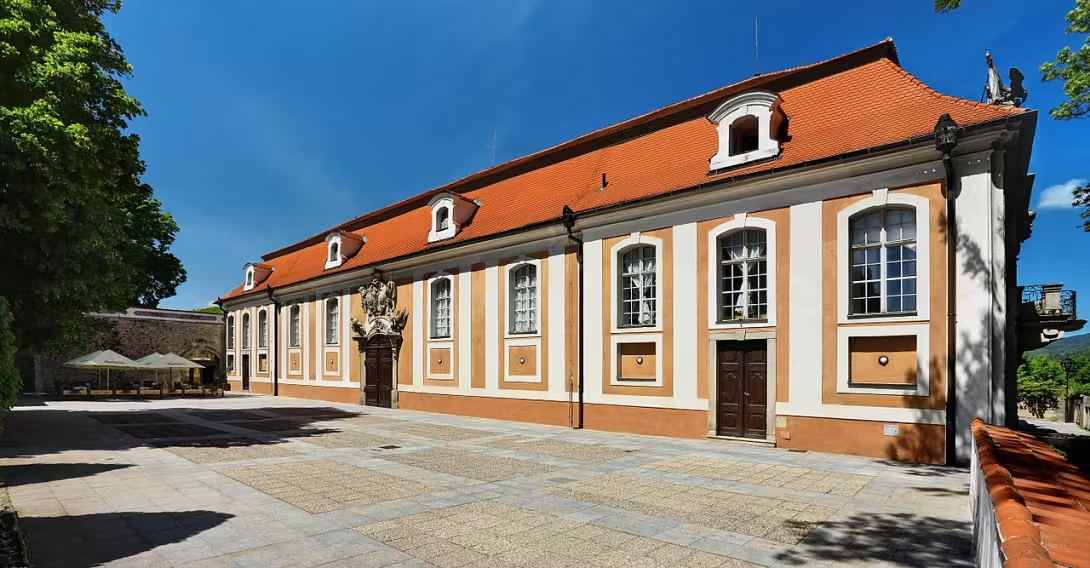
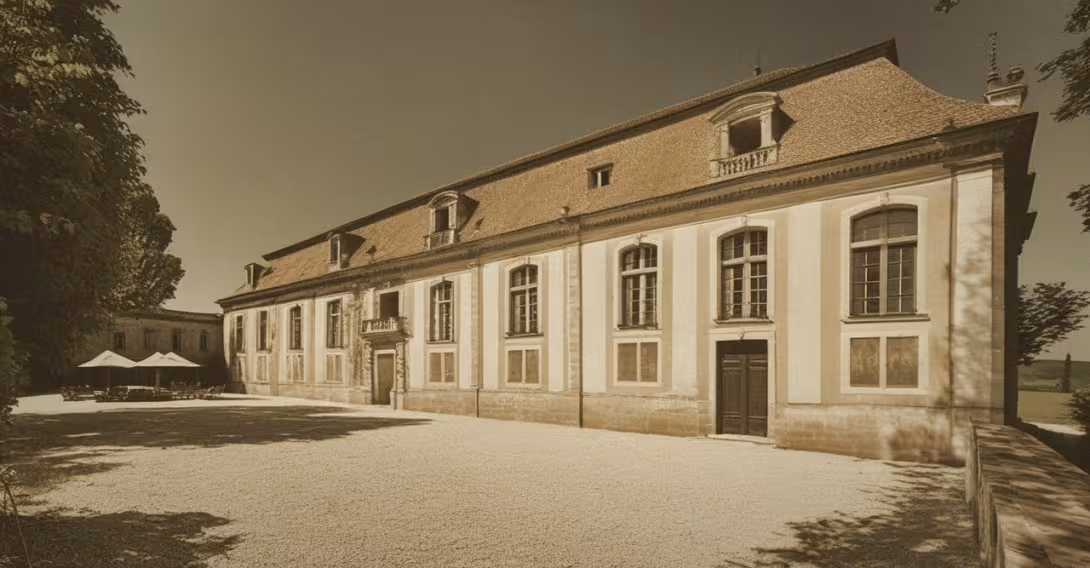
The historical appearance on the left is an AI-generated visualisation and serves as inspiration only.
Historical milestones
- 1743
- Start of preparatory work at the Winter Riding Hall, confirmed by archive springs.
- 1744
- The official start of the construction of the Winter Riding Hall in the spirit of the Vienna Rococo.
- 1748-1752
- Completion of stucco and painting decoration of the horseman.
- 1750
- Documentation of the horseman on J. Plansker's watercolors.
Architectural development
The station was built as a rectangular building with dimensions of 50,2 × 17,93 × 10,11 m, with lime seed in the surrounding area. The decoration included stucco work by Jan Antonín Zinner, paintings by Franz James Prokyš and equestrian portraits by Johann Baptiste Canton. The building was part of a wider complex, which included stables and economic buildings which were gradually rebuilt. The original stables from the 16th century were later adapted to administrative purposes. The materials correspond to Baroque tradition - stone, wood and stucco decoration.
Historical events
- 1743
- Start of preparatory work on the construction of the Winter Horseman, including correspondence on finance and dimensions.
- 1744-1746
- Construction of a riding hall in Vienna Rococo style, supplemented by sculptures and painting decoration.
- 1750
- Capture of J. Plansker's Aquarels, confirming its function as Summer and Winter Horsemen.
- 1878
- Reconstruction of the original stables in the neighbourhood, conversion to administrative premises (Pillar Hall).
Owners
- 1680-1732
- 1732-1782
- 1782-present
Points of interest
- The horseman is a unique proof of Vienna's Baroque style in Czech countries from the 18th century.
- The construction was initiated by Prince Joseph Adam of Schwarzenberg, who supported the development of the chateau stables.
- Winter riding hall measured 28 fathoms of length, 10 fathoms of width and 13 cubits of height.
- The building is decorated with sculpture and painting decoration from prominent artists such as Johann Anton Zinner and František Jakub Prokyš.
- Historic stables in Český Krumlov have existed since 1556, with bows involving fifty horses in 1603.
Guide
This guide is narrated by a synthetic voice generated by artificial intelligence.
Show guide text
This text was created by artificial intelligence and has not been editorially reviewed. It may contain inaccuracies.
The Zamecká Jízdárna is a Baroque building located in the western to northwestern part of the Český Krumlov Castle complex, not far from the castle gardens. In the Czech lands, it is a unique historical structure.
The idea of a summer and winter riding school dates back to the time when Prince Adam František of Schwarzenberg took over the estate. The rectangular area planted with linden trees dates from the beginning of the eighteenth century. Before the construction of the winter riding school, ball games and bowling were played there. The establishment of the riding school itself is connected with his son, Prince Joseph Adam of Schwarzenberg. He also supported the expansion of the stables and entrusted the main work to the Viennese architect Andreas Altomonte, who later became an imperial court engineer and theatrical draftsman.
Preparatory work began in 1743 and construction took place between 1744 and 1746 in the style of Viennese Rococo. Following the example of the Viennese imperial court, various other parts of the castle were also being remodeled at that time. The winter riding school was to be twenty-eight fathoms long, approximately fifty meters, ten fathoms wide, about eighteen meters, and thirteen ells high, roughly ten meters. In 1750, both riding schools were captured in his watercolors by Josef Plansker. He labeled the summer riding school in German as Karusell and the winter one as die Reitschule.
The sculptural and stucco decoration was created between 1748 and 1752 by the sculptor Jan Antonín Zinner, a graduate of the Viennese Academy, and stucco worker Matthias André. The painted decoration is associated with František Jakub Prokyš. Two large equestrian portraits of Prince Joseph Adam and his wife Maria Theresa, born of Liechtenstein, were painted by Johann Baptist Canton.
The riding school also included farm buildings, primarily a section of former stables with a granary on the upper floor. Written sources document stables here as early as 1556. In 1603, stables for fifty horses are mentioned. A significant renovation took place in 1878. In 1938, the stables lost their function and the building was adapted for administrative purposes. During this reconstruction, a columned hall was created, which is why the entire section is today called the Columned Hall.
Harnesses, carriages, and riding clothes were stored in several places. An inventory from 1854 mentions the so-called Roman Chamber in the basement rooms of the Old Palace. Jan Kristián I of Eggenberg had the Roman ceremonial carriage of Jan Antonín I of Eggenberg transported there from Štýrský Hradec, along with a rich collection of velvet covers stitched with gold, hangings, harnesses, and ceremonial garments. Among the chamber's unique objects were also carousel sleighs.
Tips for visitors
The best time to visit the riding hall is in the morning when there are fewer visitors and you can see the Baroque interiors in peace. If you prefer pleasant weather, a visit in spring or autumn is recommended when the weather is pleasant and the light is ideal for photography. In summer there is often the possibility of cultural events, which can be an interesting addition to your visit.
Transport to the Riding Room is simple because it is located directly in the area of Českokrumlov Chateau. The place is available by car, where you can use the parking lot around the chateau. You can find current information about parking and site availability on the official site. Public transport is also suitable for visitors from the city; the current connection can be found in the traffic search engine.
When visiting the riding room, wear comfortable shoes because they walk on the stone floors and stairs. If you are planning photography, a small camera or smartphone with good quality is recommended. For interior photography, the best places are side windows that impact light into the space and highlight the Baroque details. The best light is in the morning or at sunset
The use of lightning is prohibited in the riding room to protect sensitive paintings and ceilings. The best places for photography are spacious halls with high ceilings and richly decorated walls. If you are interested in shooting outdoor parts, focus on the surrounding chateau garden, which is suitable for beautiful compositions.
There are several interesting places in the vicinity of the Riding Hall that are worth visiting. Start at Českokrumlov Chateau, where there are other historical spaces such as the Old Palace or the New Palace. Chateau garden is an ideal place for relaxing and walking. For families with children it is advisable to visit the nearby historical premises of the chateau, where interactive programs or tours are often held for children.
For families with children it is advisable to visit the Riding Room at a time when special tours or workshops for children are organised. These often include interactive elements that attract children. There is also a space for children's activities such as painting or games with historical objects. It is also recommended to visit the chateau garden where children can run and discover nature.
Frequently asked questions
Is Zámecká jízdárna Český Krumlov open to the public?
Yes, the Castle Riding Hall is open to the public. The tour can be conducted separately or with a guide.
How do I get to the place by car / public transport?
It is possible to reach the place by car parked near the chateau or use the city transport (public transport) by line No. 1, which stops directly at the chateau.
How much is the entrance fee and is it paid on the spot?
Payment is made directly at the entrance.
Is the tour suitable for children and seniors?
Yes, Castle Riding Hall is suitable for families with children and seniors. The tour can be completed with a wheelchair or wheelchair.
How long does the tour take?
Inspection The chateau riding halls can be attended separately or with a guide. The tour time depends on the speed of visitors, but usually takes about 30-45 minutes.
What are the opening times and booking is required?
The chateau riding hall is open from 9:00 to 17:00. Reservation is not necessary, but we recommend making it for groups over 10 people.
What's interesting in the immediate vicinity?
In the immediate vicinity of the chateau is the Castle Garden and Castle Park, which are suitable for walks or picnics. There are also several restaurants and cafés near the chateau.
For kids
Imagine going back to when Český Krumlov was the most beautiful city in Czech countries. The chateau that stood in the heart of the city had one of the most beautiful horsemen in the whole country.
How did it look here? Who lived here? What happened here? There lived kings and nobles who enjoyed living in this wonderful city. The station was their favorite place where they could show off their skills and enjoy the beautiful views of the surfing countryside.
Businesses nearby
Do you run a restaurant, accommodation, shop, museum, rental, wellness or other visitor service near this monument? Show yourself directly to the people heading to it — this is how they will see you in the app and on the web:
Events nearby
Zdroj akcí: otevřená data měst a obcí ČR (Národní katalog otevřených dat) a kalendář akcí Národního památkového ústavu.
Nearby
- The main chateau complex with other Baroque and Renaissance buildings, including the Old Palace, the New Palace and the chateau garden.
- Baroque garden with lime alley and other architectural elements, which complements the chateau area.
- The basement area of the Old Palace with a rich collection of riding equipment, carriages and historical clothes.
- Natural flow, which flows through Český Krumlov and forms an important landscape dominant.
Accommodation nearby
Trips and activities nearby
Guided tours, tickets and activities nearby from GetYourGuide
Affiliate link: if you buy from the partner, we may receive a commission. The price for you does not change.
Search tours and activities →Themed route
Czech-Krumlov Chateau Type: lock This dominant building consists of the heart of the whole complex and offers a view of a unique combination of Renaissance and Baroque elements. A walk through his courtyard and inner spaces allows you to see the life of nobles from different historical periods.
Castle Gardens Type: park The Baroque garden with a lime alley serves as an ideal place to relax after a tour of the palace wings. Its architectural elements and landscaping perfectly complement the appearance of the main chateau and create a calm atmosphere.
Zámecká jízdárna Český Krumlov Type: lock The main objective of this route is a unique technical work that was used to train horses and riding. This construction is proof of the high level of engineering art and the historical importance of riding in Czech countries.
Old palaces Type: lock As part of the main chateau complex, this object offers a view of the oldest parts of the building file. Its facade and interior layout show the conversion of the Gothic chateau into a Renaissance residence.
New palaces Type: lock This building represents a later phase in the development of the chateau and brings visitors an experience of Baroque architecture. Together with the Old Palace, they form a harmonious entity that controls the city's panoramas and its surroundings.
Seasonal recommendations
In the spring, the horseman shines along with the awakening nature and fresh air. The soft spring light beautifully highlights the details of architecture and makes the space fresh. We recommend wearing more layers of clothing because the weather is very variable at this time. Visiting in the morning will allow you to avoid the largest groups of people.
The summer season brings an intense sun and a noisy, lively atmosphere throughout the city. The spaces are very spacious and noble thanks to bright lighting. Due to the high season and large crowds, it is best to come right at the opening so you can enjoy the tour in peace. Don't forget light, breathable clothes and plenty of fluids.
Autumn in Krumlov is a period of golden colors and hazy mornings that give the monument a mysterious touch. The atmosphere is calmer and more focused on contemplation. It's practical to carry a waterproof coat or umbrella for frequent collisions. At this time visitors are significantly less, which allows longer reflection on architectural details.
In winter, the riding hall is quiet and in the freezing air it gains a special dream character. The inner spaces offer a pleasant shelter from cold and freeze. It is necessary to choose very warm clothes and at the previous time to verify shortened opening times. The visit in advent time is very romantic thanks to the atmospheric lighting of the city.
Visualizations and artistic views


The visualisations are generated by artificial intelligence and serve as inspiration.
Photos from the area
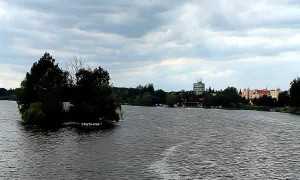
Real photos taken near the monument


Zdroj a licence jsou uvedeny u každého snímku.
Atmosphere of the place
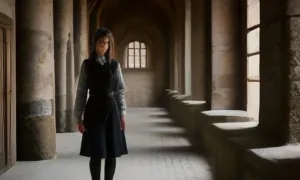
This atmospheric visualisation of the place and period was generated by artificial intelligence. It is not real footage of the location.
Tips from visitors
No tips yet. Be the first!
Log in and add your tip.
Sources and literature
Photos: Tomasss.haisss / CC BY-SA 4.0 — Wikimedia Commons. The author and licence also appear when you hover over the image.
Faktickým podkladem tohoto textu byl článek na Wikipedii, jehož autory jsou přispěvatelé Wikipedie. Článek je dostupný pod licencí CC BY-SA 4.0.
Location on the map
Příběhy a pověsti
Legendy, pověsti a příběhy spjaté s touto památkou
Fotografie návštěvníků
Zatím žádné fotografie. Buďte první, kdo přidá fotografii z návštěvy!
Log in a přidejte svou fotografii nebo hodnoťte.
Za ověřenou návštěvu v aplikaci získáte víc bodů — poznáme podle GPS, že jste na místě.
Reviews and comments