






Neumannova vila Villa
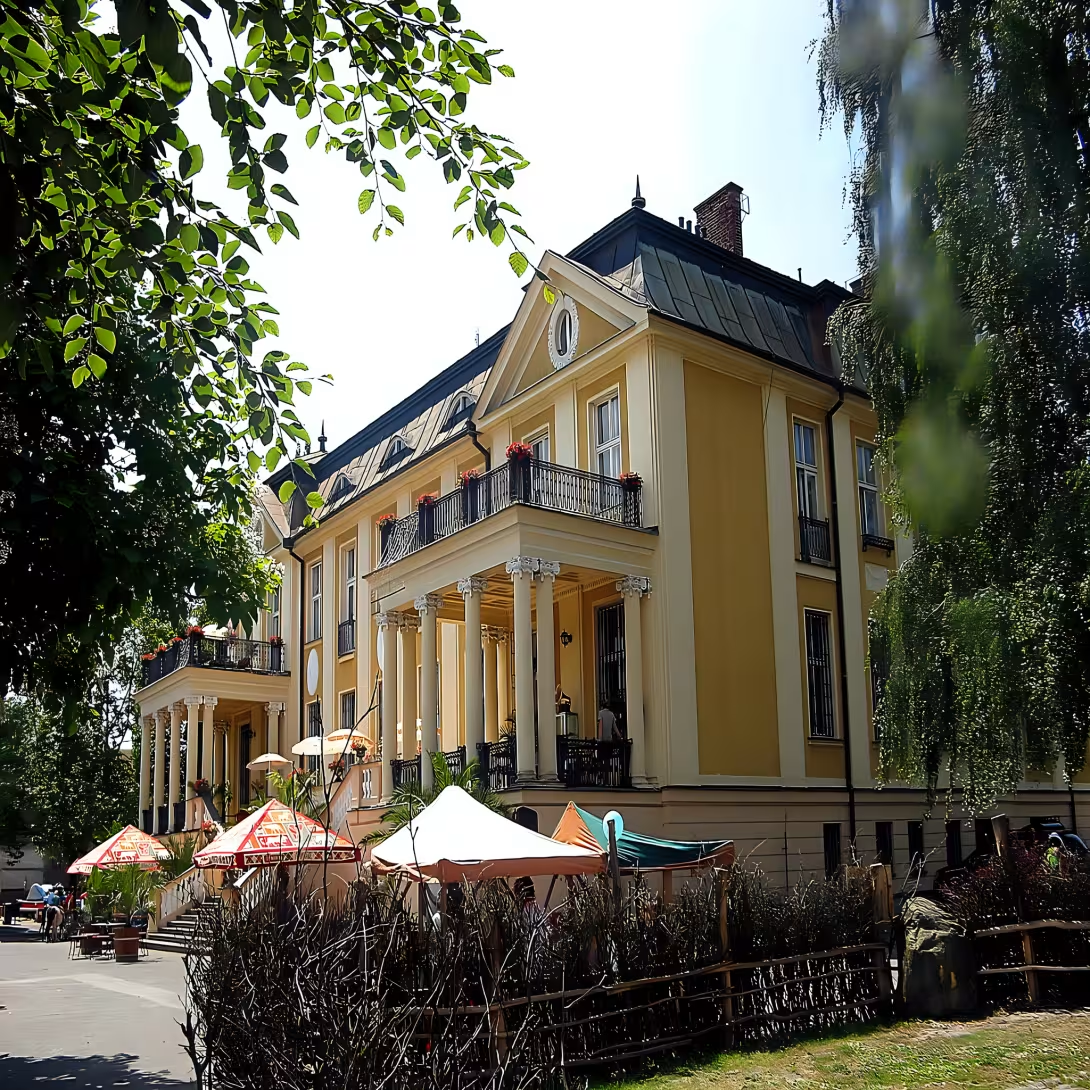
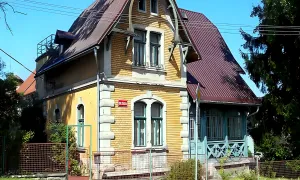
Neumannova Villa is a historical residence in Dvůr Králové nad Labem, Trutnov district, built between 1905 and 1906. A protected cultural monument of the Czech Republic, it currently serves as the administrative headquarters for the East Bohemian Zoo and an art exhibition space.
The villa was commissioned by Dr. Richard Neumann, a member of a prominent industrial dynasty. His grandfather, David Neumann, founded the M. B. Neumann textile factory in Dvůr Králové nad Labem. Born in Vienna in 1879 and having studied philosophy in Heidelberg, Dr. Neumann took over the family business in 1901, which consisted of a mechanical weaving mill and a printing house.
Construction began after the builder requested a permit on April 15, 1905, which the municipal court granted on May 24, 1905. During this phase, the original project was expanded to include a greenhouse. The building was officially completed and inspected on November 10, 1906.
Dr. Neumann remained the owner until 1945, when the property was nationalized by presidential decree. In the following years, the building served as a local city museum and gallery, and from 1965, it housed a Textile Museum. In 1969, the museum closed, and the villa was transferred to the East Bohemian Zoo.
The site's history is linked to the 1946 establishment of the East Bohemian Zoo, which used the villa's greenhouse as its first tropical pavilion. The original owner was also an art expert and collector whose personal collection contained more than 250 items. Before the Nazi occupation, Dr. Neumann and his wife, Alice Neumannová, moved first to Paris and then to Cuba. In Cuba, he continued working in the textile industry and became an honorary professor at the University of Havana. He later relocated to New York, where he died in 1961 at the age of 81.
Today, the building houses the zoo's directorate. It is also a destination for visitors due to the exhibition "Prehistory through the eyes of Zdeněk Burian," which features 147 paintings by the artist.
This villa stands as a testament to the industrial growth of the Bohemian textile sector and the legacy of the Neumann family. It is a significant site for those interested in both regional history and prehistoric art.
Historical milestones
- 1905
- Building permit requested by Dr. Richard Neumann.
- 1905
- The municipal court granted the building permit.
- 1906
- The construction was completed and the building was officially inspected.
- 1945
- The property was nationalized by presidential decree.
- 1965
- A Textile Museum was established in the building.
- 1969
- The museum was closed and the villa was transferred to the East Bohemian Zoo.
Architectural development
The villa was constructed between 1905 and 1906, with the original project being expanded to include a greenhouse during the building process. It was officially completed and inspected in November 1906.
Historical events
In 1945, the property was nationalized by presidential decree. In 1969, the museum was closed and the villa was transferred to the East Bohemian Zoo. The building currently houses the zoo's administration and a Zdeněk Burian exhibition.
Owners
Dr. Richard Neumann (until 1945), nationalized by the state in 1945, East Bohemian Zoo (from 1969).
Points of interest
- Neumannova Villa was built between 1905 and 1906 for Dr. Richard Neumann, a member of the prominent industrial dynasty founded by his grandfather David Neumann. - The villa is a protected cultural monument in Dvůr Králové nad Labem and currently serves as the administrative headquarters for the East Bohemian Zoo and an art exhibition space. - Originally commissioned to include a greenhouse, the building was completed on November 10, 1906, after construction began following a permit granted on May 24, 1905. - Dr.
Guide
Show guide text
This text was created by artificial intelligence and has not been editorially reviewed. It may contain inaccuracies.
Welcome to Dvůr Králové nad Labem. As you stand here, take a moment to pause and truly absorb the presence of the building before you. You are standing in front of Neumannova vila, a place where the layers of history are woven into the very fabric of its existence. It is more than just a historical residence; it is a silent witness to the dramatic shifts of the last century, a structure that has transitioned from a private sanctuary of wealth to a public center of knowledge and nature. As you adjust your headphones and prepare to explore, let the atmosphere of this site settle around you. You are not merely looking at a house, but at a monument that has survived political upheavals, industrial shifts, and the changing needs of a community.
To understand why this building commands such respect, we must travel back to the dawn of the twentieth century. The story of Neumannova vila is inextricably linked to the rise of the industrial age and the prosperity it brought to this region. In 1905, a building permit was requested by Dr. Richard Neumann, a man whose name was synonymous with the economic vitality of the area. He was a prominent textile industrialist, a leader in a field that drove the growth of many towns in this part of the country. However, the success of Dr. Richard Neumann was not an isolated achievement; it was the continuation of a powerful legacy. He was a member of an influential industrial dynasty, a family whose foundations had been laid by his grandfather, David Neumann. When the municipal court granted the building permit in 1905, it marked the beginning of a project intended to reflect the prestige and the stability of the Neumann name. By 1906, the construction was complete, the building was officially inspected, and the villa stood as a grand testament to the industrial success of one of the region's most significant families.
As you turn your gaze toward the structure, notice the dignity it maintains. While the specific names of the architects who designed this residence remain unknown to us, the character of the building speaks for itself. It is a protected cultural monument, and you can sense that importance in its very silhouette. Take a moment to examine the facade and the overall composition of the villa. Even without knowing the specific stylistic intentions of the original creators, you can perceive the purpose behind the design: it was built to be a statement of permanence. In an era of rapid industrial expansion, Neumannova vila was designed to provide a sense of established grace. As you stand here, try to imagine the world as it was in 1906—a time of steam, textiles, and the growing influence of industrial families—and how this villa served as a centerpiece for that era of progress in Dvůr Králové nad Labem.
The history of this site, however, is not a simple story of continuous private ownership. Like much of Central Europe, the twentieth century brought profound changes that reshaped the destiny of Neumannova vila. For many years, it remained a symbol of private industry and family life, but the political landscape shifted dramatically in 1945. Following a presidential decree, the property was nationalized, marking a definitive end to its life as a private estate. This was a moment of great transition, where the personal history of the Neumann family met the new political reality of the era. Yet, the building did not fall into disuse. Instead, it began a new chapter of public service. In 1965, the villa was repurposed to house a Textile Museum. This was a fascinating turn of events; the very building that was born from the wealth of the textile industry became a place dedicated to preserving the history of that very craft. For a time, the walls that once housed an industrialist now protected the artifacts and stories of the industry itself.
But the evolution of Neumannova vila did not stop there. In 1969, the building underwent its most significant transformation to date. The Textile Museum closed its doors, and the villa was transferred to the East Bohemian Zoo. This change of identity moved the building from the world of industrial history into the realm of natural history and conservation. Today, the villa serves as the administrative headquarters for the zoo, acting as the brain of the entire institution. It is a remarkable transition—from a home built on the mastery of man-made materials to a center dedicated to the preservation of the natural world.
There is, however, a deeper, more artistic connection that makes this location truly special. Within these walls, the villa hosts a significant exhibition of the work of Zdeněk Burian. If you are familiar with the history of art and natural science, you know that the name Zdeněk Burian carries immense weight. He was a master at bringing the distant past to life through his illustrations, and his work has a unique ability to transport the viewer to another era. The presence of his prehistoric exhibitions within the walls of a villa built for a textile industrialist creates a fascinating and unexpected dialogue. As you move forward, consider this contrast: the precision and structure of the early twentieth-century industrial world meeting the wild, untamed, and ancient worlds captured by the brush of Zdeněk Burian.
As you prepare to continue your journey, reflect on the incredible resilience of this site. Neumannova vila has worn many masks. It has been a private residence, a museum of industry, and now a hub for the East Bohemian Zoo. It has survived the transition from private dynasty to nationalized property, and from a house of textiles to a house of prehistoric wonders. It stands as a bridge between the industrial past of Dvůr Králové nad Labem and the ecological future of the zoo. We invite you to continue your exploration, to walk through the grounds, and to discover more of the stories that this remarkable monument has to tell. Thank you for joining us, and please, enjoy the rest of your visit.
Tips for visitors
The best time to visit Neumannova vila is during the late spring or early autumn months, when the weather is mild and pleasant for exploring both the villa and its surroundings. During these seasons, you can enjoy the lush greenery around the East Bohemian Zoo without the discomfort of summer heat or winter cold. The natural light during this time also enhances the beauty of the architectural details of the villa.
Parking near Neumannova vila is convenient as there are several parking areas close to the East Bohemian Zoo, which is adjacent to the villa. Public transportation options include buses and trains that connect Dvůr Králové nad Labem with nearby cities, making it accessible for those who prefer not to drive. For the most current transport schedules and routes, check a reliable travel or local transit website.
When visiting Neumannova vila, consider bringing comfortable walking shoes as you may want to explore both the villa grounds and the nearby zoo. A camera is recommended for capturing the architectural beauty of the villa, especially in natural light which highlights its historical features best during early morning or late afternoon. Don’t forget a hat and sunscreen if visiting during warmer months.
For photography enthusiasts, some of the best spots to capture Neumannova vila are from the front entrance where you can frame it with the surrounding landscape, or from the side gardens which offer unique angles and natural lighting conditions. The villa's facade is particularly striking in the soft light of dawn or dusk.
In addition to Neumannova vila, consider visiting the East Bohemian Zoo within a 30-minute walk for an enjoyable family outing. It offers a variety of animals and interactive exhibits that are both educational and entertaining for children. The zoo's proximity makes it easy to combine your visit with exploring the historical aspects of the villa.
Businesses nearby
Do you run a restaurant, accommodation, shop, museum, rental, wellness or other visitor service near this monument? Show yourself directly to the people heading to it — this is how they will see you in the app and on the web:
Events nearby
Zdroj akcí: otevřená data měst a obcí ČR (Národní katalog otevřených dat) a kalendář akcí Národního památkového ústavu.
Nearby
The villa is located adjacent to the East Bohemian Zoo, which was established in 1946.
Accommodation nearby
Themed route
Thematic Tour Itinerary: Neumannova Vila and Surroundings
1. Neumannova Vila (Villa) - *Type:* Historic Villa - *Why Visit:* Explore the architectural beauty of this historic villa, designed by architect Antonín Wiehl in 1903. The villa is renowned for its elegant Art Nouveau style and offers a glimpse into early 20th-century design aesthetics.
2. Zoo v Dvůru Králové (East Bohemian Zoo) - *Type:* Zoo - *Why Visit:* Adjacent to Neumannova Vila, this zoo was established in 1946 and is one of the oldest zoos in the Czech Republic. It offers a diverse collection of animals and provides educational insights into wildlife conservation.
3. Park around Neumannova Vila - *Type:* Park - *Why Visit:* Stroll through the beautifully landscaped park surrounding Neumannova Vila. The serene environment is perfect for relaxation, offering picturesque views and well-maintained gardens that complement the villa's architecture.
4. Zoo Exhibits at Zoo v Dvůru Králové - *Type:* Animal Exhibits - *Why Visit:* Delve deeper into specific animal exhibits within the zoo. These displays highlight unique species from various ecosystems, providing an engaging experience for nature enthusiasts and families alike.
5. Villa's Historical Context - *Type:* Educational Tour - *Why Visit:* Participate in a guided tour that delves into the historical significance of Neumannova Vila. Learn about its past residents, including prominent figures like composer Leoš Janáček, and understand its cultural impact on the region.
This itinerary offers a comprehensive exploration of Neumannova Vila and its immediate surroundings, focusing on architectural beauty, natural landscapes, and educational opportunities.
Seasonal recommendations
Spring: The arrival of spring at Neumannova vila is marked by the soft glow of the early morning sun, which bathes the historic architecture in a warm, golden light, enhancing its beauty. The surrounding gardens begin to burst with color as flowers bloom and trees regain their lush greenery, creating an enchanting atmosphere for visitors. It's advisable to wear comfortable layers that can be adjusted throughout the day due to fluctuating temperatures. Early morning visits are recommended to avoid larger crowds and fully enjoy the tranquil ambiance.
Summer: During summer at Neumannova vila in Dvůr Králové nad Labem, long daylight hours allow for extended exploration of both the villa's interiors and its expansive gardens. The lush greenery is at its peak, providing a perfect backdrop for leisurely strolls or picnics. This season often attracts more visitors, so arriving early can help avoid the crowds. Light, breathable clothing is recommended to stay comfortable in the warm weather.
Autumn: Autumn transforms Neumannova vila into a picturesque scene with vibrant foliage painting the landscape in shades of red, orange, and yellow. The cooler temperatures create a cozy atmosphere, ideal for enjoying the villa's historical charm without the summer heat. This season tends to see fewer visitors, making it an excellent time for those seeking a quieter experience. Wearing layers is advisable as temperatures can vary throughout the day.
Winter: Winter at Neumannova vila offers a serene and magical setting with snow-dusted grounds and possibly icicles adorning its historic structures, providing a unique perspective on this architectural gem. The shorter days mean that visiting times are more limited, so planning ahead is essential to make the most of your trip. Wearing warm clothing is crucial for comfort during winter visits, as temperatures can be quite chilly.
Visualizations and artistic views


The visualisations are generated by artificial intelligence and serve as inspiration.
Photos from the area
Real photos taken near the monument


Zdroj a licence jsou uvedeny u každého snímku.
Tips from visitors
No tips yet. Be the first!
Log in and add your tip.
Sources and literature
Fotografie: Jarda 75 / CC BY-SA 4.0, rozlišení zvýšeno umělou inteligencí — Wikimedia Commons. The author and licence also appear when you hover over the image.
Faktickým podkladem tohoto textu byl článek na Wikipedii, jehož autory jsou přispěvatelé Wikipedie. Článek je dostupný pod licencí CC BY-SA 4.0.
Location on the map

Příběhy a pověsti
Legendy, pověsti a příběhy spjaté s touto památkou
Fotografie návštěvníků
Zatím žádné fotografie. Buďte první, kdo přidá fotografii z návštěvy!
Přihlaste se a přidejte svou fotografii nebo hodnoťte.
Za ověřenou návštěvu v aplikaci získáte víc bodů — poznáme podle GPS, že jste na místě.
Reviews and comments