






Radnice (Dvůr Králové nad Labem) Town hall
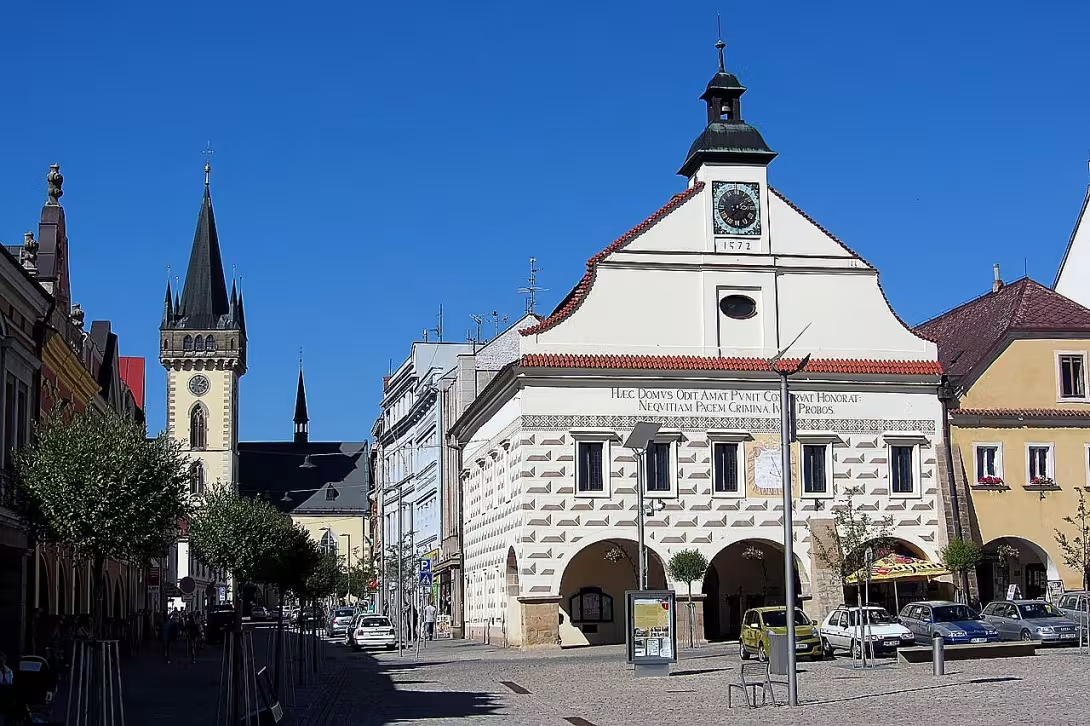
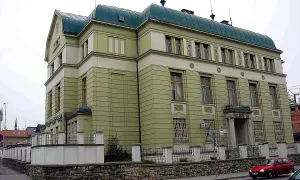
The Old Town Hall in Dvoře Králové nad Labem is a monument-protected Renaissance building from 1572, located in the west corner of T. G. Masaryk Square. It is an important architectural testimony of urban development with elements from the Renaissance to the Empire.
The building was built on the site of a former house of a glove maker that burned down in 1572. The builder Ulric Aostalli de Sal and Jan Merlian managed to create a rectangular structure with a three-piece facade, a ground floor arch and three floors. Above the right part of the building was a three-storey prismatic tower with a tip, while the shield was oriented towards the next street to the church. Today's form is the result of baroque and later modifications. The building has one floor with five axes, three arches lined with cross vaults made of colored stucco and the facade decorated with written sgrafito reexposed in 1986. On the right side, you can see the clandestine pillars, which are the remains of the demolished Town Hall Tower.
Over the second floor is placed a sun clock with a Latin inscription by John Angel Brecht (1797- 2002), which expresses hatred for evil, love for peace and protection of the law. The entire object closes the Empire shield with clock, 1572 and the Mansard tin roof. On top is a turret with a helmet, lantern and tip.
Ground floor spaces have cross and rolled vaults. The entrance hall and the left corner room are covered with a cross vault with nails, while the longitudinal room towards Palacky Street has a valed vault with sections. The dominant is the large hall of town hall with four fields of cross crest vaults, which serves as a ceremonial hall. The seating area has a flat ceiling and a two-part staircase with a floor and a subsequent mazhaus with a filled vault leads to the floor.
The cellar is gothic, consisting of four rooms with a vaulted vault from roughly unwashed optics. The town hall was connected to a house on the corner of the square and Palacky Street with a panelling and flat vaults on the ground floor, whose floor contains a large room with a flat ceiling serving as an exhibition hall.
The building's been through some changes. In 1699, there was a fire that destroyed the roof and the clock tower. The renewal lasted until 1792, while the Renaissance sgraffiti was covered. In 1833 a costly reconstruction took place with the construction of a new shield with a turret. Between 1855 and 1912 there was a district court, since 1891 a city museum has been in operation. In 1918 the building lost its function as Town Hall, when the office relocated to a new building on the east side of the square.
Significant repairs took place in 1936 and general reconstruction in 1986. In 2001, internal spaces were modernised and pillars were repaired in the facade. At the same time, on the ground floor there is a restaurant called Old Town Hall, on the floor there is a representative hall of the city and in the adjacent house exhibition hall.
The Old Town Hall in Trutnov County represents a valuable architectural complex connecting Gothic foundations, Renaissance decoration and empirical endings. It is a place where the history of the city administration meets the available culture and gastronomy, offering insight into the transformation of the city centre Dvoří Králové nad Labem.
Historical milestones
- 1572
- Building a new Renaissance town hall after the fire.
- 1699
- A city hall fire that burned down the roof and the clock tower.
- 1833
- Expensive reconstruction with new shield and turret.
- 1986
- General repair and renewal of Renaissance sgraffiti.
Architectural development
The original Renaissance state has been rebuilt baroque several times, which changed its original appearance. In 1833 a new shield with a turret was added and in later times the Renaissance sgraffiti was restored. The building has cross vaults and original Gothic cellar from the opposites.
Historical events
In 1572 a new Renaissance building was built after the fire. In 1699 there was a fire that burned down the roof and town hall tower. In 1855-1912 the building served as a seat of the district court.
Points of interest
- The Old Town Hall is a monument-protected Renaissance building from 1572. - The building was built on the site of a former house of a glove maker that burned down in 1572. - Over the second floor is placed a sun clock with Latin inscription from Jan Angela Brecht (1797- 2002). There was a fire in 1699 that destroyed the roof and the clock tower. General reconstruction took place in 1986.
Guide
Show guide text
This text was created by artificial intelligence and has not been editorially reviewed. It may contain inaccuracies.
Welcome to Dvůr Králové nad Labem. Right now, standing here, you have one of the most important and beautiful symbols of this historic place. You're standing right in front of the old town hall, a building that carries traces of centuries, many stories and many changes. Look at her face, her walls, and try to imagine how many people have walked these streets before you. This building is not just a wall and a roof, it is a living witness to the history of our city, which survived fires, reconstructions, and transformations of time.
To understand why this building looks what it looks like, we need to go back deep into the past. Imagine 1572. That was a year that was very difficult for this place. There was a devastating fire at the time that hit many houses in the area and changed the city's face. One of them was the house of the local glove maker, who was standing right here. After this tragic phenomenon, it took something new, something solid, and something to represent the rising city. So it happened that a new town hall began to emerge on the ruins of the old house. To make the building truly special, the masters from Italy were invited. It was these Italian builders who brought a new style to our region, which, at the time, impressed Europe with its elegance, balance and a new vision of beauty. Thanks to their work, a beautiful Renaissance building was born here, laying the foundations for everything you see today.
Now pay attention to the architecture itself and to what you see right in front of you. Although the building looks like one solid whole, it's actually like a book that has many chapters. Although her heart and original souls remain Renaissance, time has left its unmistakable traces. Over the centuries, the town hall went through several major reconstructions that changed its appearance according to its needs and taste. During the Baroque period and later in the Empire period, her face was changing to match new modes and images of representativeness. Yet she managed to preserve her original Renaissance features, which makes her a true gem, which combines various epochs into one harmonious work.
If you look at her walls now, you can see the strange depth and detail. In 1986, a major overhaul was carried out, which mainly focused on the restoration of Renaissance sgraffiti. These fine, scraped decorations on the facade are proof of the incredible work of the then masters who were able to create complex and beautiful patterns using simple tools. In 1833, the city invested large resources in another costly reconstruction, which brought a new shield and turret, which gave the building its distinctive and dignified appearance today. This building served many people in different ways - it was the seat of the district court, it served as a city museum, and even today it is an important centre where representative authorities are located.
The history of this place is not only about stones, but also about the unhappiness and incredible perseverance of people. In 1699, the town hall found itself again in a fiery embrace. This fire was very devastating and hit the very essence of the building - both the roof and the clock tower burned down, which meant a great loss and sadness for the city. But like many times before, the city recovered from this test and rebuilt the building to serve its citizens again. Although the names of all the people who worked here may not always be given to us, we know of the important characters that breathed life into the building. We must mention here names such as Ulrico Aostalli de Sala or Jan Merlian, who were involved in the creation of this place. Their work is in every stone and every detail you observe today.
Let's now look at one very interesting thing that you might miss if you didn't look really closely. Above the second floor of the building is placed something that connects human work to the movement of the universe - the sun clock. They are decorated with a Latin inscription created by Jan Angel Brecht. This man lived between 1797 and 2002, and his work reminds us of how time passes, while these walls and these streets remain. It is a fascinating combination of science, art and history that you can see right in front of you, as the sun moves through the sky and how its light hits this historical object.
I hope that this brief insight into the history of our town hall has at least given you a little interest and helped you better understand the beauty of this place. This building is just one of many beautiful things that you can find in the Two Kings above the Lab. I suggest you continue to walk through the city, listen to the heartbeat of our streets, and discover other hidden secrets that every old wall has in it. Thank you for spending this moment with us and paying attention to our heritage. We wish you a beautiful journey and another pleasant discovery of all the beauty of this city.
Tips for visitors
The best time to visit the old town hall in Dvoře Králové nad Labem is during spring or autumn when temperatures are pleasant and fewer people. This time also offers a beautiful view of the green surroundings and sunlight for photography.
Parking near the old town hall is possible, but due to limited capacity we recommend using public transport. The room can also be reached by foot from T. G. Masaryk Square or Palacka Street, which is ideal for those who want to take advantage of the local atmosphere.
When visiting City Hall, remember the appropriate suit, especially if you visit the church nearby. Photography is very nice here, so don't forget the camera and maybe a long lens for detailed pictures of architectural elements.
If you have children with you, they can be intrigued by the history of the building and its colorful frescoes. In addition, it is possible to explore the surrounding streets after visiting the town hall or visit the church nearby, which will provide further entertainment.
For shooting the old town hall are the best times in the morning or evening when light is softer and shadow effects add depth to the images. Also remember to check the entry conditions for the photo on the official site of the sights.
Businesses nearby
Do you run a restaurant, accommodation, shop, museum, rental, wellness or other visitor service near this monument? Show yourself directly to the people heading to it — this is how they will see you in the app and on the web:
Events nearby
Zdroj akcí: otevřená data měst a obcí ČR (Národní katalog otevřených dat) a kalendář akcí Národního památkového ústavu.
Nearby
Náměstí T. G. Masaryka, Palackého ulice, kostel v blízkosti.
Accommodation nearby
Themed route
1. The square of T. G. Masaryk (square) - The spacious centre of the city, which serves as an ideal starting point for walking. 2. Town Hall (administration building) - The main objective of the visit, where you can admire the architecture of the administration centre. 3. Palacky street (street) - Connecting the centre with the surrounding areas, suitable for peaceful walking. 4. Church nearby (temple) - Spiritual monument that complements the historical nature of the surroundings.
Seasonal recommendations
In the spring, the town hall shines with the awakening nature and fresh air. The city gets bright colors and fine spring light highlights the details of the facade. It is recommended to dress in layers because the weather is variable. It is best to visit the building in the morning when the peace and air is the cleanest.
The summer season brings intense sun and the noise of summer holidays. The building looks very representative in full sun and the surrounding area is green. Due to the high season expect more visitors, therefore come first thing in the morning. Choose light, breathable clothes and don't forget the sun protection.
The atmosphere becomes quieter in autumn and the surroundings of the town hall are coloured with golden leaves. Soft autumn light creates a nostalgic mood that suits historical construction. It is advisable to carry a waterproof jacket or umbrella. The ideal time for a tour is the late afternoon when the sun falls and the shadows extend.
In winter, the town hall is majestic, especially if it is covered by snow and frost. Short days and evening lighting give the place a cozy character, especially in advent time. Don't forget the warm sweater and gloves. Pay attention to opening times that are shorter in this period.
Visualizations and artistic views

The visualisations are generated by artificial intelligence and serve as inspiration.
Photos from the area
Real photos taken near the monument

Zdroj a licence jsou uvedeny u každého snímku.
Tips from visitors
No tips yet. Be the first!
Log in and add your tip.
Sources and literature
Photos: Petrik.Tomas / CC BY-SA 3.0 — Wikimedia Commons. The author and licence also appear when you hover over the image.
Faktickým podkladem tohoto textu byl článek na Wikipedii, jehož autory jsou přispěvatelé Wikipedie. Článek je dostupný pod licencí CC BY-SA 4.0.
Location on the map
More monuments – Dvůr Králové nad Labem
Show all in the municipality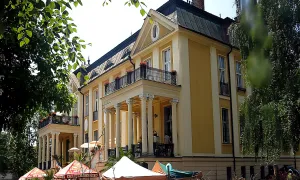
Příběhy a pověsti
Legendy, pověsti a příběhy spjaté s touto památkou
Fotografie návštěvníků
Zatím žádné fotografie. Buďte první, kdo přidá fotografii z návštěvy!
Log in a přidejte svou fotografii nebo hodnoťte.
Za ověřenou návštěvu v aplikaci získáte víc bodů — poznáme podle GPS, že jste na místě.
Reviews and comments