






rotunda svatého Martina (Vyšehrad) Chapel
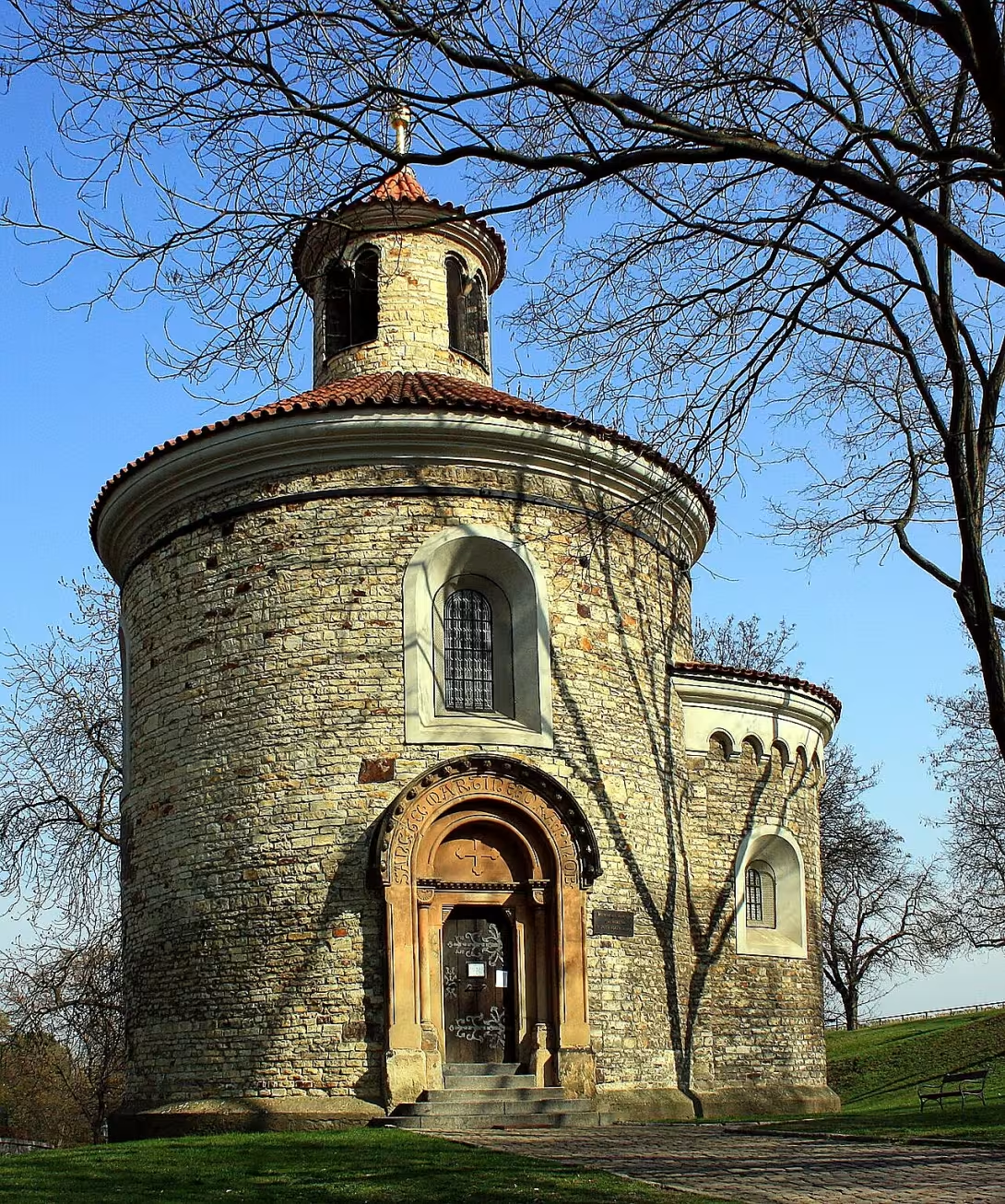
The Rotunda of Saint Martin in Vyšehrad, Prague, is the oldest surviving rotunda within the city. Built during the late 11th century under Duke Vratislav II, it was likely founded by then-dean of the Vyšehrad chapter, priest Martin. This Romanesque chapel has undergone numerous architectural changes and restorations over the centuries, maintaining its historical significance as a religious site dedicated to Saint Martin.
The rotunda's origins trace back to when Bohemia was under Duke Vratislav II, who aimed to strengthen Christianity in the region. Constructed at the end of the 11th century, its exact age remains somewhat uncertain. It likely served as a parish church for the Vyšehrad precinct and is associated with Saint Martin, revered for his legendary act of sharing his cloak with a beggar.
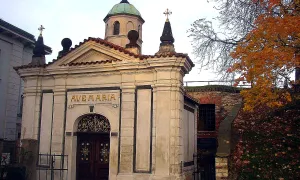
Architecturally, the rotunda was originally built in Romanesque style, characterized by its circular plan and vaulted ceiling. The structure primarily uses opus quadratum masonry with limestone blocks, along with some sandstone. Notable features include an apse on the eastern side and a lantern tower at the top, housing four windows with newly installed columns featuring corbels. Over time, significant changes were made; for instance, in 1719, a baroque portal replaced the original Romanesque entrance. The most extensive restoration occurred in 1875 when the Vyšehrad chapter purchased it and initiated renovations led by Antonín Baum. This effort restored many of its Romanesque features and introduced new elements such as stained glass windows.
Throughout its history, the rotunda has experienced various ownerships and uses. Initially managed by the Vyšehrad chapter, it faced periods of neglect and damage. In 1420, during the Hussite invasion, it suffered minor damage compared to other church buildings in the area. A fire in 1528 further damaged the structure, as recorded in historical chronicles. During the Thirty Years' War, it served as an ammunition storage facility. By 1719, a baroque portal replaced its original entrance, and in 1757, it was secularized by Joseph II due to its perceived redundancy.
Despite these challenges, the rotunda has remained significant. Today, it is owned by the Vyšehrad chapter and continues to function as a place of worship where regular masses are held. Visitors can view its interior upon request, offering a glimpse into its storied past and architectural beauty. The rotunda's resilience through centuries of change makes it a compelling site for those interested in Prague's rich history.
The Rotunda of Saint Martin is not only an architectural marvel but also a testament to the enduring legacy of religious devotion and cultural heritage in Prague. Its historical significance, coupled with its picturesque location within Vyšehrad, makes it a must-visit destination for anyone exploring the city's ancient monuments.
Then and now
Drag the slider to compare how the landmark may have looked when it was built with the view today.
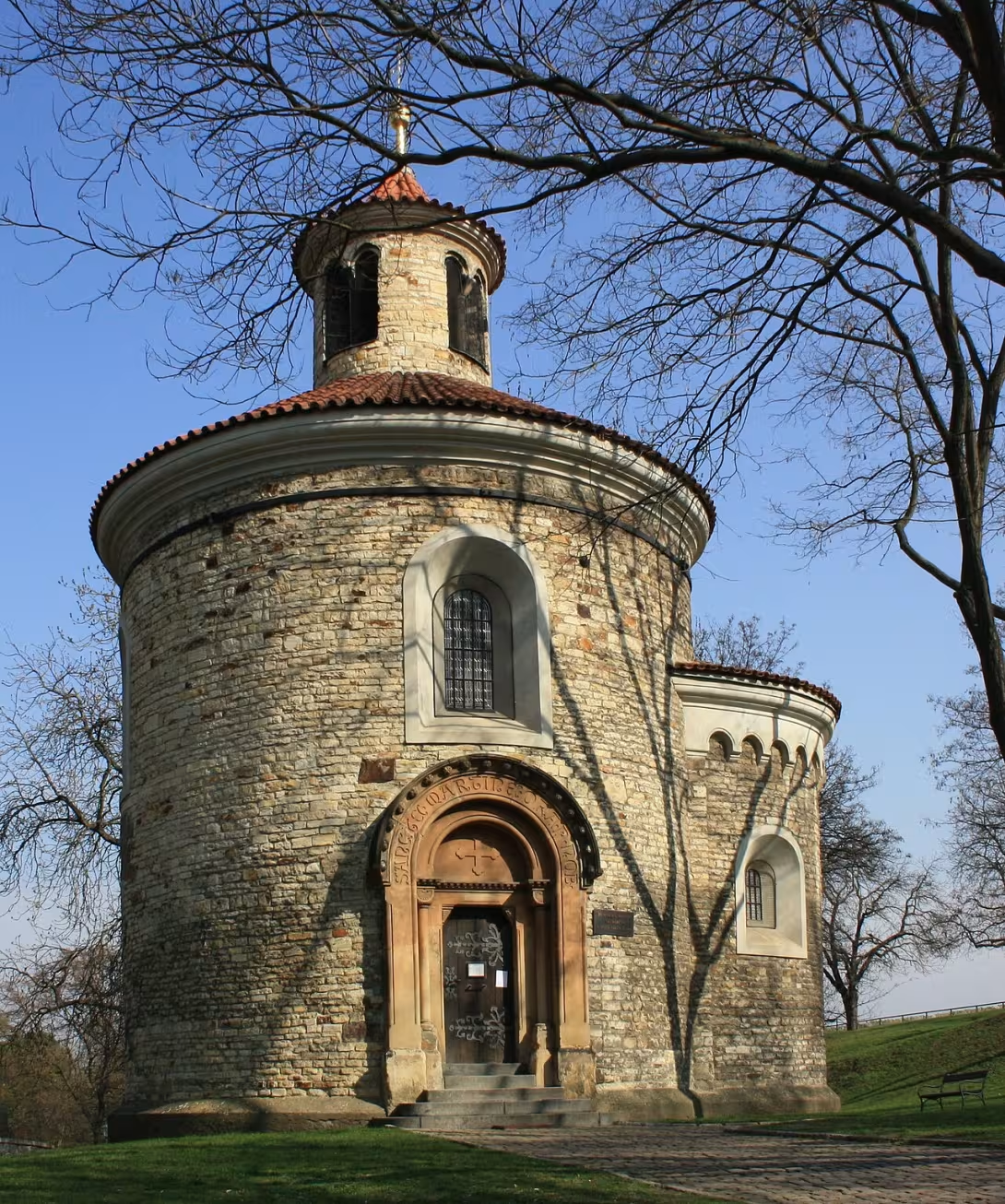
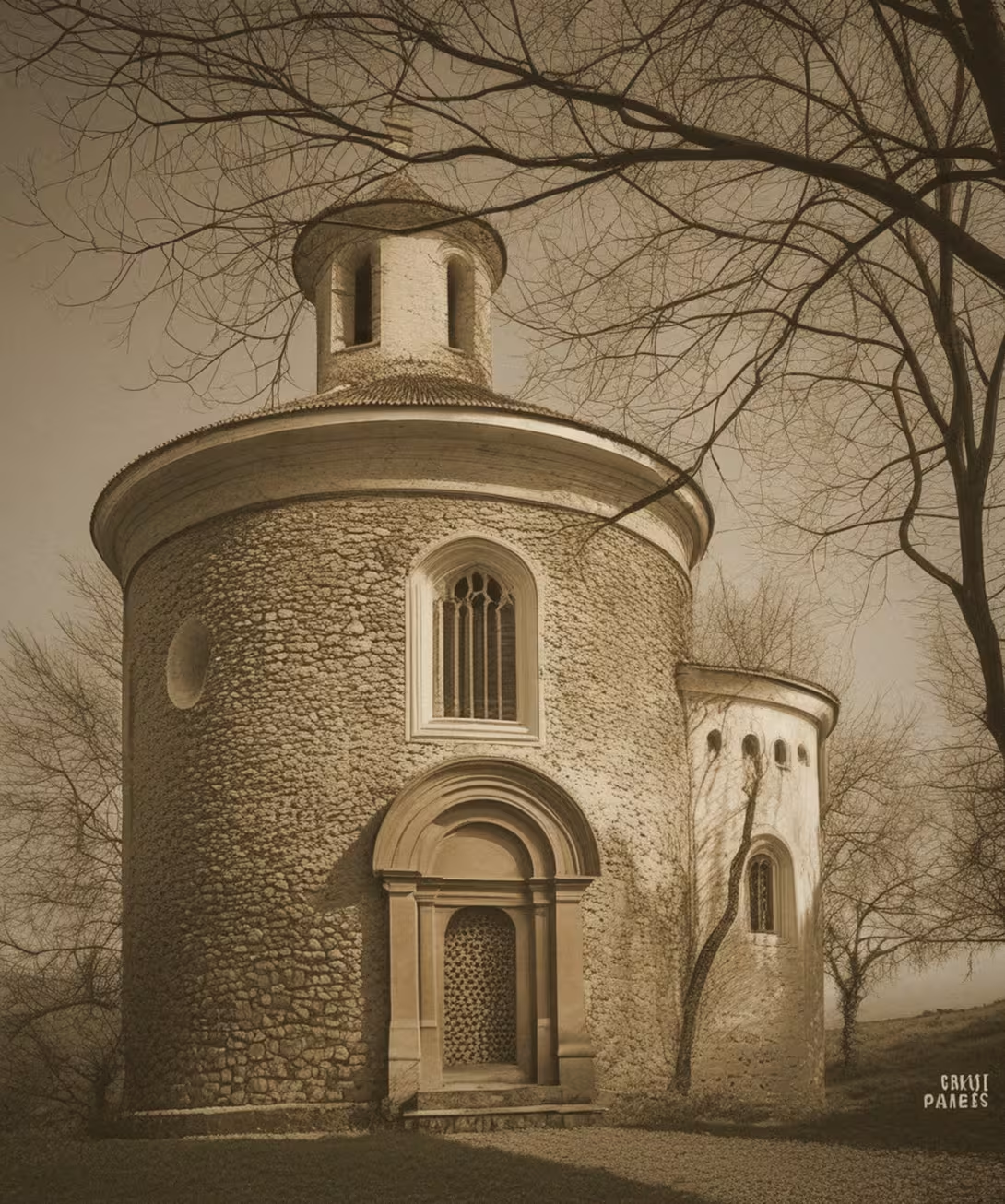
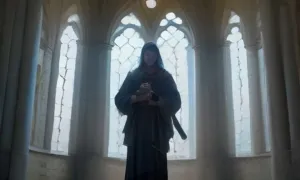
The historical appearance on the left is an AI-generated visualisation and serves as inspiration only.
Historical milestones
- 1420
- The rotunda was slightly damaged during the Hussite invasion.
- 1528
- The structure suffered fire damage as noted in historical records.
- 1875
- Restoration and reromanization were completed under the guidance of Antonín Baum.
Architectural development
The rotunda was originally constructed in Romanesque style, with significant changes over time including a baroque portal replacement in 1719. In 1875, it underwent extensive renovation led by Antonín Baum, restoring its Romanesque features and adding new elements like stained glass windows.
Historical events
1420: Suffered minor damage during the Hussite invasion, unlike many other church buildings in the area.
1528: Damaged by fire as recorded in historical chronicles.
1875: Purchased by the Vyšehrad chapter for restoration and reromanization.
Owners
Initially owned by the Vyšehrad chapter; later managed by various entities including during periods of neglect and restoration.
Points of interest
- The rotunda's association with Saint Martin is particularly intriguing because it connects to the legend of him sharing his cloak with a beggar, which has been a symbol of charity and compassion in Christian tradition.
- Despite being built during the late 11th century under Duke Vratislav II, the exact age of the Rotunda of Saint Martin remains somewhat uncertain due to limited historical records from that period.
Guide
This guide is narrated by a synthetic voice generated by artificial intelligence.
Show guide text
This text was created by artificial intelligence and has not been editorially reviewed. It may contain inaccuracies.
Welcome to the historic Rotunda of Saint Martin here in Vyšehrad, Prague. As you stand before this ancient structure, take a moment to absorb its serene presence amidst the lush landscape that surrounds it. The rotunda's weathered stones whisper tales from centuries past, inviting you into a journey through time.
The origins of this remarkable site trace back to the late 11th century, during the reign of Duke Vratislav II. It was then that the rotunda was constructed in the Romanesque style—a testament to its enduring legacy as the oldest surviving rotunda on Prague's territory. The foundation is believed to have been laid by Martin, a priest and dean of the Vyšehrad chapter at the time. As you gaze upon it now, imagine the skilled hands that shaped this sacred space nearly a millennium ago.
As you explore further, notice how the architecture has gracefully withstood the test of time. The rotunda's simple yet elegant design is evident in its circular form—a rare architectural choice that has captivated many over the centuries. Observe how it harmoniously blends into its surroundings, creating an atmosphere of tranquility and reverence.
Throughout its history, this sacred site has been a silent witness to pivotal events. In 1420, during the tumultuous Hussite invasion, the rotunda suffered slight damage—a testament to the turbulent times that have shaped its story. Later in 1528, it endured fire damage, yet it rose again, resilient and enduring. The most significant restoration occurred in 1875 under the guidance of Antonín Baum, who sought to preserve its Romanesque essence while ensuring its structural integrity.
The rotunda is intimately connected with Saint Martin, a figure renowned for his act of charity—sharing his cloak with a beggar. This legend embodies the spirit of compassion and generosity that has been central to Christian tradition since time immemorial. As you stand here today, let these values resonate within you, reminding us all of the power of kindness.
One intriguing aspect of this site is its evolution through various architectural changes while maintaining its core identity. Each layer of restoration adds depth to its story, inviting onlookers to ponder the hands that have cared for it over generations.
As your visit draws to a close, I invite you to linger a moment longer, taking in the atmosphere and reflecting on the rich tapestry of history woven into this place. The Rotunda of Saint Martin is more than just an architectural marvel; it's a living narrative waiting to be explored further by those who seek its secrets.
Thank you for joining me on this journey through time. May your exploration continue with curiosity and wonder as you discover more of Vyšehrad's treasures.
Tips for visitors
The best time to visit the Rotunda of Saint Martin is during late spring or early autumn when the weather is pleasant, allowing for a comfortable exploration of the site without the crowds that summer months might bring. The natural light during these seasons also enhances the architectural beauty of the rotunda and its surroundings, making it an ideal time for photography enthusiasts.
Parking near Vyšehrad can be limited, so visitors are encouraged to use public transportation or park at nearby lots outside the immediate vicinity of the site. Prague's efficient tram system offers easy access to Vyšehrad, with several lines stopping close to the area. This approach not only eases parking concerns but also allows for a more immersive experience in exploring Prague’s historic streets.
When visiting the Rotunda of Saint Martin, it is advisable to bring comfortable walking shoes as you will be exploring both the rotunda and its surrounding areas. Given that the site can attract visitors throughout the day, carrying water and sunscreen during warmer months is also recommended. For those interested in photography, a camera with a zoom lens might enhance your experience by capturing detailed shots of the rotunda's intricate architecture.
Photography enthusiasts will find the Rotunda of Saint Martin particularly captivating at sunrise or sunset when the light casts dramatic shadows and highlights the Romanesque architectural features. The area around Vyšehrad offers several vantage points for capturing both the rotunda and its natural surroundings, including views over Prague. Families with children can enjoy exploring nearby historical sites within a 30-minute walking distance, such as the Vyšehrad cemetery and the Church of St. Peter and Paul, providing educational opportunities about Czech history and architecture.
For families visiting with children, the area around the Rotunda of Saint Martin offers several engaging activities beyond just sightseeing. The Vyšehrad fortress and its surroundings provide a picturesque setting for a family walk or picnic. Additionally, exploring the nearby Vyšehrad cemetery can be an interesting experience, offering stories about famous Czech personalities buried there. These sites are accessible within a short walking distance from the rotunda, making them convenient stops on a day out in Prague.
Businesses nearby
Events nearby

Zdroj akcí: otevřená data měst a obcí ČR (Národní katalog otevřených dat) a kalendář akcí Národního památkového ústavu.
Nearby
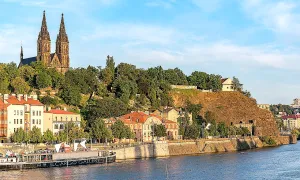
Located in Vyšehrad, Prague, the area features other historical monuments and natural landscapes within a short distance.
Accommodation nearby
Trips and activities nearby
Guided tours, tickets and activities nearby from GetYourGuide
Affiliate link: if you buy from the partner, we may receive a commission. The price for you does not change.
Search tours and activities →Themed route
Vyšehrad Thematic Walking Tour
1. Rotunda of St. Martin (Chapel) - *Type:* Historical Chapel - *Why Visit:* The Rotunda of St. Martin is one of the oldest preserved monuments in Prague, dating back to the 11th century. Its striking architecture and historical significance make it a must-visit for anyone interested in medieval history.
2. Vyšehrad Basilica - *Type:* Church - *Why Visit:* Located just a short walk from the Rotunda of St. Martin, Vyšehrad Basilica is renowned for its stunning Gothic architecture and breathtaking views over Prague. The basilica's interior houses beautiful frescoes and serves as the final resting place of many Czech cultural figures.
3. Vyšehrad Cemetery - *Type:* Historical Cemetery - *Why Visit:* This cemetery is not only a serene spot but also a significant cultural site, housing graves of notable Czech personalities such as composers Bedřich Smetana and Antonín Dvořák. Its picturesque setting offers a peaceful retreat with panoramic views of the city.
4. Vyšehrad Castle - *Type:* Historical Castle - *Why Visit:* A short stroll from the cemetery, Vyšehrad Castle is an iconic symbol of Prague's rich history. Explore its ancient walls and towers to experience breathtaking vistas of the Vltava River and surrounding landscapes.
5. Vyšehrad Park - *Type:* Historical Park - *Why Visit:* Conclude your tour in the lush Vyšehrad Park, which offers a tranquil environment perfect for relaxation. The park's scenic paths lead to various viewpoints and historical sites within Vyšehrad, providing an ideal setting to reflect on the day’s explorations.
Seasonal recommendations
Jaro: In the spring, the rotunda of St. Martin on Vyšehrad is celebrated with the return of life and color as flowering gardens and trees around the chapel offer a pleasant backdrop. Sunlight streaming through the niches and roof gives the interior a gentle, changing atmosphere. Visit in the morning or evening for milder temperatures and fewer people, allowing for a more intimate experience. It's recommended to wear comfortable clothing with an option to add an outer layer for cooler mornings or evenings.
Léto: In summer, the rotunda of St. Martin offers views over the green Vyšehrad slopes where the presence of the sun is best appreciated. This time of year attracts many tourists and visitors, so it's advisable to visit early in the morning or later in the evening to avoid peak hours. Given the warm weather, wearing light clothing is suitable and always having a water bottle on hand is wise, as the chapel interior can be particularly warm.
Podzim: Autumn brings pastel colors to Vyšehrad where falling leaves create a picturesque and mildly melancholic atmosphere around St. Martin's rotunda. Sunny days are ideal for visiting, while later autumn days offer a different kind of calm with a lighter crowd. Wearing layered clothing is suitable due to the variable climate, and visitors should be prepared for quick temperature changes.
Zima: The winter season on Vyšehrad offers a unique atmosphere with frost patterns and snow cover that can add magic to a visit to St. Martin's rotunda. Sunlight entering the chapel highlights its architectural details and creates gentle shadows, creating a serene atmosphere suitable for reflection. Visit early in the morning or later in the evening when the chapel is less frequented and opening hours may be shorter. Wearing warm clothing with protection against wind and snow is essential for comfort.
Visualizations and artistic views


The visualisations are generated by artificial intelligence and serve as inspiration.
Photos from the area
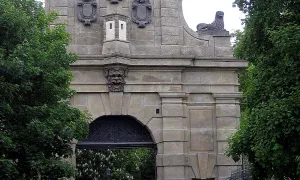
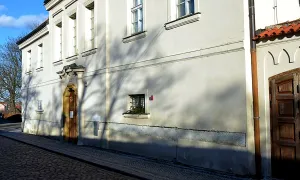
Real photos taken near the monument


Zdroj a licence jsou uvedeny u každého snímku.
Tips from visitors
No tips yet. Be the first!
Log in and add your tip.
Sources and literature
Fotografie: Michal Klajban / CC BY-SA 3.0 — Wikimedia Commons. The author and licence also appear when you hover over the image.
Faktickým podkladem tohoto textu byl článek na Wikipedii, jehož autory jsou přispěvatelé Wikipedie. Článek je dostupný pod licencí CC BY-SA 4.0.
Location on the map

Příběhy a pověsti
Legendy, pověsti a příběhy spjaté s touto památkou
Fotografie návštěvníků
Zatím žádné fotografie. Buďte první, kdo přidá fotografii z návštěvy!
Přihlaste se a přidejte svou fotografii nebo hodnoťte.
Za ověřenou návštěvu v aplikaci získáte víc bodů — poznáme podle GPS, že jste na místě.
Reviews and comments