



Vodárna (Hudcov) Waterworks
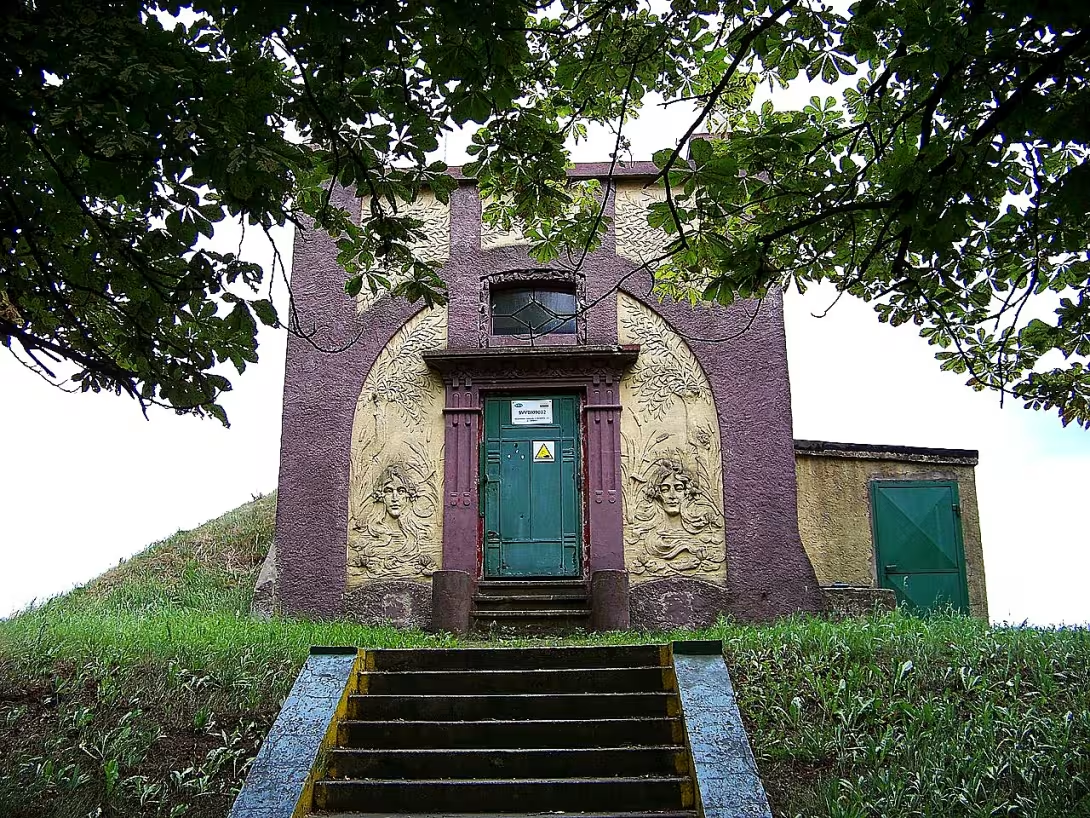
The Art Nouveau Waterworks in Hudcov is a technical monument on the edge of the part of the Hudcovská Vysost on the road II / 254 between Teplicemi and Duchcov. The building was built in 1906 as part of the water duct for Řetenice and since 1987 it has been protected as a cultural monument.
The construction was created during the period of rapid industrialisation and development of technical infrastructure in the Czech countries, which belonged to Austria-Hungary. The water supply system, which was a key part of the water supply plant, was built between 1904 and 1906 and was expanded in 1920. The purpose of the work was to supply the building at the time, namely 170 houses with 3260 inhabitants.
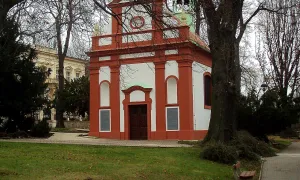
The building is a walled building on a square floor plan, whose south side is embedded in the slope. Architecturally it belongs to the Art Nouveau style, for which is typical emphasis on decorative facade. The construction is divided by corner pilasters with Art Nouveau acrotheria and plastic arch ledge, which divides the facade into several fields. The entrance facade is dominated by a plastic portal with an above-threshold ledge and a rectangular window in a profiled shampoo. The decoration consists of stucco floral motifs and symmetrically located female masks on the sides of the entrance. The side facade repeats this breakdown and contains blind windows in profile lining. There is a rectangular extension adjacent to the west wall. The entire building is covered by a counter roof and leads to a single-arm staircase.
The technical equipment included a 250 cubic meter water, powered by an underground spring of 3 liters per second. The water distribution was provided by cast iron pipes with diameters of 80 to 150 millimetres in total length of 10 200 metres. 21 hydrants were part of the system.
This building represents a proof of the period of interconnection of technical purpose with artistic sensations, when the purely utilitarian objects also obtained a representative form. For those interested in industrial history and architecture of the beginning of the 20th century, the music factory offers the opportunity to see the preserved example of Art Nouveau construction in the field.
Then and now
Drag the slider to compare how the landmark may have looked when it was built with the view today.
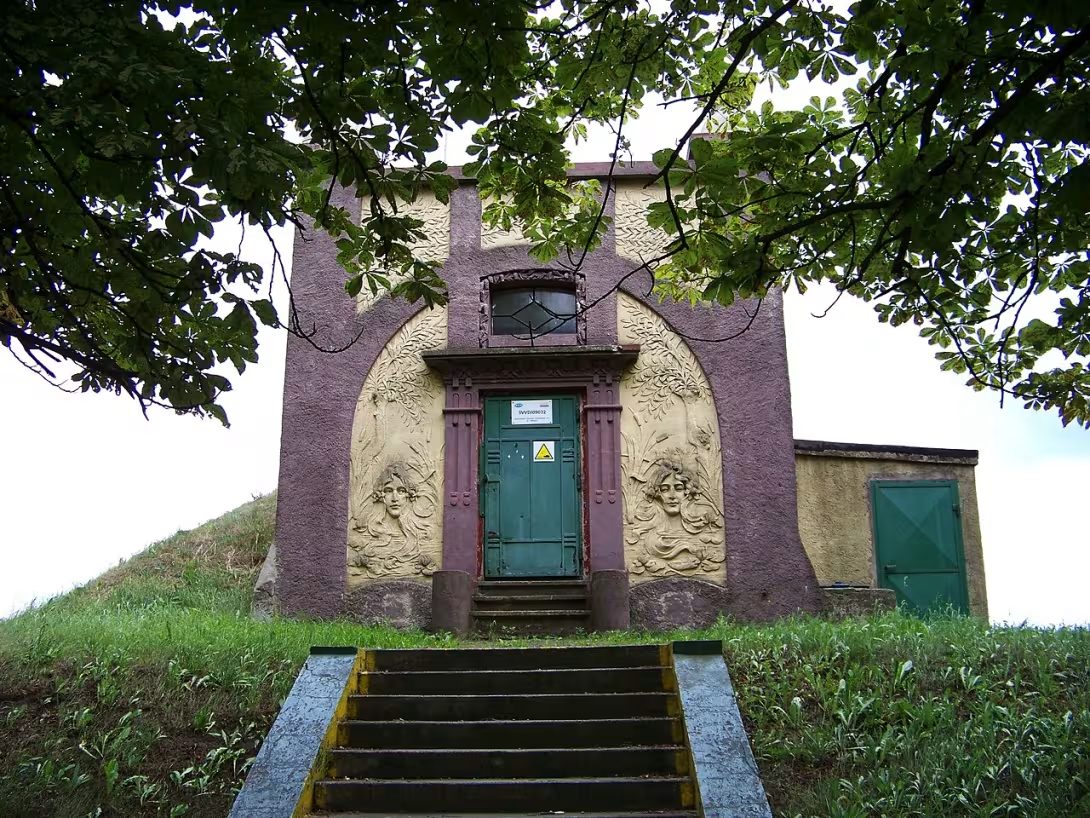
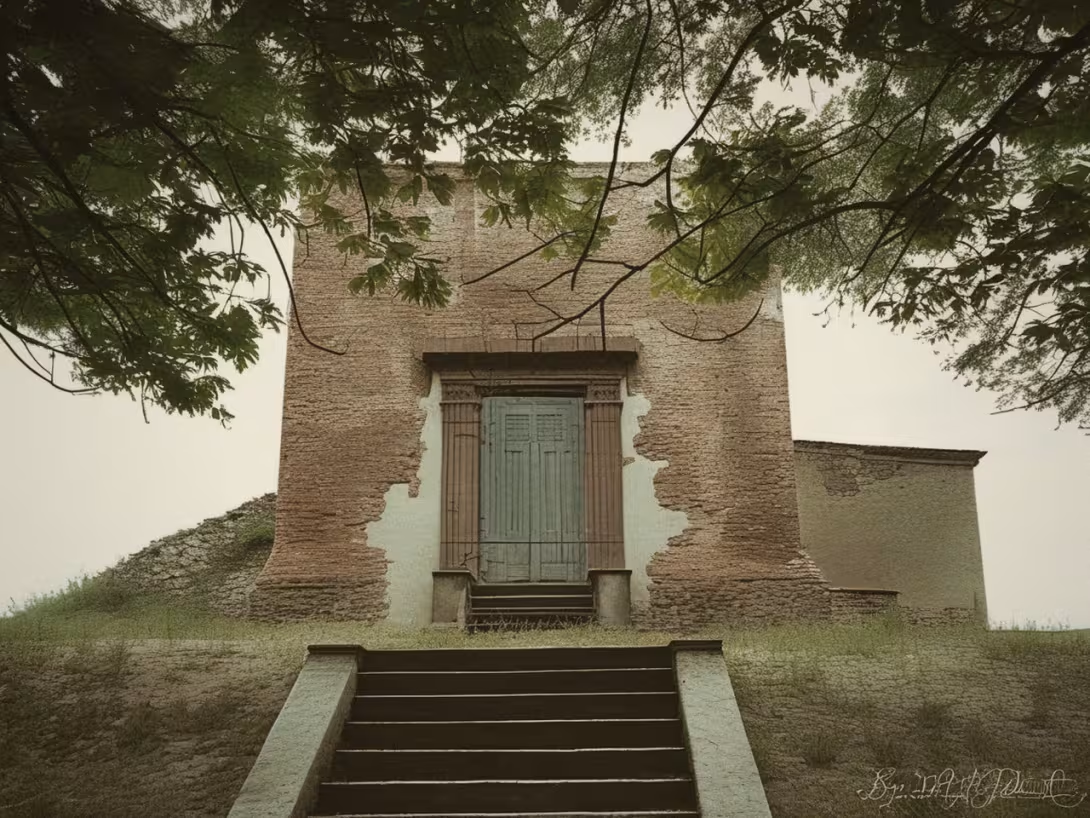
The historical appearance on the left is an AI-generated visualisation and serves as inspiration only.
Historical milestones
- 1904
- Start of construction of the water pipeline Řetenice.
- 1906
- Completion of water works.
- 1920
- Water network expansion.
- 1987
- Entry of the object into the list of cultural monuments.
Architectural development
The building was built in Art Nouveau style with emphasis on decorative facade. The building is divided by an arc ledge and decorated with stucco elements, with a rectangular attachment attached to the west wall. The original technical equipment included cast iron pipes 80 to 150 millimetres in diameter.
Historical events
1904- 1906 construction of the water pipeline Řetenice, 1920 extension of the water network, 1987 declaration for cultural monument.
Points of interest
- The water plant was built in 1906 as part of the water pipeline for Řetenice and since 1987 it has been protected as a cultural monument. - The purpose of the construction was to supply the former building, which was 170 houses and 3260 inhabitants. - The building is a walled building on a square floor plan whose south side is embedded in the slope. - The decoration of the facade consists of stucco plant motifs and symmetrically placed women's masks on the sides of the entrance. - The technical equipment included a 250 cubic meter water that was powered by an underground spring.
Guide
Show guide text
This text was created by artificial intelligence and has not been editorially reviewed. It may contain inaccuracies.
Welcome to this historic place, which is the great pearl of Teplice! You're standing in front of a water station in Hudcov, a technical monument built in the early 20th century. Note immediately the rich stucco decoration with floral motifs and women's masks that add moving colors to the overall atmosphere of this place.
The creation of this water plant is closely linked to the history of the local water pipeline. In 1904 it was the beginning of the construction of the water pipeline for Řetenice, which was to supply a newly emerging area. The completion of this important project took place in 1906, when the water plant was put into operation. It was built as part of a wider network to ensure sufficient water supply for the then construction with 170 houses and over 3,000 inhabitants.
The architecture of this object is truly remarkable. The water plant has a square plan and is embedded in the slope, which gives it unique stability and aesthetics. Take a look up at the corner pilasters with acrotheria - these details are an example of the artistic processing by which the object is enriched. The cover with the counter roof gives the overall picture elegance and completes visual impression.
Although particular architects are not known, it is clear that a great deal of work and artistic passion are behind this work. The water plant was built at a time when the technology developed rapidly, and its construction reflects the advances of that time.
The interesting thing is that the water plant was registered as a cultural monument in 1987. This highlights its historical and cultural value for the Teplice region. It is a testament to the past, which has maintained its original purpose for over a century.
We will now invite you to further explore this fascinating monument. Look around and take a moment to appreciate its historical context and architectural details. I hope this guide inspired you to appreciate this place more deeply.
Thank you for your visit and have a nice day!
Tips for visitors
The best time to visit is during the morning hours when the sun illuminates the front facade of the building.
Use your own transport or local connections to arrive at an object on the edge of Hudcovská Vysoká near the road between Teplicemi and Duchkov.
When visiting, remember to take a wide-angle camera to capture the detailed stucco decoration of the Art Nouveau building. The best images can be taken from a slight view from the slope into which the waterworks are introduced, which will highlight its square plan.
Children can admire interesting architectural elements and technical details of the construction, which are well visible from the outside.
In the immediate vicinity there is the area of Hudcovská Vysoká, which offers a pleasant environment for a short walk near the road heading from Teplice to Duchcov. This location is an ideal starting point for exploring technical monuments in the region.
Frequently asked questions
Can the monument be visited?
The building is in use (offices, a school, shops and the like). The interior is generally accessible only during operating hours and tours are not usually offered; we have not verified the details. You can see the exterior from the street.
Where is the monument?
Location: Teplice. The map on this page shows the exact spot.
Why is the monument protected?
It is listed in the Central List of Cultural Monuments of the Czech Republic as a cultural monument (register no. 1000156328).
Businesses nearby
Do you run a restaurant, accommodation, shop, museum, rental, wellness or other visitor service near this monument? Show yourself directly to the people heading to it — this is how they will see you in the app and on the web:
Nearby
Objekt se nachází na okraji části Hudcovská Výšina u silnice vedoucí z Teplic do Duchcova.
Accommodation nearby
Trips and activities nearby
Guided tours, tickets and activities nearby from GetYourGuide
Affiliate link: if you buy from the partner, we may receive a commission. The price for you does not change.
Search tours and activities →Themed route
Thematic cruise route: Hudson Waterworks
1. Hudson Water Plant (Water Works) The main objective of our route is the water plant, which is located on the edge of the part of Hudcovská Vyště. This historic water facility was a key part of the water system and is worth visiting with its architectural beauty and technical engineering value. The water plant is an example of past skills that have enabled the efficient use of water for urban needs.
2. Mound Height (Natural Area) After visiting the waterworks, move to the Hudson Heights, which offers beautiful views and a peaceful atmosphere. These places are ideal for relaxing and walking in nature. The Hudson High is known for its green environment, which provides shelter from urban life.
3. Road Teplice -Duchcov (transport connections) The following route is the road leading from Teplice to Duchcov, which passes through the water works. The road offers beautiful views of the local landscape and is suitable for fast walks or picnics. The road also serves as a connecting part between different points of the route, which allows easy connection to other activities.
4. Ambient green area (recreational area) On the edge of the road and close to the waterworks there are several green areas that are ideal for relaxing or sports activities. These places offer the opportunity to relax in nature, with the possibility to sit down and enjoy a quiet moment in green.
This route offers a combination of historical objects, natural beauty and recreational activities in the same space. It is perfect for those looking for a place where they can enjoy both cultural and natural aspects of the Teplice area.
Seasonal recommendations
Spring brings Teplice Water to the surroundings of the Hudson Waking Period. The trees are blooming around the building and the lawns are green, creating a pleasant contrast to historical architecture. The light is already strong enough for photography at this time, but the sky is often variable, which can lead to dramatic cloud formations. For a visit it is ideal to choose a late afternoon when the sun shines at a lower angle and emphasizes the texture of the facade. Clothes should be layered, because the spring weather in Teplice can be cold in the morning and warmer at noon. It is recommended to carry a light jacket and waterproof shoes as the soil is wet after spring rains. The atmosphere is calm because the main tourism has not yet begun and the surrounding area is refreshed with fresh air.
Summer offers the longest days and brightest light, which is convenient for detailed observations of water works. Plants around the building are in full bloom and green leaves provide a pleasant shade in the noon hours. The temperatures are higher, therefore it is advisable to visit the memory either early morning or late afternoon to avoid overheating and sharp shadows. Clothes should be light and breathable, ideally made of natural materials. Since the building is in operation, it is important to respect privacy and do not reach windows that may be cloudy. The surrounding area is often more lively in the summer thanks to the local people who use the Teplice baths and parks, but the water plant itself remains a quiet place to observe architecture.
Autumn brings the warm colour of leaves to the region, which perfectly matches the stone or brick structure of the water plant. The light is softer and warmer, creating an atmosphere of nostalgia and calm. The rains are more frequent, so it is necessary to equip yourself with a waterproof jacket and suitable shoes. Morning fog may be photographically interesting, but it also limits visibility, so it is better to wait for them to be distracted. The temperatures are falling, so it is appropriate to keep the clothes laminated so that the weather changes can be easily adjusted. The autumn atmosphere is quiet and thoughtful, which allows you to focus on the details of the building without interference. The surrounding nature is rich in colors, which gives the whole view of the memory depth and aesthetic value.
Winter brings cold weather to Teplice and often a snow blanket that changes the appearance of the water plant. The white landscape contrasts with darker tones of the building and creates a calm, almost magical atmosphere. The days are short, so it is best to visit the memory around noon when the light is strongest. Clothes shall be warm and insulated, including winter jacket, gloves, scarf and hat. Freezing temperatures can be uncomfortable while standing outside, so it is advisable to warm up occasionally in nearby areas. Snowflakes or frost on the windows may be an interesting element for observation, but care should be taken for safety on slippery sidewalks. Winter calm allows you to perceive the historical value of the building in a different, quiet environment.
Visualizations and artistic views


The visualisations are generated by artificial intelligence and serve as inspiration.
Photos from the area
Real photos taken near the monument


Zdroj a licence jsou uvedeny u každého snímku.
Tips from visitors
No tips yet. Be the first!
Log in and add your tip.
Sources and literature
Photos: ŠJů / CC BY 4.0 — Wikimedia Commons. The author and licence also appear when you hover over the image.
Faktickým podkladem tohoto textu byl článek na Wikipedii, jehož autory jsou přispěvatelé Wikipedie. Článek je dostupný pod licencí CC BY-SA 4.0.
Location on the map

Příběhy a pověsti
Legendy, pověsti a příběhy spjaté s touto památkou

Fotografie návštěvníků
Zatím žádné fotografie. Buďte první, kdo přidá fotografii z návštěvy!
Log in a přidejte svou fotografii nebo hodnoťte.
Za ověřenou návštěvu v aplikaci získáte víc bodů — poznáme podle GPS, že jste na místě.
Reviews and comments