



Vodní mlýn čp. 35 Water mill
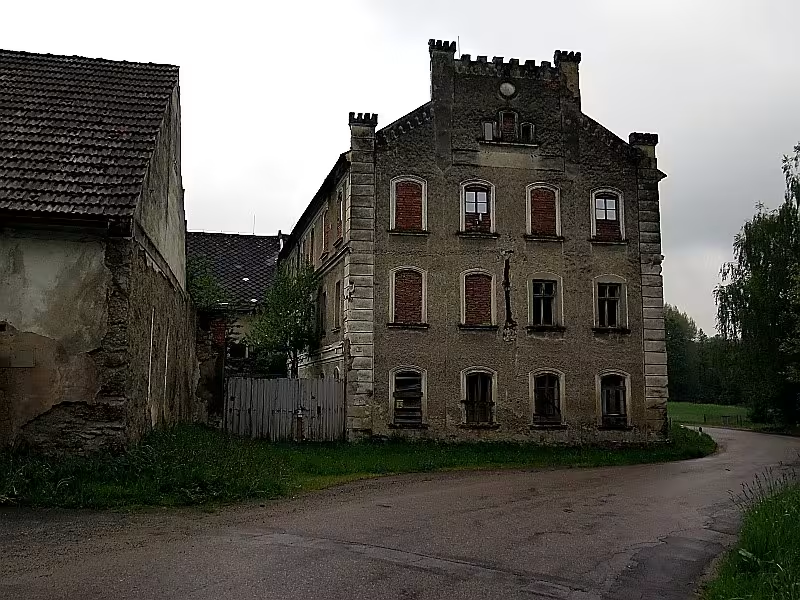
Vodní mlýn čp. 35, also known as Steinmühle, is a Baroque technical monument in the village Benešov nad Černou in the district of Český Krumlov. The building is located on the river Černá and since 1990 it has been protected as a real cultural monument of the Czech Republic. It is an important document of the technical history of the region.
The history of the construction dates back to the time before the mill itself, as it grew up in the place of the older iron hamra. The original operation has been preserved by cellars, base masonry and drive stalls. The first written mention of the miller's activity dates back to 1760, when the wife of the then benešov miller Jakub Hanis is documented in the sources. This period falls within the era of the reign of Marie Theresa, where intense colonization and development of industrial activities using water were taking place in the foothills.
The architectural solution of the mill is based on the use of older construction of the hamr, which was adapted for milling purposes. The technical equipment of the building has been modernised over time. According to records from 1930, the mill had two wheels for top water. He used the flow rate of 4.2 meters at a flow rate of 0.385 cubic meters per second. At the time, the total power of the device was 13 horsepower. The water was brought to the mill wheels by a drive from the lake.
In addition to miller technology, the saw was part of the operation, which was still one of the few original technical parts. The object remains an authentic witness to the way the power of the watercourses was used in the past in the Novohrad Mountains for the needs of the local industry.
Today, the mill in Benešov nad Černá is a protected building that resembles the technical maturity and economic development of the region in the 18th and 19th centuries. Visiting this place offers the opportunity to explore the history of water construction and to understand the importance of local industrial traditions. The construction is a valuable proof of the continuity of human activity in the landscape and deserves the attention of any interested person in technical monuments.
Historical milestones
- 1760
- The first written mention of the miller James Hanis.
- 1930
- The mill had two wheels for the upper water of 13 HP.
- 1990
- The building was declared a cultural monument of the Czech Republic.
Architectural development
The building was built on the foundations of the older iron hamr, with the original masonry and the shaft with the drive were used in the construction of the mill. The technical equipment of the mill went through modernization, in 1930 it had two wheels for the upper water of 13 HP output.
Historical events
In 1760 the miller Jakub Hanis is documented. In 1930 the mill was operated with two wheels for the upper water. Since 1990 the building has been protected historically.
Points of interest
- The building was built in a place where an iron hammer used to work. From this original operation, cellars, base masonry and drive stalls have been preserved until today. - The first written mention of the miller's activity dates back to 1760, when the sources show the death of the wife of the former miller James Hanis. - In 1930 the mill had two wheels for the upper water and used the flows 4.2 meters. At the time, the total power of the device was 13 horsepower. - In addition to miller technology, part of the operation was also a saw which was preserved as one of the few original technical parts to this day. - Since 1990 the building has been protected as a real-estate cultural monument of the Czech Republic.
Guide
Show guide text
This text was created by artificial intelligence and has not been editorially reviewed. It may contain inaccuracies.
Welcome to Benesov over Montenegro. Right now, you're standing in front of the Water Mill with the number five and thirty, which is a silent but proud witness to the transformation of this region. Stop for a moment, take a breath and feel the atmosphere of this place. In front of you is a building that is much more than just a building for grinding grain. It is a layered story of human work, technical progress and the relationship of man to nature, namely the Black River, which flows here and has been providing energy to everything that has been created here for centuries. Look at the overall shape of the mill and see how naturally it fits into the landscape around it. Now, when you look at this memory, you may only see the mill, but the history of this particular place goes much deeper than you could imagine. To understand why this building is so important, we need to go back to the past in our minds. This mill was not created in an empty place. Under the current masonry lies the secret of older industrial operations. This is where the iron hammer used to work. Imagine the noise, the heat of the blast furnaces, and the rhythmic strokes of the hammer that shaped the iron. This was an era where water did not chase the mill wheel for flour, but powered heavy metal processing machines. Although the hamr had long since disappeared and retreated to the mill, its traces were still present. If you could see through the ground, you would see the old cellars, the base masonry and the fascinating drive shaft, which are now silent reminders of this first industrial era. Now let's move on in time to the people who lived and worked here. Historical sources allow us to look into the life of the miller, even though these traces are sometimes very sketchy. The first written mention of the miller's activity at this place dates back to the year of seven hundred and sixty. It's a fascinating moment when the name of a particular person goes down in history. The miller at the time was called Jakub Hanis. Interestingly, we know about him because of his wife's death record. It's typical of old chronicles where men's names often appear only as part of family ties or in connection with their craft. Jakub Hanis and his family probably spent all day here in the rhythm of the water stream, nurturing the mill wheel and supplying the surrounding villages with flour, which was the cornerstone of life at the time. Now pay attention to the construction itself and its location. Notice how the mill is situated right at the Black River. This position was crucial to its survival and prosperity. The water wasn't just raw material, it was the blood vein of the entire operation. Even though we don't see internal mechanisms today, we can imagine how water flowed from the drive, how it broke against the wheel blades, and how this force traveled through the shafts and the gears to the mill. Take a look at the facade of the building and think about how many generations of miller people have stood up at dawn to check the condition of the water and prepare the mill for a new working day. When we look at the technical development of this place, we're getting to a very interesting period, which was nine hundred thirty years ago. At that time the mill underwent modernization, which made it a very powerful machine of its time. The mill was equipped with two wheels for the upper water. For those of you who are not familiar with the technology, the upper water means that the water has hit the top of the wheel, which is a much more efficient way of using energy than at the bottom of the wheels. The overall performance of these rounds was 13 horsepower. Today, this figure may seem small to us, but in the year nine hundred thirty, it was a considerable force that made it possible to process large quantities of grain effectively and ensure the prosperity of the entire operation. Imagine the sound of two big wheels turning in sync and driving the internal machines of the mill. This combination of old hamr and later modern mill makes this building an important proof of the technical history of the entire region. It's a place where metallurgy and miller shops meet modern machines from the early 20th century. This is why this building was declared a cultural monument of the Czech Republic in the year one thousand nine hundred ninety. This recognition means that the state recognised the value of this place not only as a building, but as a memoir of how we worked in our landscapes and how technology developed. Now I want to invite you to a little thought. Try to stop for a moment and forget the noise of the modern world. Imagine standing here hundreds of years ago. You hear the noise of the Black River, you smell the smell of freshly ground grain, and in the distance you hear the effects of the hammers from the Iron Hamr. It's a fascinating idea that beneath your feet are hidden corridors and masonry that no longer saw the light, but they are still here, holding the history of this place together. This invisible part of the monument, the stol and the foundation, forms a mysterious layer that gives the mill depth and character. It is a reminder that every building has its roots and that what we see on the surface is often just the last layer of a long process. Benešov Mill is not just about technology and data. It's mostly about people like Jakub Hanis, who shaped the landscape with their work. It's about miller families living here in symbiosis with water. It's about the courage to turn old hamr into a modern mill and the ability to adapt to new times. If you look around now, you'll see that the mill is still standing, still guarding its river, and still telling its story to anyone who finds time to listen to it. Now that you know the story of this place, I suggest you look around the mill in peace and quiet. Feel the water in the Black Lise River between the rocks, and imagine how powerful it was when the two big wheels were driven in the year nine hundred and thirty. Look at the details of the facade and think about how many secrets the cellars that once served iron smiths hide. Thank you for accompanying me on this short trip to the history of Beneshov Mill. I hope that this view of memory helped you see more than just an old building in it, but a living organism that combines centuries of human effort and technical ingenious thinking. Now you can continue to explore the beauty of this region. I wish you a pleasant journey and many other fascinating discoveries. Goodbye.
Tips for visitors
The best time to visit is late spring or summer, when the surrounding nature of the Novohradské Mountains is fully blooming and the level of the Black River offers a pleasant refreshment. In this period is also the best access to the exterior mill.
You can easily reach the village Benešov nad Černou by car. We recommend that public transport be checked in the current search engines.
For a visit, pack solid shoes suitable for field movement around the water stream and the camera. If you plan to stay longer in nature, do not forget the repellent and water bottle.
The best pictures of the mill are taken in the morning, when the sun lights up the front of the building from the river. The images from the opposite bank allow you to capture the historical structure in a picturesque concentration with water flow.
For families with children the location is ideal for easy walking along the Black River. In the vicinity you can explore the picturesque village Benešov nad Černou or take a trip to the nature of the Novohradské Mountains, which offer a quiet environment for common experiences.
Frequently asked questions
Can the monument be visited?
This is a technical monument. Some are open as exhibitions, others are out of use or on private land. We have not verified whether this one is accessible.
What are the opening hours and admission?
We have not verified the opening hours or admission. Current information is published by the operator.
Where is the monument?
Location: Benešov nad Černou, Jihočeský kraj. The map on this page shows the exact spot.
Why is the monument protected?
It is listed in the Central List of Cultural Monuments of the Czech Republic as a cultural monument (register no. 1000156482).
Businesses nearby
Do you run a restaurant, accommodation, shop, museum, rental, wellness or other visitor service near this monument? Show yourself directly to the people heading to it — this is how they will see you in the app and on the web:
Nearby
Obec Benešov nad Černou, říčka Černá, Novohradské hory.
Accommodation nearby
Trips and activities nearby
Guided tours, tickets and activities nearby from GetYourGuide
Affiliate link: if you buy from the partner, we may receive a commission. The price for you does not change.
Search tours and activities →Themed route
1. Municipality of Benešov nad Černou, village. Start your way through this peaceful settlement. Second River Black, water flow. Walk along the water bank, which will lead you to the mill. 3. Vodní mlýn čp. 35, historical mill. Admire this important water object as the main destination of the trip. 4. Novohrad Mountains, mountains. End your walk in the nearby mountains.
Seasonal recommendations
In spring, the surroundings of the mill awaken to life. The trees at the water start to green and the sun shines softer, creating a fresh and encouraging mood. We recommend a visit in the morning when the air is the cleanest. Dress well, because the morning cold at the water stream can still smell.
In the summer months there is most life and the landscape is full of thick green. The strong sun reflects beautifully from the surface, creating a bright view. Because of the larger number of people in the main summer time, it is best to arrive early in the morning to enjoy your peace. Remember light clothes and sun protection.
Autumn brings golden and brown leaves to the surroundings. The fog rising above the surface gives the place mystery and calm mood. It's the perfect time to observe nature through low light. Prepare waterproof shoes and coat because humidity and cooler air can be challenging.
Winter makes the mill very quiet and lonely, especially when the level is covered with ice. The daylight is very short, so plan a visit around noon. It is necessary to wear very warm clothes and high-quality shoes so that the frost of the water does not soak or overtake you.
Visualizations and artistic views


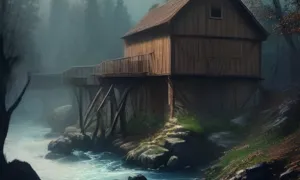
The visualisations are generated by artificial intelligence and serve as inspiration.
Photos from the area
Real photos taken near the monument


Zdroj a licence jsou uvedeny u každého snímku.
Tips from visitors
No tips yet. Be the first!
Log in and add your tip.
Sources and literature
Photos: Sovicka169 / CC BY-SA 4.0 — Wikimedia Commons. The author and licence also appear when you hover over the image.
Faktickým podkladem tohoto textu byl článek na Wikipedii, jehož autory jsou přispěvatelé Wikipedie. Článek je dostupný pod licencí CC BY-SA 4.0.
Location on the map



Příběhy a pověsti
Legendy, pověsti a příběhy spjaté s touto památkou
Fotografie návštěvníků
Zatím žádné fotografie. Buďte první, kdo přidá fotografii z návštěvy!
Log in a přidejte svou fotografii nebo hodnoťte.
Za ověřenou návštěvu v aplikaci získáte víc bodů — poznáme podle GPS, že jste na místě.
Reviews and comments