

Vojenský hřbitov (Nový Bydžov) Cemetery
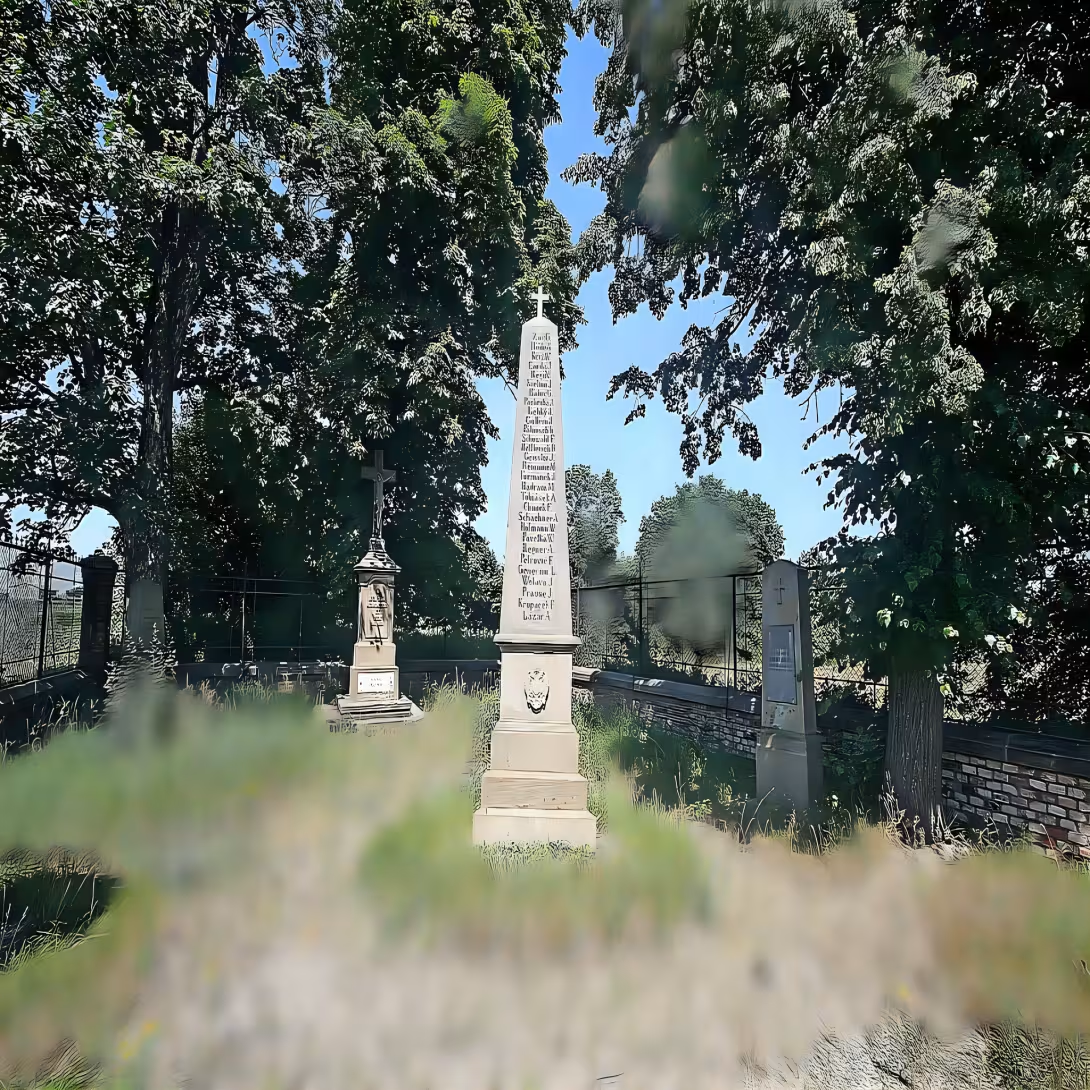
The Military Cemetery in Nový Bydžov is a historical resort from 1866. It is located on the west edge of the city by the field road behind the hospital. This real-estate cultural monument of the Czech Republic of 203 m ² serves as the last resting place of soldiers from both sides of the Prussian-Austrian War.
The cemetery was established in connection with the conflict of 1866 when a military hospital was established in the local building. The soldiers who died in this Lazaret on the disease or the aftermath of the injuries suffered in the battles at Hradec Králové and Jičín were buried in a mass grave behind the building. This is where the cemetery itself was created.
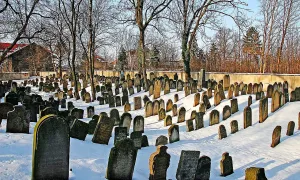
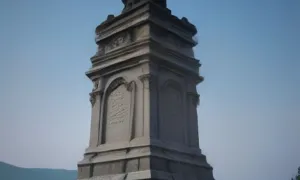
The area is closed by fencing with the gate. It consists of a collection of sandstone monuments, pyramids and obelisks. The central element is a three-edged sandstone obelisk from 1868 decorated with military emblems. The memorial bears the names of 29 Austrian and 13 Saxon soldiers. It was dedicated to c. K. military veterans together with citizens of the city and district of Nový Bydžov. In one of the corners is a type sandstone pyramid with a top gun cross, which marks the grave of 25 Prussian soldiers; This monument was dedicated to the Prussian Order of Johanites.
Other important elements are the sandstone pyramid with a cross dedicated to all fallen in the district of the city and district of Nový Bydžov and the monument in the form of a cross. It resembles a New Bydjav native, Austrian lieutenant, Lorence Lhotta of the 18th Infantry Regiment, who fell on June 29, 1866 in the Battle of Jicin. In the cemetery is also placed the block box monument of industrialist Henry Vilem Friedlaender, chairman of the local association for maintaining monuments of fallen soldiers.
The dominating area is the central sandstone cross according to the design V. Weinzettla. It was dedicated to J. V. Friedlaender and was revealed on 28 September 1902. The cross bears the Latin inscription Ego sum resorrectio et vita. In the memory of the war of 1866, in Nové Bydžov was also erected an authentic cross. During the First World War, the dead of the local Lazarets were buried in the cemetery, but their simple tombstones were not preserved.
In 1993, a separate Memorial was built in the adjacent park to the victims of wars, resistance and persecution. It consists of a central obelisk and two sculptures depicting a girl with a boy and two soldiers. The building was created by modification of the original monument of the Red Army, which was carried out by the employees of the Central Industrial School in Hořice under the direction of Leoš Valehrach.
The Military Cemetery in Nový Bydžov represents authentic evidence of the tragic consequences of the Prussian-Austrian war and of the respectable access of local people to the fallen from both sides of the conflict. It's a place suitable for anyone looking for specific historical clues from the mid-19th century.
Then and now
Drag the slider to compare how the landmark may have looked when it was built with the view today.
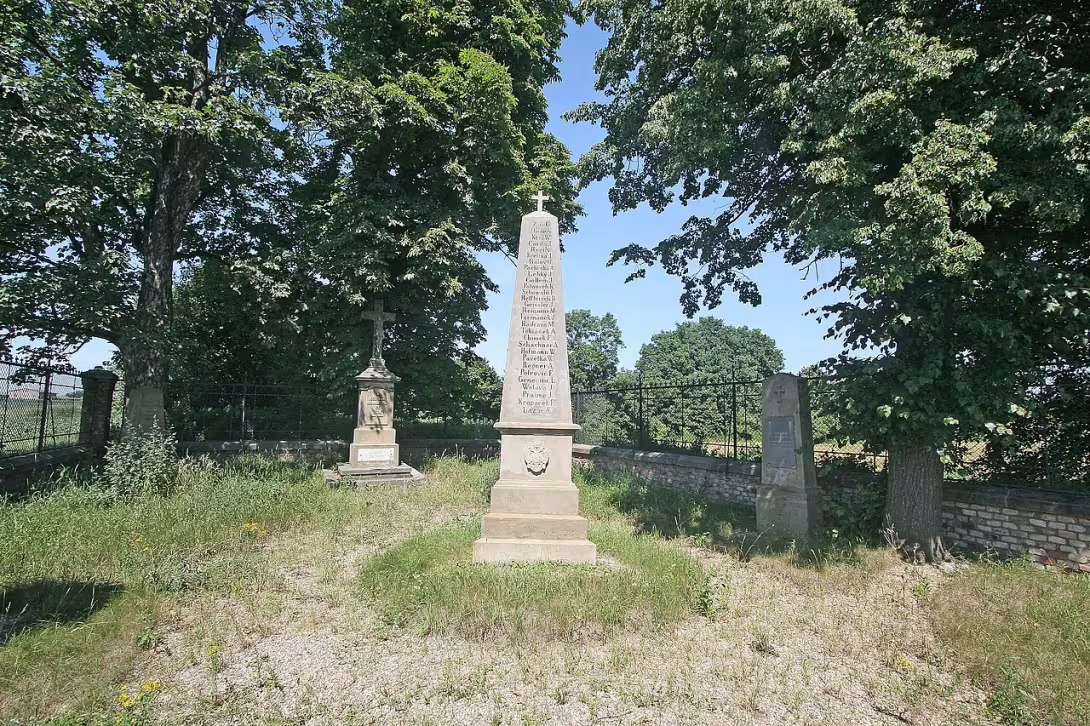
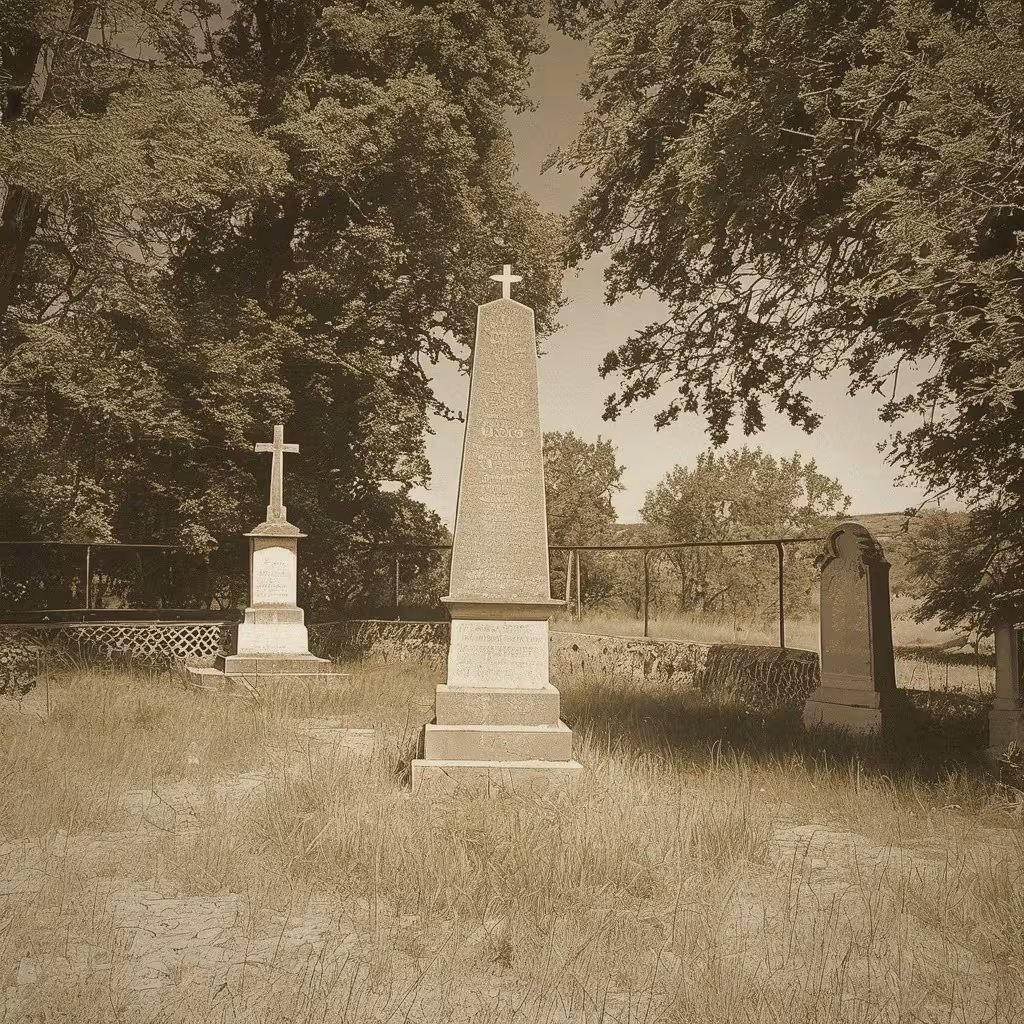
The historical appearance on the left is an AI-generated visualisation and serves as inspiration only.
Historical milestones
- 1866
- Establishment of a military cemetery in connection with the Prussian-Austrian war.
- 1868
- The raising of a central triangular sandstone obelisk.
- 1902
- Detection of the central sandstone cross with Ego sum resorrectio et vita.
Architectural development
The cemetery consists of a collection of sandstone monuments, pyramids and obelisks. In 1902 there was another addition of monuments and installation of the central cross. During the First World War, simple tombstones were added, but they were not preserved.
Historical events
1866: Establishment of a military hospital and creation of a mass grave; 1902: Detection of the central sandstone cross; 1993: Building a separate Memorial to the victims of wars, resistance and persecution in the adjacent park area.
Points of interest
- The cemetery from 1866 serves as a resting place for soldiers from both sides of the Prussian-Austrian war. - The central triangular sandstone obelisk from 1868 bears the names of 29 Austrian and 13 Saxon soldiers. - The sandstone pyramid with the cannon cross marks the grave of 25 Prussian soldiers. - A memorial in the shape of a lamb resembles the native of Lorence Lhotta, who fell in the battle of Jicin. - The dominating of space is the central sandstone cross from 1902 with Latin inscription.
Guide
This guide is narrated by a synthetic voice generated by artificial intelligence.
Show guide text
This text was created by artificial intelligence and has not been editorially reviewed. It may contain inaccuracies.
Welcome to New Byjo. You're standing right in front of a place that emits deep calm and resembles the dramatic events of the last century. There is a military cemetery in front of you, a small area of more than 200 square meters, which is today protected as a real cultural monument of the Czech Republic. When you look at this place, you may only see a quiet space with several monuments, but every stone here tells the story of pain, death and subsequent reconciliation.
Let's stop at the beginning of this place together. To understand why these men are buried here, we must return in time to the year one thousand eight hundred sixty-six. This year there was a Prusse- Austrian war. It was in connection with this conflict that this cemetery was created. At the time, a Lazaret was set up in New Bydjov, a field hospital for wounded and ill soldiers. Unfortunately, many of them didn't survive their injuries. It is here, at the site of the mass grave of those who died in the Lazaret, that the cemetery was founded. It is a place where time has stopped and where today people who were once part of the great political and military clashes of their time are resting.
Now pay attention to what you see right in front of you. The whole area is dominated by a high triangular obelisk from sandstone. This monument was erected in a thousand eight hundred sixty-eight and serves as a reminder to Austrian and Saxon soldiers. Look at him carefully. This sandstone column is not just an architectural element, but it has specific names in it. If you approach him, you will see the names of twenty-nine Austrian and thirteen Saxon soldiers. It is a strong feeling to know that behind each of these engraved names was a real man with his life, his family and the hope he had to leave in this city.
If you look further through the cemetery space, notice other elements. In addition to the main obelisk, you will find monuments dedicated to Prussian soldiers and various individual tombstones. Particularly interesting is the sandstone pyramid, which is supplemented by a cannon cross. It is this building that marks the grave of 25 Prussian soldiers. It is fascinating to see the different shapes of monuments intermingled here, from the high obelisk to the pyramid shape, which shows a different approach to commemorating the dead at that time.
Now let's talk about another significant detail that came into space later. In the year one thousand nine hundred and two, the central sandstone cross was discovered here. If you look at it, you'll see it in Latin: Ego sum resorrectio et vita. That in our language means I am the resurrection and the life. This inscription gives the whole place a spiritual dimension and hope that goes beyond the tragedy of war itself. The architectural trail was also left by Mr V. Weinzettl, whose work helped to shape this monument site.
If we think about who was associated with this place, we can mention names like Lorenc Lhotta or Jindřich Vilém Friedlaender. They are figures that play a role in the context of the history of the region and monuments. Although they are less well-known to many of us today, their presence in the record suggests that the administration and care of such sensitive places required the efforts of specific people.
Now, I want to invite you to a deeper consideration, which is the most fascinating aspect of this cemetery. You will notice that there are soldiers lying next to each other from both sides of the conflict. Prussian and Austrian and Saxon. By the time the war was underway, these men were enemies. They fought each other, maybe hated each other, or tried to destroy each other in the heat of battle. But death is a great equator. Here, on this little piece of land in New Bydžov, lies together. So this cemetery is not just the archive of death, but it becomes a symbol of peace. It is a reminder that human suffering is the same no matter what uniform a man wore or whose ruler he fought for.
Change your view from historical to personal. Imagine the silence that existed here a hundred and sixty years ago, and imagine the people who came here to plant flowers or just to quietly remember their friends and comrades. Notice how sandstone with time softened and gained its characteristic colour that fits into the surrounding landscape. The whole area is small, but its energy weight is huge.
When looking at the monument in the form of a needle, which you will also find here, remember that each one of these buildings was aimed at one thing: to ensure that these people are not forgotten. At the time of the Prussian-Austrian war, there were no digital records or modern databases. The only way to preserve a man's name for future generations was by stone. And by taking care of this place and being protected today as a cultural monument, we can stand here today and read these names out loud.
I suggest you spend a few minutes in complete silence. Walk slowly through the entire space, stop by each of the tombstones and feel the atmosphere of this place. Try to imagine the path of those wounded soldiers to the hospital and their last moments in this city. It is a place to think deeply about the anointing side of human history, but also about the ability of man to honor the dead regardless of their origin.
This concludes a short trip to the history of the military cemetery in New Bydžov. I hope this walk has inspired you to consider peace and memory. Now you can quietly continue to discover the other beauty and mystery of this city. I wish you the rest of the day and thank you for your attention. Say goodbye to this quiet place and continue your journey.
Tips for visitors
The best time to visit is late spring or autumn, when the surrounding nature complements the valiant atmosphere of this drinking place. The cemetery is accessible by car and public transport; Check the current connection in the search engine.
For a visit we recommend you take the mobs because the cemetery is located near the field road where the terrain can be unpreserved. As this is a mass grave of soldiers from the Prussian-Austrian war, it is advisable to maintain silence and respect for the deceased.
For the best photos we recommend to come in the morning or late afternoon light, which gently illuminates the monument. Focus on details of graves and contrast between the historical cemetery and modern elements in the surroundings.
We recommend families with children to use a visit to tell about the history of the Lazarets and how they have helped injured soldiers in the past, which may be an educational experience in the real environment.
Frequently asked questions
Can the monument be visited?
Cemeteries and graves are usually accessible; please respect the dignity of the place. We have not verified the opening hours of this cemetery.
Where is the monument?
Location: Nový Bydžov. The map on this page shows the exact spot.
Why is the monument protected?
It is listed in the Central List of Cultural Monuments of the Czech Republic as a cultural monument (register no. 1000125298).
Businesses nearby
Do you run a restaurant, accommodation, shop, museum, rental, wellness or other visitor service near this monument? Show yourself directly to the people heading to it — this is how they will see you in the app and on the web:
Nearby
🏰 Historic sites (116)
- svatá Anna 0.2 km
- Svatý Jan Nepomucký 0.9 km
- sv. Vavřinec 1.0 km
- sv. Václav 1.0 km
- sv. Šebestián 1.0 km
- Panna Maria Immaculata 1.0 km
- sv. Jan Nepomucký 1.0 km
- sv. Florián 1.0 km
- sv. Roch 1.0 km
- sv. František Xaverský 1.0 km
- sv. Josef 1.0 km
- Mariánský sloup 1.0 km
- Městské muzeum Nový Bydžov 1.1 km
- Miroslav Tyrš 1.1 km
- Alois Jirásek 1.1 km
- František Palacký 1.2 km
- sv. Jan Nepomucký 1.2 km
- Zámek Sloupno 2.1 km
- sv. Jan Nepomucký 2.2 km
- Dr. J. E. Proche 2.4 km
🍽️ Restaurants and dining (30)
- U Bodláka 0.3 km
- Fantazie & Flowers Coffee 0.9 km
- U puku 1.5 km Dukelská třída 973 +420 603 175 227 web
- Barešův Ranč 4.7 km web
- Hospoda Myštěves 8.3 km
- Hospoda u Novotných 9.0 km
- Café Orangerie 9.6 km
- Stop Cafe 9.6 km
- Zámecká restaurace 9.8 km Pražská 11/4 +420491612999 web
- U Karla IV. 9.9 km
- Hospůdka Na Hřišti 10.1 km
- Café U Rybiček 11.0 km +420 604 929 231 web
- Koruna 11.2 km Palackého 80
- Restaurace u Ságnerů 11.3 km +420777 643 039 web
- Selská Jizba 11.5 km +420 495 451 644 web
- Hospoda U havrana 11.6 km
- Hostinec u Růženky 11.6 km
- U Jezírka 11.7 km
- Lískovice 11.8 km
- U Vavřince 11.9 km
🏨 Accommodation (7)
- Kemp Lodín 9.6 km web
- Hotel Coruna 9.7 km Pražská 10 web
- Kemp Koupaliště Chlumec nad Cidlinou 10.3 km Na Hatích
- Motorest TIR 12.3 km
- Motel Roudnice 14.4 km web
- Kemp Milovice u Hořic 14.4 km web
- Soukromé kempové místo 14.4 km
🚲 Rentals and sport (8)
- Motokros 3.2 km
- Autocross KPM KOSICE 7.7 km
- Slavíčkova hala 9.6 km Sokolská 795
- Myslivecký klub 11.7 km
- Motokros 12.3 km
- Autokros 12.5 km
- Jízdní kola Kalecký 13.4 km Náměstí Republiky 62
- Střelnice Hrádek 14.0 km
🥾 Hiking and nature (59)
- Městký park u Novobydžovského hřbitova 0.3 km
- Velký Borek 2.9 km
- Vertánov 3.1 km
- Na kopci 3.1 km
- Chlum 4.3 km
- Vlčí hůrka 5.4 km
- Pařezová 5.8 km
- Loučná hora 5.9 km
- Horka 6.3 km
- Zdechovice 6.5 km
- Kamenec 6.6 km
- Homolka 6.9 km
- Pod Rozhlednou 7.2 km
- Pramen Mlékosrby 7.3 km web
- Židovský kopec 8.0 km
- Sychrov 8.1 km
- Horka 8.8 km
- Parčík a hřiště mezi sídlišti 9.0 km
- U Tomáškova lesa 9.2 km
- Zámecký park 9.5 km
Accommodation nearby
Themed route
Here is a proposal for a thematic walk:
1. Memorial to the victims of wars, resistance and persecution (memorial) - Modern work in the park area, which resembles the suffering of people during war conflicts. 2. Military cemetery (cemetery) - The main destination of the road on the west edge of town, where fallen soldiers rest.
The route leads at a short distance from the park section through the field route to the hospital itself.
Seasonal recommendations
In spring, space awakens to life and the surrounding greenery begin to emerge gently, creating contrast with stone grave signs. Light is soft and pleasant in this period, ideal for quiet contemplation. Moistable footwear is recommended because grass can still be wet from morning dew. The best place to visit is in the morning when the air is the cleanest.
Summer brings with it intense sun and a full bloom of surrounding vegetation, which is surrounded by dense greenery. The atmosphere is warm and calm, with shade providing only nearby trees. It is advisable to choose light, breathable clothes and a hat to protect from heat. Due to the strong sun, the best time is shortly before the setting, when the space is cooled.
Autumn is a period of melancholy, when leaves turn into golden and brown tones, which underlines the respectful nature of the cemetery. The lighting is golden and with the coming days becomes more dark. It's practical to take a lighter jacket or a wind coat and prepare for falling leaves on the road. An ideal visit in the afternoon in foggy weather.
Winter brings silence and strict purity to space, especially when snow covers the landscape. The atmosphere is very serrated and causes a deep room that is less pronounced in other times of the year. Hot and waterproof clothing is essential, including gloves and shoes. The most appropriate visit is around noon, when the most daylight is.
Visualizations and artistic views


The visualisations are generated by artificial intelligence and serve as inspiration.
Photos from the area
Real photos taken near the monument


Zdroj a licence jsou uvedeny u každého snímku.
Tips from visitors
No tips yet. Be the first!
Log in and add your tip.
Sources and literature
Photos: Petr1888 / CC BY-SA 3.0, rozlišení zvýšeno umělou inteligencí — Wikimedia Commons. The author and licence also appear when you hover over the image.
Faktickým podkladem tohoto textu byl článek na Wikipedii, jehož autory jsou přispěvatelé Wikipedie. Článek je dostupný pod licencí CC BY-SA 4.0.
Location on the map
Příběhy a pověsti
Legendy, pověsti a příběhy spjaté s touto památkou
Fotografie návštěvníků
Přidat fotografiiZatím žádné fotografie. Buďte první, kdo přidá fotografii z návštěvy!
Máte k místu vzpomínku nebo zajímavý příběh?
Log in a přidejte svou fotografii nebo hodnoťte.
Za ověřenou návštěvu v aplikaci získáte víc bodů — poznáme podle GPS, že jste na místě.
Reviews and comments