






Kostel Nanebevstoupení Páně v Borotíně Church
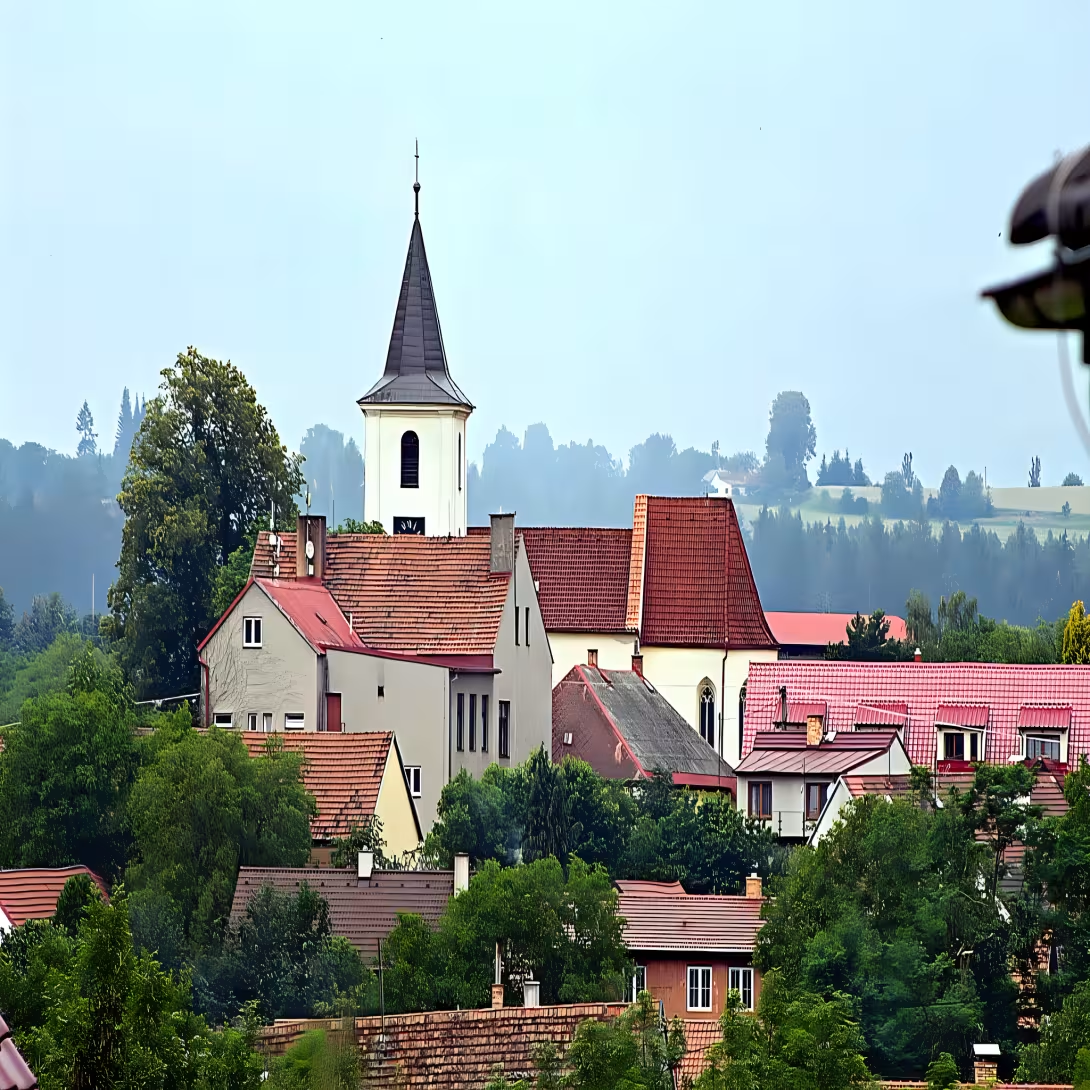
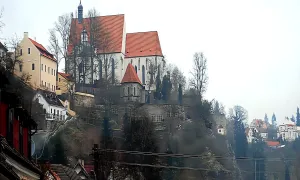
The Church of the Ascension of Our Lord in Borotín is a single-nave Gothic church with Baroque elements, located in the southern Bohemian village of Borotín. Constructed in the mid-14th century by the lords of Borotín, it reflects historical and architectural evolution over several centuries. Initially dedicated to St. Mary Magdalene, it was later rededicated, showcasing its dynamic history. Recognized as a cultural monument since 1958, this site offers insights into Gothic architecture and regional history.
The origins trace back to the mid-14th century when Vítek z Borotína built it in 1356 during Charles IV's culturally flourishing reign. Initially a filial church under Narození Panny Marie v Novém Kostelci, it gained parish status in 1386 through Mikuláš z Borotína and Archbishop Jan z Jenštejna. This change highlights its growing ecclesiastical importance.
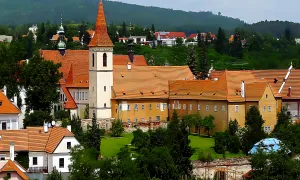
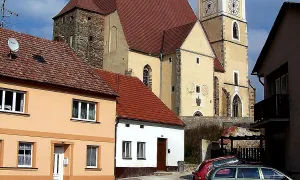
Architecturally, the church features Gothic style with later Baroque modifications. It includes a polygonal presbytery, nave, and a bell tower in the southwestern corner of the façade. Ribbed vaults and pointed arches within the presbytery exemplify typical Gothic techniques. After a fire in 1863 caused significant damage, reconstruction included a new nave designed by architect Karel Bach, blending historical preservation with modern restoration.
Ownership and administrative control have shifted over time. Initially under the lords of Borotín, it later fell under Jistebnice's jurisdiction after the Battle of White Mountain due to a priest shortage. Despite these changes, the church remains integral to the community, evidenced by its continued use and maintenance.
Key historical events include its elevation to parish status in 1386 and the 1863 fire leading to reconstruction. The installation of organs in 1882, tested by composer Josef Bohuslav Foerster, marks another cultural milestone. Notable artworks include paintings by Bedřich Kamarýt on the main altar and a Baroque cupola added to the bell tower post-1863.
Today, the Church of the Ascension of Our Lord stands surrounded by a cemetery with an enclosing wall and mortuary chapel. It remains accessible for visitors interested in its rich history and architectural beauty. Its designation as a cultural monument underscores its significance, making it a worthwhile destination for those exploring southern Bohemia's historical and artistic heritage.
Visiting Kostel Nanebevstoupení Páně v Borotíně offers an opportunity to explore a site encapsulating centuries of history, architectural evolution, and community importance. Its enduring presence invites exploration and appreciation from those seeking connection with the past in its serene rural setting.
Then and now
Drag the slider to compare how the landmark may have looked when it was built with the view today.
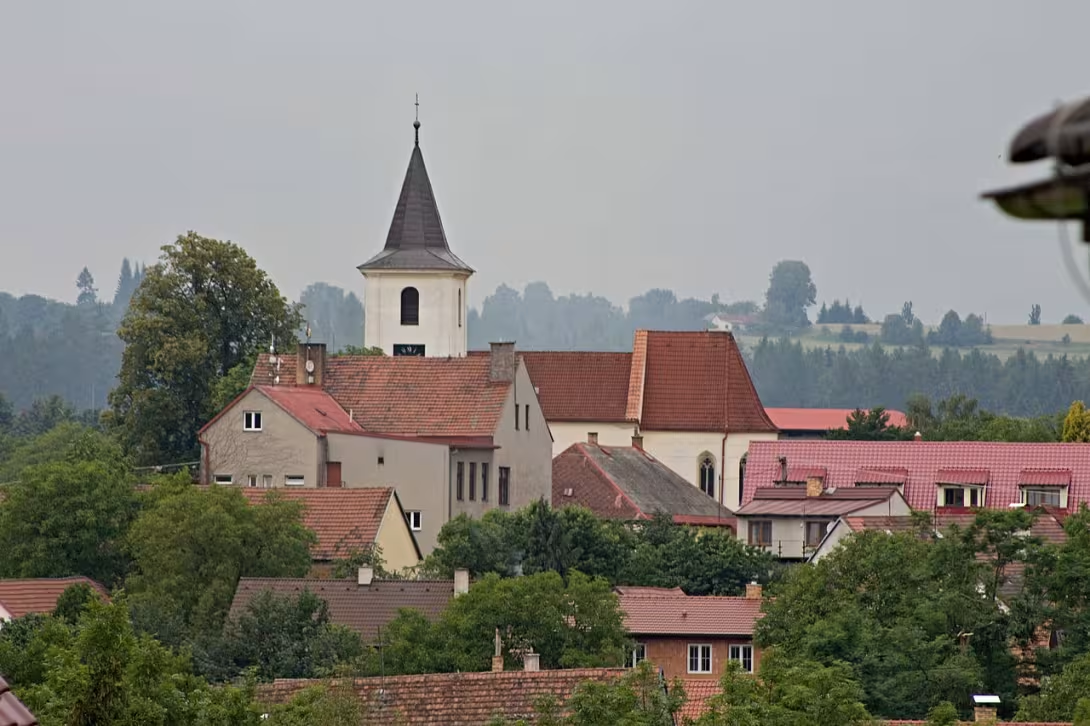
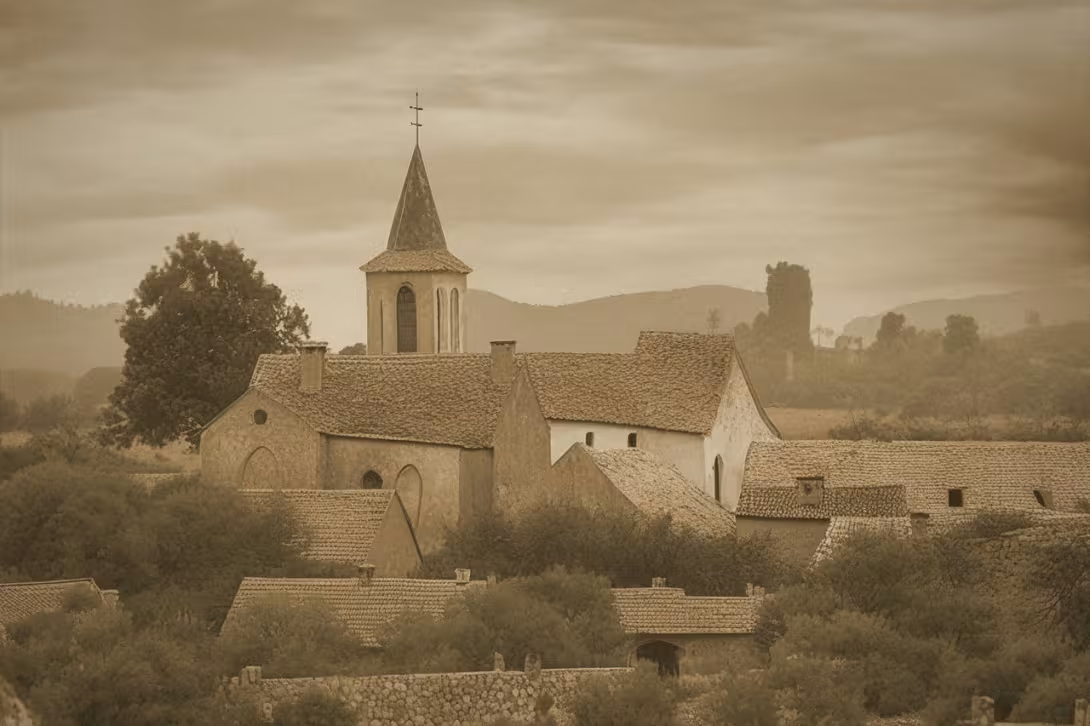
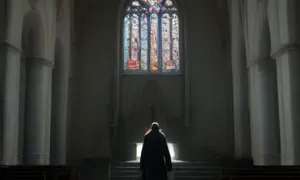
The historical appearance on the left is an AI-generated visualisation and serves as inspiration only.
Historical milestones
- 1356
- Vítek z Borotína built the church during the reign of Charles IV.
- 1386
- The church gained parish status thanks to Mikuláš z Borotína and Archbishop Jan z Jenštejna.
- 1863
- After a fire, the church underwent reconstruction with a new nave designed by architect Karl Bach.
- 1882
- Organ pipes were installed in the church and tested by composer Josef Bohuslav Foerster.
- 1958
- The church was recognized as a cultural monument.
Architectural development
Constructed in the mid-14th century as a Gothic structure, the church underwent Baroque modifications. After a devastating fire in 1863, it was reconstructed with a new nave by architect Karel Bach. The interior has seen multiple renovations, including the installation of organs in 1882.
Historical events
In 1386, the church was elevated to a parish by Archbishop Jan z Jenštejna.
After the Battle of White Mountain in 1620, it came under Jistebnice's jurisdiction.
The church suffered significant damage from a fire in 1863 but was rebuilt with a new nave designed by Karel Bach.
Owners
Initially owned by the lords of Borotín, including Vítek z Borotína in 1356 and Mikuláš z Borotína who secured its parish status in 1386. After the Battle of White Mountain, it fell under Jistebnice due to a lack of priests.
Points of interest
- The Church of the Ascension of Our Lord was originally dedicated to St. Mary Magdalene before being rededicated, reflecting its dynamic ecclesiastical history and changing religious focus over time.
- After a devastating fire in 1863, the church underwent significant reconstruction that included a new nave designed by architect Karel Bach, blending historical preservation with modern restoration techniques of the era.
- The church's organs, installed in 1882, were tested by composer Josef Bohuslav Foerster, highlighting its cultural significance and connection to notable figures in Czech music history.
- Architecturally, the church features a unique combination of Gothic style elements like ribbed vaults and pointed arches with later Baroque modifications, including a cupola added to the bell tower after the 1863 fire.
- Despite shifts in ownership and administrative control over time, such as falling under Jistebnice's jurisdiction post-Battle of White Mountain due to a priest shortage, the church has remained an integral part of its community.
Guide
This guide is narrated by a synthetic voice generated by artificial intelligence.
Show guide text
This text was created by artificial intelligence and has not been editorially reviewed. It may contain inaccuracies.
The Church of the Ascension of the Lord belongs to the South Bohemian town of Borotín in the Tábor district. It is a single-nave church in Gothic style with some Baroque elements. It was built in the fourteenth century by the lords of Borotín, probably by Vítek of Borotín in the year thirteen fifty-six. Since nineteen fifty-eight it has been a cultural monument.
At first it was not independent. As a subsidiary church it fell under the parish church of the Birth of the Virgin Mary in Nový Kostelec. It was then dedicated to Saint Mary Magdalene and received its present dedication only later. At the request of the manor owner Mikuláš of Borotín, it was separated from the Nový Kostelec parish in thirteen eighty-six and elevated to a parish church. By a document dated nineteenth March thirteen eighty-six, the Prague archbishop Jan of Jenštejn granted permission for the establishment of the parish.
After the Battle of White Mountain, there was a shortage of priests, so the Borotín church came under the parish of Jistebnice. The Borotín parish was restored only in seventeen twenty-four, and it then also included the subsidiary church in Nový Kostelec.
According to parish registers, burials frequently took place in the church, including owners of the Borotín manor. There are tombstones of the Malovec family here, and buried here is Jan Malovec of Pacov, who died in fourteen eighty-eight.
In seventeen ninety-two the church underwent reconstruction. In eighteen sixty-three it was struck by a major fire. Only the vaulted chancel with the main altar and the sacristy remained. The new church nave was then built by Karel Bach. The fire also changed the Gothic tower: its Baroque dome was replaced by a pyramid.
The organ and bells were changed several times here. The organ from eighteen eighty-two was examined by the composer Josef Bohuslav Foerster and remains in the church to this day. Further repairs took place between nineteen hundred and nineteen sixteen. Since nineteen twenty-nine the church has had electric lighting and between nineteen forty-three and nineteen forty-four its interior underwent extensive restoration.
From the original structure, the Gothic chancel has been preserved. Its floor plan consists of five sides of a regular octagon and one rectangular vaulted section. It is six point fifty-five meters high. The vault ribs are terminated conically and behind the altar are round bases. The chancel has three windows with Gothic tracery. The triumphal arch is pointed and measures five point five meters in height.
A Gothic entrance one point eighty-five meters high leads to the sacristy. It has a pointed vault and its edges are bevelled diagonally. The same treatment applies to the Gothic portal in the left wall, which is two point forty-five meters high and one point seventy-eight meters wide. The altar paintings were executed by Bedřich Kamarýt.
Around the church extends a cemetery with a surrounding wall and a mortuary chapel.
Frequently asked questions
Can the monument be visited?
Religious buildings are usually open mainly during services; at other times a visit is normally arranged with the parish or the operator. We have not verified specific times.
Where is the monument?
Location: Borotín, Jihočeský kraj. The map on this page shows the exact spot.
Why is the monument protected?
It is listed in the Central List of Cultural Monuments of the Czech Republic as a cultural monument (register no. 20587/3-4743).
Businesses nearby
Do you run a restaurant, accommodation, shop, museum, rental, wellness or other visitor service near this monument? Show yourself directly to the people heading to it — this is how they will see you in the app and on the web:
Nearby
Surrounded by a cemetery with an enclosing wall and mortuary chapel, the church is located in a rural setting typical of southern Bohemia. Nearby natural features include rolling hills and agricultural landscapes.
Accommodation nearby
Themed route
Borotín Church Hike
1. Kostel Nanebevstoupení Páně (Church of the Ascension of Our Lord) This 18th-century Baroque church is the main attraction of the hike. Its unique architecture and peaceful atmosphere make it a must-visit destination.
2. Borotín Cemetery (approximately 0.5 km from the church) The cemetery surrounding the church is a tranquil oasis with an enclosing wall and a mortuary chapel. Take a moment to appreciate the serene atmosphere and the history that lies within.
3. Surrounding Hills (approximately 1 km from the church) The rolling hills surrounding Borotín offer a picturesque landscape perfect for a leisurely walk or a picnic. Take in the breathtaking views of the countryside and enjoy the peacefulness of the rural setting.
Seasonal recommendations
Jaro
In the spring, the Church of the Ascension of Our Lord in Borotín is surrounded by beautiful nature awakening from its winter slumber. The green vegetation and blooming trees create a pleasant atmosphere that complements the church's historical value. This period is an ideal time to visit the church as there are fewer tourists, allowing you to better acquaint yourself with its history and architecture. We recommend visiting the church in the spring months (March and April) when the weather is enjoyable and nature is in full bloom.
Summer
The main summer season is an ideal time to visit the Church of the Ascension of Our Lord in Borotín. In summer, nature is at its peak, with the church surrounded by blooming trees and green vegetation. However, this period also sees the most tourists, so we recommend arriving early to avoid large crowds. The best times to visit the church are in the morning or late afternoon when there are fewer people. Don't forget to bring sunscreen and water as summer weather can be very hot.
Autumn
The autumn season is a beautiful time to visit the Church of the Ascension of Our Lord in Borotín. The church is surrounded by stunning nature changing into its autumn attire. Blooming trees and green vegetation create a pleasant atmosphere that complements the historical value of the church. This period is also an ideal time to visit as there are fewer tourists, allowing you to better acquaint yourself with its history and architecture. We recommend visiting the church in the autumn months (September and October) when the weather is enjoyable and nature is in full bloom.
Winter
The winter season is a calm and quiet time to visit the Church of the Ascension of Our Lord in Borotín. The church is surrounded by snow and tranquil nature, creating a pleasant atmosphere. Don't forget to bring warm clothing as winter weather can be very cold. We recommend visiting the church in the winter months (January and February) when there are fewer tourists, allowing you to better acquaint yourself with its history and architecture.
Visualizations and artistic views


The visualisations are generated by artificial intelligence and serve as inspiration.
Photos from the area
Real photos taken near the monument


Zdroj a licence jsou uvedeny u každého snímku.
Tips from visitors
No tips yet. Be the first!
Log in and add your tip.
Sources and literature
Photos: VitVit / CC BY-SA 4.0, rozlišení zvýšeno umělou inteligencí — Wikimedia Commons. The author and licence also appear when you hover over the image.
Faktickým podkladem tohoto textu byl článek na Wikipedii, jehož autory jsou přispěvatelé Wikipedie. Článek je dostupný pod licencí CC BY-SA 4.0.
Location on the map

Příběhy a pověsti
Legendy, pověsti a příběhy spjaté s touto památkou
Fotografie návštěvníků
Zatím žádné fotografie. Buďte první, kdo přidá fotografii z návštěvy!
Log in a přidejte svou fotografii nebo hodnoťte.
Za ověřenou návštěvu v aplikaci získáte víc bodů — poznáme podle GPS, že jste na místě.
Reviews and comments