



Kostel Panny Marie Pomocné (Teplice nad Metují) Church
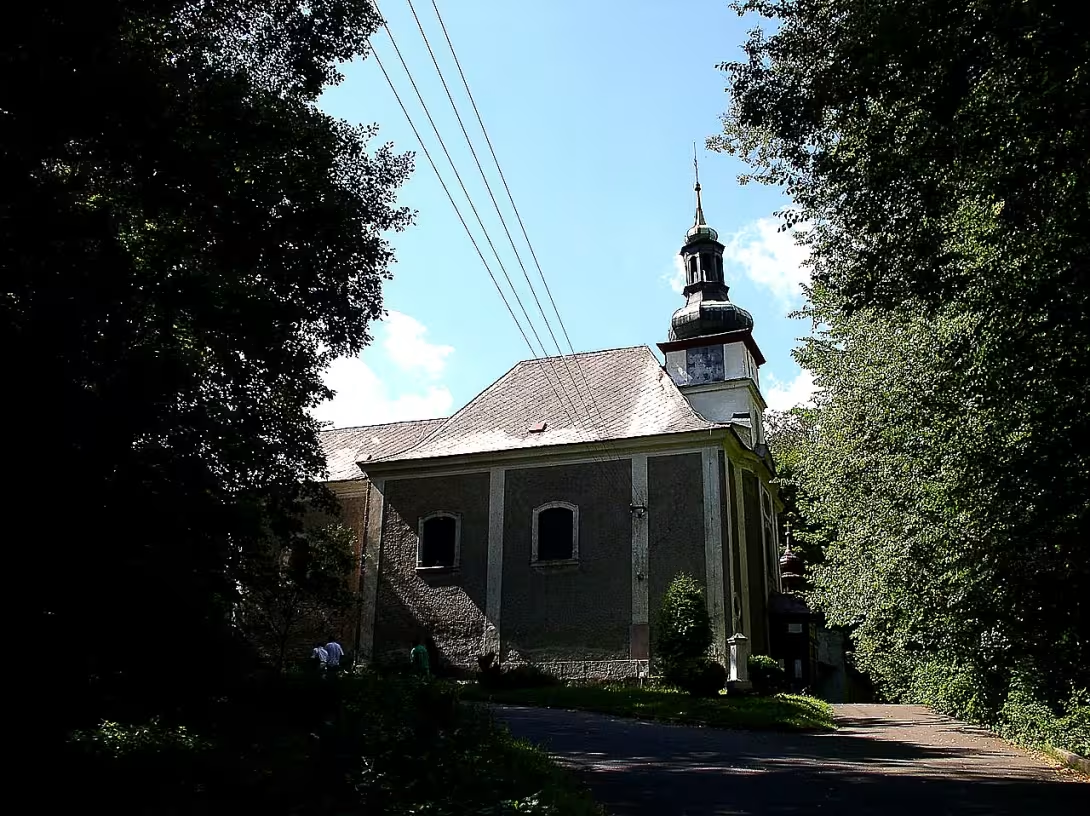
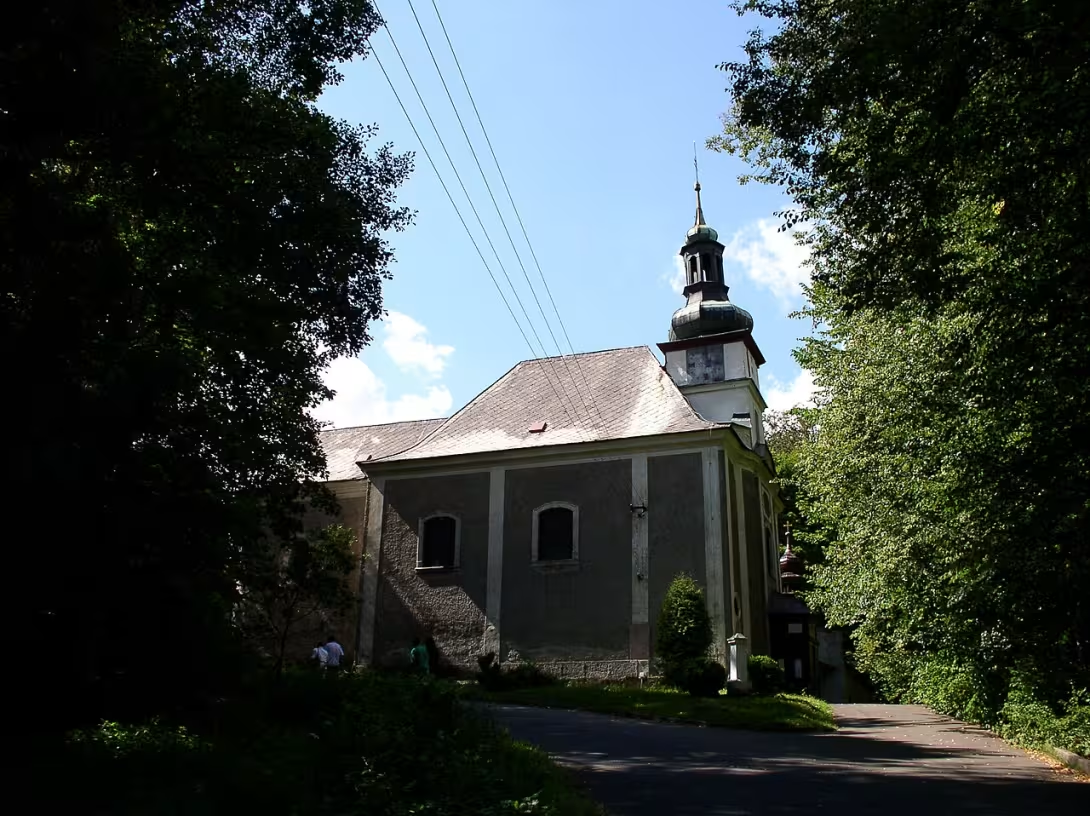
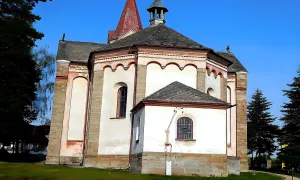
The Church of the Virgin Mary of the Auxiliary is located in Teplice nad Metují in the local part of Kamenec near the right bank of the River Metuje. The building is protected as a cultural monument of the Czech Republic and represents a characteristic example of Baroque pilgrimage architecture from the middle of the 18th century.
The church construction lasted between 1754 and 1763. It was realized by builder G. J. Kühne. The initiator and founder was the Prague physician and philosopher Jan Maxmilián z Peytersbergu, who chose the Virgin Mary as an object of special respect. Next to the church he built a wooden hermit for the proper community of ivantos and lived there personally until his death. As the founder, he was directly participating in the spiritual life of places.
The interior of the church bears the symptoms of baroque style. The main element is the altar dedicated to the Virgin Mary the Auxiliary, in historical sources also called Pasovská according to the original location of the image storage. This painting has acquired an extraordinary position in the Baroque Bohemia - about sixty chapels and churches were dedicated to it in various places of the country. The church space is complemented by two side altars. A valuable testament to the history of the site and the personality of its founder is a 1763 painting that hangs at the main entrance and depicts a portrait of John Maximilian from Peytersberg.
At present, the church serves as a filial temple in which there are no ordinary services. However, it remains an important architectural and cultural monument, which documents the intensity of the Baroque branch in the 18th century and the role played here by the widespread respect for the Virgin Mary of the Auxiliary.
Then and now
Drag the slider to compare how the landmark may have looked when it was built with the view today.

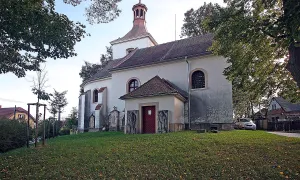
The historical appearance on the left is an AI-generated visualisation and serves as inspiration only.
Historical milestones
- 1754
- The beginning of the construction of the church of the Virgin Mary's Auxiliary at the Stone at Teplice nad Metuje.
- 1754
- The founder of the church and initiator of the pilgrimage site became Prague physician Jan Maxmilián z Peytersbergu.
- 1763
- Completion of church construction and portrait of founder Jan Maximilian from Peytersberg.
- 1763
- Establishing a wooden hermit for proper community of ivants next to the church.
- Around 1750- 1760
- The painting of the Virgin Mary (Pasovská) gained great respect in the Czech Republic and inspired the construction of many chapels and churches.
Architectural development
The church was built in 1754- 1763 in Baroque style. The area includes the original wooden hermit, which was built next to the church. Few such complexes have survived in intact form. The church is walled, with typical Baroque elements such as richly decorated altars and frescoes.
Historical events
1754-1763: Construction of the church and hermitage by order of John Maximilian of Peytersberg.
1763: Finishing the fresco with a picture of the founder in the church.
18th century: The church became an important pilgrimage place thanks to the cult of Our Lady of Help.
Points of interest
- The Church of the Virgin Mary of the Auxiliary was built between 1754 and 1763 as a pilgrimage Baroque building.
- His founder was the Prague physician and philosopher Jan Maxmilián z Peytersbergu, who lived here until his death in a wooden hermit for the proper community of ivants.
- The main altar is dedicated to the Virgin Mary of Auxiliary and is known as Pasovský, according to the original location of the image storage.
- In the interior, a portrait of the founder from 1763 hangs at the main entrance.
- The church serves today as a filial temple without ordinary services, but remains an important monument to baroque religious life.
Guide
This guide is narrated by a synthetic voice generated by artificial intelligence.
Show guide text
This text was created by artificial intelligence and has not been editorially reviewed. It may contain inaccuracies.
The Roman Catholic Church of Our Lady Helper is located in Teplice nad Metují, in the local district of Kamenec, on the right bank of the Metuje river. It is protected as a cultural monument of the Czech Republic.
It is a Baroque pilgrimage church from the years 1754 to 1763. It was built by the builder Kühn.
The interior furnishings are also Baroque. The main altar depicts Our Lady Helper. According to the place where the original is housed, she is also called the Passau Madonna. This image was very popular in Baroque Bohemia and about sixty chapels and churches were dedicated to it. Beside the main altar, the church has two side altars.
Near the main entrance hangs a painting from the year 1763. It depicts the founder of the church, Jan Maxmilián z Peytersbergu, a Prague doctor and philosopher. He had a wooden hermitage of the Ivanites built next to the church and lived in it until his death.
Today the church is a subsidiary church and religious services are not held in it.
Frequently asked questions
Is Kostel Panny Marie Pomocné (Teplice nad Metují) open to the public?
Yes, the church is open to the public. The opening hours are 9:00 to 5:00.
How do I get to the place by car / public transport?
By car you can arrive in Teplice nad Metuje and then continue walking along the road towards the church. Public transport can be used by connection from Náchoda or Hradec Králové.
How much is the entrance fee and is it paid on the spot?
Payment shall be made directly at the church.
Is the tour suitable for children and seniors?
Yes, a church tour is also suitable for families with children as well as for seniors. The church has accessible premises and information materials are available.
How long does the tour take?
A church tour usually takes about 30-45 minutes.
What are the opening times and booking is required?
The church opening hours are from 9:00 to 5:00. Reservation is not required, but we recommend prior verification of opening times in bad weather.
What's interesting in the immediate vicinity?
In the immediate vicinity of the church is located the local part of Kamenec and the right bank Metuje. Other historical monuments such as the chateau or monastery can be visited in the surroundings.
For kids
Imagine coming back 272 years, until our ancestors lived in the village of Teplice nad Metují. The Church of the Virgin Mary was built in 1754 and is today protected as a cultural monument of the Czech Republic.
How did it look here? The village was small and closed, but full of life. People lived in the fields, in the village houses, and important events took place at the church. The church was the centre of the village and people came here for services and for pleasures.
Businesses nearby
Do you run a restaurant, accommodation, shop, museum, rental, wellness or other visitor service near this monument? Show yourself directly to the people heading to it — this is how they will see you in the app and on the web:
Nearby
- A river flowing right by the church that affected its location and meaning as a pilgrimage place.
- Nature reservation with rich flora and fauna, located about 3 km from the church.
Accommodation nearby
Themed route
Thematic cruise route around the Church of the Virgin Mary Help (Teplice nad Metují)
1. Church of the Virgin Mary Auxiliary - * Type: * Historical religious monuments - * Why is it worth visiting: * This Baroque church is located in the centre of the village and is famous for its beautiful architecture and spiritual importance. It is the main pilgrimage place where every year there is an honest celebration of mass and procession.
2. River Metates - * Type: * Natural landmark - * Why is it worth a visit: * The river flows right by the church, affecting its historical location and meaning. A beautiful view of the flow Metává offers quiet moments for relaxation and reflection.
3. National Nature Reserve Montenegro - * Type: * Natural reservation - * Why is it worth a visit: * This area is known for its rich flora and fauna, making it an ideal place for nature lovers. It is suitable for short walks or longer trips with the possibility of observing different kinds of plants and animals.
4. Church courtyard - * Type: * Historical area - * Why is it worth visiting: * The church reservoir is an ideal place to relax and see for yourself. Here you can also obtain information about the history and importance of the church through auxiliary tables or exhibitions.
5. Tower of the Church of the Virgin Mary Auxiliary - * Type: * Historical architecture - * Why is it worth visiting: * The tower view offers a view of the surrounding landscape and can be a fascinating experience for those who wish to see the area from a higher perspective. It is also a place where you can enjoy a quiet moment in the atmosphere of an ancient church.
This route offers a combination of historical and natural attractions that allow a deeper understanding of the region around Teplice nad Metuje.
Seasonal recommendations
Spring During the spring, when the landscape is awakening to life, the Church of the Virgin Mary of the Auxiliary in Teplice nad Metáty is gaining beauty thanks to blooming trees and green meadows in the surroundings. The sun rays penetrating through the stained glass make the interior a color game, while the outdoor area is lit with soft, scattered light. The atmosphere is quiet, almost meditative, ideal for walking along the surrounding roads, where the scent of spring flowers with fresh air is mixed. It is recommended to visit the church in the morning when the attendance is lower and the light is the most beautiful. The clothing of the middle layer is suitable - warm but not too heavy because the weather can be variable. The right time is between April and May, when nature reaches its most charming appearance.
Summer In the summer months, when the landscape is full of life and the sun shines almost continuously, the Church of the Virgin Mary offers breathtaking views of the surrounding hills and forests. The inner spaces are illuminated by bright daylight, which highlights the details of painting works and sculptures. The atmosphere is lively, but at the same time calm, ideal for relaxing in the shade of the surrounding trees. In the main summer season, however, it is recommended to visit the church early in the morning or late in the afternoon to avoid crowds of tourists. Suitable is light but decent clothes that protect from the sun, and comfortable shoes for walking along the surrounding roads. The best season is June and July, when the weather is most stable.
Autumn Autumn brings rich leaf colours around the church that create a picturesque background for a visit. The sun sets behind the mountains will dye the facade of the church into warm shades, while the light becomes more intense in the interior, which gives the place a mysterious atmosphere. The surrounding area is quiet, almost desolate, allowing for more focused experiences. It is recommended to visit the church in the morning when the air is clean and the light is most beautiful. The warm, layered clothes are suitable because the weather can be cold and wet. The best period is September and October, when nature reaches its most beautiful autumn coloring.
Winter In the winter months, when the landscape is covered with snow, the Church of the Virgin Mary gets help for mysticism and peace. The white landscape and frozen ponds in the surrounding area create a fabulous atmosphere, while the interior of the church has a dim light, which gives the place an intimate and meditative touch. In Advent Time, the church becomes even more charming thanks to shining candlesticks and Christmas decorations. It is recommended to visit the church in the afternoon when the light is softest and the traffic is lower. Suitable is warm but comfortable clothes that protect from freeze, and comfortable shoes for walking on snowy roads. The best period is December and January, when the landscape is the most beautiful and the church offers a unique atmosphere.
Visualizations and artistic views


The visualisations are generated by artificial intelligence and serve as inspiration.
Photos from the area
Real photos taken near the monument


Zdroj a licence jsou uvedeny u každého snímku.
Tips from visitors
No tips yet. Be the first!
Log in and add your tip.
Sources and literature
Photos: Osobic / Public domain — Wikimedia Commons. The author and licence also appear when you hover over the image.
Faktickým podkladem tohoto textu byl článek na Wikipedii, jehož autory jsou přispěvatelé Wikipedie. Článek je dostupný pod licencí CC BY-SA 4.0.
Location on the map


Příběhy a pověsti
Legendy, pověsti a příběhy spjaté s touto památkou

Fotografie návštěvníků
Zatím žádné fotografie. Buďte první, kdo přidá fotografii z návštěvy!
Log in a přidejte svou fotografii nebo hodnoťte.
Za ověřenou návštěvu v aplikaci získáte víc bodů — poznáme podle GPS, že jste na místě.
Reviews and comments