






Liliová (Praha 1) Street
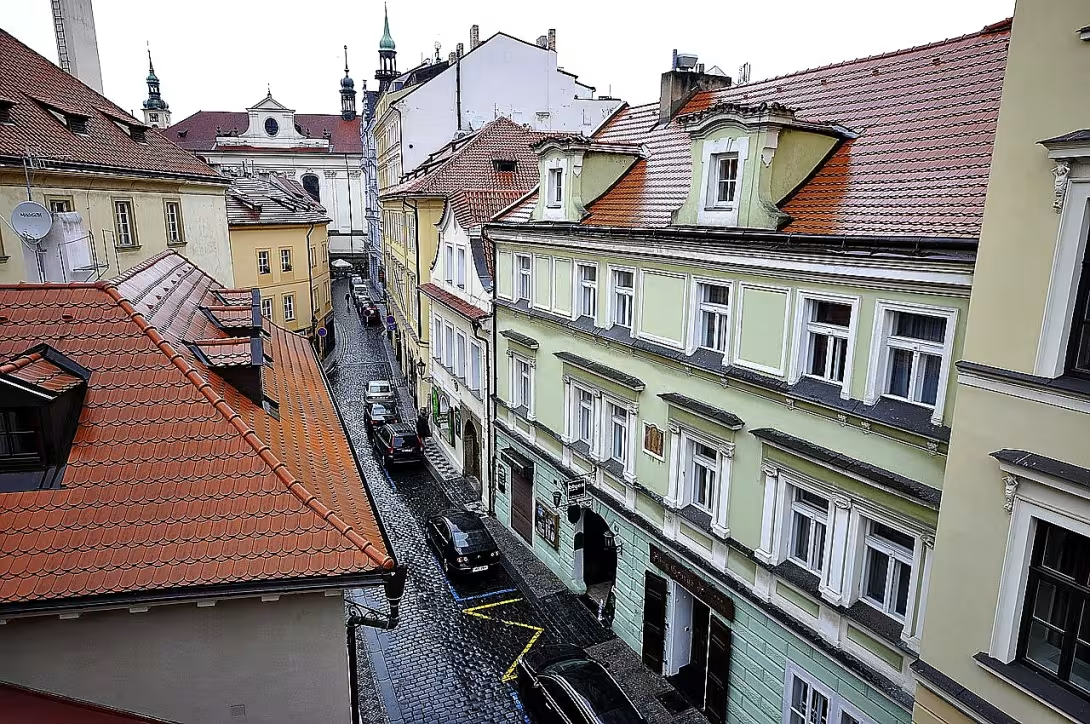
Lilius Street leads almost exactly north towards the western part of Old Town, from the intersection with Náprstková Street and the northwest tip of Bethlehem Square to Charles Street. Its route is not entirely straightforward, and this is a clue to the long history that the trap carries by waiting.
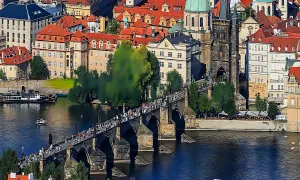
The streets reach deep into the early Middle Ages. It is assumed that it was originally served as one of the roads leading towards Vysehrad from the Vltava ford, which was located approximately between the current Klárov and the Kaprovy Street line. The decisive change came after the construction of Judith's bridge, built between 1158 and 1172 in the place of the older wooden bridge. This bridge has changed the urban logic of Old Town forever. The routes leading from the bridge to the marketplace in Old Town Square were newly promoted to a partially established street network. The result was a more chaotic ground plan than he could have planned - even Charles Street, although it was used as the so-called Royal Road for Coronation Parades, it breaks several times between Crožovnik and Little Square.
The northern end of Lili was first created by the Dominican monastery, which later replaced Clementine in the Baroque, a huge architectural block, which stands here today. In the south, the street network transformed after the construction of the Old Town walls during the 1930's. The new gates could not be established in the direction of all the previous routes, so orientation changed. Around here were two main roads: in the east the gate of St. Martin in the direction of today's Burnt Street, in the west the gate of St. Stephen to the street Carolina Svlá.
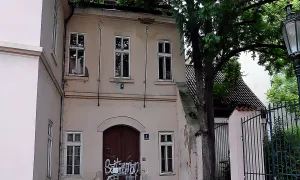
The street is rich in houses that tell about architectural layers. The Western side is, for example, the Bojkovsky Palace, which is based on at least two medieval houses, rebuilt in the Renaissance and partially baroque between 1713 and 1726. Near the Anen Street neighborhood, there is a Gothic house that has been professionally modified several times. The Golden Snake House on the floor of Charles Street represents a medieval building which was gradually transformed by Renaissance and Baroque elements.
The eastern side, which faces into Bethlehem Square and the surrounding streets, bears a richer variety of styles. Here it stands the House of the Golden Chair, originally part of the property of the Roudnický monastery, the House of the Švandas with a neo-Renaissance treatment from 1874, or the well-named House of the White Cock, which in today's form dates from 1855 to 1863 and represents a significantly neo-Renaissance character. The three-storey rental buildings from the second half of the 19th century, which brought the eclectic facade which decorated Lili to this day, complement many houses. Among the projection attractions is the house number 16 from 1898, designed by Václav Romáček, or the number 20 from 1905 by Edvard Rechziegel.
Lilio is not only a passageway street but a cross section of the construction style and urban fate of Old Town. The walk offers readers of architectural layers - from Gothic foundations to baroque reconstructions to historical adaptation and rental houses of the 19th age, which transformed the face of medieval Prague.
Then and now
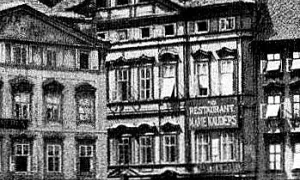
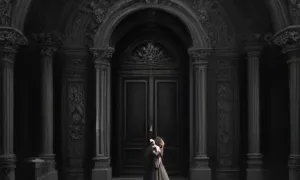
Drag the slider to compare how the landmark may have looked when it was built with the view today.
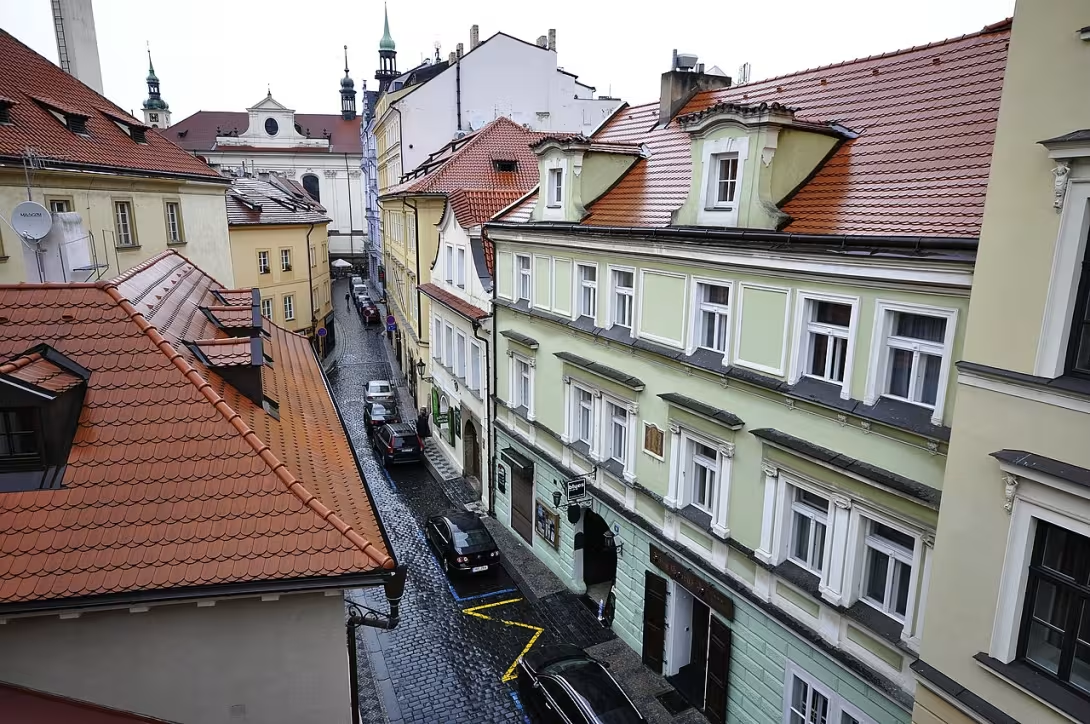
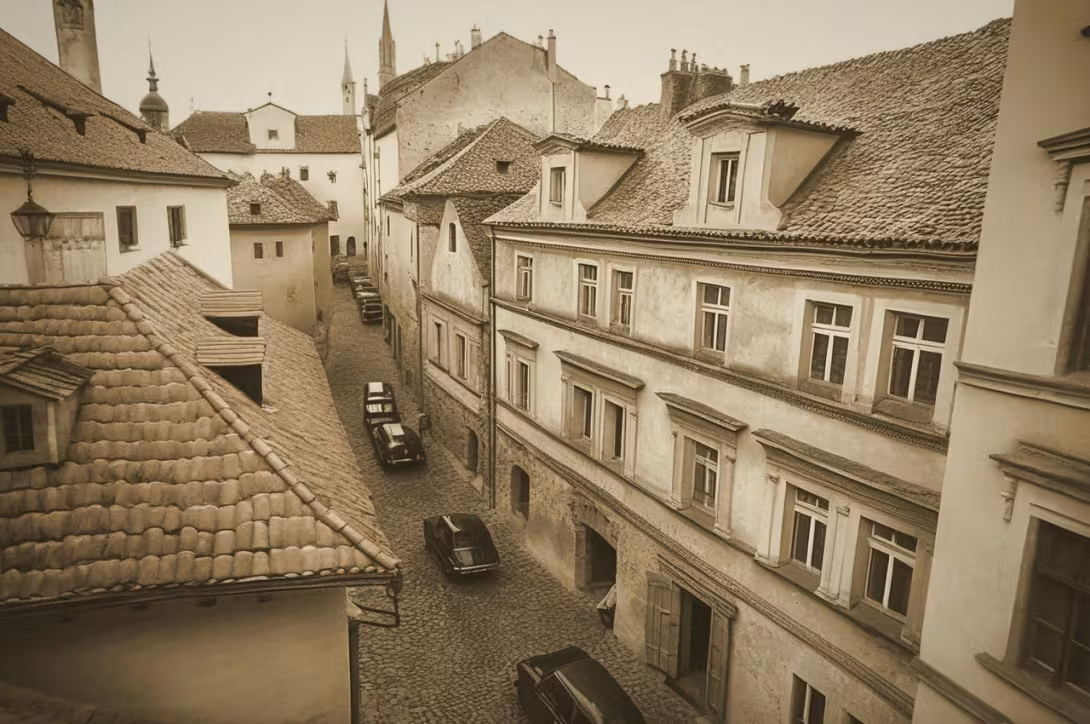
The historical appearance on the left is an AI-generated visualisation and serves as inspiration only.
Historical milestones
- 1158-1172
- Building Judith's Bridge
- 30, 13th century
- Old town walls construction work
- 1713-1726
- Transforming the Bojkovsky Palace into a Baroque Palace
Architectural development
The installation is based on medieval foundations and original connections to the Vltava ford. Gradually Renaissance and Baroque reconstruction took place, which in the 19th century was supplemented by neo-Renaissance and historic new buildings.
Historical events
The construction of Judith's bridge (1158-1172), which changed urban urban urban planning; Construction of Old Town walls (13th century 1930) which affected street tracing; Transforming the Bojkovsky Palace into a Baroque Palace (1713-1726).
Owners
Roudnický monastery, gentlemen of Kunštát and Poděbrad
Points of interest
- The street dates back to the early Middle Ages and could originally serve as a road to Vyšehrad from the Vltava ford. - The north end of the street was the Dominican monastery, which later replaced Clementine in the Baroque. - The Cheykov Palace on the west side is built on the foundations of at least two medieval houses. - House. At the gold chair on the east side, it was originally part of the property of the Routni monastery. - The White Rooster House in today's form dates from 1855 to 1863 and has a neo-Renaissance character.
Guide
This guide is narrated by a synthetic voice generated by artificial intelligence.
Show guide text
This text was created by artificial intelligence and has not been editorially reviewed. It may contain inaccuracies.
Welcome to Lili, one of the most noble streets in Prague's Old Town. You're standing right where history and architecture make a wonderful symphony. Under your feet is a path that will take you from Bethlehem Square through the heart of Old Town to Charles Street. Now take a moment and look around - the atmosphere of this place is full of secrets and beauty.
Lilius has roots deep in the past, dating back to the Middle Ages. Judit Bridge was built here between 1158- 1172, which served as a key link between the two banks of the Vltava. This bridge not only allowed people and goods to move, but also contributed to the development of the city. In the 1930's, old-town castles were built, which gave strategic importance to the street.
Look up at the facade of the buildings and notice the architectural details. Liliová is a true cross-section of Czech history ranging from medieval Gothic to Renaissance to Baroque and historical elements of the 19th century. Architects such as J. Knauer, A. Turba, Josef Dobr, František Wolf, Václav Romováček and Edvard Rechziegel left their trail here.
Now take a moment to look at the Chejkov Palace. This Baroque gem, built in 1713-1726, is based on at least two medieval buildings. It's a perfect example of how history and architecture intersect.
Lili was once home to and from prominent personalities like páni z Kunštátu a Poděbrad. These families played a key role in the social and political life of the then Czech Republic.
The interesting thing is that the north end of the street was once a Dominican monastery. This monastery was replaced by Clementina at the Baroque time, which gave the place another layer of history.
Let's move on and explore more of this fascinating place. Lili has many secrets to reveal, so if they're not ready to leave, we'll invite you to further explore.
Thank you for your visit to Lili. We hope you felt at home here and will remember this moment with pleasure. When you return to Prague, remember to visit other historical monuments of this beautiful city.
Tips for visitors
For the best experience we recommend a visit in the early morning or late afternoon, where there are fewer tourists in the street and light creates a pleasant atmosphere for observing historical architecture.
The location is easily accessible by public transport; Check the current connection in the mobile application or on the website of the transport company. Due to the location in the centre, parking in the area is very limited, so it is recommended to use public transport.
When walking we recommend to wear comfortable shoes suitable for historical tiles. For families with children, exploring these narrow streets is an interesting adventure in the heart of history.
For the best photos we recommend using soft light at sunset. In the surrounding area you can take a short walk to Bethlehem Square, Charles Street, Clementine Bridge, Judith Bridge or Old Town Square.
Frequently asked questions
Is Liliová (Praha 1) open to the public?
Yes, Liliová Street is open to the public and can be viewed free of charge.
How do I get to the place by car / public transport?
You can reach the surrounding parking area by car or use the public transport tram No 2, 5, 8, 15 and 26, which stop at the Old Town station.
How much is the entrance fee and is it paid on the spot?
Admission is not required because Liliová Street is a public promenade street.
Is the tour suitable for children and seniors?
Yes, the tour is suitable for all age groups, including children and seniors.
How long does the tour take?
The tour of Lili Street takes approximately 1-2 hours, depending on the number of visitors and their interests.
What are the opening times and booking is required?
Lilio Street is open to the public from 9 a.m. to 9 p.m. Reservation not required.
For kids
Imagine going back to when Praha was still a medieval town. Now, let's go back to Lilio Street in the western part of Old Town.
How did it look here? Who lived here? What happened here? At that time, Lilius Street was a small narrow street, where traders and craftsmen lived. It was an area full of life where everything needed to live was sold - from grain to dress.
Businesses nearby
Events nearby

Zdroj akcí: otevřená data měst a obcí ČR (Národní katalog otevřených dat) a kalendář akcí Národního památkového ústavu.
Nearby
Bethlehem Square, Charles Street, Klementinum, Judith Bridge, Old Town Square
Accommodation nearby
Trips and activities nearby
Guided tours, tickets and activities nearby from GetYourGuide
Affiliate link: if you buy from the partner, we may receive a commission. The price for you does not change.
Search tours and activities →Themed route
Thematic cruise route "Liliová" and surrounding Old Town
1. Liliová (Praha 1) - monument, bell tower Liliová is one of the most famous bells in Prague Castle and is a popular place for tourists. Its importance lies in history because it served as a warning against enemy attacks. The bell is also known for its unique lily form and a beautiful view of Staré Město.
2. Old Town Square - historical square, architectural monument After exploring Lili we move to the heart of Old Town, where the Old Town Square is located. This place is known for its historic buildings as the Old Town Hall and the Marian Chapel. The square has been an important centre of the city for centuries, reflecting the rich history of Prague.
3. Klementinum - library and former monastery buildings From there we move towards Klementine, which is not only one of the largest libraries in the Czech Republic, but also a historical complex of former monastery buildings. It is important for its architecture and a rich collection of books and manuscripts. Visitors can appreciate both historical and cultural values here.
4. Judith most - bridge, historical monument After examining Clementine, we will go to Judith's Bridge, which connects the Old Town to the Little Party. This bridge is not only an important transport artery, but also a historical monument that bears traces of many events from the past.
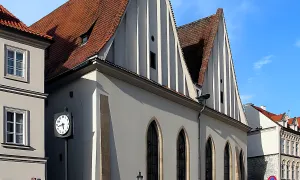
5. Bethlehem square - small square with chapel The final point of the route is Bethlehem Square, famous for its picturesque and Bethlehem Chapel. This place offers quiet rooms to relax on the way between the historical monuments of Old Town.
This route will guide you through the most distinctive and historically rich places of Prague 1, offering a view of architectural beauty and important historical sites.
Seasonal recommendations
Spring: In the spring period, the memory of Liliová in Prague is transformed into a colorful flower paradise, where the floods of lily flowers revive Staré Město with its beauty. Sun rays illuminating green meadows and flowering trees create a unique atmosphere that attracts many tourists and locals to walk. This season, it is advisable to visit the memory at the beginning of the day to avoid excessive crowds. Clothes should be versatile - warm up to a cooler morning, but also with the possibility to remove layers because the noon sun can bring warmth.
Summer: Summer in Old Town offers a warm and lively atmosphere, where the memory of Lilio is full of tourists. The sunny days illuminate historic buildings and streets with bright light that emphasizes their beauty. In the main summer season it is best to visit the memory early morning or evening to avoid heat and crowds. Clothes should be light and light, with sun protection - ties, hats and face protection are particularly useful.
Autumn: In autumn, Staré Město is transformed into a room with a rich colour spectrum, where tree leaves take on hot shades. This season is ideal for quiet walks because crowds are decreasing and the atmosphere is also gaining melancholy beauty. Visit the monument in semi-morning light, when the temperature is pleasant and the leaves are illuminated by streets and squares. Clothes should be versatile - mild, but with the possibility to add layers in cooler parts of the day.
Winter: Winter brings Staré Město into the atmosphere of snow scenarios and light effects, when streets and monuments illuminated by flashing light create a magical atmosphere. In Advent time, it is best to visit the memory in the morning when you can avoid cold evening temperatures and shorter opening times. Clothes should be warm - with leather helmets, blankets and gloves against low temperatures to use winter beauty without discomfort.
Visualizations and artistic views


The visualisations are generated by artificial intelligence and serve as inspiration.
Photos from the area
Real photos taken near the monument


Zdroj a licence jsou uvedeny u každého snímku.
Tips from visitors
No tips yet. Be the first!
Log in and add your tip.
Sources and literature
Fotografie: Jan Sommer / CC BY-SA 4.0 — Wikimedia Commons. The author and licence also appear when you hover over the image.
Faktickým podkladem tohoto textu byl článek na Wikipedii, jehož autory jsou přispěvatelé Wikipedie. Článek je dostupný pod licencí CC BY-SA 4.0.
Location on the map

Příběhy a pověsti
Legendy, pověsti a příběhy spjaté s touto památkou
Fotografie návštěvníků
Zatím žádné fotografie. Buďte první, kdo přidá fotografii z návštěvy!
Přihlaste se a přidejte svou fotografii nebo hodnoťte.
Za ověřenou návštěvu v aplikaci získáte víc bodů — poznáme podle GPS, že jste na místě.
Reviews and comments