



Plachého Street
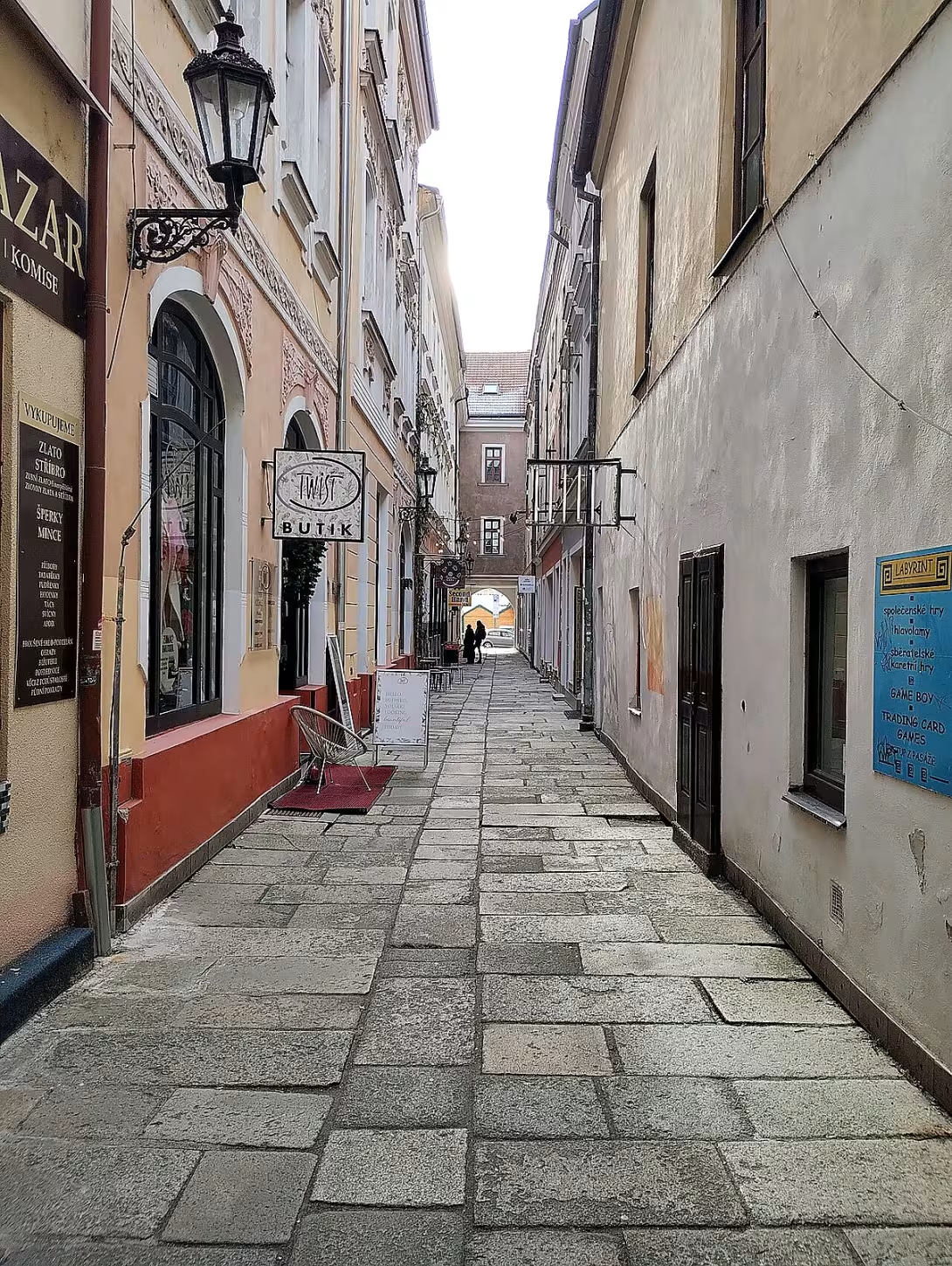
Plachého Street is a historic street in the center of České Budějovice, connecting the northern side of Přemysla Otakara II Square with Na Mlýnské stoce Street and a pedestrian bridge to Sady Park. This street has a long history dating back to the Middle Ages, when it was a hub for the livestock trade in the region. The street has undergone several name changes over the centuries, with the current name Plachého adopted in 1875.
Initially known as Sviní Street, it was a hub for the livestock trade, with its name reflecting the type of commerce that took place there. The street's original name, Sviní, was used from at least 1371, and it was also known as Vicus scropharum in Latin and Saugasse in German, which was considered derogatory and was later changed to Sauergasse, or Kyselá ulice. The name was eventually changed to Plachého in 1875, in honor of Šimon Plachý z Třebnice, a city scribe who was killed during the invasion of the army of Pasov bishop Leopold V. Habsburg in 1611.
The street's architecture and artistic form are not well-documented, so it is assumed to be a typical medieval street with buildings from the time period. Over the centuries, the street has undergone various changes, with some buildings being demolished and new ones constructed.
Plachého Street has been home to various businesses, including restaurants, shops, and a music store. In the 19th century, it became a hub for various businesses and cultural activities. Notable establishments on the street include U Mïlleretů restaurant, U Hromádků shop, and a music store that was previously a private music school.
Located in the historic center of České Budějovice, the street is surrounded by other historic buildings and landmarks. Its name change in 1875 reflects the city's efforts to honor its past. Today, the street remains an important part of the city's infrastructure, connecting the northern side of Přemysla Otakara II Square with Na Mlýnské stoce Street and a pedestrian bridge to Sady Park.
Plachého Street is a must-visit destination for history and culture enthusiasts. Its rich history and significance make it a unique and fascinating part of the city's heritage. Visitors can walk along the street and imagine the bustling trade and commerce that once took place there, and appreciate the street's importance in the city's development.
Historical milestones
- 1371
- The street was known as Sviní Street.
- 1611
- The city scribe Šimon Plachý z Třebnice was killed during the invasion of the army of Pasov bishop Leopold V. Habsburg.
- 1875
- The street was officially renamed Plachého.
Historical events
In the 14th century, the street was known as Sviní Street and was a hub for the livestock trade.
In the 18th century, the street was renamed from Saugasse (Kyselá ulice) to Plachého.
In 1875, the street was officially renamed Plachého.
Points of interest
– The street was once known as Vicus scropharum in Latin, which translates to "street of the scrofulous" or "street of the diseased", likely due to the poor living conditions and high mortality rate in the area.
– The name Sauergasse, or "sow street", was considered derogatory by the locals and was later changed to Kyselá ulice, which is a more neutral name.
– The street was a hub for the livestock trade, and its original name Sviní reflected the type of commerce that took place there, with the word "sviní" meaning "pigs" in Czech.
– The street's architecture and artistic form are not well-documented, so it is assumed to be a typical medieval street with buildings from the time period.
– The street has been home to various businesses, including restaurants, shops, and a music store, with notable establishments including U Mïlleretů restaurant, U Hromádků shop, and a music store that was previously a private music school.
Guide
This guide is narrated by a synthetic voice generated by artificial intelligence.
Show guide text
This text was created by artificial intelligence and has not been editorially reviewed. It may contain inaccuracies.
Welcome! You are standing in front of one of the oldest and most historic streets in the heart of Czech Budějovice, Plachého Street. Look around you and notice how this street stretches from approximately the northern side of Přemysla Otakara II Square to Na Mlýnské Stoce Street and the pedestrian bridge into Sady Park.
Let's step back in time and discover how this street developed over the centuries. Already in the Middle Ages, it was known as Sviní Street, due to the animal trade that took place here. The name later changed to Plachého, but the original name Sviní Street is still used synonymously with this location.
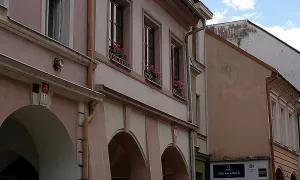
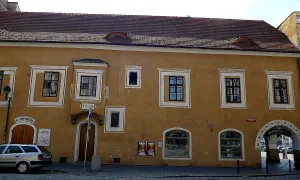
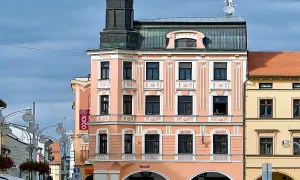
Notice how the street stretches at a gentle slope, creating a pleasant atmosphere for strolling. Take a look at the facades of the houses located here. Some of them are remnants of older buildings that have survived to this day. Their architecture is characteristic of the medieval and early modern period when these parts of the city were predominantly made up of wooden and brick houses.
Now pay attention to one of the most interesting historical events that took place on this street. In 1611, the town scribe Šimon Plachý z Třebnice was killed here as a victim of an invasion by the army of Passau Bishop Leopold V Habsburg. This is just one of many examples of how Plachého Street became part of the historical history of Czech Budějovice.
Whether you are seasoned historians or simply admirers of history, Plachého Street offers many interesting details and mysteries. One of them is the fact that it was once known as Vicus scropharum, which translates to "street full of sick people" or "street with poor living conditions." This name can be explained by the high mortality rate in this area and the poor living conditions that people suffered there.
Plachého Street is also known under the name Sauergasse, or "chicken street," which was considered derogatory by locals. What happened to this name? Why did local residents behave so towards it? This is one of many questions you can try to answer as you continue exploring this historic location.
Thank you for your attention and I hope that Plachého Street offered you an interesting glimpse into the history of Czech Budějovice. If you enjoyed strolling down this beautiful street, stop by Přemysla Otakara II Square for a while and continue discovering other historic sites in the heart of the city.
Frequently asked questions
Can the monument be visited?
This is a structure in a public space that can usually be seen from outside free of charge. We have not verified that this particular one is freely accessible.
Where is the monument?
Location: České Budějovice 1, Jihočeský kraj. The map on this page shows the exact spot.
Businesses nearby
Do you run a restaurant, accommodation, shop, museum, rental, wellness or other visitor service near this monument? Show yourself directly to the people heading to it — this is how they will see you in the app and on the web:
Events nearby
Zdroj akcí: otevřená data měst a obcí ČR (Národní katalog otevřených dat) a kalendář akcí Národního památkového ústavu.
Nearby
The street is located in the historic center of České Budějovice, surrounded by other historic buildings and landmarks.
Accommodation nearby
Trips and activities nearby
Guided tours, tickets and activities nearby from GetYourGuide
Affiliate link: if you buy from the partner, we may receive a commission. The price for you does not change.
Search tours and activities →Themed route
Historical Heart of České Budějovice
1. Plachého (main attraction) - historical building, the reason for visiting is its architecture and significance in the city's history. 2. Náměstí pod Zlatou střechou (0.2 km) - significant square with historic buildings, worth visiting for its atmosphere and architecture. 3. Kostel Nanebevzetí Panny Marie (0.3 km) - church, worth visiting for its architecture and history. 4. Staroměstská radnice (0.4 km) - historical building, the reason for visiting is its architecture and history. 5. Kostel svatého Václava (0.5 km) - church, worth visiting for its architecture and history.
Seasonal recommendations
Jaro
In the spring season, Plachého Street in České Budějovice is surrounded by flower beds and greenery, creating a pleasant atmosphere. It's ideal to combine a visit to this historic landmark with a walk around the Vltava River. You should opt for lighter and open clothing to breathe comfortably. The best time to visit is during the early morning hours when there are fewer people.
Léto
During the peak summer season, Plachého Street in České Budějovice is crowded with tourists. To avoid crowds, we recommend visiting the landmark early in the morning or late in the evening. Choose lighter and comfortable clothing as you'll likely be walking a lot. Summer is also an ideal time for a walk around the Vltava River and nearby parks.
Podzim
In autumn, Plachého Street in České Budějovice is surrounded by the colors of fall nature. The atmosphere is calm and serene, perfect for exploring this historic landmark. Choose lighter clothing but be prepared for possible cold weather. It's best to visit in the late afternoon when there are fewer people.
Zima
In winter, Plachého Street in České Budějovice is quiet and peaceful. Visiting this historic landmark can be combined with a walk around the Vltava River, which looks beautiful covered in snow. Choose warm and layered clothing as it's likely to be cold.
Visualizations and artistic views

The visualisations are generated by artificial intelligence and serve as inspiration.
Photos from the area
Real photos taken near the monument

Zdroj a licence jsou uvedeny u každého snímku.
Tips from visitors
No tips yet. Be the first!
Log in and add your tip.
Sources and literature
Photos: Anaj7 / CC BY-SA 3.0 — Wikimedia Commons. The author and licence also appear when you hover over the image.
Faktickým podkladem tohoto textu byl článek na Wikipedii, jehož autory jsou přispěvatelé Wikipedie. Článek je dostupný pod licencí CC BY-SA 4.0.
Location on the map
More monuments – České Budějovice 1
Show all in the municipality
Příběhy a pověsti
Legendy, pověsti a příběhy spjaté s touto památkou
Fotografie návštěvníků
Zatím žádné fotografie. Buďte první, kdo přidá fotografii z návštěvy!
Log in a přidejte svou fotografii nebo hodnoťte.
Za ověřenou návštěvu v aplikaci získáte víc bodů — poznáme podle GPS, že jste na místě.
Reviews and comments