






přemostění Masarykova nádraží Bridge
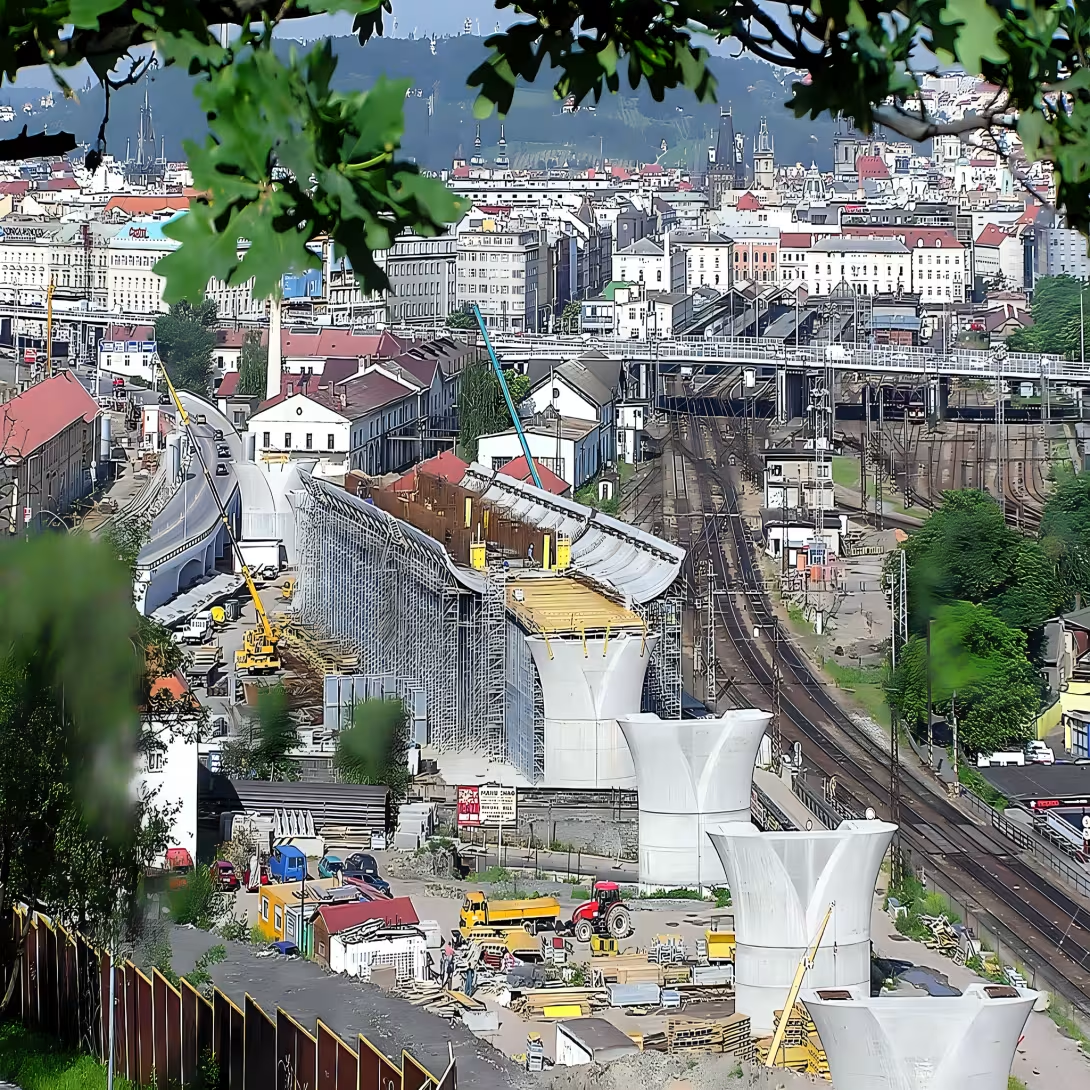
The North-South Magistrate is one of the key transport walls of the Prague Centre and part of it is also přemostění Masarykova nádraží - a construction that solves one of the most fundamental urban problems Praha has faced for decades. The Masaryk railway station has long been a serious obstacle to smooth car traffic in the north-south direction. The bridge through the station itself measures 240 metres, but the entire steel estacade from the main station to connection to the Hávkov Bridge reaches a length of almost 685 metres.
The idea of solving the traffic situation in the centre of Prague was born in the 1930s. The plans then envisaged not only the solution of the car transport, but also the mass transport - even the bridge for the tram speedboat, which was built in the 1930s. This intention was fundamentally changed only in the 1950s and 1960s, when the demolition of the railway station was discussed - as was later the case with the Prague station Praha-Těšnov. In the end, however, Masaryk Railway Station was preserved and simply overpowered by the Magistrate.
Operation on the bridge started on 28 October 1978 and represented the culmination of long-term construction efforts. The steel supporting structure was made in the building of former VŽKG in Ostrava between 1976 and 1978. This is a high-value welded steel construction consisting of seven separate elements. The weight of the steel structure itself is 6,821 tonnes. The bridge reaches a maximum width of over 41 metres and leads in an arc with radii moving between 420 and 3000 metres, with a range of fields between 30 and 40 metres - up to 43.7 metres above Sokolovská Street. The main beams are 1.1 metres high and 2.25 metres wide.
The construction is part of Wilson Street and represents one of the most important technical achievements of the socialist period. It is not without interest that at the beginning of the twenty-first century, a part of the so-called New Connection - railway construction was built in the vicinity of the bridge, which connected the Main Railway Station with the lines coming from Prague in the northeastern, northern and eastern direction. The bridge of Masaryk Railway Station remains an important part of a comprehensive transport solution that allows Prague to function as a modern city. For a visitor, an interesting example of engineering courage is the second half of the twentieth century.
Then and now
Drag the slider to compare how the landmark may have looked when it was built with the view today.
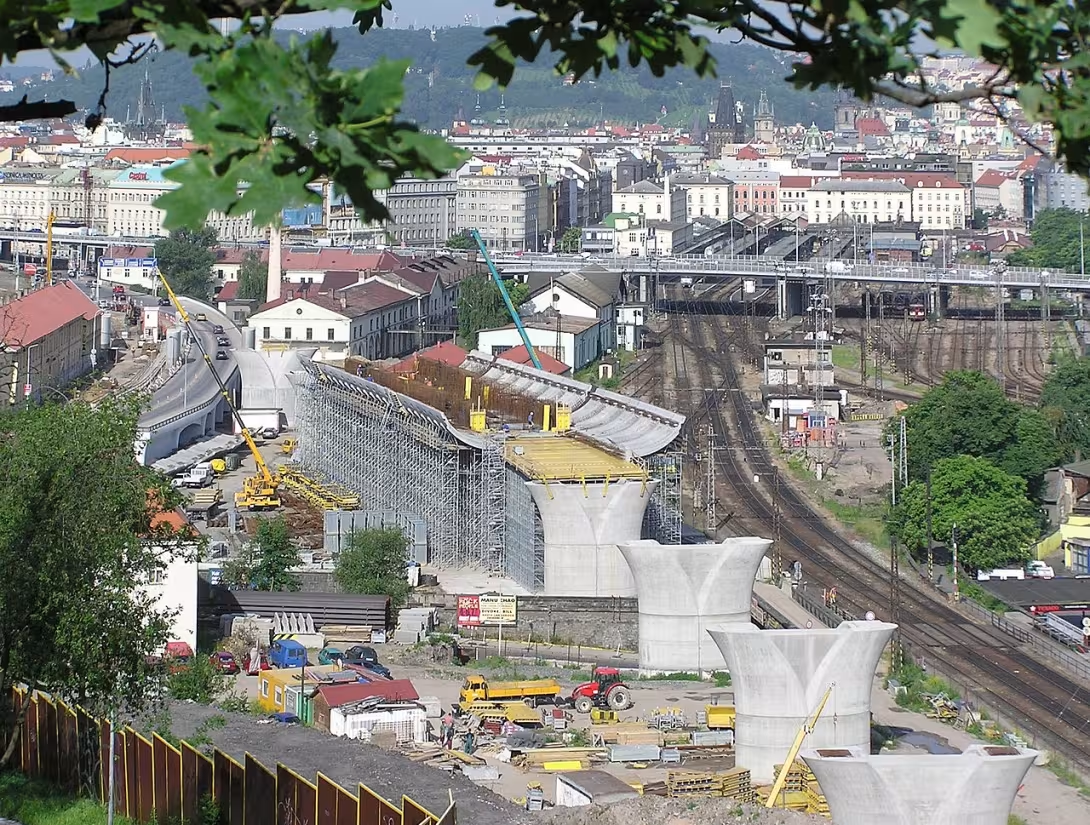

The historical appearance on the left is an AI-generated visualisation and serves as inspiration only.
Historical milestones
- 30th years of the 20th century
- Birth of ideas of solving traffic situation in the centre of Prague
- 1976-1978
- Production of steel support structure in Ostrava Mostárna VŽKG
- 28 October 1978
- Start of operation on přemostění Masarykova nádraží
- Start of the 21st Century
- Construction of part of the railway New connection in the neighbourhood
Architectural development
The steel structure was manufactured between 1976 and 1978 in Ostrava Mostána VŽKG. The whole establishment is made of high-value welded steel. The construction leads to an arc of radius between 420 and 3000 meters.
Historical events
October 28, 1978: Opening of operation on the bridge.
Points of interest
- The idea of solving the traffic situation in the centre of Prague was born in the 1930s. - Operation on the bridge started on 28 October 1978 and represented the culmination of long-term construction efforts. - Steel supporting construction was made in the building of former VŽKG in Ostrava between 1976 and 1978. - The bridge reaches a maximum width of 41 meters and leads in an arc with radii moving between 420 and 3000 meters. - Construction is part of Wilson Street and represents one of the most convenient technical feats of the socialist era.
Guide
This guide is narrated by a synthetic voice generated by artificial intelligence.
Show guide text
This text was created by artificial intelligence and has not been editorially reviewed. It may contain inaccuracies.
Welcome to the heart of Prague. You are standing in front of one of the most distinctive and massive technical units in our city. In front of your eyes, there is a monumental steel estacade that dominates the surrounding space with its large force. It's přemostění Masarykova nádraží, part of the key North South Magistrate. If you look around now, you'll probably feel the incredible weight and extent of this building. It's not just an ordinary bridge, it's a huge steel organism that cuts through the urban landscape and allows traffic to flow through the very core of the metropolis. Feel the atmosphere of strength and stability that this structure radiates. It's a work that makes you look up with its size and realize how much the face of our city has changed through human efforts and technical progress.
Now let's move forward in time together and understand why this colossus is even standing here. The idea of solving the difficult traffic situation in the centre of Prague was not a modern idea. It's fascinating, but in the 1930s, in the head of the then planners and engineers, there was a vision of how to handle the growing traffic strain in the heart of the state. Back then, it was just a distant idea, an ambitious plan that had to wait decades for its real implementation. The road to this moment was long and challenging, requiring not only political will but, above all, huge technical capacity. The whole process that led to what you see today was the culmination of a long-term construction effort that focused on connecting different parts of the city and lightening historic streets.
Now pay attention to the construction itself and to what you see right in front of you. This steel structure is not one piece of metal, but it is a highly sophisticated whole. If you look at its structure, you might notice it's divided into seven separate elements. Each of these elements is made of welded steel, which is proof of the then top technological level. This steel force is incredible. The total weight of the entire bridge exceeds six thousand eight hundred twenty-one tons. Imagine the weight that's spread over six hundred and eighty-five meters. It's a real triumph of engineering. Looking at the endless series of steel elements, you can perceive the rhythm and precision with which this entire aesthetic was assembled. Every connection, every welded part, talks about the enormous force and resistance that this building has to show every day to carry thousands of tons of traffic.
If you're wondering where this huge force came from, we need to look east. The whole steel structure you are now observing has not been manufactured directly in Prague. From 1976 to 1978, its production took place in the Ostrava Mostana of former VŽKG. It is a fascinating combination of Ostrava's industrial heart and the transport artery of Prague. Imagine the thousands of tons of steel that had to be produced, processed and then transported to merge here in the center of the capital into this monumental entity. It was this industrial process that was crucial for the successful completion of the work. The operation on this bridge was festively launched on 28 October 1978. This was the moment when long-term plans and hard work in Ostrava's finalmente have turned into a reality that you can see today and that you can use.
It would pay attention to how this place changed over time. Although the construction was completed in the 1970s, its story continued in the new century. At the beginning of the 21st century, part of the Railway New Connection was realized in close proximity to this bridge. This means that the space you are currently in is part of an increasingly dynamic and complex transport hub that is constantly developing and adapting to the modern needs of the city.
Now, I want to tell you one interesting thing that might interest you in the next look at this construction. When you look at the seven separate elements, you realize that even though they appear to be firmly connected in one monolith, their distribution is a deliberate technical solution. This distribution allows the design to better manage the stresses and movements that are inevitable in such a massive steel structure. It's like this huge colossus is constantly breathing in and moving to maintain its stability. It is a fascinating contrast between the apparent steel inertia and the dynamics that this building must manage.
I hope this short view of přemostění Masarykova nádraží helped you see this steel colossus from a slightly different angle. It is not only a massive construction that simply surrounds you, but it is proof of a long history, industrial strength and technical precision that connects Ostrava to Prague. Now that you know how many tons of steel you are surrounded and how long this idea must have traveled from the 1930s to today, leave me and continue to explore this beautiful city. Praha still has many other secrets and historical sites worth discovering. I wish you a wonderful journey and enjoy every moment you spend in this fascinating city. Goodbye.
Tips for visitors
The best time to visit is in the early morning or shortly before sunset, when light falls at an angle that best highlights the details of the steel structure and its monumental appearance.
The location is easily accessible by car and public transport; The current connection and parking possibilities in the surrounding area are recommended in the current search engine or map server.
We recommend taking comfortable shoes and a photographic machine with us. As it is an outdoor area, we recommend clothes adapted to the current weather.
For the best photos, look for angles that highlight the massiveness of the estacada in contrast to the architecture of New Town and surrounding buildings.
In the area you can visit the Masaryk railway station, Hávkov Bridge or Vítkov during a short walk. For families with children, the place is suitable for observing modern technology and transport from safe walkways.
Frequently asked questions
Is přemostění Masarykova nádraží open to the public?
Yes, it's open all day, and the entrance is free.
How do I get to the place by car / public transport?
You can reach the Masaryk station by train or bus. Near the station you can find parking, but you can also use public transport.
How much is the entrance fee and is it paid on the spot?
The entrance is free.
Is the tour suitable for children and seniors?
Yes, suitable for all ages.
How long does the tour take?
The tour can take place in a few minutes.
What are the opening times and booking is required?
The monument is accessible throughout the day, free admission, no restrictions or reservations.
What's interesting in the immediate vicinity?
Close to the station you will find a number of shops, restaurants and other interesting places. We recommend you visit the neighbouring park where you can relax and sit down.
For kids
Imagine going back to the time of the great meadow. It was a real wilderness where sheep and horses grazed. Where the shepherds lived with their tents and strollers.
Here at Masaryk Station there was only a small village called "Bubenech." The villagers lived in tents, making candles and timber products. Everyone was very friendly and happy to welcome the passengers.
It was like a game of stories about a long time ago. How was their life? We can only argue about that. But we know that the Czech kings also stayed here! They were people from the mighty Luxembourg dynasty.
Businesses nearby
Events nearby

Zdroj akcí: otevřená data měst a obcí ČR (Národní katalog otevřených dat) a kalendář akcí Národního památkového ústavu.
Nearby
Masaryk Station, Hávkov Bridge, Vítkov, New Town.
Accommodation nearby
Trips and activities nearby
Guided tours, tickets and activities nearby from GetYourGuide
Affiliate link: if you buy from the partner, we may receive a commission. The price for you does not change.
Search tours and activities →Themed route
Thematic cruise route: "The bridge of Masaryk Railway Station"
1. Bridging Masaryk Station (bridge) - This bridge, known as Hávka Bridge, is an architectural pearl of Prague. Designed by František Hlavko, it connects the municipalities of Nové Město and Vítkov with the Masaryk railway station. Its unique design and history make it a necessary stop for lovers of architecture.
2. Masaryk Railway Station (Railway Station) - Visiting this historic station offers a view of its rich past and architectural significance. The Masaryk railway station, opened in 1883, is the oldest Prague railway station and served as an important transport hub.
3. Vítkov (district) - Shortly after walking through the Hávkov Bridge we can reach the Vítkov area, where you can enjoy a view of modern architecture and green spaces. This part of Prague offers a quieter atmosphere compared to the dense central part.
4. New Town (district) - After returning through the Hávkov Bridge we will return to New Town where you can explore historical streets and architectural gems. This area is full of life with rich cultural heritage and modern attractions.
5. Hlavkova brist (bridge) - We close the trip again by visiting the Hlavkov Bridge, this time with a different angle or in the light of the morning sun. This bridge is an ideal place for photos and a last look at the connection between history and modern Prague.
This route offers a combination of architectural gems, historical experience and relaxation opportunities in the quieter parts of the capital.
Seasonal recommendations
Spring: The bridge to the Masaryk station in the spring season offers a unique atmosphere where the urban environment intersects with natural elements. Flowers and trees are beginning to bloom, which gives the surrounding space life and color. Spring is the perfect time to visit because you avoid winter cold and summer hot spots. It is recommended to visit the morning or evening when the temperature is more pleasant and fewer people on the streets. Dress up suitable for mild weather to be ready for both sunny and colder days.
Summer: Summer is the most popular time for visiting historical monuments in Prague. The bridge of Masaryk Railway Station offers a beautiful view of the sun setting over the capital, which also means the presence of more tourists and locals. The best time for a tour is in the early morning or late evening hours to avoid hot afternoon hours. We recommend light clothes and sun protection - hat and sunflowers are essential for a more comfortable experience.
Autumn: In autumn, the atmosphere around přemostění Masarykova nádraží turns into less busy, quieter and more intimate. The colours of the leaves on the trees offer a beautiful background for photography and the overall impression is more melancholy. This is the perfect time to visit because you are avoiding the summer crowd and the winter cold. It is recommended that clothing suitable for mild to warm nature of autumn and the use of local cafés or restaurants that offer comfort before winter temperatures.
Winter: Winter visit přemostění Masarykova nádraží is full of magic and peace. When Praha is covered with snow, it offers unique views of historical monuments in the winter atmosphere. It is advisable to visit the morning or evening when the temperature is lighter and fewer people walk the streets. Clothing adapted to cold is important - warm coat, gloves and shoes with attached soles are necessary. In addition, watch out for shorter opening times for some of the facilities this season.
Visualizations and artistic views


The visualisations are generated by artificial intelligence and serve as inspiration.
Photos from the area
Real photos taken near the monument

Zdroj a licence jsou uvedeny u každého snímku.
Atmosphere of the place
This atmospheric visualisation of the place and period was generated by artificial intelligence. It is not real footage of the location.
Tips from visitors
No tips yet. Be the first!
Log in and add your tip.
Sources and literature
Fotografie: Aktron / CC BY-SA 4.0, rozlišení zvýšeno umělou inteligencí — Wikimedia Commons. The author and licence also appear when you hover over the image.
Faktickým podkladem tohoto textu byl článek na Wikipedii, jehož autory jsou přispěvatelé Wikipedie. Článek je dostupný pod licencí CC BY-SA 4.0.
Location on the map
More monuments – Nové Město (Praha 1)
Show all in the municipality
Příběhy a pověsti
Legendy, pověsti a příběhy spjaté s touto památkou
Fotografie návštěvníků
Zatím žádné fotografie. Buďte první, kdo přidá fotografii z návštěvy!
Přihlaste se a přidejte svou fotografii nebo hodnoťte.
Za ověřenou návštěvu v aplikaci získáte víc bodů — poznáme podle GPS, že jste na místě.
Reviews and comments