



The oldest town hall in the Czech Republic: Prague, Brno or Cheb?
The Old Town Hall in Prague, founded in 1338, is usually named the oldest town hall in the Czech Republic. The oldest walls, though, are in Brno. A guide to the oldest town halls, what is documented and what is legend, from the astronomical clock to the Brno Dragon and the all-stone tower in Kadaň.
Czech heritage records · the oldest town halls
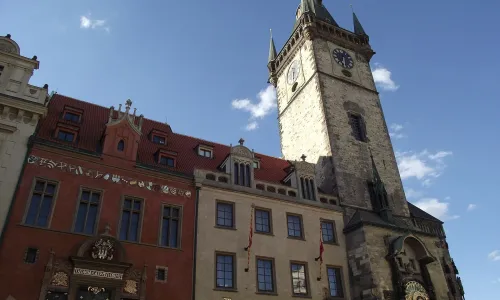
Short answer: the oldest town hall in the Czech Republic is usually said to be the Old Town Hall in Prague. King John of Luxembourg allowed the Old Town to establish a town hall in 1338, the earliest documented founding of a town hall in Bohemia.
The oldest walls, however, stand in Brno: the oldest room of the Old Town Hall dates from the first half of the 13th century, and the house became a town hall in the 14th century. Cheb and Olomouc have claims of their own. No source proves that any single town hall is the oldest in the whole country.
“The oldest town hall in the Czech Republic” is a favourite quiz and school question. Search engines usually answer “Prague, 1338”. That is a good answer, but not a complete one. It depends on whether we ask where burghers first set up a town hall as an institution, or which building used as a town hall is the oldest, and whether we count only Bohemia or also Moravia and the Cheb region.
We went through academic literature, the websites of towns and sites, and tourist portals. For each town hall we say what is documented, what is legend, and where sources disagree.
Why the answer is not simple
Medieval towns were not founded together with a town hall. The council first met in the house of the reeve or of one of the councillors, and the community bought a building of its own only with the ruler's permission and the money to do it. So “the oldest town hall” can be counted in three ways:
- The earliest documented founding of a town hall: when the ruler allowed the town to set one up. Prague leads with 1338.
- The oldest building that served as a town hall: Brno leads, with a core from the first half of the 13th century.
- The earliest mention of any communal house: Olomouc and Cheb, where such a house is mentioned in the 13th century, though the evidence is weaker.
The Old Town Hall in Prague (1338)
For a long time the Old Town of Prague was run from the old reeve's house in Rytířská Street. That changed in 1338. King John of Luxembourg then allowed the burghers to use income from the Ungelt, the customs court behind the Týn Church, to buy the house of Wolflin of Kámen on the corner of the square and set up a town hall in it. Czech Wikipedia gives the exact date of the charter as 18 September 1338. It was the first town hall in Bohemia.
The core of the town hall is therefore an early Gothic corner house from the second half or end of the 13th century, built on Romanesque foundations. Over time the town bought neighbouring houses: the Kříž House with the council chamber, the Mikeš House and the House at the Cock. That is why the town hall today looks like a row of different houses with a single tower.
The tower was completed in 1364 and is 69.5 metres high. On its first floor is the town hall chapel with a five-sided oriel, consecrated in 1381.

The astronomical clock: Nicholas of Kadaň, not Master Hanuš
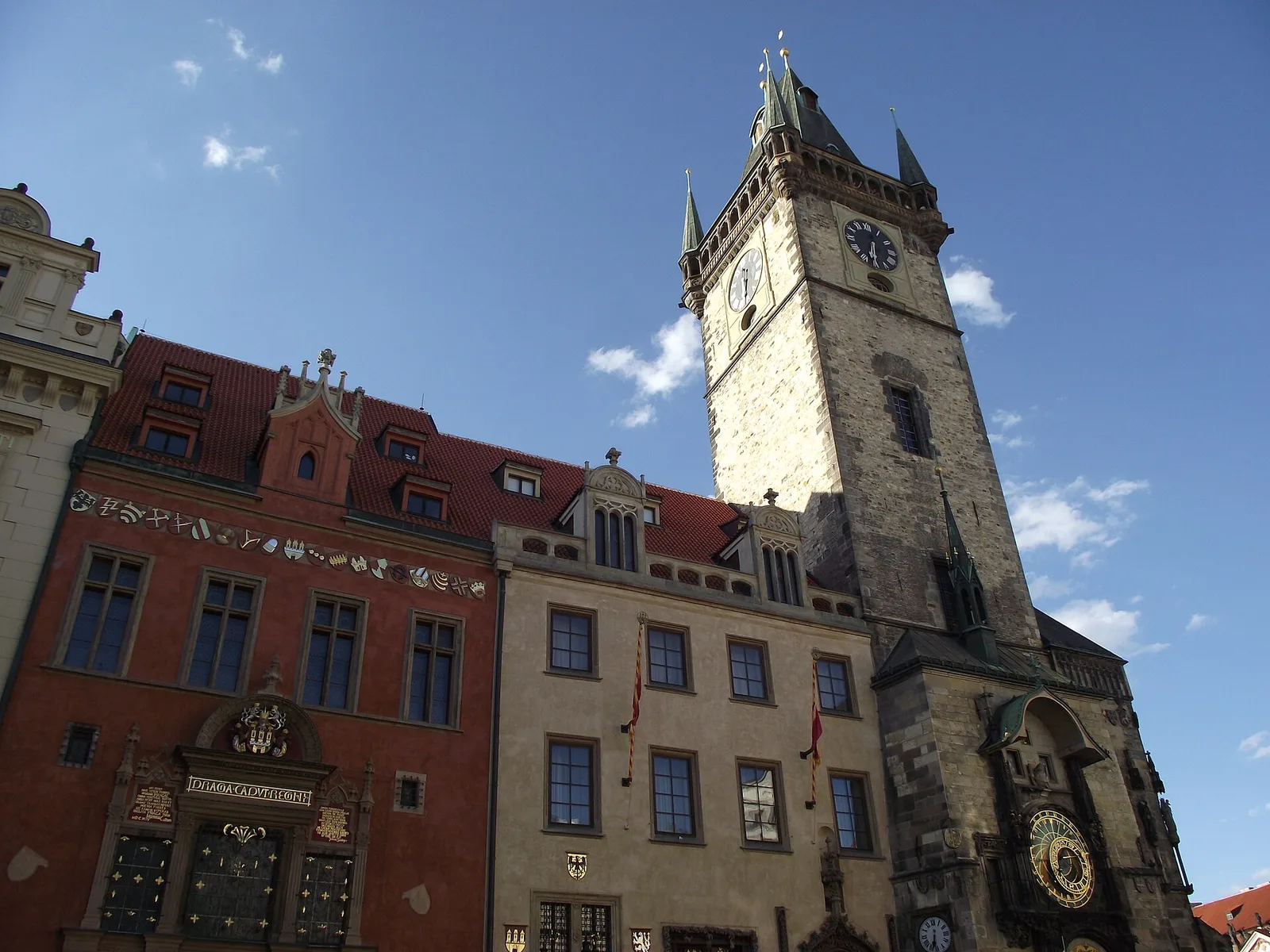
On the south side of the tower is the Prague astronomical clock. It is first documented by a charter of 9 October 1410 in which the council thanks the clockmaker Nicholas of Kadaň. The mathematical model was probably prepared by the astronomer Jan Šindel. It is commonly described as the third-oldest astronomical clock in the world and the oldest still working.
A famous legend says the clock was built by Master Hanuš, whom the councillors had blinded so that he could not build another one elsewhere. Master Hanuš (Jan Růže) was in fact only the clock's keeper in 1475–1497 and modified it around 1490. The mistake comes from a 16th-century chronicle and was disproved by the historian Zdeněk Horský. The blinding is fiction, popularised by Alois Jirásek in his Old Czech Legends.

The execution of 1621 and the fire of 1945
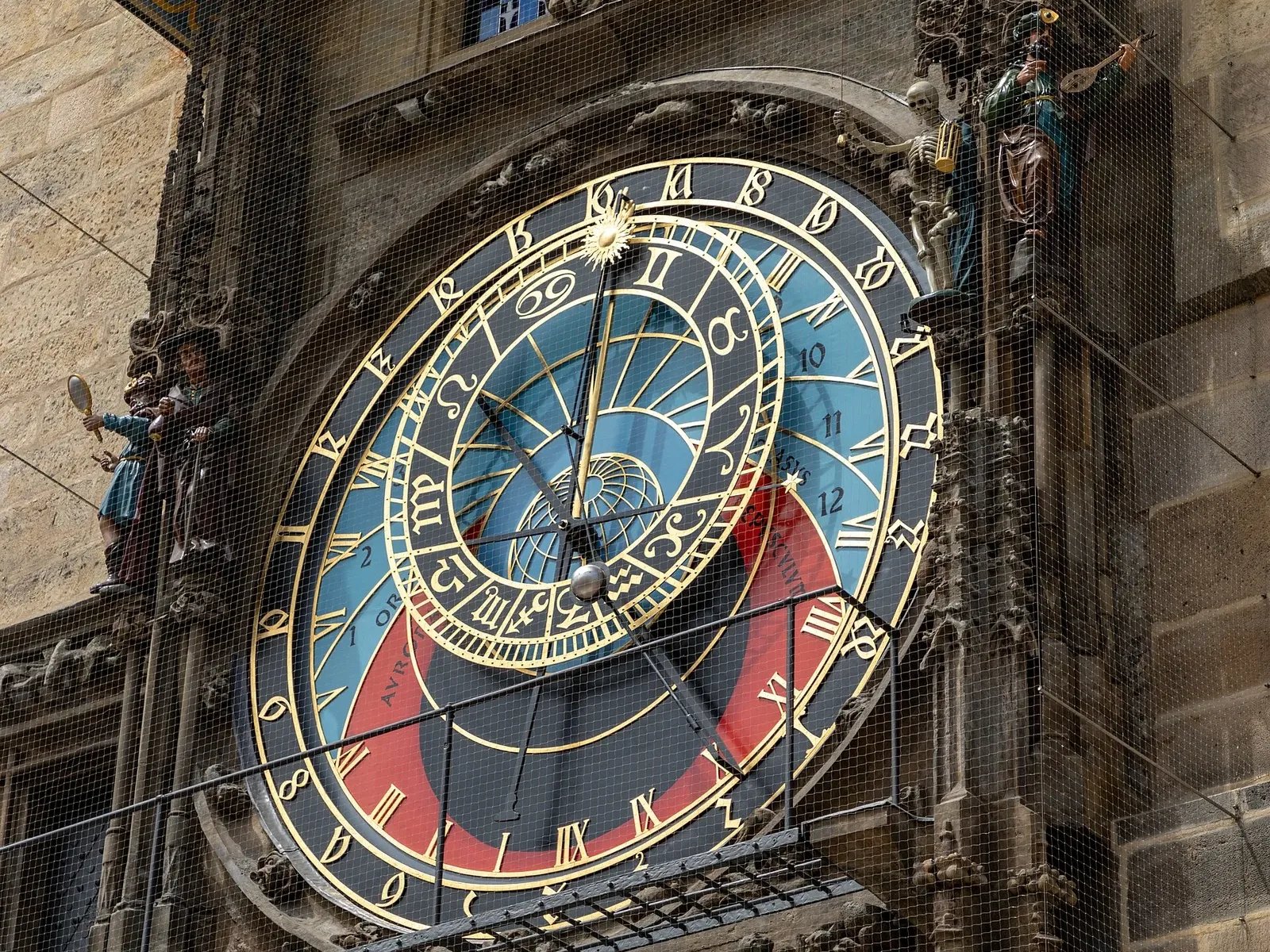
On 21 June 1621 the Old Town Square execution took place in front of the town hall: after the Battle of White Mountain, 27 leaders of the Estates' uprising were executed here, three lords, seven knights and seventeen burghers. They are commemorated by 27 white crosses in the paving in front of the town hall.
The town hall's worst day came on 8 May 1945. During the Prague Uprising it served as the resistance headquarters and burned down under shelling. The fire destroyed the whole neo-Gothic east wing and damaged the tower, the chapel oriel and the clock; the figures of the apostles burned. Part of the city archive was lost too. The wing was demolished and its site next to the tower has remained empty ever since. The clock started again in 1948 with new apostles carved by Vojtěch Sucharda.
What you can see today: the viewing gallery of the tower, historic halls including the council chamber and the chapel, the Romanesque and Gothic underground, and the clock mechanism with the apostles from inside. Admission and opening hours are on the official tourist portal prague.eu.
Brno's Old Town Hall: the oldest walls
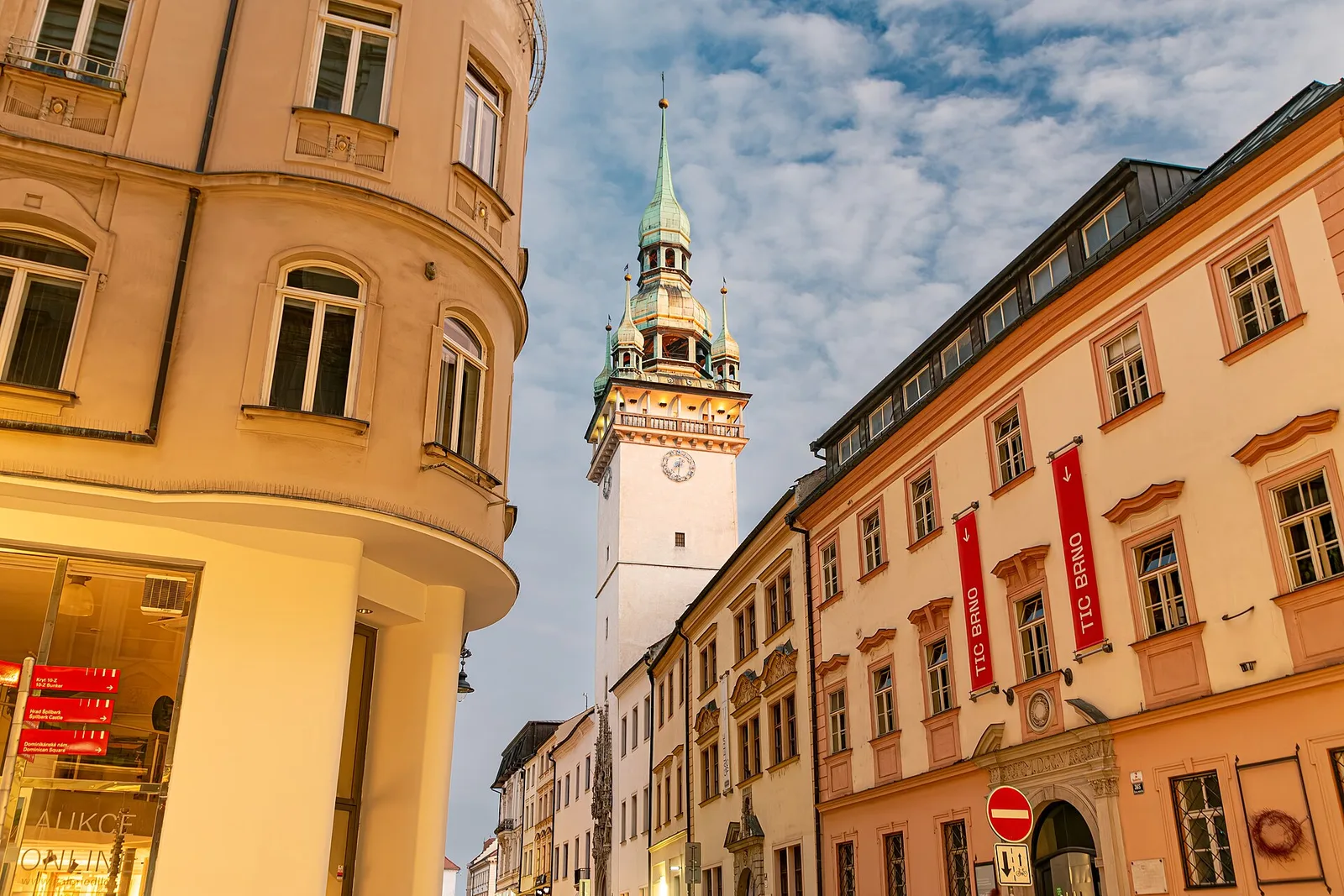
The Old Town Hall in Brno is the oldest secular building in the city. Its oldest room survives almost unchanged from the first half of the 13th century, the same period as, or even earlier than, Prague's house of Wolflin of Kámen. As a town hall, however, it is documented later than Prague. In 1304 it housed the reeve's office, the seat of the ruler's official. The town council met here by 1343 at the latest, and the house is recorded definitively as a town hall in 1373. According to Brno's tourist centre, the town book of the scribe Jan from 1343 is the oldest town book in Moravia.
The building remained the town hall until 1935, when the office moved to the former Land House on Dominikánské Square, today's New Town Hall. The Old Town Hall has been a National Cultural Monument since 1 July 2024 and today serves as a cultural and information centre.
The crooked pinnacle on Pilgram's portal
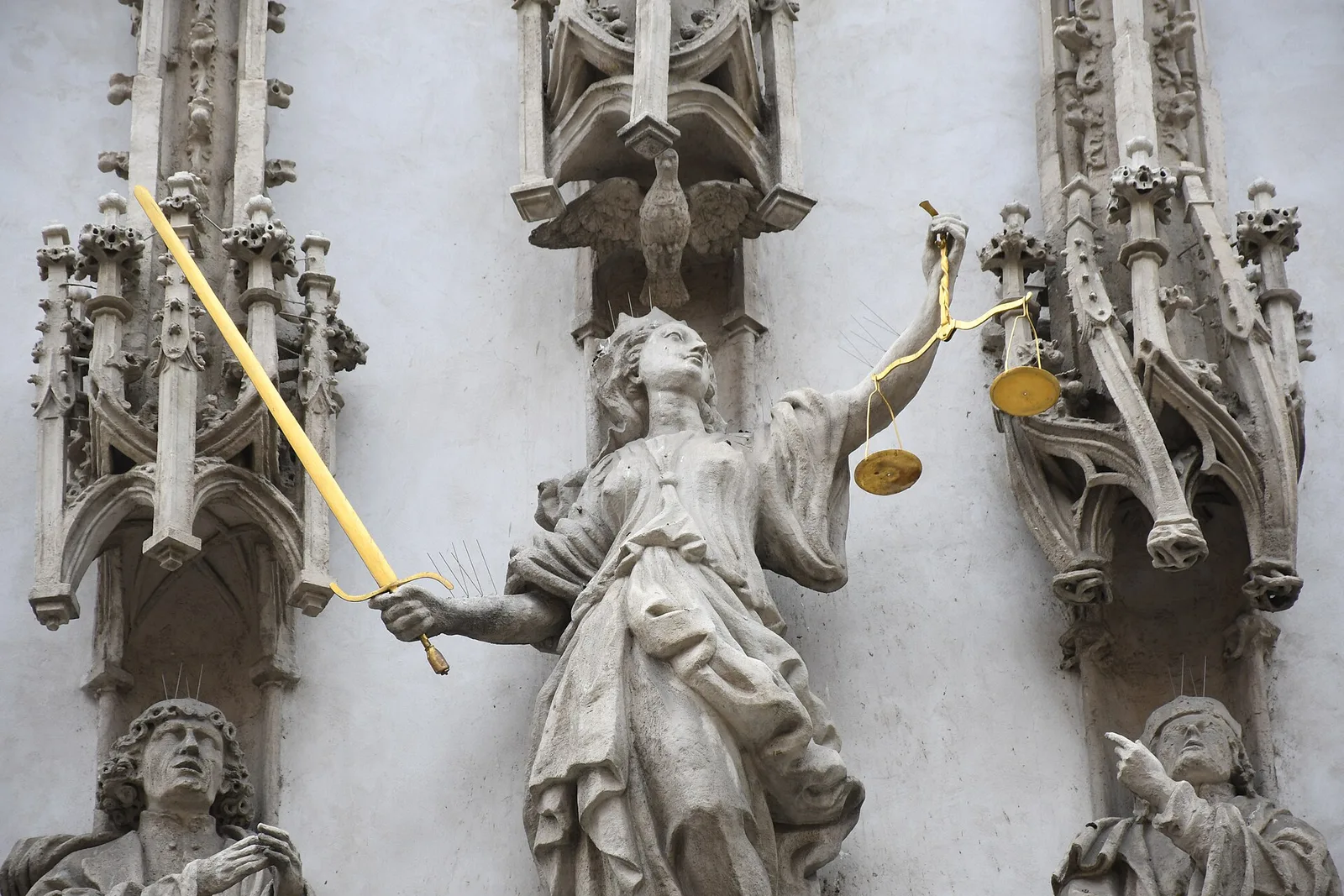
You enter the town hall through a late Gothic portal made in 1510–1511 by the Brno-born master Anton Pilgram. Above the entrance stand men-at-arms with the Brno coat of arms, two councillors and, at the top, a statue of Justice. Today's Justice dates from the 17th century; according to Brno sources the original was destroyed by the Swedes.
The middle pinnacle, right above Justice, is twisted. According to legend, the councillors did not pay Pilgram the promised fee and he took revenge by bending the pinnacle so that it would be “as crooked as justice at Brno town hall”. Another version says he drank out of anger and the pinnacle came out crooked by itself. The sources do not give the real reason. What is certain is that Pilgram left for Vienna in 1511, where he led the masons' lodge of St Stephen's Cathedral, and that late Gothic liked to play with shapes.

The dragon and the wheel
The Brno Dragon hangs in the passage of the town hall. It is actually a stuffed Nile crocodile. There are several legends: a gift from Archduke Matthias in 1608, a gift from Turkish envoys, or a dragon from the Svratka river poisoned with lime. The town accounts are older than all of them, though: in 1568 a painter was paid four gold coins to paint the dragon, and in 1578–1579 it was reportedly attacked by worms. So the crocodile has hung in the town hall since at least the 16th century.
Next to the dragon hangs the Brno Wheel. Legend says the wheelwright Jiří Birk from Lednice bet that in a single day he would fell a tree, make a wheel from it and roll it to Brno, more than 50 kilometres away. According to the legend he won. The year differs between sources, usually 1635 or 1636. A survey in 1991 showed that the wheel was not made from a single piece or from fresh wood, but in a workshop. In the middle is the signature “Georg Birck”.
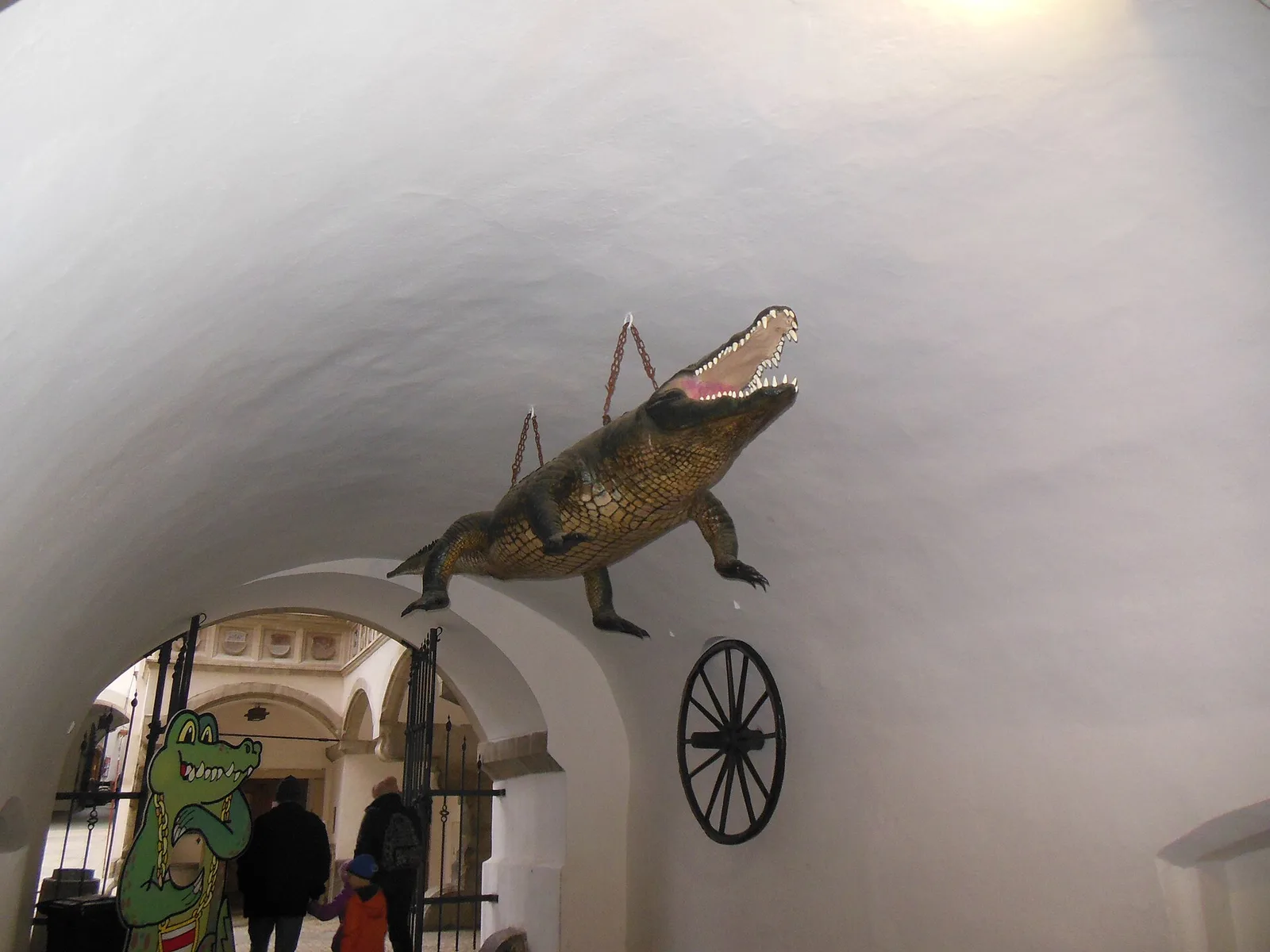

What you can see today: the passage with the dragon and wheel, the arcaded courtyard, exhibition halls and a 63-metre tower with 173 steps and views in all directions. Current information is on gotobrno.cz.

Cheb and Olomouc: town halls in the 13th century?
According to academic studies, Cheb had its first town hall on today's Jánské Square, in a merchants' house built perhaps in the first half of the 13th century. It probably burned in the great town fire of 1270, and only after its rebuilding can it be called a town hall. Historians consider a record of a town hall as early as 1149 unlikely. The Cheb region also became a permanent part of the Kingdom of Bohemia only in 1322, so its town hall is usually not counted as “the oldest in Bohemia”. Today's Old Town Hall on the square dates from the second quarter of the 14th century.
Olomouc, according to Czech Wikipedia, received a privilege from Ottokar II in 1261 to build a “communal house”. Permission to build a town hall, however, came only from Margrave Jobst in 1378, and the stone Olomouc Town Hall was built from 1420. Today it has a 75-metre tower, the Chapel of St Jerome and an astronomical clock that was given a socialist-realist look after the war.
More of the oldest town halls in the Czech Republic
The table shows the town halls that most often appear among “the oldest”. The years are the first mentions of the town hall, not of the town.
| Town hall | Town hall recorded | What you can see |
|---|---|---|
| Cheb (first town hall on Jánské Sq.) | 13th c. (uncertain) | Old Town Hall on the square, 14th c. |
| Opava (Hláska) | 1327 (one source) | Renaissance tower 1614–1618 |
| Prague, Old Town Hall | 1338 | tower 1364, chapel, clock 1410, underground |
| Brno, Old Town Hall | council 1343, town hall 1373 | core from 1st half of 13th c., portal 1511, dragon |
| Polička | around 1360 | Gothic tower inside a Baroque town hall |
| Žatec | 1362 | tower and arcades, Classicist rebuilding |
| Kadaň | mid-14th c. | all-stone tower, 53.75 m |
| Olomouc | permission 1378 (privilege 1261?) | 75 m tower, chapel, clock |
| Prague, New Town Hall | 1377–1398 | Gothic hall, tower, first defenestration 1419 |
| Český Brod | building 1379–1396 | jail with four cells, underground |
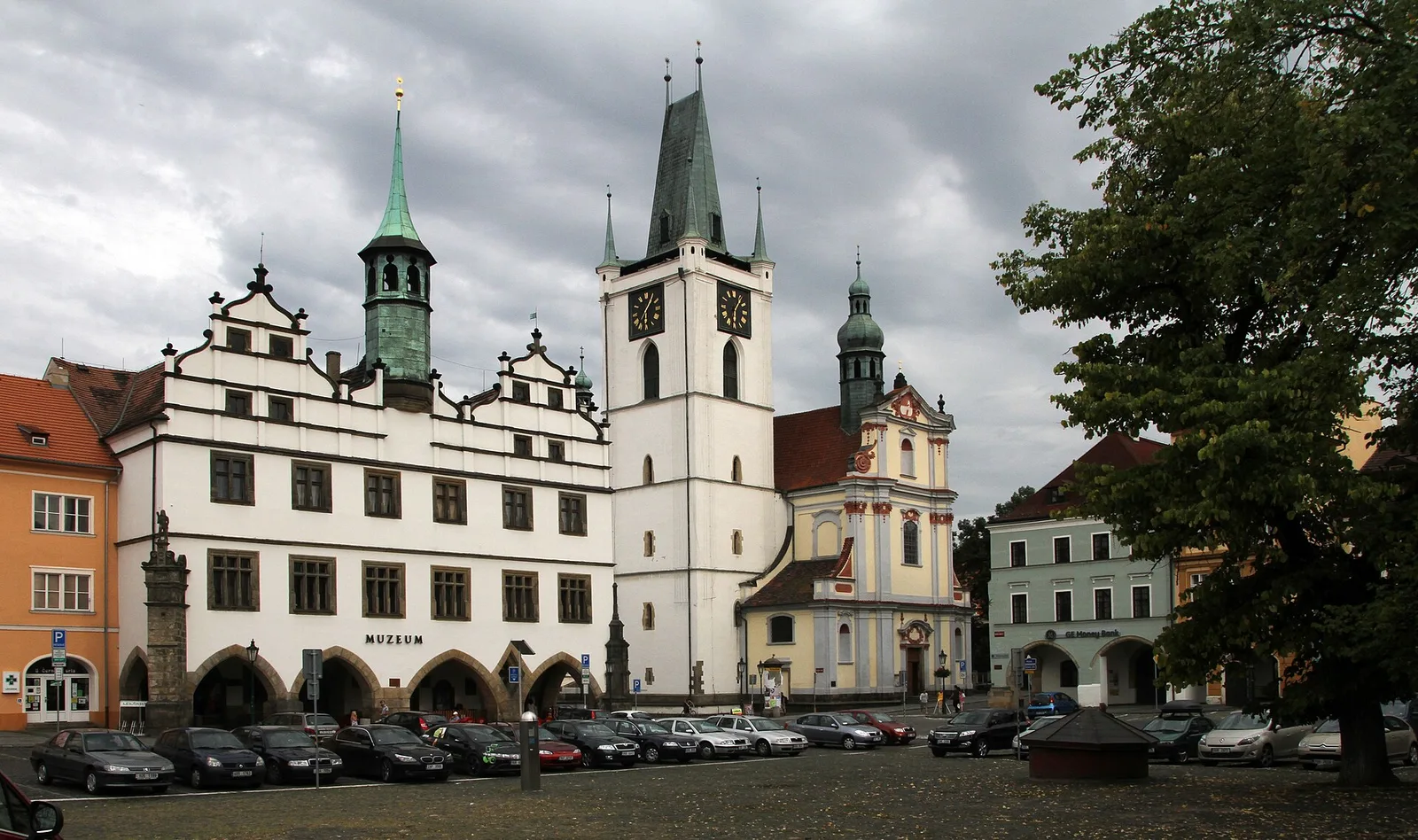
| Litoměřice, Old Town Hall | 1397 | Gothic arcade, Renaissance gables, museum |
| Louny | 1398 | Classicist building, now a library |
| Jihlava | 1425 | Gothic hall, Renaissance court room |
| Telč | 1443 | Renaissance town hall on a UNESCO square |
| Česká Lípa | 1465 | Classicist rebuilding 1822–1824 |
Litoměřice, Kadaň, Polička and Český Brod
The Old Town Hall in Litoměřice is recorded in 1397. It has a Gothic core with an arcade and a Renaissance rebuilding of 1537–1539, a council hall from 1542, a statue known as Roland and an iron ell, the town's standard measure of length. It served as the town hall until 1839 and now houses the regional museum.

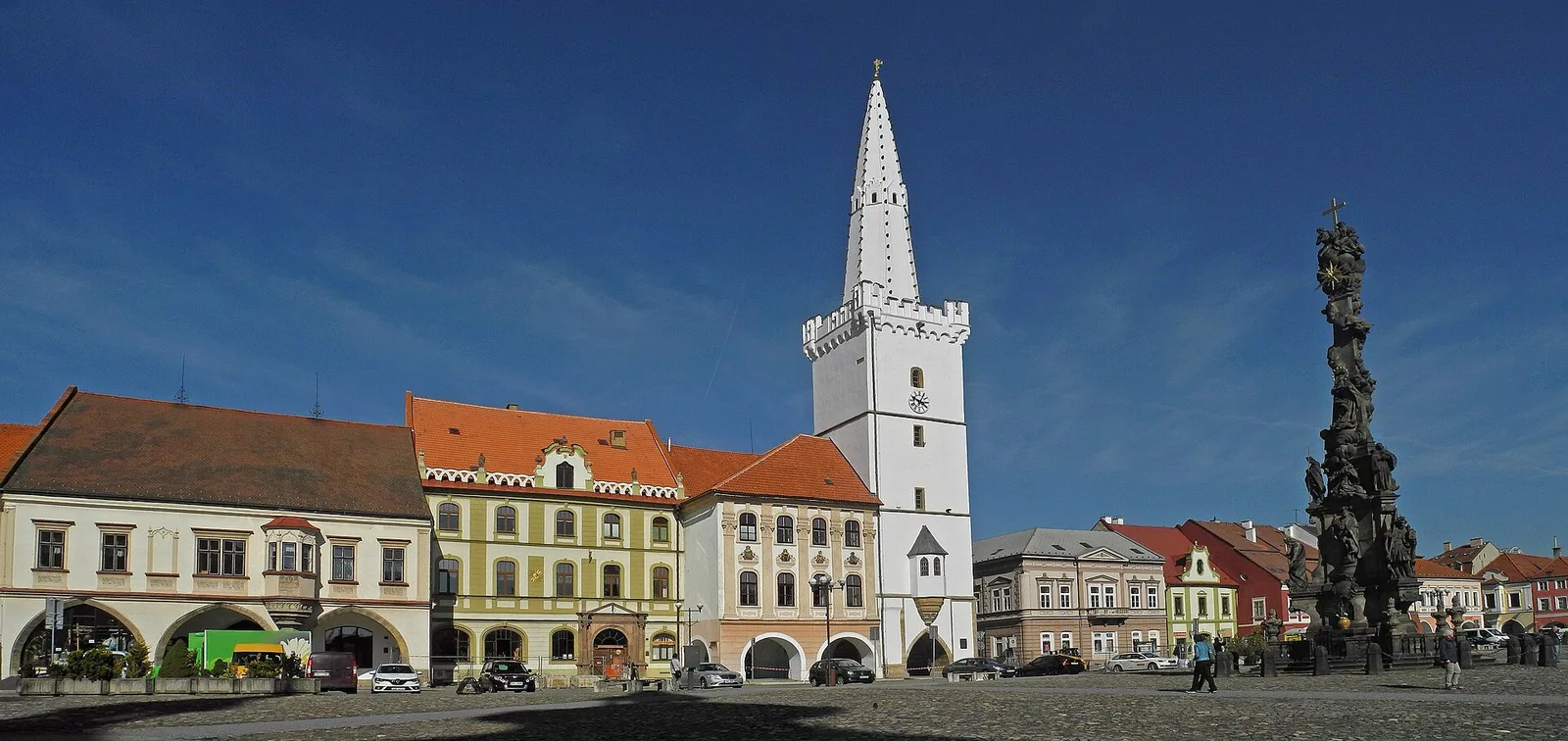
Kadaň Town Hall dates from the mid-14th century. Its late Gothic tower from the early 16th century is 53.75 metres high and built entirely of stone, including the spire, so it has not a single roof tile. It has been a National Cultural Monument since 1 July 2024.

Some popular articles describe the town hall in Polička as “the oldest town hall in the Czech lands”. That cannot be proved. A Gothic town hall was built at the time of Charles IV's privilege of 1360; today's Baroque building dates from 1739–1744 and hides the original Gothic tower inside. The foundations of the Gothic town hall were found in 2010.
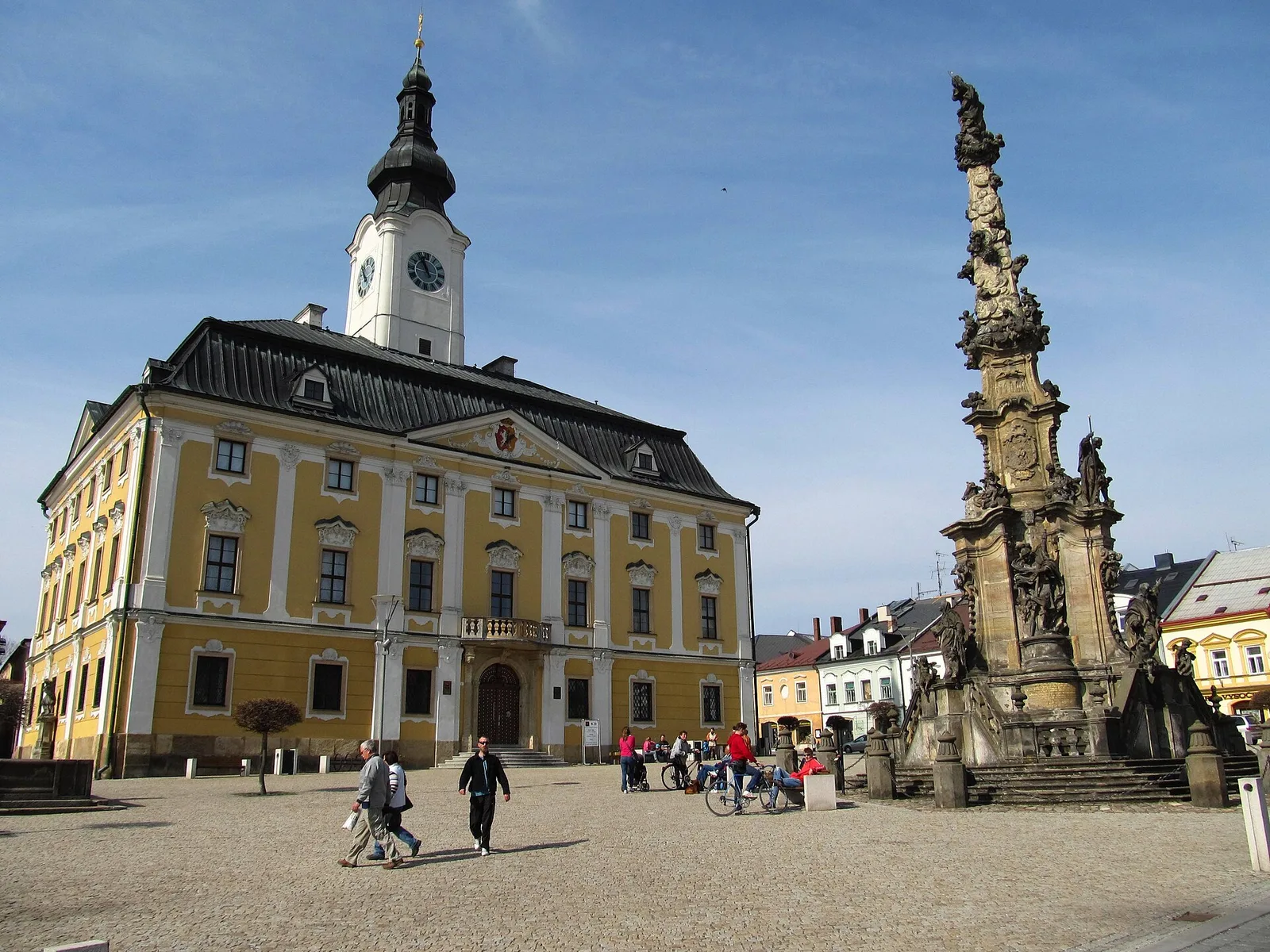

The Old Town Hall in Český Brod has its oldest part from 1379–1396 and is one of the oldest town hall buildings in the country. It still has a jail with four cells.
The rest of the table can be found in our catalogue: Žatec town hall, the Old Town Hall in Louny, Jihlava Town Hall, Telč town hall, Česká Lípa town hall, the Hláska tower in Opava and the Old Town Hall in Tábor, whose rib-vaulted hall is the second largest in the country after Vladislav Hall.
And the tallest town hall?
People also search for the opposite record. The tallest town hall in the Czech Republic is the New Town Hall in Ostrava from the first half of the 20th century. Its observation tower is more than 85 metres high. So the records for the oldest and the tallest town hall belong to Prague and Ostrava.
Quick facts for quizzes and school projects
- John of Luxembourg allowed Prague's Old Town to establish a town hall in 1338, the first in Bohemia.
- The tower of Prague's Old Town Hall was completed in 1364 and is 69.5 metres high.
- The Prague astronomical clock is first documented in 1410 and was built by Nicholas of Kadaň, not Master Hanuš.
- On 21 June 1621, 27 leaders of the Estates' uprising were executed in front of the Old Town Hall, commemorated by 27 crosses in the paving.
- The Old Town Hall burned on 8 May 1945 during the Prague Uprising.
- The Brno Dragon in the passage of the Old Town Hall is a stuffed crocodile recorded in the town accounts as early as the 16th century.
- The middle pinnacle of Pilgram's portal on Brno's Old Town Hall (1510–1511) is crooked; legend says the master took revenge on the councillors.
- Brno's Old Town Hall served as the town hall until 1935.
- The town hall tower in Kadaň (53.75 m) is made entirely of stone, roof included.
Trip ideas
Prague: combine the Old Town Hall with a tour of its underground and watch the procession of the apostles on the hour. For the first Prague defenestration of 1419, head to the New Town Hall on Charles Square.
Brno: the dragon and wheel hang in the town hall passage, and from the tower you can see Petrov and Špilberk. On the Cabbage Market right next door stands the Parnas fountain.
North-west Bohemia: Kadaň, Žatec and Louny are close to each other, and you can see all three town halls in one day.
We do not list opening hours or admission prices because they change. You will find them on the websites of the towns and tourist centres, such as prague.eu and gotobrno.cz.
More Czech heritage records
- The oldest town in the Czech Republic
- The oldest house in the Czech Republic, in Prague and in Brno
- The oldest castle in the Czech Republic
- The largest castle in the Czech Republic and the world
- The largest chateau in the Czech Republic
- The oldest church in the Czech Republic
- The oldest synagogue in Europe and the oldest monasteries in the Czech Republic
- The oldest bridge in the Czech Republic
- The oldest brewery in the Czech Republic
All records in one place: Czech heritage records.
ENDFrequently asked questions
What is the oldest town hall in the Czech Republic?
The Old Town Hall in Prague is usually named: King John of Luxembourg allowed the Old Town to establish a town hall in 1338, the first in Bohemia. The oldest building, however, is the Old Town Hall in Brno (core from the first half of the 13th century), documented as a town hall from the 14th century.
When was Prague's Old Town Hall founded?
In 1338, when John of Luxembourg allowed the burghers to buy the house of Wolflin of Kámen and set up a town hall in it. The tower was completed in 1364, and the astronomical clock is documented from 1410.
Who built the Prague astronomical clock?
The clockmaker Nicholas of Kadaň, recorded in a document of 1410; the mathematical model was probably prepared by Jan Šindel. Master Hanuš only looked after the clock in 1475–1497, and the legend of his blinding is fiction.
What is the Brno Dragon?
A stuffed Nile crocodile hanging in the passage of Brno's Old Town Hall. Town accounts show it was there in the 16th century; the legends about a gift from Archduke Matthias or Turkish envoys are later.
Why is there a crooked pinnacle on Brno's Old Town Hall?
According to legend, master Anton Pilgram took revenge on the councillors who did not pay him for the portal of 1510–1511. Historical sources do not give the real reason.
What is the tallest town hall in the Czech Republic?
The New Town Hall in Ostrava, whose observation tower is more than 85 metres high.
Historical information from Czech and English Wikipedia, prague.eu, gotobrno.cz, the Brno Urban Centre publication “The Old Town Hall and Anton Pilgram in Brno”, Kudy z nudy, the City of Olomouc and academic studies; disputed points are marked in the text. Photographs from Wikimedia Commons. Lead photo: Old Town Hall in Prague, Fred Romero, Wikimedia Commons, CC BY 2.0.