



Trnovany Castle
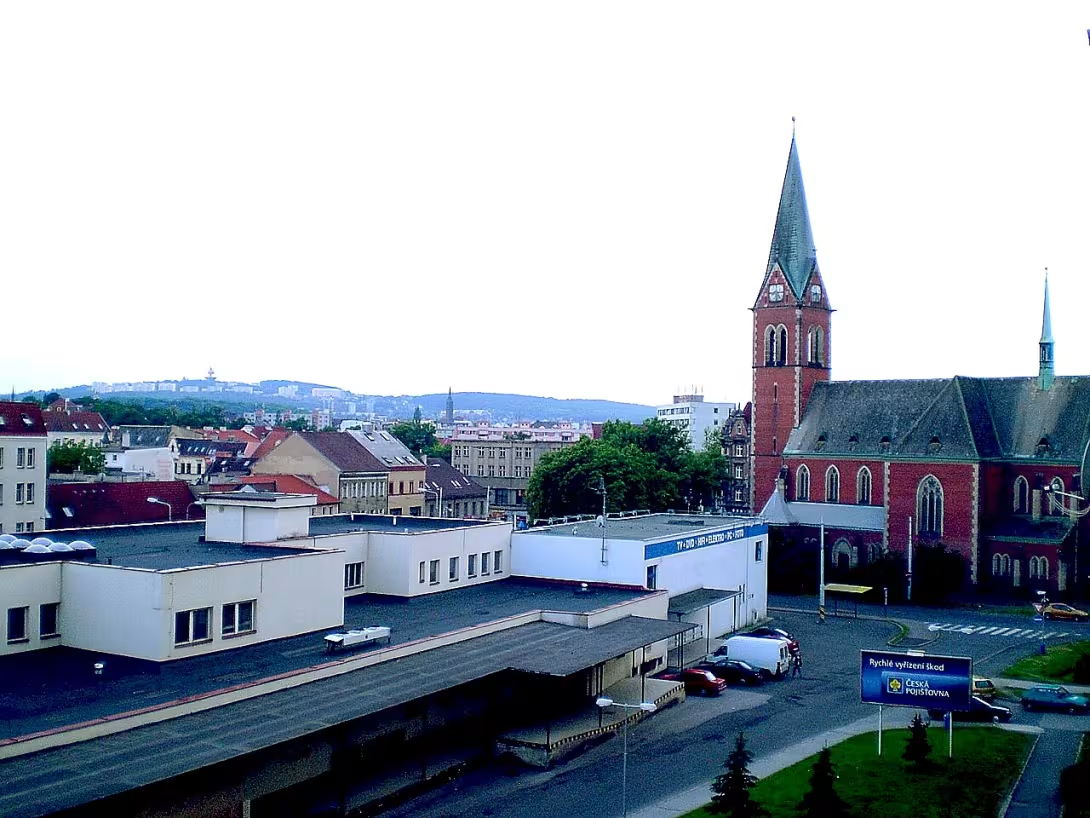
Trnovany is part of the statutory city of Teplice in the district of Teplice, Ústecký kraj. This site is known for its long history, dating back to 1057, and for the industrial development of the region, especially in the production of luxury ceramics.
The oldest written mention of the village comes from a transcript of a memorial record from around 1057, which documents the gift of a lithomeric chapter. The record shows arable land in Trnovany and a beekeeper named Těšek, the oldest documented figure on later Teplice. For a long time there was an agricultural village with settlements focused around the village, located on the site of today's street at the Red Church. In the past he stood in the space between Trnovany and Teplicemi Prince Brewery.
Since the mid-19th century there has been a sharp change in the character of the village. The main factors of development were the availability of coal, the introduction of railways and free areas, which attracted large industries. Over 40 years, the population has increased tenfold. In 1876, Thuryn's entrepreneur Alfred Stellmacher founded the first ceramic factory. The establishment of the factory for luxury ceramics and porcelain Amphora Werke in 1892, built by Hans Rießner, Karl Rießner, Eduard Stellmacher and Rudolf Kessel.
The factory later went through changes in ownership and naming. In 1894 it was owned by Ernst Wahliss and his sons. Under the name Alexandra Porcelain Works the operation expanded and around 1900 employed 300 people with representatives in Vienna, Berlin and London. In 1910 the company was renamed Amphora-Werke Riessner. Here was the famous figure ceramics and serapis vases in Art Nouveau style, which were exported to the whole world. Production was nationalized in 1945 and in 1952 the objects turned into a coal warehouse. Another ceramic workshop was founded by the Znojemská firm Ditmar & Urban, which also produced goods for the American company Erphila.
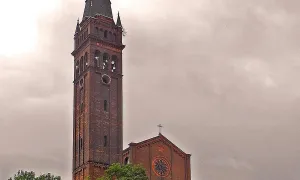
The urban character of Trnovan has changed significantly over the years. The original building was gradually supplemented by schools and churches. A narrow-track tram track was passed through the city, connecting Dubí to Teplicemi. In the 1980s, most of the original building north of the Masaryk class was demolished for the construction of a panel estate. In 1973 Christ's church was destroyed, which was a rare Art Nouveau building from the Dresden architects Schillinga and Gräbnera. In the 1980s, the corner house of the Café Lipa at the Church of the Holy Heart was also removed.
Administrative developments include the promotion of Trnovan to the city in 1910. From 1921 to 1930 they belonged to the district of Teplice-Šanov, from 1947 they were part of the statutory city of Teplice. Significant events include the operation of the brown coal mine Elizabeth between 1932 and 1934, owned by Eliška Rendlová. Between 1938 and 1945, Trnovany was assigned to Nazi Germany as a result of the Munich Agreement. The location is associated with the names of personalities such as the politician Marie Švermová, the spiritual Jan Miřejovský or the politician Adolf Kořínek.
Today Trnovany is part of Teplice city infrastructure. The headquarters of the North Bohemian Water and Sewerage Company, McDonald's and Kaufland, Penny Market and Bill are located here.
Trnovany is an interesting example of transformation from the early medieval village through the globally recognized centre of the ceramic industry to the modern urban district. Visiting this place offers insight into the industrial history of Northern Bohemia.
Then and now
Drag the slider to compare how the landmark may have looked when it was built with the view today.
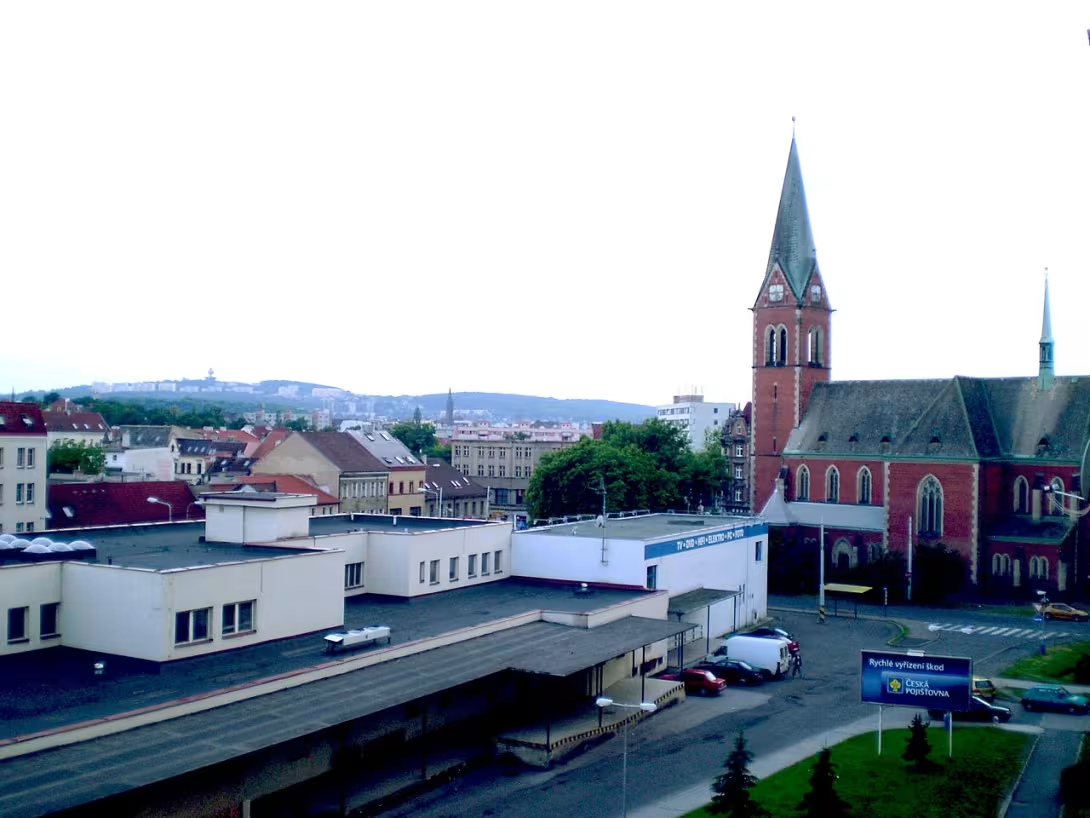

The historical appearance on the left is an AI-generated visualisation and serves as inspiration only.
Historical milestones
- 1057
- The first written mention of Trnovans in the record of giving a lithomeric surrender.
- 1876
- The foundation of the first manufacture of ceramics by Alfred Stellmacher.
- 1892
- Establishing a factory for luxury ceramics and porcelain Amphora Werke.
- 1910
- The promotion of Trvans to the city.
- 1932
- Starting operation of the brown coal mine Elizabeth.
- 1973
- The demise of the Art Nouveau Church of Christ.
Architectural development
Originally an agricultural village with a settlement around the village, later transformed into an industrial town. In the last century a part of the original building and construction of a panel estate was demolished. In history there was also a Art Nouveau building of Christ's church.
Historical events
In 1057, the first written mention of the village; Since the mid-19th century, severe industrial transformation; between 1932- 1934 the operation of the brown coal mine Elizabeth; since 1947 integration into the statutory city Teplice.
Points of interest
- Trnovany are part of the statutory city Teplice and have a long history dating back to 1057. - The oldest written mention of the village comes from a transcript of a memorial record from around 1057, which documents the gift of a lithomeric chapter. - Since the mid-19th century there has been a sharp change in the character of the village due to the availability of coal and the introduction of railway. - In 1876 Alfred Stellmacher founded the first manufacture of ceramics, which led to the development of luxury ceramics in the region. - The factory Amphora Werke produced renowned figural ceramics and serapis vase in Art Nouveau style, which were exported all over the world.
Guide
This guide is narrated by a synthetic voice generated by artificial intelligence.
Show guide text
This text was created by artificial intelligence and has not been editorially reviewed. It may contain inaccuracies.
Trnovany, in German Turn, are today part of Teplice on the northeast of the city. Yet their history is older than the history of Teplice itself. The oldest mention dates from around the year 1057. It is a transcription of a memorial record about a gift to the Litoměřice chapter, and it states: "Arable land in Trnovany and with it also the beekeeper Těšek."
Trnovany then remained an agricultural village for a long time. The farmsteads were concentrated around the village green in the area of today's U Červeného kostela street and in the surroundings there were several ponds. Between Trnovany and Teplice stood a princely brewery.
From the middle of the 19th century, the village underwent rapid transformation. The railway, available coal and open spaces attracted industry here, and with it new residents. In forty years their number increased tenfold. Schools, churches and other public facilities were built afterwards. A narrow-gauge tramway line ran through the centre of the village from Dubí to Teplice.
Trnovany gained fame through ceramics. The first manufactory was founded here in 1876 by the Thuringian entrepreneur Alfred Stellmacher. In 1892 the factory for luxury ceramics and porcelain Amphora Werke was established, which two years later was owned by Ernst Wahliss with his sons. Around 1900 it employed three hundred people and had representatives in Vienna, Berlin and London. The Art Nouveau vases and figurative ceramics of the Serapis brand were exported all over the world and collectors value them to this day. In 1945 the factory was nationalised and previous production ended. A second ceramic workshop here was operated by the Znojmo firm Ditmar and Urbach, which produced for export until the Second World War.
Trnovany were elevated to a city in 1910. In the thirties a brown coal mine called Alžběta operated here briefly. From 1938 to 1945, as a result of the Munich Agreement, Trnovany were incorporated into Nazi Germany. Since 1947 they have been part of Teplice.
A large part of the original buildings north of Masaryk Street gave way to a panel housing estate in the eighties of the 20th century. The corner house of the Lípa café, which stood next to the church of the Most Sacred Heart of Jesus, the so-called Red Church, disappeared at that time. As early as 1973 Christ Church, called the green one, ceased to exist. It was a rare Art Nouveau building by the Dresden architects Schilling and Gräbner.
Tips for visitors
The best time to visit Trnovan is the period from spring to autumn when natural beauty areas are in full bloom and weather usually favourable. This time of year is ideal for exploring historical sites and enjoying the peace outside.
What to take with you: We recommend not to sleep on a trip to Trván light clothes, protective sunglasses and shoes suitable for walking. If you are planning to take pictures, remember to marry your camera or mobile phone.
Photography: The best places for photography are historical buildings and surrounding natural landscapes. Morning and evening light offers best captured colors and shadows, which is ideal for photography.
What to visit in the area: Near Trnovan there is a statutory city Teplice with its spa facilities and historical architecture. It is also necessary to mention the brown coal mine of Elizabeth in Serbice, which offers interesting information about the industrial past of the area.
Frequently asked questions
Can the monument be visited?
Some buildings of this kind are open for guided tours, others serve another purpose or are privately owned. We have not verified whether and when this monument is open – please ask the operator.
What are the opening hours and admission?
We have not verified the opening hours or admission. Current information is published by the operator.
Where is the monument?
Location: Teplice, Ústecký kraj. The map on this page shows the exact spot.
For kids
Trnovany - the secret of the castle
Today we will take a ride to the past, namely 1220, when Trnovany was built as a fortress against enemy attacks. It was a time of war and power struggle. The city of Teplice was small at the time, but its inhabitants were brave and smart.
What did it look like back then? The church of Christ stood in the middle of the castle and was known for its unusual architectural form. If we went in today, we'd see beautiful stained glass and richly decorated walls.
Businesses nearby
Do you run a restaurant, accommodation, shop, museum, rental, wellness or other visitor service near this monument? Show yourself directly to the people heading to it — this is how they will see you in the app and on the web:
Nearby
Statutory city Teplice, brown coal mine Elizabeth in Serbice.
Accommodation nearby
Trips and activities nearby
Guided tours, tickets and activities nearby from GetYourGuide
Affiliate link: if you buy from the partner, we may receive a commission. The price for you does not change.
Search tours and activities →Themed route
1. Statutory City Teplice - City. Ideal starting point for familiarity with the region and its urban form. Trnovany - Monuments. The main destination of the trip, which is a key point of interest within the municipality. 3. The brown coal mine Elizabeth in Serbice - Industrial area. A place where the specifics of brown coal mining in this area can be observed.
Seasonal recommendations
In spring, the surroundings of Trnovan awaken to life under the sign of fresh green and blooming flowers. Light is soft in this period and very pleasant to observe the details of architecture without unwanted sharp shadows. We recommend a visit in the morning when the air is the cleanest and the most active nature. Clothes should be layered because the morning cold can still feel, even if it is already starting to warm.
Summer months bring intense sun and lively atmosphere to the Teplice area. Nature is in the greatest expansion and thick green offers a pleasant shade. However, due to the main summer season it is recommended to arrive as early as possible in the morning to avoid the largest crowds of visitors. Don't forget light summer clothes, headgear and plenty of fluids because heat in open spaces can be considerable.
Autumn visit offers the most impressive visual experience thanks to the golden and red shades of the surrounding countryside. The morning fog brings a mysterious and nostalgic atmosphere to the memory, which is ideal for quiet tours. It is advisable to carry waterproof shoes and a warmer layer of clothing, because wet and cooler winds are common at this time. The best time to capture beautiful images is a short afternoon light.
During the winter, Trnovany is more peaceful and almost deserted, which allows a deeper perception of history in silence. If the snow comes, the monument looks very magical and looks fabulous. Due to shorter daily time and possible shorter opening time, plan to visit in clear morning hours. The need is quality winter clothes, including warm gloves and shoes with good insulation against cold.
Visualizations and artistic views


The visualisations are generated by artificial intelligence and serve as inspiration.
Photos from the area
Real photos taken near the monument

Zdroj a licence jsou uvedeny u každého snímku.
Tips from visitors
No tips yet. Be the first!
Log in and add your tip.
Sources and literature
Photos: Patrik Bitner (Triquelito) / CC BY 3.0 — Wikimedia Commons. The author and licence also appear when you hover over the image.
Faktickým podkladem tohoto textu byl článek na Wikipedii, jehož autory jsou přispěvatelé Wikipedie. Článek je dostupný pod licencí CC BY-SA 4.0.
Location on the map
Příběhy a pověsti
Legendy, pověsti a příběhy spjaté s touto památkou

Fotografie návštěvníků
Zatím žádné fotografie. Buďte první, kdo přidá fotografii z návštěvy!
Log in a přidejte svou fotografii nebo hodnoťte.
Za ověřenou návštěvu v aplikaci získáte víc bodů — poznáme podle GPS, že jste na místě.
Reviews and comments